Kids interview Rosalind Franklin
by Charactorium · Rosalind Franklin (1920 — 1958) · Sciences · 5 min read
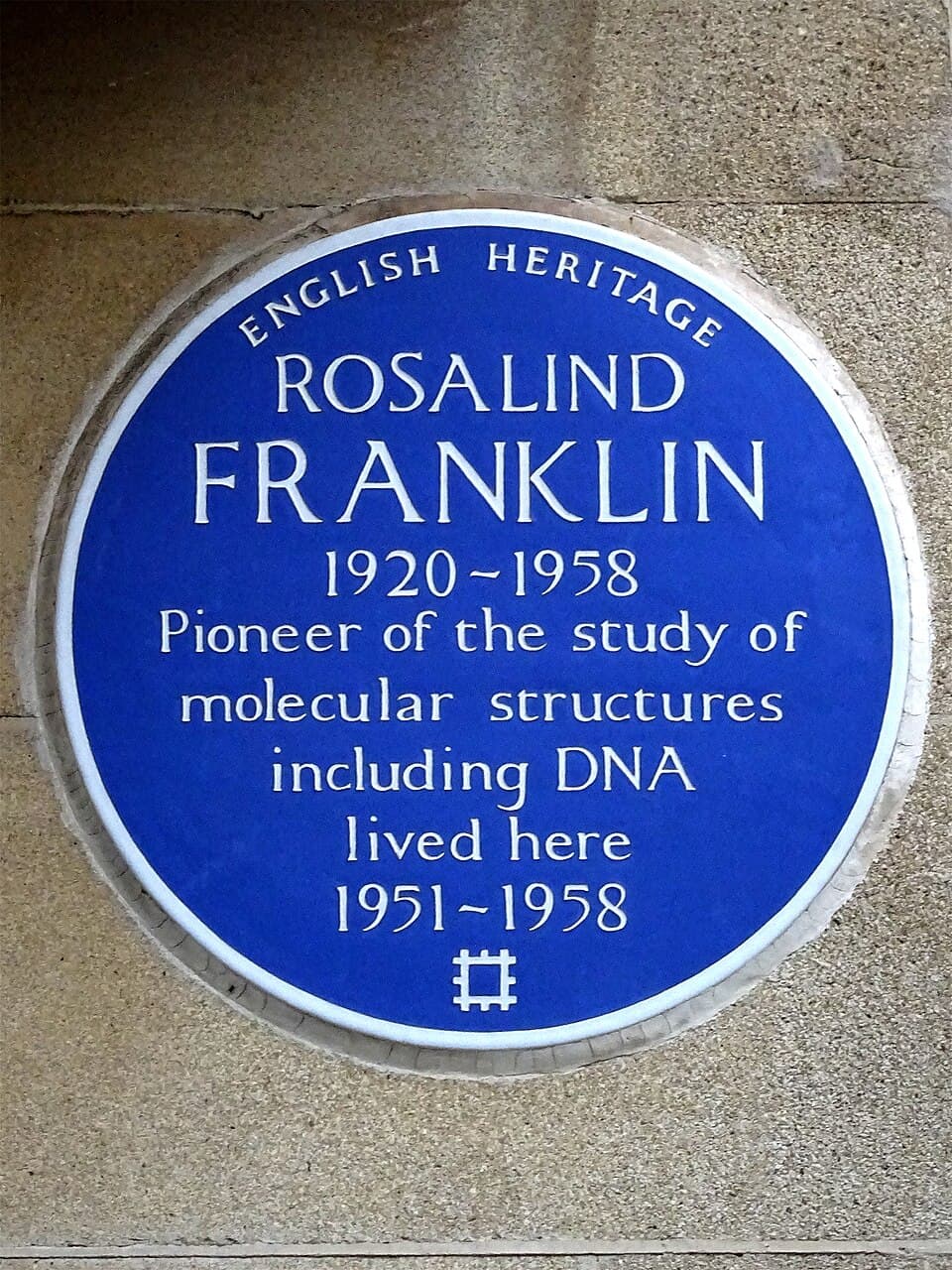
Two 7th graders visit a lab with their class trip. At the back of the room, near a strange X-ray machine, a scientist in a lab coat greets them with a smile. It's Rosalind Franklin, and she has agreed to answer all their questions.
—What was it like at home when you were little in London?
You know, I was born on July 25, 1920, in London, into a very close Jewish family. We loved books, discussions, and learning languages. Picture a big house full of people, where we debated at the table like a schoolyard! As a child, I constantly asked questions about how things were made. I always wanted to understand the inside of objects, not just their outside. My parents found it strange for a little girl. I found it normal. I think that's where it all began: this desire to look inside matter.
I always wanted to understand the inside of things, not just their outside.
—Did you really speak several languages? What did that help you with?
Yes, my child! I spoke French, German, and a little Hebrew. Imagine being able to read the notebooks of scientists from several countries without waiting for someone to translate them. That's enormous freedom. In my time, science was written in all these languages at once. And then there was the war, in 1939. It was dark; we feared for those we loved. I was studying chemistry at Cambridge, nose in my test tubes. Working helped me hold on. Knowing languages opened the world to me when the world was closing.
Knowing languages opened the world to me when the world was closing.
—Did you work in Paris? What did you learn there?
Ah, Paris! I spent two wonderful years there, around 1947. I worked in a chemistry lab, and that's where I really learned my secret craft: X-ray crystallography. It's a way of photographing things so small that no eye can see them. Imagine throwing invisible marbles at an object, and by watching how they bounce, you guess its exact shape. That's exactly it! My Parisian colleagues were patient and cheerful. We laughed, we talked for hours. I became a true expert there. Without Paris, I would never have succeeded with my photos later.
Photographing things so small that no eye can see them.
—Didn't you study only DNA? Were there also viruses?
You've listened well! Yes, after DNA, I went to Birkbeck College to study a virus, the tobacco mosaic virus. It's a small disease that spots tobacco leaves. With my X-rays, I discovered that this virus had a spiral shape, like a tiny spring. You see, I wasn't just "the DNA lady." I loved exploring all the hidden structures of life. Each molecule was a puzzle for me to solve. And solving a puzzle, my child, is the greatest pleasure in the world. Much stronger than a game, because the answer is true.
Each molecule was a puzzle to solve, and solving a puzzle is the greatest pleasure in the world.
—What exactly is your famous Photo 51?
It's the image of my life, taken in 1952 at King's College in London. Imagine a black photo, crossed by a large cross of small blurry spots. To you, it would look like nothing. To me, it was a treasure! That cross told a secret: DNA, the molecule that contains the instructions of all living things, has the shape of a double helix. It's like a spiral staircase, two rails winding together. I had spent hundreds of hours adjusting my machine, in the dark, holding my breath. And there, on the plate, the answer was written. You understand why I love it so much.
A black photo that told the greatest secret of life.
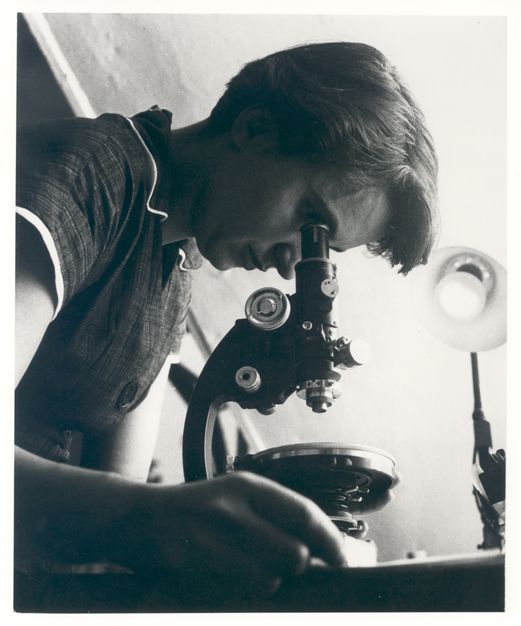
—Is it true that others used your photo without telling you?
Yes, and that hurt me. Two researchers, Watson and Crick, saw my Photo 51 without me really knowing. This image served as their proof to announce the shape of DNA in 1953. Imagine solving a very difficult puzzle, and someone else copies it without saying your name. It breaks your heart, doesn't it? Yet I didn't spend my days complaining. My data were solid, accurate, measured to the millimeter. Good work remains, even when they forget to cite your name. Someday, the truth always comes back to the surface.
Good work remains, even when they forget to cite your name.
—Was it hard being a woman in your lab?
Yes, my child, it was sometimes difficult. At King's College, some colleagues didn't take a female scientist seriously. They looked at me sideways, they interrupted me. Imagine being the most gifted in your class, but everyone always listens to someone else. It's draining. So I defended myself with the only weapon I had: rigor. My measurements were so precise that no one could contest them. I checked everything twice, three times. I never asked to be liked; I asked that my evidence be respected. And evidence, you see, does not lie, even when people do.
I never asked to be liked; I asked that my evidence be respected.
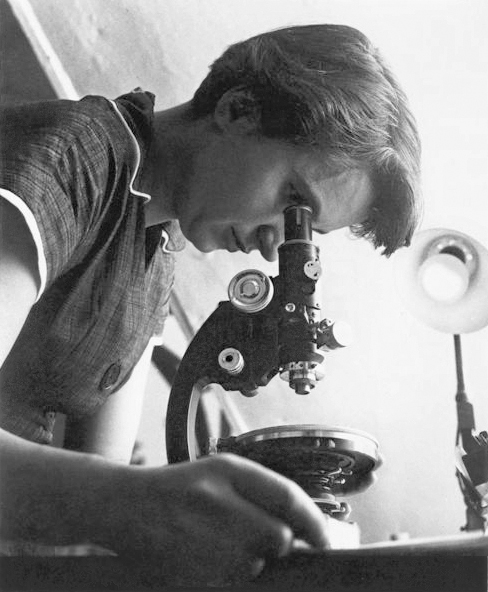
—What did you wear to work? Makeup, jewelry?
What a lovely question! No, I dressed simply: a sober suit, closed and practical shoes, almost never shiny jewelry. Picture an elegant but discreet lady, ready to handle delicate instruments all day. In my time, women were expected to be always prim, perfumed, smiling. I found that useless in a lab. My lab coat was worth all the dresses in the world. What mattered were my steady hands and my attentive gaze on the images. I wanted to be noticed for what I did, not for what I wore.
My lab coat was worth all the dresses in the world.
—Why did you get sick? Was it because of the X-rays?
You've put your finger on something sad. X-rays, those famous invisible rays that allowed my photos, are also dangerous for the body when exposed too long. We didn't know that well at the time. In 1956, doctors discovered I had cancer. I was barely over thirty. But I didn't put down my instruments! I continued my research on viruses, even tired, even sick. Imagine someone who loves their work so much they refuse to stop. That was me. Science may have worn me out, but it also kept me standing until the end.
Science may have worn me out, but it kept me standing until the end.
—If someone could tell you one thing today, what would it be?
How sweet of you to think of me. I left on April 16, 1958, far too early. Four years later, a great scientific prize rewarded the discovery of DNA, but not me: it is only given to the living. Yet my Photo 51 was there, at the heart of everything. So here is what I would tell you, my child: don't do science for the rewards. Do it for the joy of understanding, and for those who will come after you. My images still serve thousands of researchers today. That is my real reward. And since you ask me these questions, I am not truly forgotten.
Don't do science for the rewards; do it for the joy of understanding.
This imaginary interview was generated by artificial intelligence from sources documented in Rosalind Franklin's profile. It dramatises what the figure might have said based on what we know about them, but does not constitute attested historical testimony. For primary sources and factual documentation, refer to the full profile.