Imaginary interview with Selma Lagerlöf
by Charactorium · Selma Lagerlöf (1858 — 1940) · Literature · 6 min read
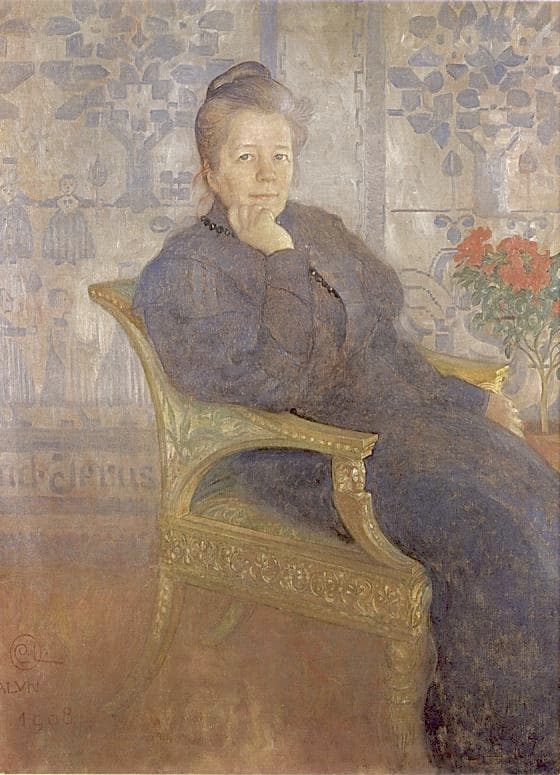
Värmland, early autumn 1920. The mistress of Mårbacka receives us in the grand salon of her reclaimed estate, where the low light of Swedish forests falls on a desk cluttered with papers. Coffee steams, outside the wild geese prepare their great journey south — and Selma Lagerlöf, sixty-two years old, agrees to trace the thread of a life spent turning maps and legends into novels.
—Where should one seek the primary source of your calling as a storyteller?
It all begins here, in Värmland, on my grandmother's lap. I was a sickly child, and while others ran outside, I listened to her unfold the old stories of the region — cursed pastors, lake spirits, manor houses haunted by their own past. These tales did not seem like bedtime stories to me: they were the living memory of a country. When much later I wrote Gösta Berling's Saga, I was simply giving back to this corner of Sweden what it had lent me. A goose quill, a porcelain inkwell, and all that voice from before me that needed to pass onto paper.
These tales were not bedtime stories: they were the living memory of a country.
—What did the repurchase of the Mårbacka estate mean to you?
Mårbacka is the house I lost and had to earn twice. As a child, I saw it slip from my family's hands; as a woman, I bought it back with my own earnings as a writer. Do you understand what it means, for a daughter of Värmland, to become mistress again of the land where her dead are buried? In the morning, I work early, a light coffee, bread and butter, then writing until the words refuse to go further. In the afternoon, I walk in the woods and gardens of the estate, and it is there, between two trees, that chapters unravel. This home is not a backdrop: it is the secret workshop from which everything else emerges.
To become mistress again of the land where her dead are buried.
—How was a book like The Wonderful Adventures of Nils born?
From a commission, if you can believe it, and the most austere one: a reader to teach geography to Swedish schoolchildren. I was asked for a map; I wanted an adventure. I spread before me the whole country, its provinces, its rivers, its birds, and I told myself that a child does not love a map of Sweden — he loves to fly above it. So I took a mischievous brat, shrunk him into a tomte, and perched him on the back of a domestic goose that joined the wild geese. Nils Holgersson was born of this trick: to make the entire nation enter a child's head through the door of wonder, not through that of the lesson.
A child does not love a map of Sweden: he loves to fly above it.
—Why did you choose a goose, such a humble animal, to carry your entire country?
Because the goose does not cheat. The great eagle soars, disdainful; the goose, on the other hand, hugs the ground, stops in marshes, lands near farms, knows the names of fields. I wanted the reader to feel Sweden from below, at reed level, as a migrating creature feels it. And then there was, in this journey, a second metamorphosis more important than the boy's into a tomte: a cruel child who learns, province by province, to respect the living. The marvelous, in my work, is never gratuitous — it is a fairy tale that must bring someone back to goodness. Without that, it would be just a pretty winged lie.
I wanted one to feel Sweden from below, at reed level.
—You constantly draw on folklore and ancient legends: how do you avoid making them mere copies of the past?
I am sometimes told that I pick up old stones; I reply that I build with them. Folklore is not a museum, it is a quarry. When I write The Queen of Kungahälla or compile Christ Legends, I do not recite medieval tradition: I make it breathe in a language of today, with my doubts as a modern woman. We writers of the North have this particular task — to give a small people a literature that resembles them, what I would call a literary nationalism without arrogance or drums. The legend provides the skeleton; it is up to the writer to lend the warm blood. Otherwise, the tales might as well sleep in attics.
Folklore is not a museum, it is a quarry.
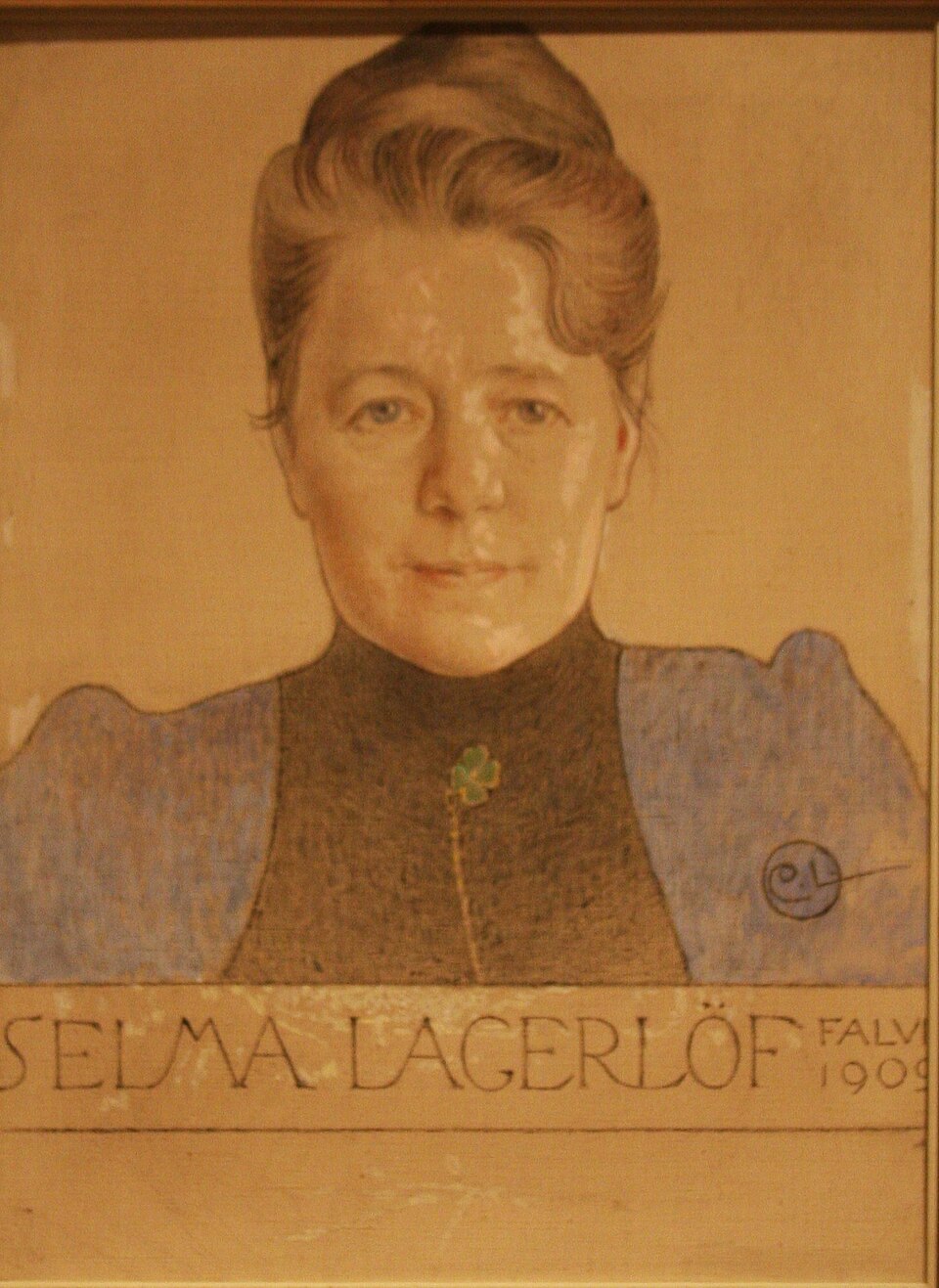
—The supernatural runs through all your work: what do you expect from these ghosts and miracles?
I do not believe in them like a devotee, nor do I laugh at them like a scholar. In The Heritage of the Monk as in Jerusalem, invisible forces serve to say what bare realism cannot say: guilt, grace, the weight of a promise. My neighbors in Värmland lived surrounded by presences; it would have been dishonest to rid them of them under the pretext of modernity. The naturalism of my time wanted to weigh man as one weighs a mineral — I, on the other hand, believe that there always remains, deep within each person, a part of legend that no scale can measure. It is that part I go looking for, even through the door of the fantastic.
There always remains, deep within each person, a part of legend that no scale can measure.
—What was at stake in 1909, when you became the first woman to receive the Nobel Prize in Literature?
I was fifty-one, and I can confess to you: joy was laced with fear. Receiving the Nobel Prize in 1909, the first woman, in the very hall where only men were expected — it was to bear a burden as much as a crown. I knew I was no longer judged alone: behind me stood all those who had been told that writing was not their affair. The same year, the doors of the Swedish Academy were also opened to me, another first. I did not give a thunderous speech; I spoke, as always, of my grandmother and her stories. For it was through an old woman's tales that I had arrived there.
I was no longer judged alone: behind me stood all those who had been told that writing was not their affair.
—You made the choice not to marry: how did this choice weigh on your life as a writer?
It was not a bitter renunciation, but a condition of work, if I may say so. In my time, a wife belonged first to her home; but I wanted to belong to my books. Renouncing marriage meant keeping my time, my travels — even to Italy, which nourished me so much — and that freedom to get up at dawn to write without asking anyone's permission. I have seen in my novels, even in Anna Svärd, how a woman's destiny is played out in her moral choices, often against the current. The women's movement awakening around us demands the right to vote; I, for my part, first conquered, pen in hand, the right to belong to myself.
I did not want to belong to a home: I wanted to belong to my books.
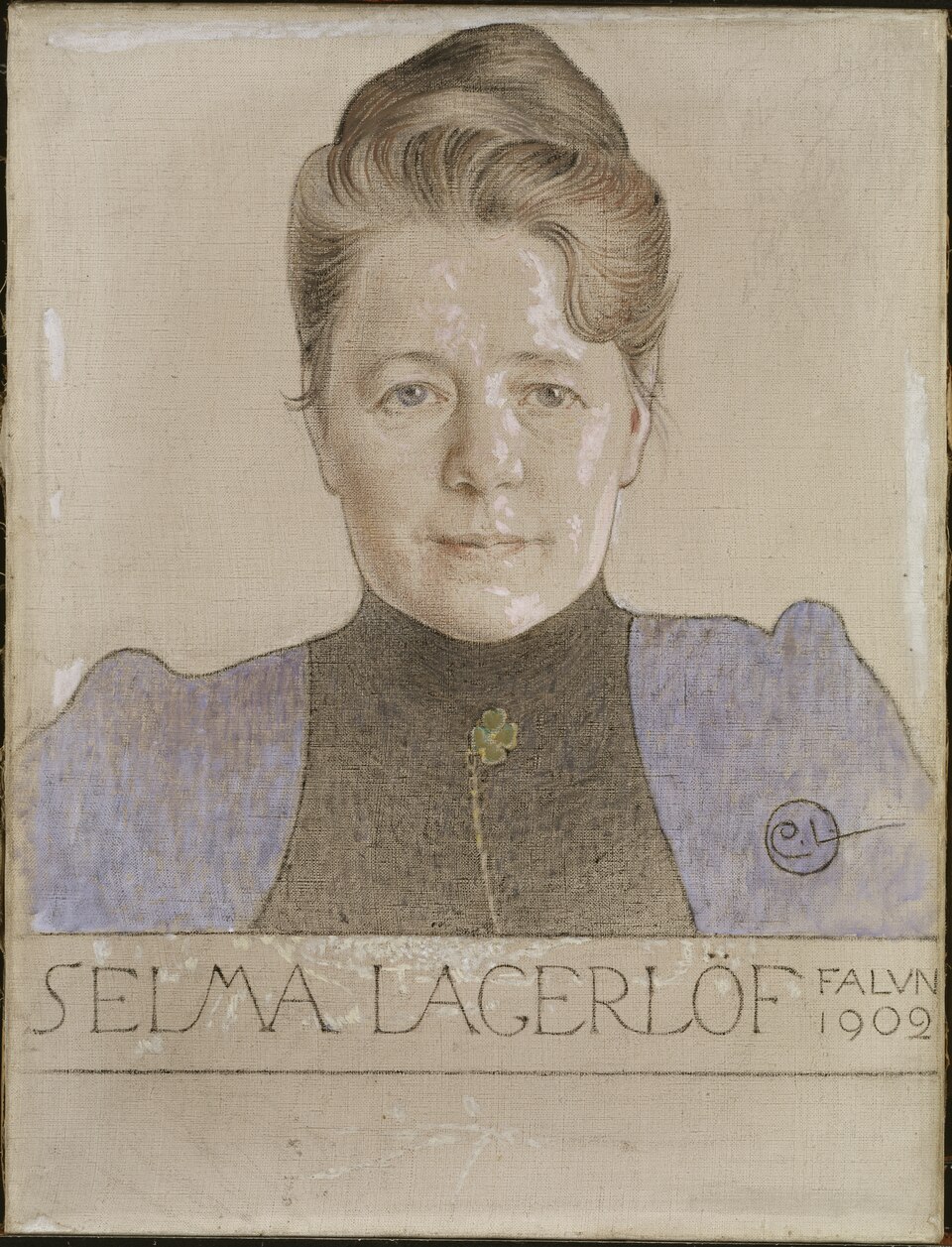
—You saw the Sweden of your childhood transformed by machines and factories: what is your view on this modernity?
I was born by oil lamps and today I sometimes write on a typewriter — my whole life lies in that gap. Modernity brought trains that race through my Värmland, factory smoke where there were peasant forges. I do not curse it: it lifted many people out of poverty. But I fear that by running so fast, one forgets the murmur of old stories, and that a people without legends becomes a people without a soul. That is perhaps why I wrote Nils: so that the child of the machine age would keep, engraved in him, the ancient face of his country before it changed completely.
I fear that a people without legends becomes a people without a soul.
—Europe has barely emerged from the Great War: what does this world, which seems to have faltered, inspire in you?
The war of 1914 left me heavy-hearted, like so many others. I grew up believing that the century was moving toward more reason, and I saw entire nations tear each other apart with new, terrible weapons. Sweden stayed out of the fighting, but no border stops grief. People speak today of a League of Nations to prevent it from happening again — I want to believe in it, out of duty more than certainty. What I know is that the writer has no right to remain silent in such times: he must remind, even in his tales, that there exists a humanity older and deeper than the hatreds of the day.
No border stops grief.
—If you were to imagine what will survive of you in a century, what would you wish to leave behind?
What a strange question for a living person! If I allow myself to dream that I will still be read in a hundred years, I do not ask that people remember the honors — neither the Nobel nor the Swedish Academy. I would want a child, somewhere, to open The Wonderful Adventures of Nils and feel beneath him the beat of goose wings above Sweden. That my grandmother's stories, passed through me, continue their journey in a mouth I will never know. The rest — the medals, the speeches — is only golden dust. A legend, to survive, needs only one thing: someone, always, to tell it anew.
A legend, to survive, needs only one thing: someone to tell it anew.
This imaginary interview was generated by artificial intelligence from sources documented in Selma Lagerlöf's profile. It dramatises what the figure might have said based on what we know about them, but does not constitute attested historical testimony. For primary sources and factual documentation, refer to the full profile.