Imaginary dialogue between Albert Einstein and Selma Lagerlöf
by Charactorium · Selma Lagerlöf (1858 — 1940) · Literature · 5 min read
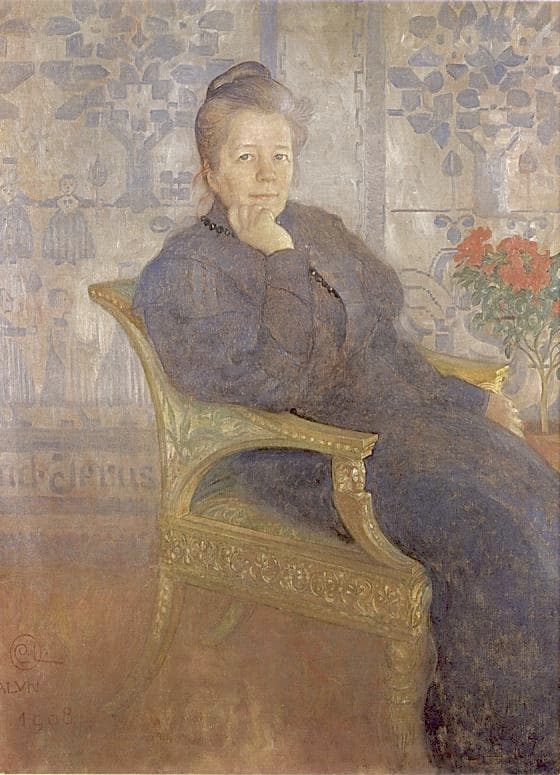
It is in the grand, hushed salon of the Swedish Academy in Stockholm, one winter evening in 1923, that two Nobel laureates cross paths. Snow falls beyond the tall windows and a fire crackles in the hearth as Albert Einstein, freshly honored in physics, sits down near Selma Lagerlöf, the first woman to enter under this dome. They know each other from afar, through the strange fraternity of Nobel winners, and the physicist, curious about everything, wants to understand how a storyteller makes a child travel across an entire country. The novelist, a mischievous glint in her eye, welcomes him as one welcomes a kindred spirit.
—Dear Selma, you and I both come from obscure villages. Where does that inexhaustible wellspring of stories that has flowed from you since childhood come from?
My dear Albert, everything was born in a room in Mårbacka, in Värmland, at my grandmother's feet. She told me legends from morning till night, and I sincerely believed that the world was made of stories before it was made of stone. You who seek the hidden laws of the universe, understand me: I listened to those that old women kept by the fireside. When I wrote The Saga of Gösta Berling in 1891, I merely gave back to my province those voices entrusted to me. Värmland gave me everything — its forests, its pastors, its magnificent madmen. I do not invent so much as I remember.
I believed that the world was made of stories before it was made of stone.
—You speak of memory rather than invention. But did you not, like me, have to impose a new form on old material?
Yes, precisely. The legends I had from my grandmother were shards, scattered fragments. My work was to give them a framework, a breath, a necessity. Gösta Berling is not a collection of tales: it is a cavalcade, an entire world that stands upright. You know better than anyone, Albert, that it is not enough to observe — one must order what one observes. I long sought my form, and I found it the day I stopped imitating the great realist novels and dared this singing, almost incantatory tone, which I was first reproached for and which was eventually loved.
It is not enough to observe — one must order what one observes.
—What amazes me as a scientist: you taught the geography of Sweden through a tale of wild geese. How does one convey knowledge through the marvelous?
Ah, Nils Holgersson! I was commissioned to write a reader for schools, Albert — a serious book to teach children their country. I understood that a child does not retain a map: he retains a journey. So I shrank my scamp, perched him on the back of a gander, and made him fly over all of Sweden, province after province. Rivers, mountains, factories, local legends — everything passed before his eyes as an equation passes before yours. The marvelous is not the enemy of knowledge: it is its surest vehicle. A child who has flown with Nils knows his homeland in his flesh, not in his head.
A child does not retain a map: he retains a journey.
—You transform a boy into a gnome with an ease that baffles me. Doesn't the fantastic weaken the truth you wanted to teach?
On the contrary, it makes it bearable and memorable. Consider, Albert, that I had to keep a child engaged over hundreds of pages while teaching him the length of rivers and the names of mountains. Pure reality would have put him to sleep. By making Nils a gnome punished for his cruelty, I added a moral lesson to the geographical knowledge: he shrinks because he was mean, and he grows by becoming good. Metamorphosis is not an escape from truth; it is a magnifying glass placed upon it. Your science too, I believe, simplifies the world to make it better seen — we proceed differently, but we seek the same clarity.
Metamorphosis is not an escape from truth; it is a magnifying glass placed upon it.
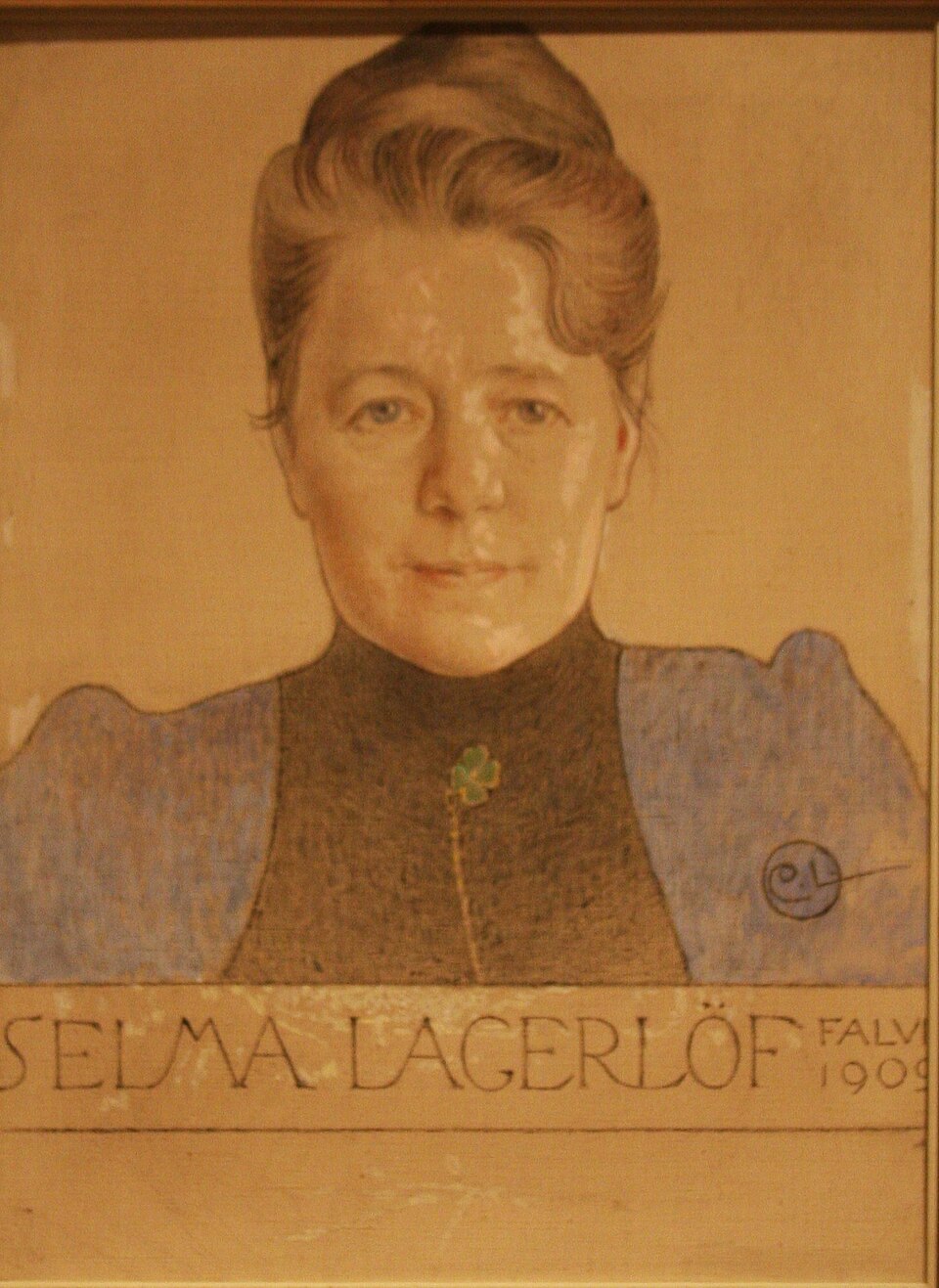
—Here we are, both marked by the seal of Stockholm. But you, in 1909, were the first woman. What did you feel under this dome?
A dizziness, I admit. I was fifty-one, and they told me that no woman had ever received this literature prize. I thought of all those who had written in the shadows, without name, without rights. Receiving this medal was not only honoring Selma Lagerlöf: it was cracking open a door long locked. Then the Swedish Academy welcomed me among its members, right where we sit tonight — yet another first. You, Albert, are celebrated for piercing a mystery of the universe; I was celebrated, and I bear the responsibility, for having held a pen that so many other women might have held before me.
It was not honoring Selma Lagerlöf: it was cracking open a door long locked.
—A more intimate question, if you will: you never married. Was it a renunciation, or a conquest?
A conquest, Albert, without the slightest hesitation. In my time, a woman who married handed over her life, her property, and her time to a man. I saw too many female intelligences extinguished in running a household. I chose to keep my days for my characters, my travels across Europe, my freedom to think and write at my own hour. They say today that women demand the right to vote; I first demanded the right to be alone at my worktable. It was not a sad sacrifice: it was the joyful price of my work. Without that chosen solitude, none of my books would exist.
I first demanded the right to be alone at my worktable.
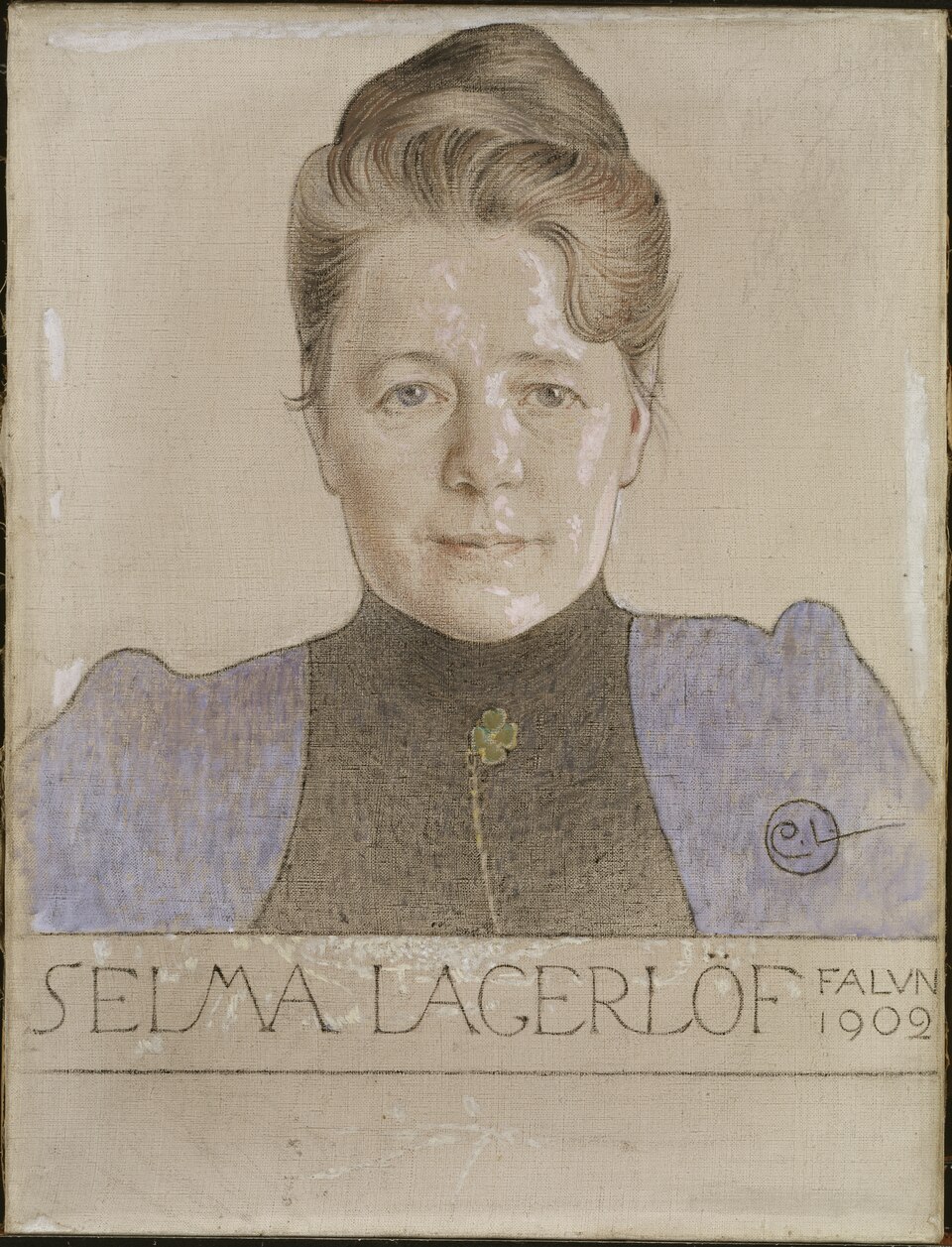
—The world is changing fast around us, Selma — factories, machines, women stepping forward. Do you feel your work tied to this upheaval?
Deeply, though by roundabout paths. I am classified among the storytellers of the past, lovers of old legends, and that is true. But look closely: my heroines choose, resist, refuse. A woman who writes, who earns her living by her pen, who buys back her ancestral estate herself — is that not modernity on the march? I did not write pamphlets, Albert, that is not my temperament. But every time a young girl reads that a woman from Värmland entered the Academy, something shifts within her. The transformation of societies also passes through the stories told to them. That is my discreet way of advancing with the century.
The transformation of societies also passes through the stories told to them.
—I am told you bought back the house of your childhood. Why this need to return precisely to Mårbacka?
Because one never truly leaves the place that made you. My family had to sell Mårbacka in hardship, and that loss haunted me for years. The day my books gave me the means, I bought it back, stone by stone, land by land. I found my forests, my gardens, the scent of Värmland again. It is there that I work best: I rise early, have a light coffee, and write when my mind is clearest, before the day fills up. In the afternoon, I walk under the trees. You understand that, you who think while walking: the landscape is my first draft.
One never truly leaves the place that made you.
—Your days at Mårbacka seem as regular as clockwork. Is this discipline the secret condition of your imagination?
It is its skeleton, yes. People imagine the writer as a being at the mercy of inspiration's whims; it is a pretty legend, but a legend nonetheless. The morning belongs entirely to me: it is the hour when images come without being forced. I protect this time fiercely, as you no doubt protect your hours of calculation. In the afternoon, I allow visits, correspondence, friends; in the evening, I read and dream of the next day's pages. Regularity does not kill the marvelous, Albert — it makes room for it, a safe place to return to. Even a wild goose follows the same route each autumn, and that is what makes its journey faithful.
Regularity does not kill the marvelous — it makes room for it, a safe place to return to.
This imaginary interview was generated by artificial intelligence from sources documented in Selma Lagerlöf's profile. It dramatises what the figure might have said based on what we know about them, but does not constitute attested historical testimony. For primary sources and factual documentation, refer to the full profile.