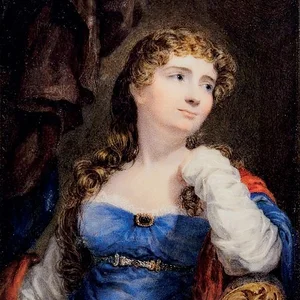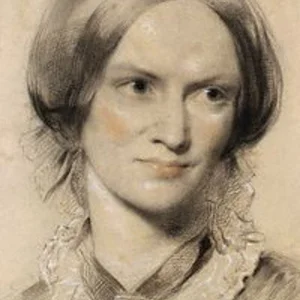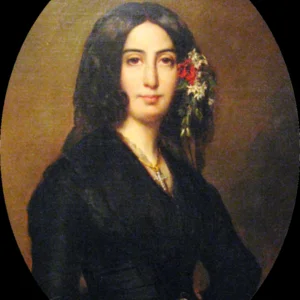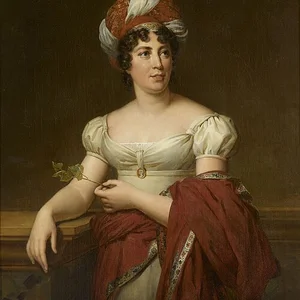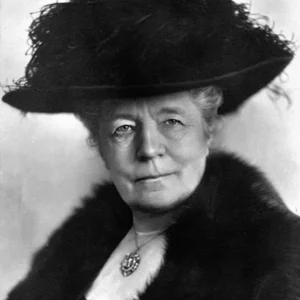

Selma Lagerlöf (1858-1940) was the first woman to receive the Nobel Prize in Literature, awarded in 1909. This Swedish author is best known for her novel 'The Wonderful Adventures of Nils', which has become a worldwide classic of children's literature.
Selma Lagerlöf(1858 — 1940)
Selma Lagerlöf
Suède
7 min read
Frequently asked questions
Famous Quotes
« A book is made of words, but it lives through the images it awakens in the reader's mind.»
« The best way to make children good is to make them happy.»
Key Facts
- 1858: Born at Mårbacka, Sweden, into a minor rural noble family
- 1891: Publication of 'Gösta Berlings saga', her first novel, acclaimed by critics
- 1906-1907: Publication of 'The Wonderful Adventures of Nils', commissioned as a geography textbook for schoolchildren
- 1909: First woman to be awarded the Nobel Prize in Literature
- 1914: First woman elected to the Swedish Academy
Works & Achievements
Selma Lagerlöf's first major novel, telling the adventures of a defrocked pastor in Sweden. This work marked the beginning of her international recognition and remains a classic of Swedish literature.
A major work for young readers, telling the fantastical journey of a boy traveling across Sweden on the back of a goose. This geographical and educational novel has been translated worldwide and is considered a cornerstone of children's literature.
A two-volume novel exploring religious and spiritual themes, following a Swedish community that undertakes a pilgrimage. The work delves into questions of faith and human destiny.
A collection of short stories and fantastical tales featuring supernatural elements and Swedish legends. The work showcases Lagerlöf's talent for imaginative and traditional storytelling.
A historical short story based on medieval Swedish legends, demonstrating the author's ability to blend history and fiction. It illustrates Lagerlöf's deep interest in Scandinavian cultural heritage.
A collection of animal fables and fantastical stories for children, enriching Lagerlöf's body of work in children's literature with moralistic and poetic tales.
Anecdotes
Selma Lagerlöf was born in 1858 in Värmland, a rural region of Sweden that she deeply loved. She spent her childhood listening to the stories and legends told by her grandmother, which inspired her love of storytelling and fairy tales. These childhood memories became the source of inspiration for her most celebrated literary works.
In 1909, Selma Lagerlöf received the Nobel Prize in Literature at the age of 51, becoming the first Swedish woman to receive this honor. The prize recognized the importance of her work, particularly 'The Wonderful Adventures of Nils', a fantastical tale that has enchanted readers around the world.
Selma Lagerlöf was a deeply socially engaged woman who chose never to marry in order to preserve her independence and creative freedom. This decision — bold for the time — allowed her to devote herself entirely to her work as a writer and to travel throughout Europe.
She purchased the Mårbacka estate, her family's ancestral property in Sweden, and transformed it into a personal retreat and place of literary creation. The house remained an important symbol of her Swedish roots and has since become a museum celebrating her life and work.
Primary Sources
The story of a young boy transformed into a tiny elf who embarks on a fantastic journey across Sweden with a flock of wild geese. Through this wonderful adventure, the reader discovers the landscapes, history, and culture of Sweden.
The novel follows the adventures and misadventures of the pastor Gösta Berling and his companions in the Värmland region of Sweden, blending realism and romanticism in its portrayal of Swedish provincial life.
A collection of hagiographic legends and tales reflecting Lagerlöf's interest in spirituality and Swedish folk traditions.
A story examining the life of an ordinary Swedish woman and the moral choices she faces in the midst of hardship, showcasing Lagerlöf's talent for exploring the inner lives of female characters.
Selma Lagerlöf's personal correspondence sheds light on her reflections about her literary work and her social commitment as the first Swedish woman to receive the Nobel Prize in Literature.
Key Places
Family estate in Värmland (Sweden) where Selma Lagerlöf was born and raised. This place deeply inspired her work, particularly her novels evoking Swedish rural life, and became an important memorial center.
The Swedish capital where Lagerlöf pursued her studies and began her literary career. She lived and worked there as a schoolteacher before devoting herself entirely to writing.
A historic region in central Sweden that provides the setting and atmosphere for many of Lagerlöf's novels, most notably 'The Saga of Gösta Berlings'. This region embodies the Swedish soul throughout her work.
The oldest university in Sweden, where Lagerlöf completed her intellectual education. There she gained the knowledge and skills needed to build her career as a writer.
An important travel destination for Lagerlöf throughout her life, which influenced her storytelling and broadened her literary horizons. She drew inspiration there for several of her works.
The prestigious institution of which Lagerlöf became a member in 1909, a first for a woman in Sweden. It represents the official recognition of her literary genius.
Typical Objects

The primary writing instrument of the 19th century, used by Selma Lagerlöf to write her manuscripts. The quill was the essential tool of writers before the widespread adoption of the ink pen.

A vessel holding the ink used for writing, a common item on a writer's desk of the era. Lagerlöf is said to have used several throughout her long literary career.

A handwritten notebook in which the author recorded her notes and early versions of her works. These notebooks bear witness to the creative process of the 19th-century Swedish writer.

The typical format for literary publications in the 19th century, with a leather cover and pure paper pages. Lagerlöf's works were first published in this prestigious form.

An emerging technology of the late 19th century that revolutionized the work of writers. Lagerlöf adopted this modern tool to enhance her literary productivity.

The distinction awarded to Selma Lagerlöf in 1909 for her literary work, recognizing her excellence in literature. This medal symbolizes her status as the first woman to receive the Nobel Prize in Literature.

The typical light source of the 19th century, allowing writers to work in the evening. Lagerlöf composed her works by artificial light, an essential element of her working environment.

An object representing Lagerlöf's sources of inspiration, drawn from Swedish landscapes and culture. Her works, such as The Wonderful Adventures of Nils, reflect her deep attachment to the geography and history of her homeland.
School Curriculum
Vocabulary & Tags
Key Vocabulary
Daily Life
Morning
Selma Lagerlöf wakes up early at her Mårbacka estate in Värmland, Sweden. She has a light breakfast of bread, butter, and coffee before dedicating herself to writing, the time of day when she is most intellectually productive.
Afternoon
The writer continues her literary work or strolls through the gardens and forests of her estate, a constant source of inspiration. She occasionally receives visits from literary figures and close friends, maintaining an active intellectual network.
Evening
After a modest family dinner, Selma Lagerlöf spends time reading, corresponding with fellow writers, or engaging in literary conversation. She retires early to rest, preserving her creative energy for the following day.
Food
Her diet reflects that of the Swedish bourgeoisie: rye or wheat bread, dairy products (cheese, butter), fresh or preserved fish, occasional meat, and seasonal vegetables from the Mårbacka kitchen garden. She drinks coffee and milk, both staples of Swedish society.
Clothing
Dressed in the fashion of the turn of the twentieth century, she wears long dresses with a corset, high-necked blouses with long sleeves. Her outfits reflect her standing as a woman of good family and an established writer — understated yet elegant.
Housing
She lives at the Mårbacka family estate, a classic Swedish-style manor surrounded by farmland in Värmland. This symbolically important home provides her with a rural setting conducive to writing and to a deep connection with the Swedish nature that inspires her work.
Historical Timeline
Period Vocabulary
Visual Style
Un style pictural mêlant l'aquarelle nordique et le romantisme fin de siècle, évoquant les contes suédois et les légendes folkloriques. L'univers poétique de Lagerlöf se traduit par une atmosphère vaporeuse et magique, entre réalisme nature et dimensions fantastiques.
Sound Ambience
Une ambiance immersive mêlant la nature scandinave aux sons intimes d'une écrivaine du XIXe siècle : paysage forestier suédois, musique romantique au piano, et bruit de la plume écrivant, créant l'atmosphère littéraire de Selma Lagerlöf dans sa Dalécarlie natale.
Liens externes & ressources
Références
Œuvres
La Saga de Gösta Berling
1891
Le Merveilleux Voyage de Nils Holgersson
1906-1907
Jérusalem
1901-1902
L'Héritage du Monk
1910
La Reine de Kungahälla
1910
Le Carnaval des animaux et autres contes
1904