Imaginary dialogue between Carl Gustav Jung and Sigmund Freud
by Charactorium · Sigmund Freud (1856 — 1939) · Philosophy · Sciences · 5 min read
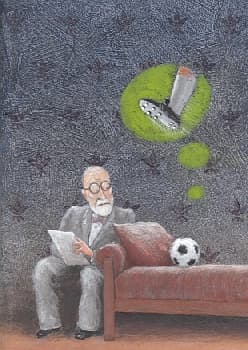
In the consulting room at 19 Berggasse, in Vienna, an evening visitor comes to see Sigmund Freud at the end of 1913. The smoke of a cigar floats above the couch and the ancient figurines lined up on the desk. Carl Gustav Jung, once his designated heir, sits where patients would lie down — but their correspondence has grown scarce, and the break looms. He comes one last time to sound out the master, caught between old admiration and new independence.
—Master, let us sit for a moment facing this couch. You once told me you adopted it almost by chance — was it truly a fortuitous find?
You put your finger on something I hardly like to admit, my dear Jung: yes, chance played its part. I used to ask my patients to lie down, to relax them — and also, I confess in confidence, because I could hardly bear being stared at for hours. But I soon noticed that lying down, no longer seeing me, they revealed more: confessions, images, memories that would never have come under my gaze. The device served free association better than I had anticipated. That ordinary piece of furniture thus became the instrument of my entire method. Science, you see, is sometimes born as much from a detail of furniture as from a great idea.
That ordinary piece of furniture became the instrument of my entire method.
—Before psychoanalysis, there was Paris. What were you seeking in 1885 at the Salpêtrière with Charcot?
I was a young neurologist then, convinced that every disorder had its lesion, its seat in nervous matter. And then Charcot, that magnificent teacher, showed me hysterics whom hypnosis could cure — or make ill — with a word, a suggestion. Do you grasp the earthquake? The symptom obeyed an idea, not a damaged fiber. The paralysis followed the contours the patient imagined of his own arm, not those of anatomy. I left Paris with a certainty that never left me: there exists, beneath consciousness, a psychic cause. Charcot turned me away from the microscope and toward the soul. You who know my beginnings know that everything started there.
Charcot turned me away from the microscope and toward the soul.
—You call the dream the royal road. When you initiated me into your method, that was where everything began — why the dream first?
Because the dream is the guardian of sleep and the messenger of the unconscious, Carl. By day, repression is on guard, censoring, pushing away unbearable desires. At night, this guard relaxes, and forbidden desires surface — but disguised, travestied into absurd images to deceive the still-slumbering censor. My work in The Interpretation of Dreams was to learn to undo this disguise, to trace from the manifest content back to the latent content. Where others saw only nocturnal madness or omen, I found a coherent text, a wish-fulfillment. I sincerely believe that this book from 1900 will remain the best thing I have done. It is through the dream that the unconscious consents, for the first time, to be read.
The dream is the guardian of sleep and the messenger of the unconscious.
—And what you found there — the unconscious, repression — did it surprise you yourself, or confirm what you suspected?
Both, and that is the trouble. I suspected that no psychic act is left to chance, that everything — a slip, a forgetting, a mislaid name — has its hidden cause. But the extent of what lies beneath consciousness frightened even me. We believe ourselves masters in our own house, and we are not: that is the humiliation my discovery inflicts on human pride, after those of Copernicus and Darwin. Repression pushes out of consciousness what it cannot tolerate, but the banished does not die — it acts in the shadows, it returns through the symptom. I have sometimes wished I were wrong. My own dreams, which I analyzed without indulgence, robbed me of that consolation.
We believe ourselves masters in our own house, and we are not.
—Your theories caused a scandal. When Clark University invited you in 1909, did you feel the tide was finally turning?
That trip to America was a strange sweetness, I admit. Imagine: I, the suspect Viennese, was asked to present psychoanalysis before a learned audience, I was awarded an honorary degree. You were on that journey, Carl — we crossed the ocean together, analyzing each other's dreams on the ship's deck, do you remember? I saw it as a sign that my ideas were finally crossing the walls of my consulting room. And yet I was wary: I said then that we were bringing them the plague without their knowing. America welcomed me, but the resistance, in Europe as elsewhere, merely changed its face. Recognition never disarmed controversy.
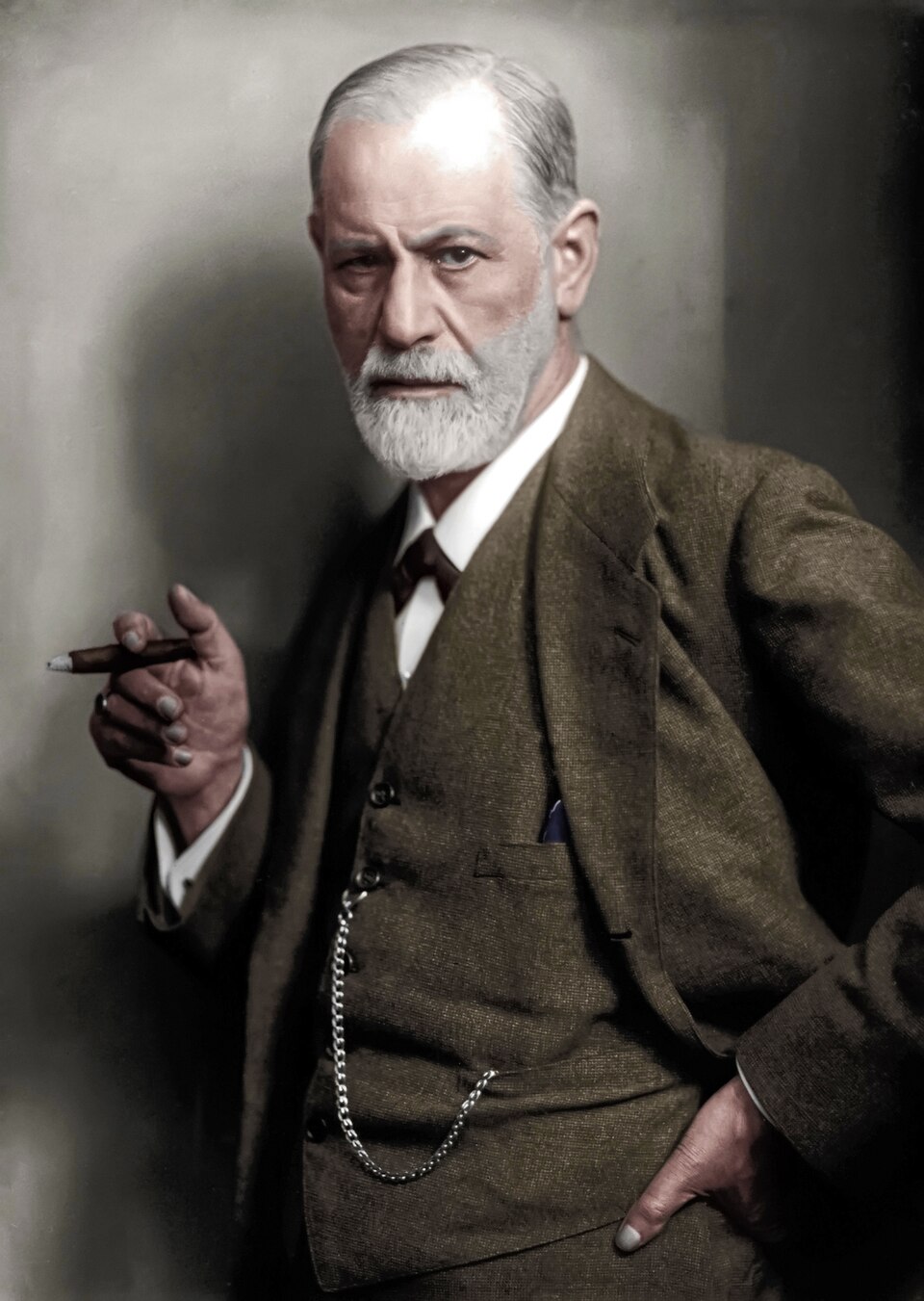
—Allow a friend to worry: you smoke incessantly, perhaps twenty cigars. Does the physician in you not hear the warning?
The physician hears it very well, and the smoker does not listen — that is the whole paradox of the man you claim to know so well. The cigar has accompanied me since my youth; it disciplines my thought, it paces my working hours, it has become a more faithful companion than many disciples. I am warned, I know, and I understand better than anyone the mechanics of an addiction: a pleasure one cannot renounce even when knowing oneself threatened. Do you think that he who described the drives is free of them? I am the first subject of my own science, and the most recalcitrant. Know this, Carl: understanding a chain is never enough to break it.
Understanding a chain is never enough to break it.
—You speak of drives stronger than reason. Did your own cigar inspire the idea of the compulsion to repeat?
You are perceptive, and that pushes me further than I would like. Man does not seek only pleasure, Carl; there is in him something that brings him back, again and again, to what destroys him. I observe soldiers who endlessly replay at night the horror whose memory they should flee; I observe the child who repeats the painful departure of his mother. This compulsion to repeat forced me to suppose, beyond the pleasure principle, a drive turned toward a return to the inorganic — let us say a death drive. My own tobacco is but a modest example of this stubbornness of the living to harm themselves. Theory, you see, is often born from what one first observes in oneself.
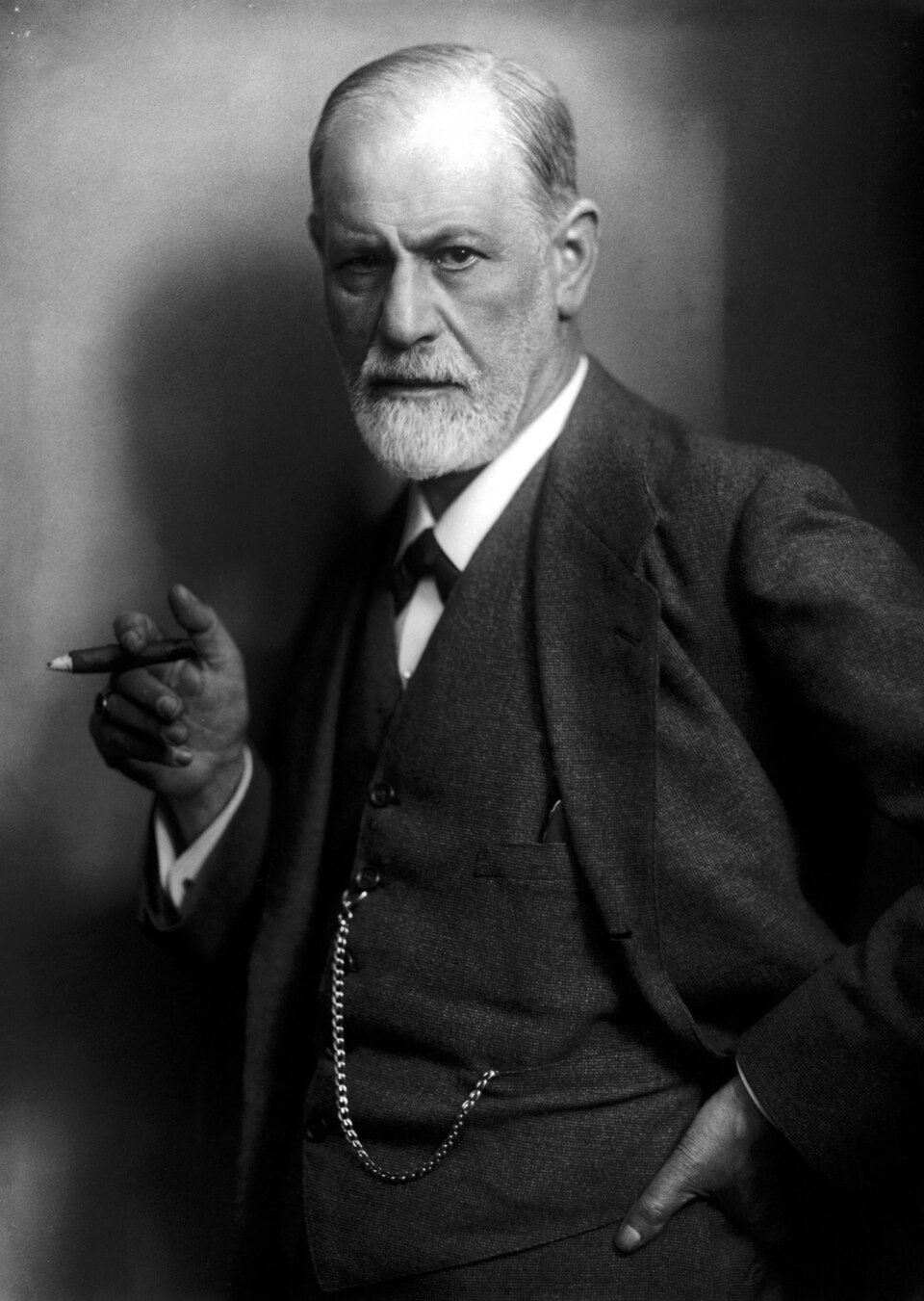
—Times are darkening, master. Are you still attached to this Vienna where you built everything, despite the rising threats?
This city I have both loved and hated — it kept me at a distance, long refused me its honors, and yet I have lived, worked, written almost my entire life here. 19 Berggasse, my patients, my antiquities, my library: everything is rooted deeply. To leave this place would be to tear myself from myself. But I am not blind, Carl; I see well what poison is spreading, and what my name, what my people represent to those rising. A scholar always believes that reason will ultimately prevail over barbarism. I have perhaps held that naivety too long. One does not uproot an old tree without breaking it.
—And if one day they were to burn your books, throw The Interpretation of Dreams into the fire — what would you feel?
If it came to burning my books? What progress, I would say almost bitterly: in the Middle Ages, they would have burned me; today they content themselves with my works. But do not laugh too quickly at that quip, for the pain is real. A book is a child of the mind, and he who sees his work delivered to the flames sees a part of his life burn. Yet I know one thing that fire ignores: an idea, once released into the world, cannot be retrieved. One can drive away the man, reduce his pages to ashes; the unconscious, however, will not return to oblivion. What psychoanalysis has discovered, no pyre will undo.
What psychoanalysis has discovered, no pyre will undo.
—One last question, almost intimate: of all the path traveled since Charcot, what would you want to be remembered for?
Not a fixed doctrine, Carl — doctrines age and harden, you know that better than anyone, you who are already taking your own paths. I would want to be remembered for a gesture: having taken seriously what was despised — the dream, the slip, the hysteric's symptom, the child's confession. Having dared to say that nothing in psychic life is insignificant or due to chance. I have wounded human pride, I know, and I will not be forgiven for it anytime soon. But I will have opened a door. That others after me cross it differently than I — that is in the order of things, and perhaps our very disagreement is already a sign of it.
Having dared to say that nothing in psychic life is insignificant.
This imaginary interview was generated by artificial intelligence from sources documented in Sigmund Freud's profile. It dramatises what the figure might have said based on what we know about them, but does not constitute attested historical testimony. For primary sources and factual documentation, refer to the full profile.