Imaginary interview with Sigmund Freud
by Charactorium · Sigmund Freud (1856 — 1939) · Philosophy · Sciences · 6 min read
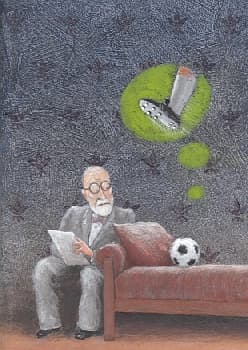
Vienna, autumn 1938 — or rather London, already, because 19 Berggasse is nothing more than a memory sealed by the Nazis. In a study in Hampstead where, showcase by showcase, his collection of antiquities has been reassembled, an old man of eighty-two receives us, his jaw painful and his cigar within reach. Here is what he confided to us about the unconscious, exile, and the stone gods that watched him work.
—How did a Viennese neurologist come to abandon nerves for the soul?
Everything changed in Paris, in 1885, in the wards of the Salpêtrière. I had come to study lesions of the nervous system, like a good student of the medicine of my time, and there Charcot showed me women said to be hysterical: under hypnosis, their paralyses dissolved, their symptoms obeyed an idea rather than a nerve. Understand the intimate scandal: a limb that becomes paralyzed without any nerve being severed. That day I understood that the cause lay elsewhere than in anatomy — in a territory that consciousness does not visit. I returned to Vienna with my compass misaligned. The stethoscope was no longer enough; I needed to learn to listen to what cannot be auscultated.
A limb that becomes paralyzed without any nerve being severed: the cause lay elsewhere than in anatomy.
—Why did you abandon hypnosis, since it seemed to provide relief?
Hypnosis puts the guard to sleep, but it teaches nothing. You get relief, never a truth — and the symptom, driven out the door, comes back through the window. With Josef Breuer, whose Studies on Hysteria (1895) open my entire work, I saw that a patient healed better by speaking freely than by obeying my suggestion. So I gave up commanding sleep. I asked that everything be told to me: the ridiculous, the obscene, the trivial above all — because it is the trivial that betrays. Thus was born free association: not putting to sleep, but lifting the censorship while awake. Hypnosis made the doctor a magician; I wanted to make him a patient archaeologist, who clears layer after layer without breaking anything.
Hypnosis puts the guard to sleep, but it teaches nothing.
—What happens, concretely, when a patient lies down on your couch?
The couch is not a piece of comfort furniture; it is a ruse. The patient lies down, I sit behind him, out of his sight — and freed from my face, he frees himself from his vigilance. I ask him only one thing: to say whatever comes, without choosing, without correcting, like a traveler describing the landscape that passes by the window. I, in my clinical notebook, collect the slips, the silences, the associations that seem absurd. For nothing is due to chance: this is what I call psychic determinism. Forgetting a name, a slip of the tongue, all have a cause, and that cause dwells in the shadows. The couch has become a symbol; for me, it was never more than a means of getting someone to finally stop lying politely to themselves.
The couch is not a piece of comfort furniture; it is a ruse.
—You attach considerable importance to dreams. Why?
Because they are the night when the guard is lowered. In 1900, in The Interpretation of Dreams, I dared to write what it took me twenty years to dare to think: "The dream is the royal road to the knowledge of the unconscious. In the dream, repressed desires find a disguised expression, and the analysis of these manifestations allows us to access the deep layers of the psyche." The sleeper thinks he is attending an absurd theater; in truth he is the author, the actor, and the set of his own play. The dream disguises what censorship forbids by day: it condenses, it displaces, it dresses up desire in acceptable images. To interpret is to undo this disguise. I was much mocked for this book — at first only a few hundred copies were sold. I learned to wait.
The sleeper thinks he is attending an absurd theater; in truth he is its author.
—Your study overflows with ancient figurines. What do they represent to you?
Look at these shelves: Egyptian gods, Greco-Roman goddesses, bronzes exhumed from a soil that kept them for centuries. I bought them as others buy bread, sometimes against all domestic reason. Why? Because the work of the analyst resembles the work of the archaeologist: you dig, you clear the strata, you reconstruct a buried edifice from a few shards. The psyche is a city built on its own ruins, where nothing disappears entirely — where the most ancient past continues to live beneath the present. These antiquities at 19 Berggasse reminded me at every session that what a man believes forgotten is never destroyed, only covered over. The repressed, like the buried city, patiently waits to be brought to light.
The psyche is a city built on its own ruins, where nothing disappears entirely.
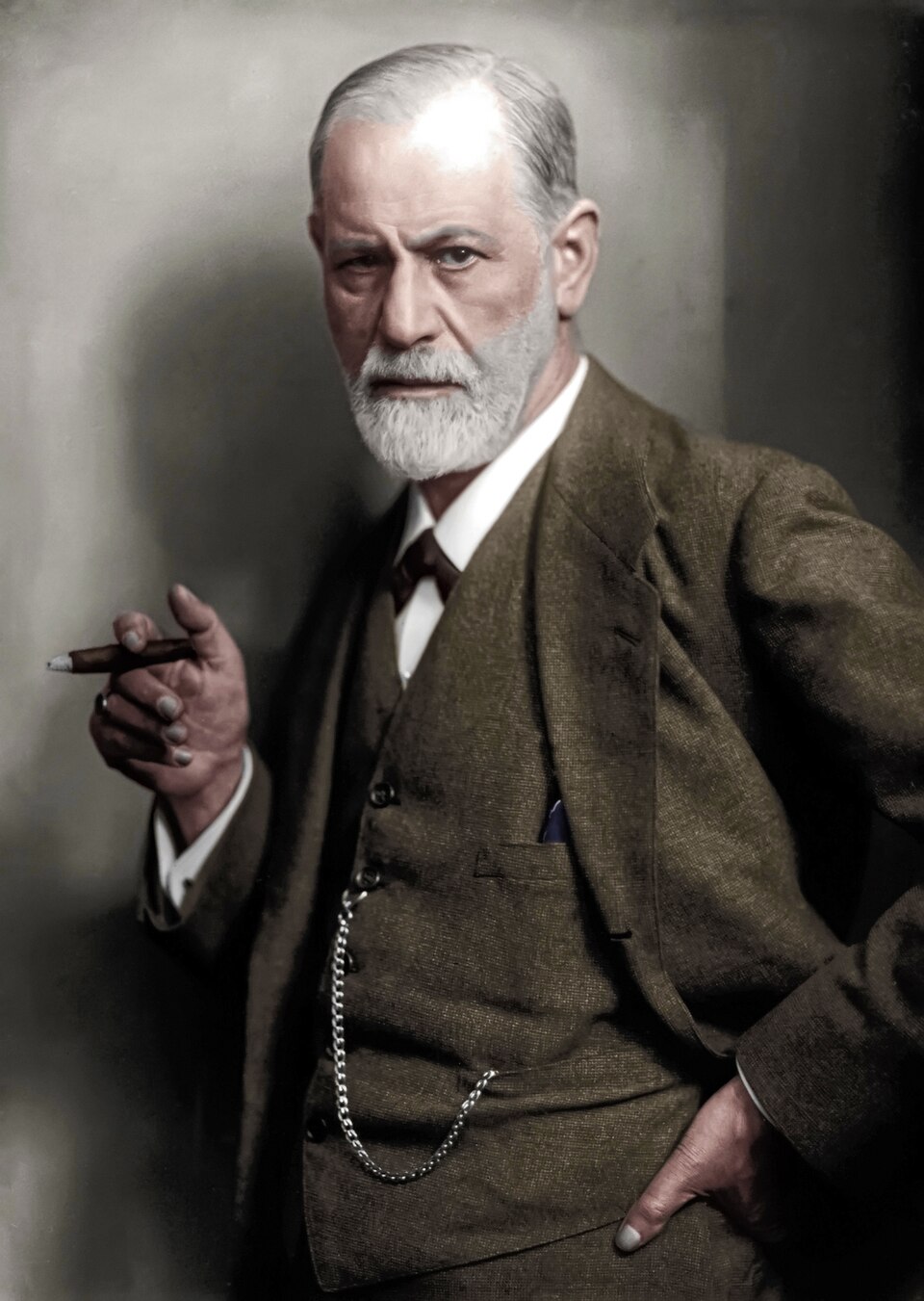
—In Civilization and Its Discontents, you seem pessimistic about progress. Are you?
Let us say lucid. In 1930, in Civilization and Its Discontents, I wrote that "civilization imposes considerable instinctual sacrifices on man, which generates deep guilt and a fundamental discontent. The price of social progress is paid by renouncing instinctual satisfactions." Understand: to live together, we must bridle within us the animal that wants everything, right away. Every paved street, every law, every politeness rests on a tamed drive — and man pays for this domestication with a dull discontent. My antiquities already taught me this: great civilizations did not collapse for lack of technology, but under the weight of what they refused to admit. I do not announce the end of the world. I only say that happiness was not on the species' program.
Happiness was not on the species' program.
—You still smoke, despite everything. How do you experience this relationship with the cigar?
You see me smile bitterly. Twenty cigars a day, or nearly, for decades — and in 1923 I was diagnosed with this jaw cancer that now eats away at me in shreds. I was begged to stop. I could not manage it. See the irony: the man who built a career explaining why we are slaves to our drives remains unable to untie his own. The cigar helps me think, or at least I persuade myself that it helps — and there precisely is the mechanism I have spent my life describing: reason inventing beautiful justifications for desire, which commands from behind the scenes. I am not above my own laws. No theorist of the passions is. That is, no doubt, what authorized me to speak of them.
The man who explained our servitude to drives remains a slave to his own.
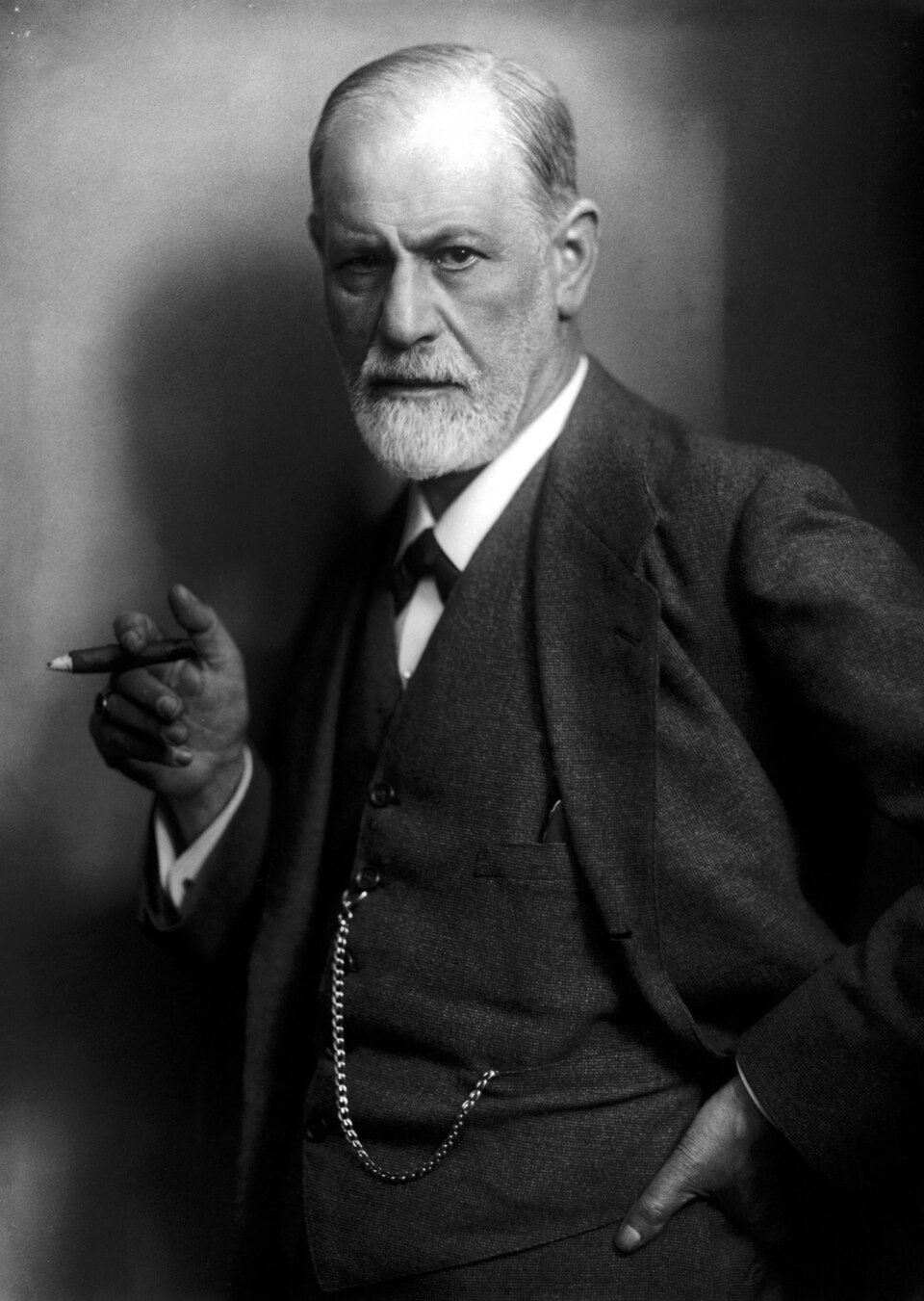
—This obstinacy in the face of danger, how do you explain it, you the theorist of drives?
I sought the key, and I believe I found it later than I would have wished. In 1920, in Beyond the Pleasure Principle, I had to admit a disturbing thing: "There exists in psychic life a death drive that opposes the pleasure principle and the desire to live. This compulsion to repeat pushes the individual to relive traumatic experiences." For a long time I believed that everything in us runs toward pleasure. Then I saw men repeat their own misfortune, rage against themselves — and this cigar I still bring to my ravaged lips is perhaps the humble illustration. Something in man works to undo him. The physician I was long refused to see it; the old man I am can no longer deny it.
Something in man works patiently to undo him.
—You left Vienna in 1938. What remains of that departure?
A tear that neither analysis nor age soothes. I had lived in Vienna for nearly eighty years; I was driven from my home at eighty-two. When Hitler's regime annexed Austria, staying meant dying, or worse, seeing my daughters die. My apartment was searched, my family interrogated. I signed, they say, a statement in which I ironically certified that I had nothing but praise for the Gestapo — humor is the last freedom of the condemned. And here I am in London, among my stone gods which they had the grace to let me take, in a language that is not mine. The man and his collection were saved. The homeland, however, does not pack into crates.
The man and his stone gods were saved. The homeland does not pack into crates.
—Your books were publicly burned. What thought crossed your mind then?
As early as 1933, in Berlin, my works were thrown onto the pyre as degenerate literature. When I was told, I made this remark — the only one I could oppose to barbarism: what progress, all the same! In the Middle Ages, they would have burned me; now they content themselves with my books. People laughed around me. And yet a burned book is a terrible thing, for it is a thought that one would like to repress on the scale of an entire people — exactly the mechanism I described in the individual, transposed to a nation that does not want to hear itself. But the repressed always returns, in one form or another. Flames consume paper; they have never extinguished an idea. I still believe this, from this exile where I will end my days.
Flames consume paper; they have never extinguished an idea.

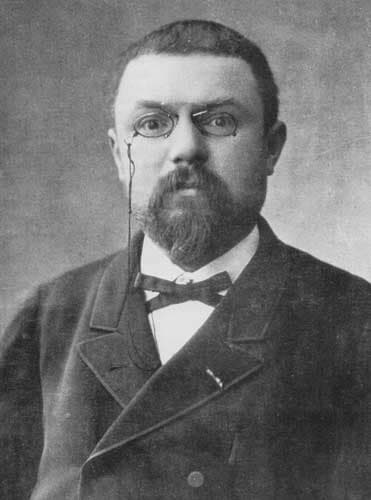
This imaginary interview was generated by artificial intelligence from sources documented in Sigmund Freud's profile. It dramatises what the figure might have said based on what we know about them, but does not constitute attested historical testimony. For primary sources and factual documentation, refer to the full profile.