Imaginary interview with Sima Qian
by Charactorium · Sima Qian (144 av. J.-C. — 85 av. J.-C.) · Sciences · Literature · Philosophy · 6 min read
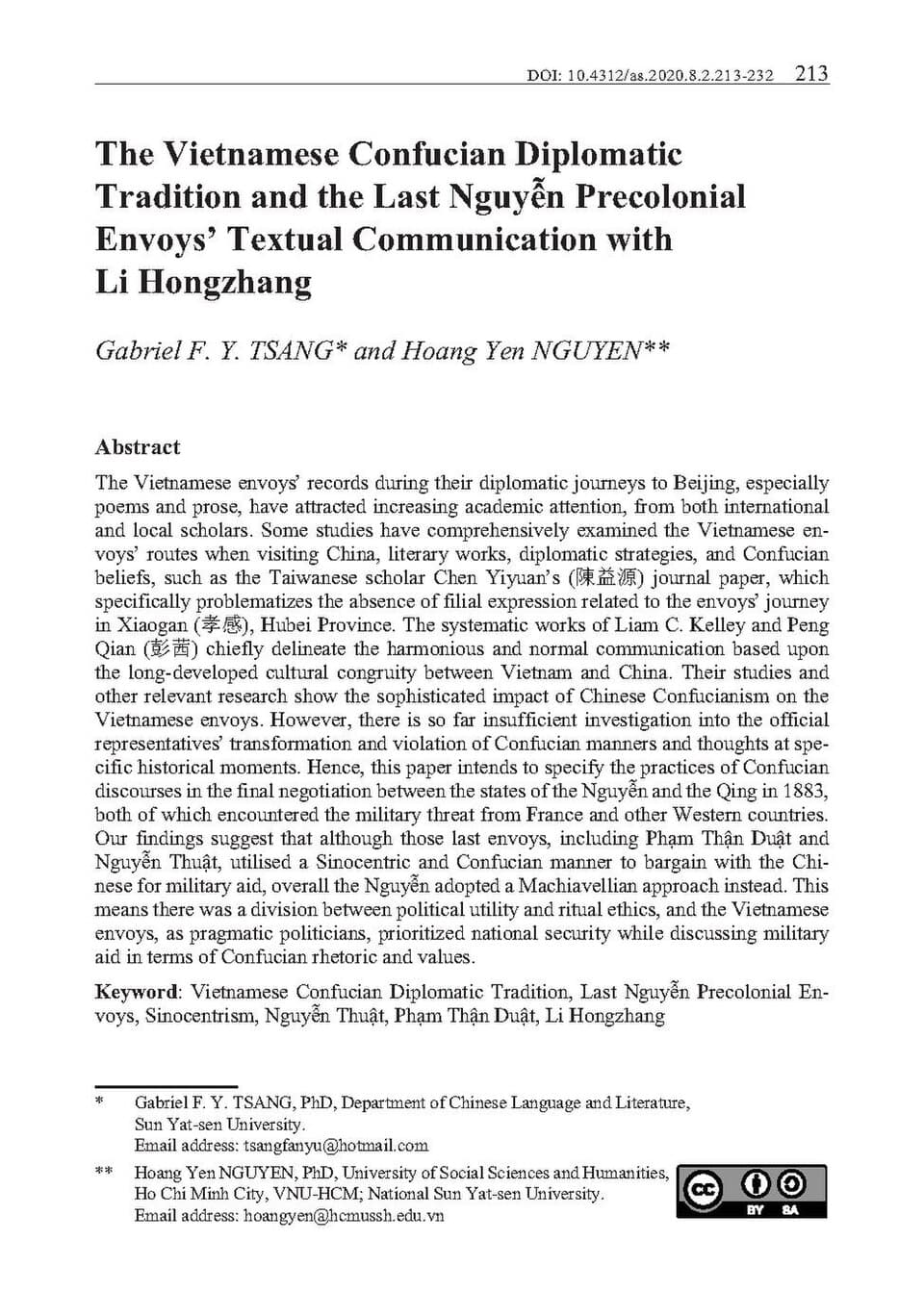
Chang'an, under the waning reign of Emperor Wu. In a low room strewn with bamboo slips, an old man with a marked face receives his visitor by the light of an oil lamp. He no longer wears the scholar's cap: his dignity now resides entirely in the bundles of slats stacked against the wall.
—How did this immense work enter your life?
It did not begin with me, but with my father, Sima Tan, Grand Astrologer before me. When he passed away in 110 BC, he took my hand and reminded me that our ancestors already held the annals under the Zhou. He told me not to let this mission fall; I bowed my head and wept. Understand: among us, a charge is transmitted like blood. I did not choose to write the history of China; I inherited it as one inherits a debt to the dead. Since that day, every slip I carve, I carve also for him, so that he may not remain, in the other world, with his promise unfinished in his hands.
A charge is transmitted like blood.
—Before being an official, you traveled the empire. What were you seeking on the roads?
Truth does not sleep in archives; it walks in the fields and is told in the squares. As a youth, I went up the Yellow River valley, I climbed Mount Tai, I went to bow before the temple of Confucius at Qufu. There, old men showed me the exact spot where such a battle took place; they sang me songs that no record preserved. An imperial decree gives you a date; a peasant who has kept his grandfather's memory gives you the taste of the thing. I confronted the two all my life. Without those roads, my chapters would be skeletons; it is those voices that put some flesh on them.
Truth does not sleep in archives; it walks in the fields.
—It is often forgotten that your first profession was not history, but the sky. What did it consist of?
Grand Astrologer, Taishiling — that is the title my father left me with his instruments: the gnomon, the armillary sphere, the dials. Before dawn, I checked what my assistants had recorded of the night, the movements of the stars, and from that I drew up the celestial report for the emperor. In 104 BC, I contributed to the reform of the Taichu calendar: fixing the first month of the year, adjusting the intercalary months to catch up with the moon's lag. Measuring the time of the sky and measuring the time of men, you see, is the same gesture. He who regulates the calendar and he who writes the annals both hold the cord that links the past to what is to come.
Measuring the time of the sky and the time of men is the same gesture.
—Your Historical Records invent a way of writing the past. What new thing did you want to do?
I had before me the model of the Ancients: the Chunqiu, which they say Confucius composed to establish the distinctions between ritual and transgression. I wanted more: not only a chronicle of reigns, but the lives of men themselves. I invented the liezhuan, the biographies — a general, a merchant, an assassin, a philosopher, each his own chapter. One hundred and thirty chapters, more than three thousand years, from mythical emperors to my own time. All carved on bamboo slips tied with cords, a volume to make a cart bend. For a reign is judged by its laws, but a man is judged by what he has done with his life. It is the man I wanted to restore to memory.
A reign is judged by its laws, but a man by what he has done with his life.
—On what materials, concretely, was your work based?
My raw material was the imperial archives, the fudian: registers, lists of lords, sealed decrees, to which my office gave me access like no other. In the afternoon, I shut myself in there, then I traced myself with a brush the passages that mattered, on the slips prepared in advance; for the rest, I dictated to scribes. In the evening, by the lamp, I reread, I corrected, I compared one scroll to another when they contradicted each other. Writing history is not copying a source; it is judging ten and deciding which one deserves to be believed. The brush is light in the hand, but what it fixes on bamboo, no emperor can ever completely erase.
Writing history is judging ten sources and deciding which one deserves to be believed.
—Do you remember the day you spoke out to defend General Li Ling?
99 BC. General Li Ling had been captured by the Xiongnu after fighting until exhaustion, one against ten. The whole court rushed to condemn him; I alone dared to say that a man who had shed his blood for the empire deserved to have his judgment suspended. That was enough. Emperor Wu saw it as insolence, almost treason. That day, I did not measure what my frankness would cost me. I thought I was serving justice by speaking; I learned that at court, telling the truth at the wrong time ruins you more surely than lying. But I do not disown those words. A man who remains silent in the face of injustice ceases to be worthy of holding the brush of history.
Telling the truth at the wrong time ruins you more surely than lying.
—The punishment that followed was, for a scholar, the worst humiliation. How did you get through it?
Castration — the gong xing. For a scholar nourished on Confucius, mutilating the body received from one's ancestors is a stain that no rank can wash away. Many, in my place, would have killed themselves to save honor; that was the proper path, the easy path. I chose shame. Not out of cowardice, but because dying then would have killed my Records with me, and betrayed the promise made to my dying father. I continued to write, first from my cell, then from my post as Grand Secretary. Every morning I woke up dishonored, I told myself that this shame was the price of the one hundred and thirty chapters. An exorbitant price. I paid it without bargaining.
I chose shame, because dying then would have killed my Records with me.
—In your letter to Ren An, you weigh the value of a death. What did you want him to understand?
Ren An, my friend, had written to me in misfortune, and I owed him the truth of my heart. I wrote to him this: “Every man must die once. That death can be as heavy as Mount Tai or as light as a feather. It all depends on what one dies for.” That is my whole thought. To commit suicide out of wounded pride is to die lightly, for nothing, and the world forgets you before your body cools. To survive humiliated in order to complete a work that will speak when all the names of the court are dust — that is a death that weighs. I chose to make mine weigh. Let Mount Tai be the witness.
That death can be as heavy as Mount Tai or as light as a feather.
—You speak of the sky and the annals as the same cord. Did the emperor understand this link?
Emperor Wu wanted his astrologer to read in the stars the favor of Heaven on his reign, and to fix a calendar worthy of his glory — the Taichu, in 104 BC, was also a matter of imperial prestige. But what he did not see is that the same hand that regulates the intercalations holds the record of his faults. Heaven sends omens; history, for its part, sends a verdict that sometimes takes centuries to fall. A sovereign can punish the man who writes; he cannot punish what the writing will say about him to generations that do not yet have a name. That, I believe, is the only revenge allowed to a man without power.
A sovereign can punish the man who writes; he cannot punish what the writing will say about him.
—Your Records open to the most ancient times, almost mythical. Why go back so far?
Because a river is not understood at its mouth, but at its source. I wanted to begin at the origins, with the Yellow Emperor, Xuanyuan, of whom I report that he practiced the virtues of the Way and Justice, regulated the calendar and the seasons, cultivated the five grains, and made peace with the ten thousand peoples. Three thousand years separate that emperor from the reign in which I live. But it is by following the entire thread, without cutting an inch, that one sees why dynasties rise and why they fall. To write only one's own time is to chatter; to embrace the whole is to offer princes to come a mirror in which to read their future in the past of others.
A river is not understood at its mouth, but at its source.
—If you could imagine being read in a century, what would you wish to remain of you?
What remains of a mutilated man, with no descendants to carry his name? The bamboo slips. I entrusted a copy of my Records to my daughter, so that nothing would be lost if the court came to burn them. If I dared imagine being read in a hundred years, in a thousand, I would not ask that my shame be pitied nor my style praised. I would ask that the men I saved from oblivion be remembered — the loyal, the rebel, the righteous condemned. My body is little, as light as a feather. But these one hundred and thirty chapters, I wanted them heavy as Tai. It is there, and nowhere else, that I will survive.
My body is little; but these one hundred and thirty chapters, I wanted them heavy as Mount Tai.
Read further
This imaginary interview was generated by artificial intelligence from sources documented in Sima Qian's profile. It dramatises what the figure might have said based on what we know about them, but does not constitute attested historical testimony. For primary sources and factual documentation, refer to the full profile.