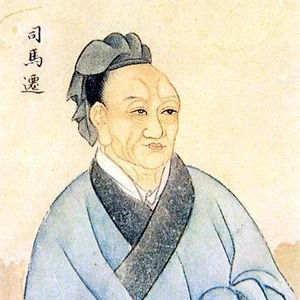

A historian and annalist of the Han dynasty, Sima Qian is the author of the Records of the Grand Historian (Shiji), considered the first great work of Chinese historiography. Despite disgrace and castration imposed by Emperor Wu, he completed this monumental work covering three millennia of history.
Sima Qian(144 av. J.-C. — 85 av. J.-C.)
Sima Qian
Han de l'Ouest
8 min read
Frequently asked questions
Famous Quotes
« A man has only one death. That death may be weightier than Mount Tai, or it may be lighter than a feather.»
« I wished to examine all that concerns heaven and humanity, to understand the changes of the past and present.»
Key Facts
- Born around 145 BCE in Shaanxi province, son of Sima Tan, the imperial court's grand astrologer and historian
- Appointed Grand Astrologer (Taishi ling) at the court of Emperor Wu of Han around 108 BCE
- Condemned to castration in 99 BCE for defending the general Li Ling
- Wrote the Shiji (Records of the Grand Historian), a work in 130 chapters covering Chinese history from its legendary origins to his own time
- Died around 86 BCE; his work established the model for official Chinese dynastic histories for two thousand years
Works & Achievements
Sima Qian's masterwork, the Shiji comprises 130 chapters covering more than 3,000 years of Chinese history, from mythical origins to the reign of Emperor Wu. The first comprehensive history of China, it invented the biographical genre and served as the model for all subsequent dynastic histories.
Sima Qian played an active role in developing the Taichu calendar, which established the first month of the lunar year and regulated intercalations. This reformed calendar remained in use under the Han dynasty and attests to his expertise in astronomy.
An exceptional autobiographical document in which Sima Qian explains to his friend Ren An why he chose to survive castration rather than take his own life. This letter stands as one of the most moving testimonies in classical Chinese literature on the subjects of dignity and the meaning of one's life's work.
Anecdotes
In 99 BC, Sima Qian defended the general Li Ling, who had been captured by the Xiongnu, at a time when the entire imperial court was condemning him. This boldness deeply displeased Emperor Wu, who sentenced Sima Qian to castration — the worst possible humiliation for a Confucian scholar. Sima Qian chose to survive this shame solely to complete his life's work.
After his sentencing, Sima Qian continued working on the Records of the Grand Historian (Shiji) from his cell, and later from his post as Palace Secretary. He wrote to his friend Ren An that only the completion of his work justified his will to go on living despite the dishonor he had endured.
In his youth, Sima Qian undertook an extensive journey across China, visiting historical sites, gathering oral testimonies, and consulting local archives. These fieldwork investigations — rare for a historian of the ancient world — gave the Shiji an exceptional documentary richness.
His father, Sima Tan, was himself Grand Astrologer at the Han court. Dying in 110 BC, he tearfully entrusted his son with the mission of completing the history of China he had begun. Sima Qian honored that promise at great personal cost.
The Shiji spans more than 3,000 years of Chinese history, from mythical origins to the reign of Emperor Wu. The work comprises 130 chapters divided into five distinct sections, including individual biographies (liezhuan) — an invention of Sima Qian that would shape all subsequent Chinese historiography.
Primary Sources
A man must die once. That death may be weightier than Mount Tai, or lighter than a feather. It all depends on what one dies for.
The Yellow Emperor, Xuanyuan, cultivated the virtues of the Way and of Righteousness; he regulated the calendar and the seasons, tended the five grains, and brought peace among the ten thousand peoples.
My father said to me on his deathbed: 'Our ancestors were already historians under the Zhou. Do not let this mission lapse.' I bowed my head and wept.
Confucius composed the Chunqiu to establish distinctions between ritual propriety and transgression; he wished that kings, lords, and high ministers would remember their duties.
Key Places
Capital of the Western Han Empire, Chang'an was where Sima Qian lived and worked. It was here that he served as Grand Astrologer and later Grand Secretary, and where he wrote the bulk of the Shiji.
Sima Qian's hometown in Shaanxi Province, where his mausoleum still stands today. A museum is dedicated to him there, and his tomb remains a place of pilgrimage for Chinese scholars.
A sacred mountain of China that Sima Qian visited during his youthful travels and again during Emperor Wu's grand feng sacrifice in 110 BCE. In his letter to Ren An, it symbolizes a death that is worthy and remembered.
Sima Qian traveled to Qufu to pay his respects at the Temple of Confucius and gather local accounts. This visit informed his biography of Confucius, one of the most celebrated chapters in the Shiji.
The cradle of Chinese civilization, which Sima Qian traveled extensively during his major geographical surveys. The historical sites of this region provided firsthand accounts for the oldest chapters of the Shiji.
Liens externes & ressources
Références
Œuvres
Shiji — Mémoires historiques
vers 109–91 av. J.-C.
Réforme du calendrier Taichu
104 av. J.-C.
Lettre à Ren An (Bao Ren Shaoqing shu)
vers 91 av. J.-C.
See also
Related Characters
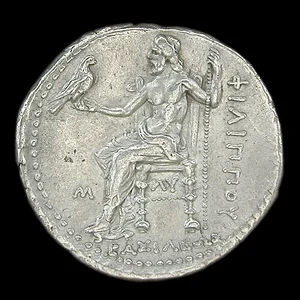
Alexander II of Macedon

Anaxagoras of Clazomenae
499 av. J.-C. — 427 av. J.-C.

Anaximander
609 av. J.-C. — 545 av. J.-C.
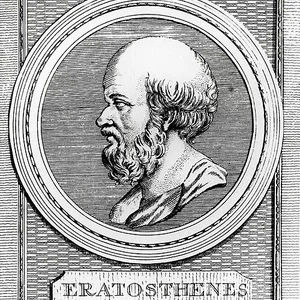
Eratosthenes
275 av. J.-C. — 193 av. J.-C.
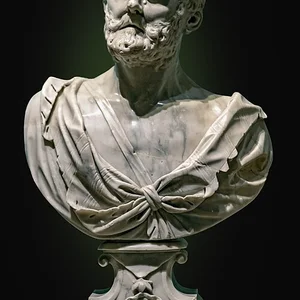
Heraclitus
534 av. J.-C. — 470 av. J.-C.
Phidias
499 av. J.-C. — 429 av. J.-C.