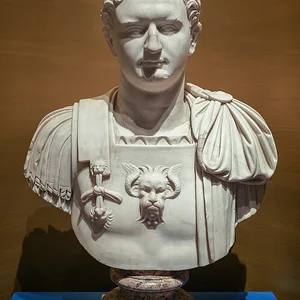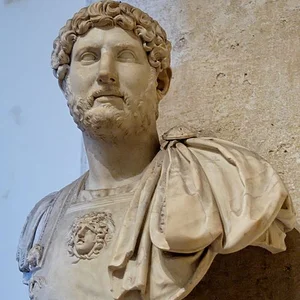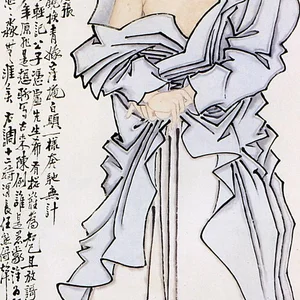

Officer and court official of the Han dynasty under Emperor Wu (2nd–1st century BC). He is primarily known as the recipient of Sima Qian's famous letter, in which the historian justifies his acceptance of castration in order to complete the Records of the Grand Historian.
Ren An(124 — 202)
Ren An
9 min read
Frequently asked questions
Key Facts
- Officer at the court of Emperor Han Wudi (r. 141–87 BC)
- Recipient of Sima Qian's “Letter to Ren An” (Bào Rèn Ān Shū), written around 91 BC
- This letter is one of the greatest works of classical Chinese prose
- Implicated in a political conspiracy, he was sentenced to death and executed
- His case prompted Sima Qian to explain why he had chosen a humiliating survival in order to complete his historical work
Works & Achievements
Imprisoned and sentenced to death, Ren An wrote to Sima Qian to seek his intervention with the Emperor. This letter, now lost, is indirectly known through the historian's famous reply, which constitutes its most important indirect record.
As commander of the elite military force tasked with defending Chang'an, Ren An bore considerable responsibility for the security of the capital and the imperial person. This position placed him at the heart of the political crisis of 91 BC.
Ren An rose through the ranks of the Han bureaucracy and military from humble origins to command an elite unit of the capital, illustrating the relative meritocracy of the Han administrative system.
Anecdotes
Ren An served as commander of the Northern Army (北軍護軍) in Chang'an when the witchcraft crisis (巫蛊之祸) broke out in 91 BC. When Crown Prince Liu Ju, accused of sorcery, took up arms against the imperial troops, Ren An shut the gates of his barracks and refused to take sides. This neutrality was interpreted as treason by Emperor Wu's entourage, and resulted in Ren An being sentenced to death.
Imprisoned and awaiting execution, Ren An wrote to his friend Sima Qian asking him to intercede on his behalf with the emperor. This letter provoked the most celebrated response in all of classical Chinese literature: the “Letter to Ren An” (报任安书), in which the historian explains why he chose the humiliation of castration over death in order to complete his Records of the Grand Historian.
Sima Qian and Ren An shared a genuine friendship forged in the circles of the imperial court. In his letter, Sima Qian addresses Ren An by his courtesy name Shaoqing (少卿), a mark of an intimate relationship between equals. He confides his deepest anguish and his shame at having undergone the punishment of castration, a profound disgrace in Han Confucian society.
Despite Sima Qian's deeply moving letter, Ren An was ultimately executed in 91 BC during the purge that followed the failure of the crown prince's revolt. His tragic fate stands in contrast to that of Sima Qian, who survived to complete the Shiji, one of the greatest historiographical works in human history — a work in which the letter to Ren An has immortalized both men.
According to the Han Shu (Book of Han), Ren An came from a poor family in Xingyang and arrived in Chang'an as a simple chariot driver. He then rose through the ranks of the military administration to command an elite unit in the capital. His trajectory illustrates the relative openness of the Han bureaucracy, which could sometimes admit men of humble origins on the basis of merit and recommendation.
Primary Sources
人固有一死,或重于泰山,或轻于鸿毛,用之所趋异也。(Death is the common lot of all: for some it weighs heavier than Mount Tai, for others it is lighter than a feather — it all depends on the cause to which one devotes it.)
遭李陵之祸,幽于缧绁,乃喟然而叹曰:是余之罪夫!(Struck by the misfortune of the Li Ling affair, imprisoned in chains, I sighed deeply and said to myself: this is my fault!)
任安字少卿,荥阳人也。家贫,为人将车之长安,留,求事为武帝北军护军。(Ren An, styled Shaoqing, was a native of Xingyang. Born into a poor family, he drove carts to Chang'an, stayed there, and sought to serve as commander of Emperor Wu's Northern Army.)
太子使使者持节收北军护军任安,安受节已,闭军门不出,不肯应。太子走。(The crown prince sent a messenger bearing the imperial seal to order Ren An to join him; Ren An received the seal, then shut the barrack gates without coming out, refusing to obey. The crown prince fled.)
Key Places
A metropolis of over one million inhabitants and the seat of Han imperial power, Chang'an was the city where Ren An's career unfolded. It was here that he commanded the Northern Army, was imprisoned and executed, and where Sima Qian addressed his famous letter to him.
According to the Han Shu, Ren An was originally from Xingyang (in present-day Henan province). Born into a poor family, he left the city to seek his fortune in Chang'an, where he managed to enter the service of the imperial army.
An elite unit tasked with defending the Han capital, stationed in the northern part of Chang'an. It was here that Ren An, as commander, ordered the gates shut during the Crown Prince's revolt of 91 BCE — a decisive act that sealed his fate.
The main palatial complex of the Han dynasty, Weiyang housed the imperial court and its grand official audiences. It was within this setting that the friendship between Ren An and Sima Qian took shape, as both men moved in the orbit of Emperor Wu's power.
Typical Objects

The primary writing medium of the Han era, bamboo tablets bound together with silk cords served as official documents, imperial decrees, and private correspondence. It was most likely on this type of support that Sima Qian's letter to Ren An was written.

A bamboo insignia adorned with yak-tail tassels, presented by the Emperor to a messenger to confer official authority. During the crisis of 91 BC, the crown prince had such a tally delivered to Ren An to order him to commit his troops — a tally that Ren An accepted before closing his gates.

The symbol of a Han official's authority, the seal engraved with its holder's title and name was used to validate military orders and administrative documents. As commander of the Northern Army, Ren An held a seal of high rank.

Standard equipment for Han officers, consisting of leather or bronze lamellae laced together. Ren An wore it during troop reviews and military operations in Chang'an.

A prestige weapon and status symbol of the Han officer, worn at the belt during imperial audiences and ceremonies. It visually set apart men of military rank within the imperial retinue.

According to the *Han Shu*, Ren An first came to Chang'an as a chariot driver before rising through the military ranks. The chariot remained a symbol of prestige in the Han army, even as light cavalry had by then come to dominate campaigns against the Xiongnu.
School Curriculum
Vocabulary & Tags
Key Vocabulary
Tags
Daily Life
Morning
Ren An rose before dawn for the morning inspection of his troops at the Northern Army barracks. Dressed in his ceremonial armor and girt with his sword, he reviewed the guards, passed on the day's orders, and received reports from his subordinates. Han officers often began their day with brief libations to the protective spirits of the barracks.
Afternoon
The afternoon was devoted to administrative audiences, to reading and drafting official documents on bamboo tablets, and to journeys to the Weiyang Palace to report to his superiors. As commander, Ren An also oversaw his men's training in archery, swordsmanship, and military maneuvers.
Evening
Evenings sometimes brought together scholars and court officials at banquets where music was played, poems were recited, and Confucian philosophy was debated. It was in these circles that Ren An and Sima Qian nurtured their friendship, exchanging views on history, the classics, and the affairs of the empire.
Food
The diet of a senior Han official included millet, rice, legumes, pickled vegetables, and pork or poultry at official banquets. Grain wine (米酒) accompanied ceremonial meals, and high-ranking officials received food rations provided by the state in addition to their bronze-coin salary.
Clothing
Ren An wore the regulation attire of Han officers: a long crossed silk robe (深衣, shēnyī) for audiences, with its color and embroidery indicating his rank. A belt adorned with jade and bronze plaques signaled his position. On military duty, he donned armor made of lacquered leather lamellae laced together with silk cords.
Housing
As commander of the Northern Army, Ren An likely resided in official quarters adjacent to the barracks or in a residential district of Chang'an reserved for officials. The residence comprised several pavilions around an inner courtyard, with a reception hall and private apartments, in keeping with Han architectural standards.
Historical Timeline
Period Vocabulary
Liens externes & ressources
Références
Œuvres
Lettre à Sima Qian (demande d'intercession)
circa 92–91 av. J.-C.
Commandement de l'Armée du Nord (北軍護軍)
circa 95–91 av. J.-C.
Carrière administrative sous l'Empereur Wu
circa 120–91 av. J.-C.