Imaginary dialogue between Jean-Paul Sartre and Simone de Beauvoir
by Charactorium · Simone de Beauvoir (1908 — 1986) · Literature · Philosophy · 6 min read
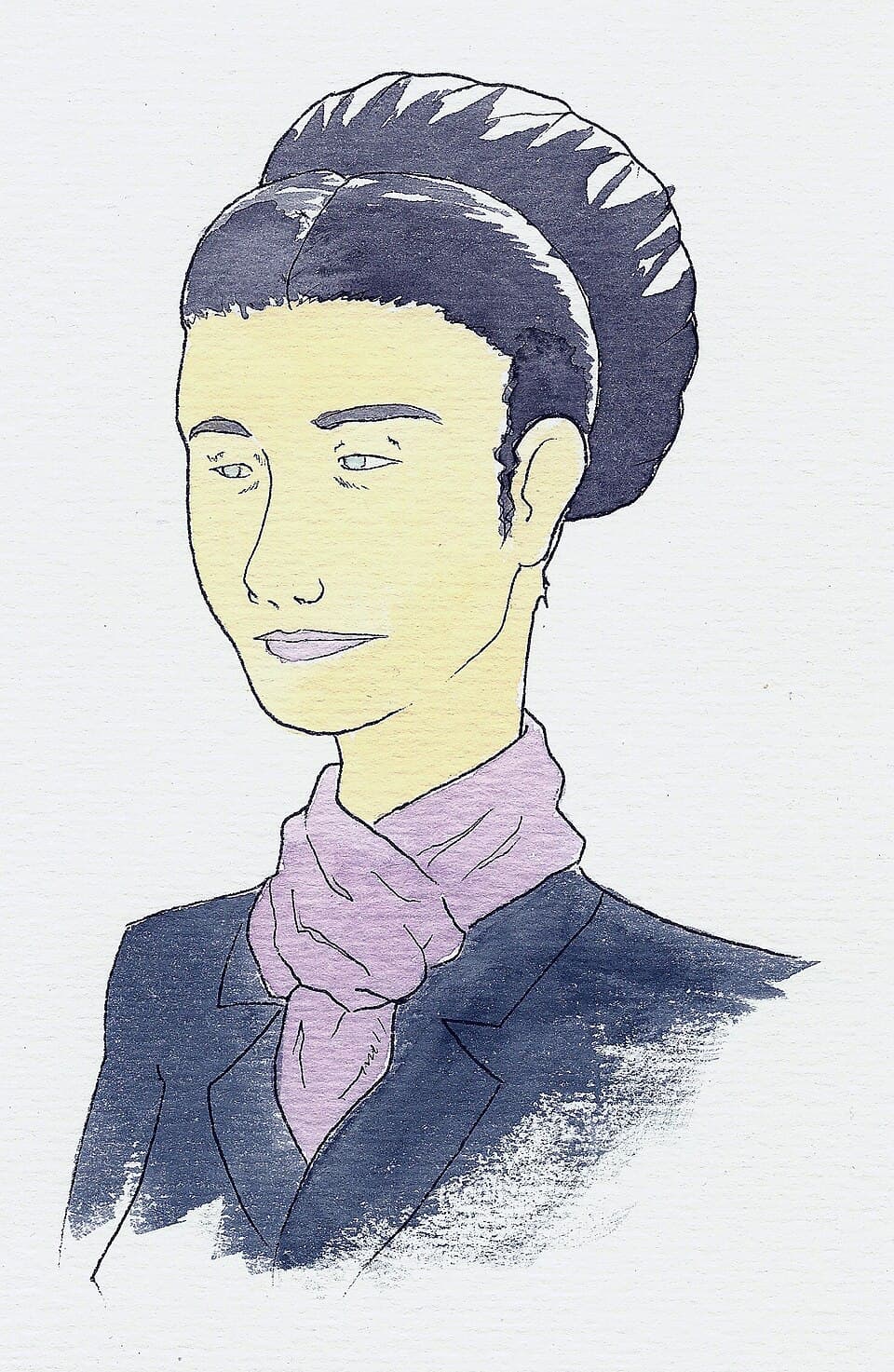
In the warm half-light of the Café de Flore, one autumn morning in 1965, Jean-Paul Sartre meets Simone de Beauvoir at their usual table in Saint-Germain-des-Prés. Cigarette smoke rises toward the mirrors, two black coffees grow cold, and manuscripts pile up between them. They have known each other since the agrégation of 1929 — thirty-six years of working side by side — and Sartre has come not as a philosopher, but as a witness to an entire life, to make her talk about herself, for once.
—Castor, I remember that agrégation of 1929: you second, me first, and the jury calling you the true philosopher. What did that verdict do to you?
It flattered me less than it amuses you, who still tells the story. What mattered was what those weeks opened up: for the first time, I met someone with whom I could think relentlessly, without having to efface myself. You remember, we would talk for hours at the Luxembourg, I stood up to you, you forced me to take every idea back to its root. The jury could rank me second; what I gained that summer was not a rank, it was a shared life of the mind. I always knew I wanted to write and not bow to the destiny laid out for a well-bred young girl. That meeting confirmed to me that it was possible — that I didn't have to choose between thinking and existing.
The jury could rank me second; what I gained was a shared life of the mind.
—In 1949, you wrote The Second Sex almost before my eyes. Where did that phrase come from, that one is not born a woman, one becomes one?
From myself, believe it or not. I had wanted to talk about myself, and I realized I first had to say what it meant to be a woman — something I had never questioned. I noticed, almost with astonishment, that I had always defined myself in relation to men, in relation to you. So I understood that woman is not a given of nature but a product of history, education, the gaze of others. One is not born a woman: one becomes one. I was not a feminist when I started; I became one by writing. The Vatican put the book on the Index, I was showered with insults — and it sold by the thousands. It touched something that millions of women knew without being able to name it.
I was not a feminist when I started; I became one by writing.
—We are often told that your ethics is merely an echo of mine. You who wrote The Ethics of Ambiguity, what is there that is only yours?
That is a question only you can ask without hurting me. I owe you a great deal, but ambiguity is my ground. You built an almost dizzying freedom; I insisted on this: freedom exists only within a situation, and it cannot brutally deny that situation without denying itself. One is not free in a vacuum — one is free in a body, an era, a condition of woman or oppressed. That is why commitment, for me, is not an abstract word: it is about transforming the situation that imprisons us. From Pyrrhus and Cinéas onward, I sought how my freedom could answer for that of others. It is not your system that I recite, it is an ethics of the concrete, of the embodied.
One is not free in a vacuum — one is free in a body, an era, a condition.
—Here we are again at the Flore, at our table. Why did you refuse for so long to have an apartment of your own, to settle down like everyone else?
Because walls would have possessed me. You know, you who have seen me drift from hotel to hotel: I long refused to accumulate furniture, curtains, everything that keeps a woman at home. In the morning, a coffee, a cigarette, and I would go down to write right here, or at Les Deux Magots, in the noise of conversations. This table was better than a desk: I was free there, with no property to defend. Possession, for me, was an insidious way of alienating oneself. An independent woman must possess nothing that can possess her in return. I did end up taking a place, yes, but spartan, a workspace more than a home. The essential thing remained to be able to leave, write, start over elsewhere.
Walls would have possessed me; an independent woman must possess nothing that possesses her.
—Last year, in 1964, I refused the Nobel. They say you would do the same. What binds us in this refusal of honors?
The same disgust for co-optation, my dear. When the institution decorates you, it classifies you, neutralizes you, makes you a harmless monument. You were right to say no, and I would follow you without hesitation. An intellectual who accepts consecration by the power he criticizes betrays himself. Our work only makes sense if it disturbs, if it remains free of all allegiance. To receive such a distinction would be to let the bourgeoisie absorb what we have written against it. I prefer to remain a voice that bothers rather than a statue that is saluted. And besides, between us, what would we have done with those crowns? They add nothing to a well-written page, nor to a fight carried through to the end.
I prefer to remain a voice that bothers rather than a statue that is saluted.
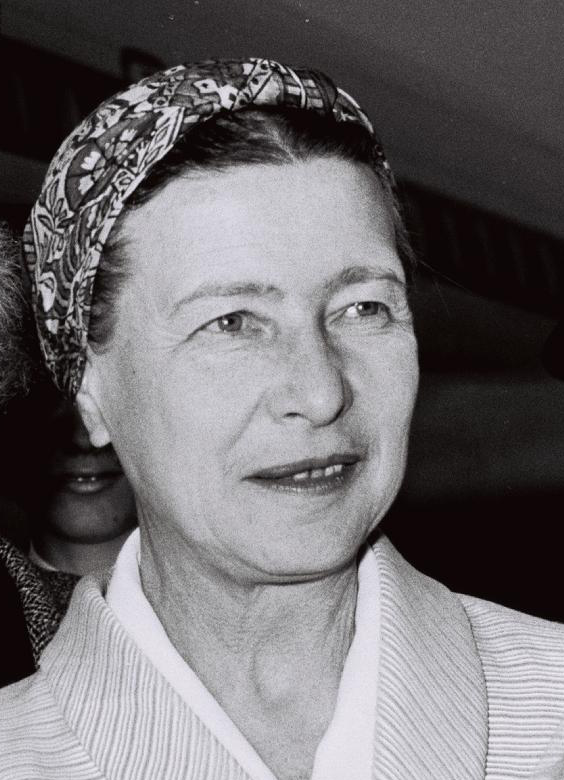
—You are always photographed with a cigarette in your fingers, soberly dressed, hair tied back. Did you want that image, or did it impose itself on you?
I wanted it by subtraction, by refusing everything else. I never sought to please in the sense that a woman is expected to please — frills, coquetry, all that panoply imposed on us from childhood. Functional clothes, a blouse, a simple skirt, and the cigarette, yes, which still scandalized that a woman should smoke in public. It was not a pose, it was an economy: all the time one does not spend making up, one spends thinking, writing. The concern for appearance is one of the subtlest chains attached to women. Getting rid of it was already claiming my independence. The image was only the consequence of a freedom taken daily, down to the way I did my hair.
All the time one does not spend making up, one spends thinking.
—You taught philosophy to young girls at the Lycée Molière. What did you want to convey to them, that the textbooks did not say?
That they were not condemned to become what was expected of them. In front of those classes, I saw lively minds being prepared for marriage and effacement. I could not tell them openly everything I thought — that was not the custom — but I tried to teach them to question, to take nothing for granted. To think is already to resist. A young girl who learns to reason for herself becomes hard to bend. I remembered my own well-ordered youth, that predetermined destiny I had rejected by deciding to write and never marry. I wanted to open that breach for them: to show them that existence is chosen, that no essence obliges them to be only wives and mothers.
To think is already to resist; a young girl who reasons becomes hard to bend.
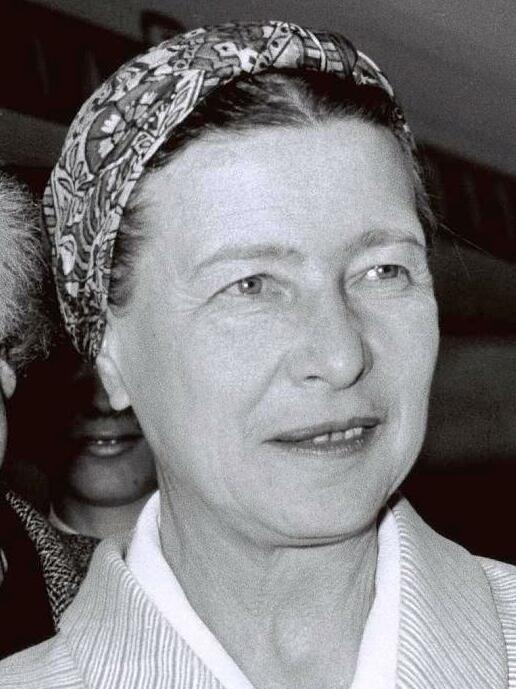
—You often use the word alienation. For you, what alienates a woman more surely than visible chains?
The internalized gaze. Visible chains, you see them, you can break them. But the deepest alienation is when a woman judges herself through the eyes of a man, makes herself an object to be loved, awaits her existence from another. She then becomes complicit in her own dispossession. She has been taught to want to be the Other, the relative, never the absolute subject. That is where everything is decided: as long as she does not posit herself as a sovereign freedom, no law will truly liberate her. Material emancipation is necessary, but it is not enough if consciousness remains enslaved. That is why I wanted to describe the feminine condition from the inside — so that women would stop betraying themselves.
The deepest alienation is when a woman judges herself through the eyes of a man.
—Thirty-six years that we have worked together, read each other. What has our pact really brought you, you who wanted to be free?
It proved to me that one can love without possessing. We invented our own form, without conventional lies, without ownership of one over the other — a transparency that demanded a lot of courage, you know that better than I. You are my first reader, my most demanding critic; you never spared me, and that is why I listen to you. What you brought me is not a support to lean on, it is a rigor that obliges me. Many thought I stood in your shadow; they did not understand that our freedom was reciprocal. Without that absolute trust, I might never have dared to write The Second Sex. Our relationship did not limit my freedom: it was its living proof.
It proved to me that one can love without possessing.
—Castor, when all is said and written, what idea would you like people to remember above all from your work?
That no destiny is imposed on us — neither biological, nor psychic, nor economic. That is the heart of everything I have written: we are what we make of what others have made of us. A woman is not a fixed nature, it is a situation, therefore something that can be transformed. If one idea is remembered, let it be this: the condition of women is not a fatality, it is a construction, and everything that is constructed can be deconstructed. I did not want to give lessons but to open a door. The rest — the books, the fights, the anger — is only the extension of that conviction. As long as a woman believes she can make herself other than what was decided for her, I will have served some purpose.
We are what we make of what others have made of us.
This imaginary interview was generated by artificial intelligence from sources documented in Simone de Beauvoir's profile. It dramatises what the figure might have said based on what we know about them, but does not constitute attested historical testimony. For primary sources and factual documentation, refer to the full profile.