Kids interview Simone de Beauvoir
by Charactorium · Simone de Beauvoir (1908 — 1986) · Literature · Philosophy · 5 min read
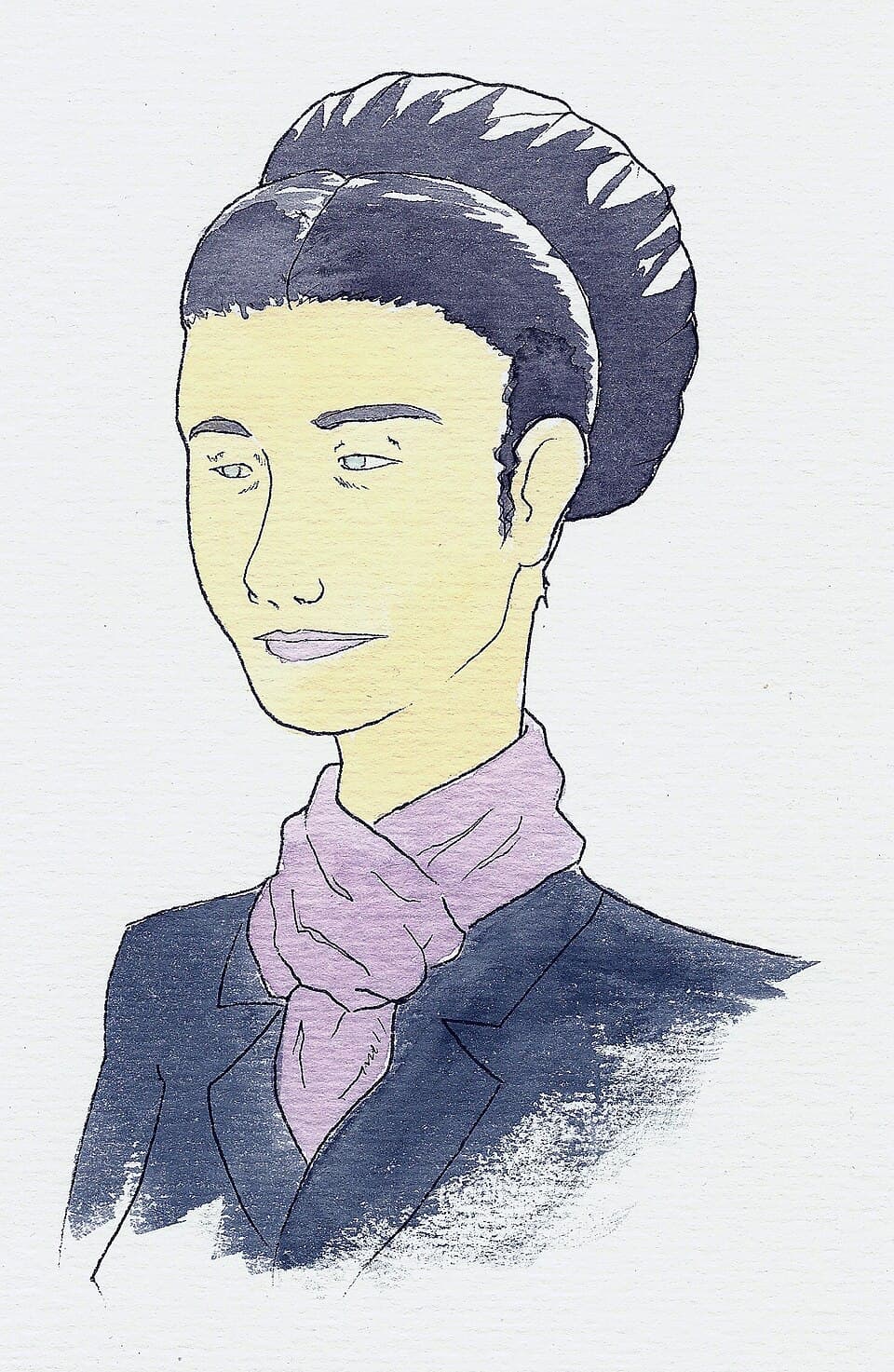
Two twelve-year-old students, on a school trip to Paris, have an appointment at a café in Saint-Germain. A lady is waiting for them, a cigarette in her hand and a notebook in front of her. It is Simone de Beauvoir. She smiles at them and motions for them to sit down.
—How old were you when you decided you would be a writer?
You know, I was still a dutiful child, raised in a very proper Paris, the 16th arrondissement. Imagine a little girl who is constantly told she must marry and keep a good home. Well, one day, I said no to all that. In my memoirs, I wrote this sentence: “I decided never to marry and to be a writer.” It was exactly the opposite of what had been planned for me. That day, I felt that my life belonged to me. It was like opening a window in a room that was too closed.
My life belonged to me, and I decided to write it.
—Is it true that you met Sartre at an exam? How did that happen?
Yes! It was in 1929, at the philosophy agrégation, a very important exam. Imagine a room full of young people studying like mad. He, Jean-Paul Sartre, finished first. Me, second. But you know the funniest part? The professors on the jury said among themselves that the real philosopher was me. We started talking, arguing too, for hours on end. That friendship lasted our whole lives, until his death in 1980. We never married. We preferred to be free, and to think together.
Second in the exam, but the jury knew who the real philosopher was.
—What was a normal day like when you were writing?
I got up early, almost always. A nice hot coffee, a cigarette, and off to work. But not at home: at a café! Most often at the Café de Flore, in Saint-Germain. Imagine a large noisy room, waiters rushing by, and me in a corner with my notebooks, writing for hours. In the afternoon, Sartre would arrive, and other friends, and we would discuss everything. To people, it seemed strange: writing in the noise. To me, it was perfect. The café was my real office, and it was heated in winter!
The café was my real office — and it was heated in winter.
—Did you write by hand or with a machine?
Both, my dear! At the café, I filled notebooks by hand, with my rapid handwriting. That's where ideas were born, a bit messy. Then, later, I would type everything up on my typewriter. Imagine a small device with hard keys: you press, and a letter strikes the paper, tac, tac, tac. No screen, no delete button. If you made a mistake, you had to redo the whole page! It was slow, but it forced me to think carefully before writing each sentence. I loved that steady noise, it was like a little work music.
No delete button: you had to think before writing.
—Why did you write an entire book about women?
At first, it wasn't even for others. It was to understand myself! One day, I wanted to write about my own life. And then, I was struck by something: I had always defined myself in relation to men. Always 'the daughter of', 'the friend of'. Never just me. So I wanted to understand why. That became The Second Sex, in 1949. Imagine a big book that simply asks: why are girls treated differently from boys? I didn't have the answer when I started. I sought it by writing.
I wrote this book first to understand myself.
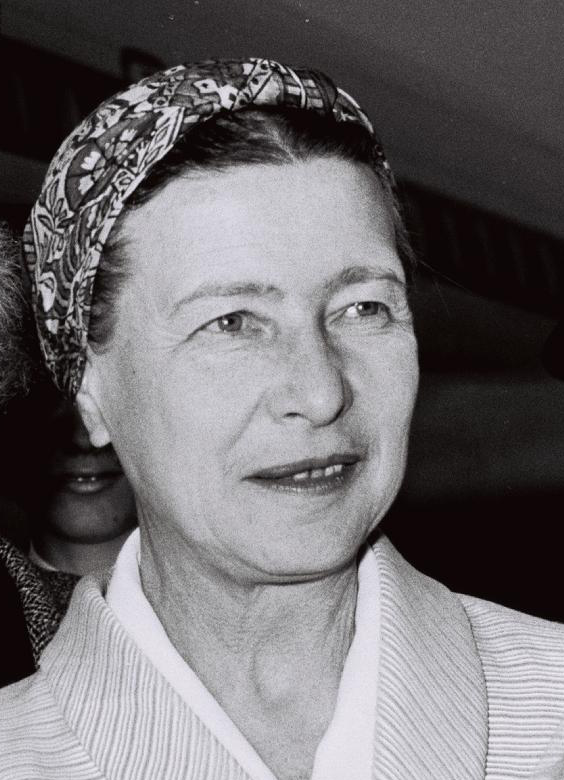
—What is the sentence from your book that everyone knows?
Ah, you mean this one: “One is not born, but rather becomes, a woman.” It's my most famous sentence, and it's simpler than it seems. Imagine two babies, a girl and a boy. At birth, they are almost the same. But then, the girl is told: be gentle, play with dolls, don't make noise. And the boy: be strong, run, give orders. That's what I meant. Being a woman is not just nature: it's also everything society teaches you to become.
One is not born, but rather becomes, a woman.
—Did people like your book, or did it make them angry?
Oh, it made many angry! You know, in my time, in 1949, people weren't used to a woman speaking so freely about women's condition. The Church, in Rome, put my book on the Index: that meant Catholics were forbidden to read it. I was considered scandalous. But imagine: despite the ban, the book sold thousands! People were curious. And many women wrote to thank me, because, for the first time, someone put words to what they felt but dared not say.
They banned my book, and that's why it was so widely read.
—What is the manifesto you signed, with the risk of being arrested?
It was in 1971. At that time, in France, abortion was illegal. Women still had them, in secret, sometimes in dangerous conditions. So, with other famous women, I signed a text: the Manifesto of the 343. We all said, publicly: 'Yes, we have had abortions, and we demand that it be legalized.' Imagine the courage: admitting in public to something illegal. We received insults, threats. But it helped change the law a few years later, in 1975. Sometimes, speaking the truth out loud moves mountains.
Admitting out loud to something illegal: that moves mountains.
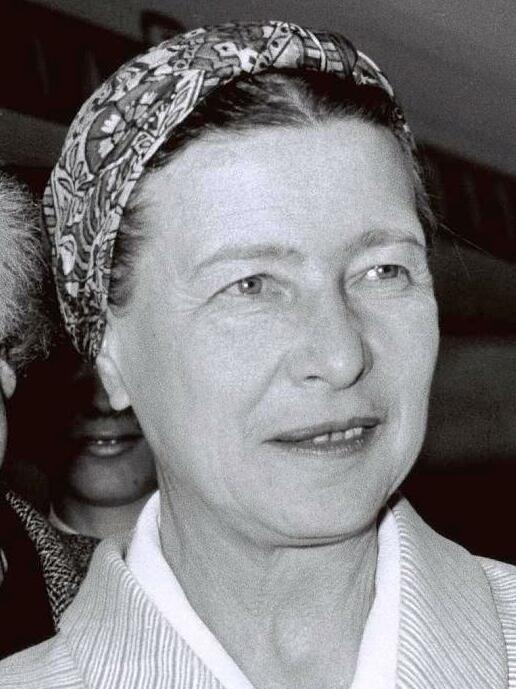
—Were you afraid when you defended dangerous ideas?
Of course I was afraid, sometimes. You don't sign a forbidden text with a peaceful heart. But you know, I believed in a very simple idea: a thinker must not stay in a corner thinking alone. They must engage, take sides, go into the streets if needed. That was called being an engaged intellectual, someone who uses their ideas to really act in the world. Imagine a captain who stays in port for fear of the waves: what good is his boat? I chose to set sail.
A thinker who stays in port, what good is his boat?
—Is it true that you lived in hotels and refused major awards?
Absolutely! For a long time, I didn't want my own apartment. I lived in hotel rooms, near the Deux Magots, in Saint-Germain. Imagine a simple room, just a bed, a table, my books: nothing to maintain, nothing to tie me down. To me, that was freedom. And the great honors? I refused them, like Sartre. I thought accepting a medal was letting yourself be bought a little. I preferred to remain free to say everything. You can be very rich in thought and live with almost nothing.
A room, a table, my books: that was my freedom.
—If someone passed you on the street, what would they notice first?
You would have recognized me, I think! First, my hair up, simply tied, in a kind of crown. No fashionable dresses, no jewelry: practical clothes, a shirt, a sweater. I didn't care about coquetry. And then, almost always, a cigarette between my fingers — it was the habit of intellectuals in my time, even though I know today they say it's bad for health. Imagine a woman walking quickly, with a determined air, heading to her café to work. That's it. I wanted to be looked at for my ideas, not my clothes.
Look at me for my ideas, not my clothes.

This imaginary interview was generated by artificial intelligence from sources documented in Simone de Beauvoir's profile. It dramatises what the figure might have said based on what we know about them, but does not constitute attested historical testimony. For primary sources and factual documentation, refer to the full profile.