Imaginary interview with Simone Weil
by Charactorium · Simone Weil (1909 — 1943) · Philosophy · 6 min read
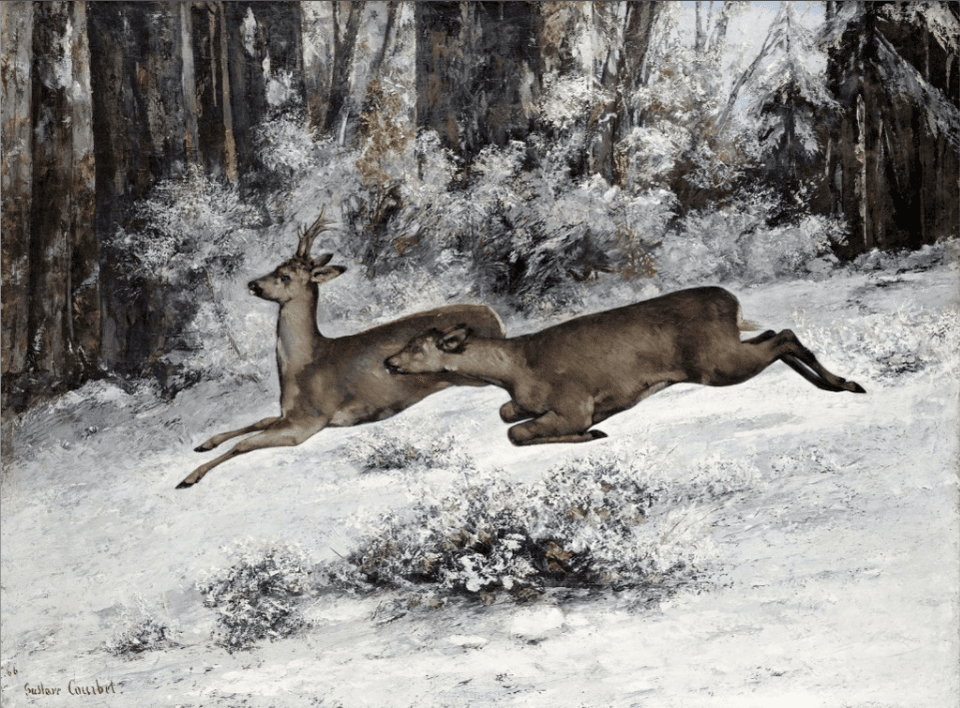
Summer 1942, in a modest office of Free France in London, amid piles of pages blackened with feverish handwriting. A thin woman, round glasses and burning gaze, pushes aside her barely touched plate to answer. Here is Simone Weil, philosopher and factory worker, as one might have heard her for an hour.
—Do you remember the day you left your philosophy chair to enter the factory?
In 1934, I put down my chalk and closed the door of my classroom. People thought I was mad to abandon a teaching post for the assembly lines of Billancourt. But how can you speak of oppression without having felt the metal bite your fingers, without having counted pieces at the pace of a machine that does not look at you? I wanted thought to descend into the body, where it hurts. My notebooks from those months — what you will later read in La Condition ouvrière — are not theories: they are reports of fatigue. There I learned something no book had taught me: repeated suffering does not elevate the soul, it extinguishes it. You do not become wise in the factory; you become a thing.
You do not become wise in the factory; you become a thing.
—What do you ultimately retain from those months in front of the machine?
Before the factory, I still believed that manual labor could be a school of the mind. I came back harder and clearer. In my notebooks, I noted that “work should be the opportunity for the worker to develop his thought. If it is not, it is a crime against human nature.” And this crime, I saw committed every day. The pace forbids thought; it tears from you even the right to reflect on your own misery. That is alienation: not only being robbed of your wages, but being dispossessed of yourself, reduced to a gesture you did not choose. I kept my worker’s clothes as one keeps a scar. They reminded me that social justice is not a drawing-room idea, but a debt to exhausted bodies.
—Why did you leave for Spain in 1936, you who so doubted the virtues of war?
In 1936, I could not bear to stay at my desk while people were dying on the other side of the Pyrenees. I joined a column of anarchist militiamen, on the Republican side, convinced that standing alongside the oppressed is not a choice but a duty. I did not fight: a stupid accident, some boiling oil, burned me and I had to be sent back. But I saw enough. I saw how violence, even in the service of a just cause, corrupts the one who wields it; how force turns into a thing both the one who suffers it and the one who exercises it. That war killed in me the last remnant of revolutionary enthusiasm. What remained was a certainty: you do not save men by adding affliction to affliction.
—In London, what were you still trying to accomplish for your country?
I joined Free France in London with a divided heart. I wanted to be parachuted in, entrusted with a mission, allowed to share the danger — I was refused, and that refusal was a wound to me. So I did the only thing I was allowed to do: write. L'Enracinement was born of those London nights. In it I sought what a soul needs in order not to die: not only bread, but roots, a past, a homeland that is not an idol. I already saw that liberated France would hunger for something other than revenge. I could not finish it. It is an unfinished project, like almost everything I have written, because true thought never ends: it is interrupted.
—Where does this passion for Greece come from, to the point of learning its language to read Homer?
I learned Ancient Greek not out of erudition, but to hear Homer in his own language, without the veil of translation. The Iliad seized me like no other book: it is the poem of force, that power which turns to stone whoever touches it, the conquered as much as the conqueror. The Greeks saw what we refuse to see — that he who possesses force is also blinded by it, and that no armor protects against the reversal of fortune. I read those verses in the evening, in my lodgings cluttered with books and manuscripts, and I found more truth about our century in them than in many newspapers. For the Europe of my time, like Troy, believed itself invincible. Greek tragedy does not console: it teaches you to look at affliction without turning away.
Force turns to stone whoever touches it, the conquered as much as the conqueror.
—What were you ultimately seeking in this meditation on the justice of the Ancients?
I sought to understand why injustice seems to all of us a kind of death. In my Cahiers, I noted that “justice is the establishment of something that is so attached to nature that its absence constitutes a certain form of death.” The Greeks knew this: for them, the broken balance always has to be paid. Justice is not a convention that men invent at will; it is inscribed in the order of things like gravity in bodies. When you crush a man, you do not violate a mere rule: you tear the very fabric of the world. That is what Homer taught me better than the theorists of law. True justice has no force on its side; that is why it is almost always defeated, and that is why it touches the divine.
—How do you explain these two words that sum up your thought: gravity and grace?
Everything in the soul obeys laws as certain as the fall of bodies. That is what I call gravity: the slope that always makes us descend — selfishness, resentment, the need to compensate for our unhappiness by lowering others. Nothing more natural, nothing more universal. Grace, on the other hand, is the only thing that escapes this law: a movement that rises instead of descending, and which we cannot produce ourselves. We can only make room for it, by consenting to the void. La Pesanteur et la Grâce, that collection that friends drew from my notebooks after my death, says nothing else: man left to himself falls; he rises only by what surpasses him. It is physics as much as mysticism.
Man left to himself falls; he rises only by what surpasses him.
—You claim that affliction brings us closer to God. How could such pain elevate the soul?
Beware: I do not say that suffering is good. In the factory, I saw that it stupefies. The affliction I speak of is something else — it is the total uprooting of the soul, that which leaves nothing standing. In my notes, I wrote: “Affliction is the only source of knowledge. That is above all how affliction brings us closer to God.” Not that it rewards, but because it strips us of all our illusions of power; and in the depths of that void, if we do not revolt, something can enter. That is the experience I had in 1938, almost in spite of myself, while reciting a poem: a presence, more real than my own pain. I speak of it only with fear. These things cannot be proven; they are undergone.
—It is said that in exile you refused to eat more than the ration of the occupied French. Why impose that on yourself?
How could I have swallowed a full plate knowing my compatriots were rationed under the Occupation? In London, I forced myself not to exceed what was allowed there, in occupied France. It was not a devout mortification — I never liked austerity for its own sake. It was a simple question of consistency: you cannot think solidarity and betray it at the table. All my life, my diet was frugal, bread, fruit, vegetables, never superfluous meat. My doctors deemed it unreasonable, and they were perhaps right from the body's point of view. But the soul has demands that the body ignores. To eat my fill while an entire people could not would have been a bitter bread, impossible to digest.
You cannot think solidarity and betray it at the table.
—At the threshold of the end, at Ashford, did you regret having pushed that demand so far?
I was taken to the hospital at Ashford, in Kent, in that summer of 1943. Tuberculosis was consuming me, worsened, they said, by my refusal to eat more. I was only thirty-four years old, and I knew it. Regret? The word does not fit. I have always thought that a life is not measured by its duration, but by what one has consented not to betray. I would have liked to serve still, to be useful, to join France in its ordeal — that I missed until the end. But to take my share of bread beyond others in order to gain a few months, no. My notebooks remained full of unfinished thoughts; I knew they might be read one day, and that they would say better than my voice what I had sought. To die attentive, that was all I asked.
A life is not measured by its duration, but by what one has consented not to betray.
This imaginary interview was generated by artificial intelligence from sources documented in Simone Weil's profile. It dramatises what the figure might have said based on what we know about them, but does not constitute attested historical testimony. For primary sources and factual documentation, refer to the full profile.