Imaginary dialogue between Solomon Bandaranaike and Sirimavo Bandaranaike
by Charactorium · Sirimavo Bandaranaike (1916 — 2000) · Politics · 5 min read
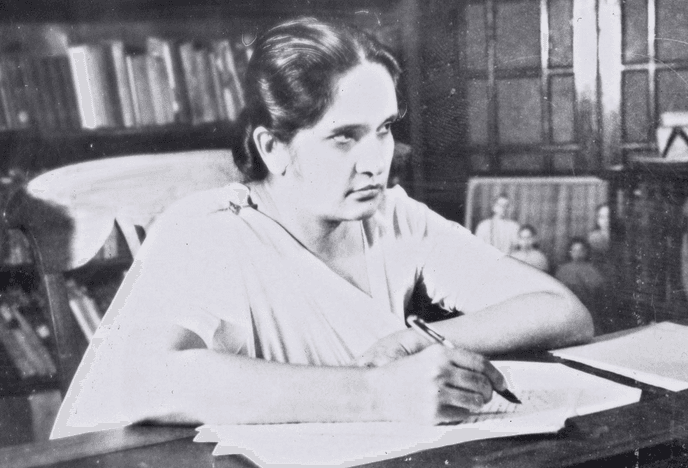
It is in the gardens of Temple Trees, in Colombo, that this impossible meeting takes place. The light falls on the frangipani trees, and the scent of tea infuses the evening air. Where Solomon Bandaranaike worked before falling under an assassin's bullets in 1959, his wife Sirimavo returns to sit, as if to answer to him — he who had known her as a discreet wife and finds her mistress of the nation he left behind. He comes with the anxious curiosity of a man who wants to know what his widow has done with his legacy.
—Sirimavo, when I was shot down on this veranda, you were only a retiring wife. How did you take my place at the head of the party?
You are mistaken, Solomon: I did not take your place, it was offered to me. The Freedom Party was orphaned, torn apart, and the elders came to me because I bore your name and, they said, your voice. At first I wept, then I spoke in public for the first time — I who used to listen to you in silence. People called me the "weeping widow" before they realized I was no longer weeping. In 1960, the people elected me, and I became the first woman in the world to lead a government. What you had taught me in private, I proclaimed before the nation.
I did not take your place, it was offered to me — and I was no longer weeping.
—Had you even prepared for such a destiny? What does a woman feel when entering a role no other woman had ever held?
No woman before me had a model to follow — I walked a path no one had traced. Fear? It was there every morning, after my Buddhist devotions, when I consulted the files you once read. But I swore one thing: never to govern as a shadow of you. The ministers expected a docile housekeeper; they found a leader. I learned to make decisions, to impose silence in a room full of doubting men. They judged my saree before they judged my decisions. I wore that sari like armor, and authority came.
I walked a path no one had traced.
—In 1956, I saw you support my law making Sinhala the sole official language. Once in power, did you regret it?
I pursued it, Solomon, and even enforced it more harshly than you. Sinhala was to be the language of administration, schools, the state — in my eyes, it restored dignity to a majority long humiliated by the colonizers' English. But I won't hide from you what you already know deep down: we hurt the Tamils. The tensions you feared deepened, and I bear part of that fracture. One rarely governs without harming someone. I wanted to unite the country through a language, and sometimes I divided what I sought to bring together. That shadow, I do not deny it.
I wanted to unite the country through a language, and sometimes I divided what I sought to bring together.
—The great tea and rubber plantations, those strongholds of British planters — you dared to touch them. Tell me about it.
Yes, I nationalized what the English had held tight in their fists. Tea, rubber, these riches grew on our soil but fed distant coffers. Between 1960 and 1965, my government took control, because political independence without economic independence is just a flag on an empty shell. I said on the radio that the country's resources should benefit all our citizens, not a privileged elite. It was not theft, it was a reconquest. The owners cried out, London frowned, but Ceylon stood tall. You would have loved to see that, you who dreamed of a country master of itself.
Political independence without economic independence is just a flag on an empty shell.
—And facing the two giants, Washington and Moscow, what place did you choose for our small island?
The place of a free nation, Solomon: client of neither, vassal of none. I placed Ceylon in the Non-Aligned Movement, that refusal to choose a camp which was not cowardice but pride. I spoke at the United Nations General Assembly about the right of peoples to self-determination, and I meant it first for us. I drew closer to neighboring India, I dialogued with Moscow without chaining myself to it. A small island can weigh more than its size if it refuses to be a pawn. While the blocs clashed, we kept our hands free — and that is governing for one's own people.
A small island can weigh more than its size if it refuses to be a pawn.
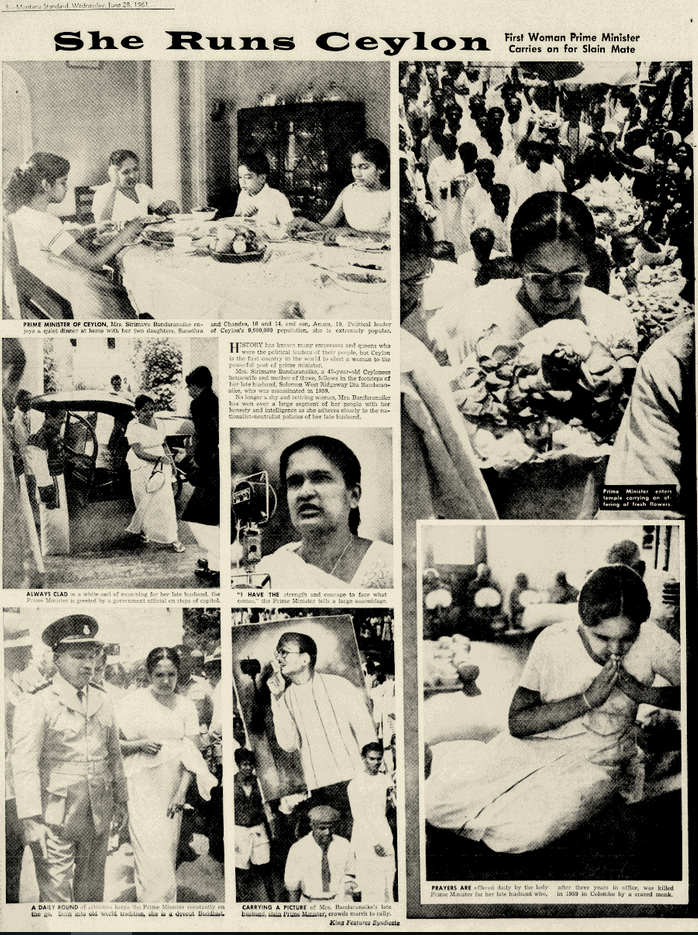
—In my speech, I dreamed of the welfare of the people. What did you concretely offer to the peasants and children of this country?
I turned your dream into laws, my friend. Free education, so that the child of a farmer from Ratnapura could learn to read without paying a cent. Public healthcare, so that no one died for lack of a doctor. Social security, subsidized rice on the tables of the humblest. I wanted to build a true welfare state in South Asia, a democratic socialism that did not stop at speeches. When I took the oath, I promised to serve the people with dedication and to work for the well-being of all — those words, I did not leave on paper. A nation is measured by how it treats its poorest.
A nation is measured by how it treats its poorest.
—That socialist republic you proclaimed in 1972, that new name of Sri Lanka — was it truly the culmination of our struggle?
It was its crowning, Solomon. In 1972, we broke the last thread connecting us to the British crown: Ceylon, that name the colonizers had stuck on us, became the Democratic Socialist Republic of Sri Lanka. A new constitution, written by us, to affirm the full and complete sovereignty of the people. I promulgated it saying it marked our transition to a socialist republic. That day, I thought of you, of our late-night discussions on what a free nation should be. You had sown the idea; I had the privilege of seeing it grow. The country finally bore a name that belonged to it.
Ceylon, that name the colonizers had stuck on us, became a name that belonged to us.
—I am told you experienced downfall, humiliation, conviction. How does a head of state end up there?
Politics is cruel to those who have ruled, Solomon. After my defeat in 1977, my adversaries wanted to erase me. In 1980, they accused me of abuse of power, tried me, convicted me — and stripped me of my voting rights for seven years. Imagine: the first woman head of government in the world banned from casting a ballot. It was a calculated humiliation, meant to break me publicly. I experienced a form of internal exile, pushed aside from everything. But I did not give them the pleasure of seeing me disappear. They can take away my rights, but they cannot take away my voice or the loyalty of the people. I bided my time.
They can take away my rights, but they cannot take away my voice.
—And yet, I am told, you returned. At an age when one retires, how did you regain power?
I returned because this country was in my blood as much as in yours. In 1994, already old, body weary but mind intact, I regained the post of Prime Minister. My daughter Chandrika became head of state, and our family took back the torch that death and judges had thought extinguished. Many thought I was finished; I proved to them that a will cannot be condemned in court. That return was not pride — it was a debt to all those who had never stopped believing in our work. You see, Solomon, what we began together survived our falls and our absences.
Many thought I was finished; a will cannot be condemned in court.
—One last question, you who have carried my name so much: what would you like to be remembered of the woman behind the Prime Minister?
That I was a wife who became a leader without ever ceasing to be myself. You knew me silent at your side, praying in the morning, watching over our children; the world, for its part, only saw the leader in the white saree who defied the powerful. The two women are one. I did not seek the glory of being "the first" — History imposed it on me. I simply refused to fade away when I was believed condemned to do so. If anything is to be remembered, let it be that a woman can carry both mourning and a nation in the same arms. The rest belongs to those who will judge after us.
A woman can carry both mourning and a nation in the same arms.
This imaginary interview was generated by artificial intelligence from sources documented in Sirimavo Bandaranaike's profile. It dramatises what the figure might have said based on what we know about them, but does not constitute attested historical testimony. For primary sources and factual documentation, refer to the full profile.