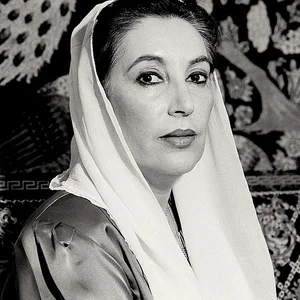

Sirimavo Bandaranaike was the first woman to become head of government in the world, elected Prime Minister of Ceylon in 1960. The widow of assassinated Prime Minister Solomon Bandaranaike, she succeeded him as leader of the Sri Lanka Freedom Party and served in the role three times.
Sirimavo Bandaranaike(1916 — 2000)
Sirimavo Bandaranaike
Sri Lanka
6 min read
Frequently asked questions
Key Facts
- 1960: became the first female Prime Minister in the world, following the assassination of her husband Solomon Bandaranaike in 1959
- 1972: during her second term, proclaimed the Republic of Sri Lanka (formerly Ceylon) and adopted a new constitution
- A committed member of the Non-Aligned Movement, she refused to tie Sri Lanka to either the American or Soviet bloc during the Cold War
- 1994: elected Prime Minister for a third time under the presidency of her daughter Chandrika Kumaratunga
- 2000: died on election day during legislative elections, after fifty years in political life
Works & Achievements
Sirimavo Bandaranaike became the first woman in the world to hold the office of Prime Minister, succeeding her assassinated husband. This achievement stands as a landmark moment in the history of women's political rights.
Her government nationalized the large plantations inherited from the colonial era, strengthening Sri Lanka's economic independence and reducing the influence of British landowners.
Bandaranaike kept Sri Lanka non-aligned and independent throughout the Cold War, refusing alliances with either the Soviet or American blocs while championing the Non-Aligned Movement.
She established Sinhala as the sole official language, marginalizing Tamil and English in the process. This decision created lasting communal tensions between the Sinhalese majority and the Tamil minority.
Her government developed progressive social policies including free education, public healthcare, and social welfare coverage, laying the foundations of a welfare state in South Asia.
At the age of 78, she returned to power after years on the margins of politics, demonstrating her resilience and enduring influence on Sri Lankan political life.
Anecdotes
In 1960, Sirimavo Bandaranaike became the world's first woman elected to lead a government, serving as Prime Minister of Sri Lanka (then called Ceylon). She won this electoral victory by succeeding her husband, Prime Minister Solomon Bandaranaike, who had been assassinated three years earlier. This election marked a major turning point for women's political rights worldwide.
In 1956, Sirimavo Bandaranaike supported her husband's policy of making Sinhala the official language of Sri Lanka, which triggered a national crisis. This decision inflamed tensions between the Sinhalese majority and the Tamil minority, creating divisions that would leave a lasting mark on the country.
During her terms as Prime Minister (1960–1977 and 1994–2000), Sirimavo Bandaranaike pursued a socialist and nationalist agenda. She nationalized key sectors such as oil and transport, and reshaped Sri Lanka's foreign policy by drawing closer to non-aligned nations such as India and the Soviet Union.
In 1980, Sirimavo Bandaranaike was accused by political opponents of misappropriation of funds and human rights violations. She was found guilty and convicted, stripping her of the right to vote for seven years — a rare political humiliation for a former Prime Minister.
At the age of 84, Sirimavo Bandaranaike won the 1994 parliamentary elections and returned to the post of Prime Minister. Her son became president, demonstrating her family's enduring influence in Sri Lankan politics well into the 21st century.
Primary Sources
I commit to serving the people of Sri Lanka with dedication and to promoting national unity. Our government will work toward economic independence and the well-being of all our citizens.
Sri Lanka, as an independent nation, reaffirms its commitment to world peace and the right of peoples to self-determination.
This new constitution represents the full sovereignty of the people of Sri Lanka and marks our transition to a democratic socialist Republic.
We have nationalized key sectors of the economy to ensure that the country's resources benefit all citizens, not a privileged elite.
Key Places
Capital of Sri Lanka where Sirimavo Bandaranaike served as Prime Minister and resided. The main political center of her governmental activity from 1956 to 1977 and from 1994 to 2000.
City in Sri Lanka where Sirimavo Bandaranaike was born in 1916 into a Sinhalese aristocratic family. The birthplace of the future world's first female Prime Minister.
Seat of legislative power where Sirimavo Bandaranaike was elected as a member of parliament and led the government. The center of her major political and social reforms.
The nation where Sirimavo Bandaranaike transformed politics by becoming the world's first female Prime Minister in 1956. She left a lasting mark on the country through her socialist policies and non-aligned foreign policy.
An important city in Sri Lanka where Sirimavo Bandaranaike conducted political activities and drew significant electoral support from the central provinces of the island.
Typical Objects

Traditional Sri Lankan garment worn by Sirimavo Bandaranaike in her official duties. The white sari symbolized dignity and political authority in 20th-century Sri Lankan culture.

Foundational document that Sirimavo Bandaranaike helped establish during her second term, transforming Ceylon into the Democratic Socialist Republic of Sri Lanka.

Mass communication medium used in the 1960s–1970s to broadcast the Bandaranaike government's nationalist and socialist policies to the population.

National symbol adopted after independence in 1948, representing the national identity that Sirimavo Bandaranaike strengthened as the country's first female Prime Minister.

Typical communication device of the 1960s–1980s used at government headquarters where Sirimavo Bandaranaike exercised executive power during her two terms in office.

The dominant information medium of the era, used to cover the social and political reforms carried out by the Bandaranaike government during its terms in office.

Symbol of the democratic processes through which Sirimavo Bandaranaike was elected, notably in 1960 and 1970, breaking political barriers for women across Asia.
School Curriculum
Vocabulary & Tags
Key Vocabulary
Daily Life
Morning
Sirimavo Bandaranaike begins her day early, following her personal Buddhist devotions. She prepares formally for her political duties, consulting her secretaries and advisors on the day's affairs before attending government or parliamentary meetings.
Afternoon
The afternoon is dedicated to official audiences, diplomatic meetings, and sessions of Parliament or the Council of Ministers. She receives delegations, handles matters of state, and takes an active role in legislative debates, asserting her authority in governmental decisions.
Evening
In the evening, she retires to her official residence where she continues her administrative work, reads government reports, and occasionally receives dignitaries or close associates. She sets aside time for her family and personal reflection before rest.
Food
Her diet follows Sri Lankan Buddhist culinary traditions, consisting of rice, vegetable and fish curries, tropical fruits, and local tea. As a high-ranking political figure, she enjoys carefully prepared meals made by her household staff.
Clothing
She wears the traditional Sri Lankan saree, a symbol of cultural identity and political dignity, complemented by understated, elegant jewelry. Her polished appearance reflects her status as prime minister and her commitment to her country's traditions.
Housing
She resides in prestigious official residences in Colombo, most notably Temple Trees (the official prime ministerial residence), featuring gardens, domestic staff, and security structures. These homes reflect the importance of her political position and her high standing in Sri Lankan society.
Historical Timeline
Period Vocabulary
Visual Style
Un style de portrait politique années 1960-70 combinant réalisme officiel et modernisme, célébrant la figure pionnière d'une femme chef d'État sud-asiatique. Ambiance formelle et dignifiée avec une palette de teintes chaudes et dorées.
Sound Ambience
Une ambiance sonore qui capture l'atmosphère politique du Sri Lanka de l'époque postcoloniale, mêlant les sons de rassemblements populaires, l'architecture coloniale et les traditions bouddhistes, dans un contexte de gouvernance politique féminine pionnière.
Liens externes & ressources
Références
Œuvres
Première femme Premier ministre du monde
1960
Nationalisation des plantations de thé et de caoutchouc
1960-1965
Politique de neutralité dans la Guerre froide
1960-1977
Promotion du cinghalais comme langue officielle
1960
Réformes sociales et welfare state
1960-1977
Retour au pouvoir après l'exil politique
1994