Imaginary dialogue between Xuanzang (le moine Tang) and Sun Wukong
by Charactorium · Sun Wukong · Mythology · 5 min read
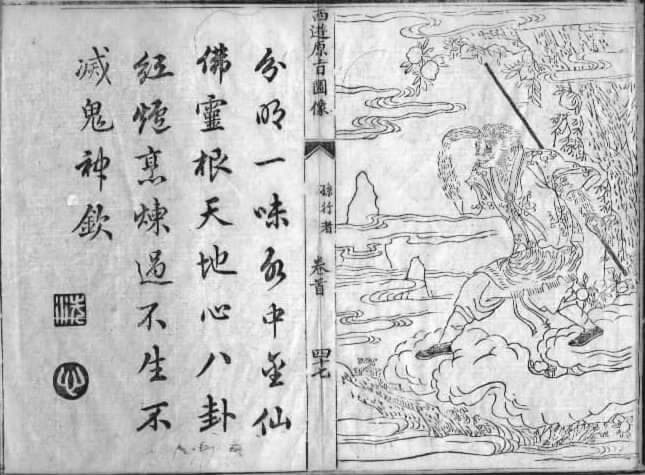
At the foot of Five Elements Mountain, where the Monkey King lay sealed for five hundred years, Xuanzang finds Sun Wukong for an evening halt after a day's march westward. A brushwood fire crackles, the Ruyi Jingu Bang rests against a stone, and the golden diadem glows faintly on the monkey's brow. The monk, who freed him from his rock prison and took him as a disciple, wants to understand this turbulent heart he has sworn to guide. He asks his questions in a low voice while demons lurk in the distance.
—Wukong, before I freed you from this mountain, you had challenged all of Heaven. Tell me: why did you proclaim yourself equal to the Emperor Above?
Master, you ask me this when you found me crushed under this rock — so you already know the end of the story. I named myself Great Sage Equal to Heaven because the celestial officials had given me an empty title, keeper of the stables, to appease me. I, who was born free on the Mountain of Flowers and Fruit, would not accept being valued so little. I overturned the Queen Mother's banquet, devoured the peaches of immortality, terrorized the heavenly palaces. No army could take me. It took the palm of the Buddha himself to pin me here, five hundred years, drinking rain and chewing iron. It is a long time to learn humility.
They gave me an empty title; I wanted a name to match Heaven.
—You were not born of a mother, I am told, but of a stone. How did a being of rock learn the arts that make you so fearsome today?
It is true, I emerged from a cosmic stone egg split by wind and dew, there on the Mountain of Flowers and Fruit. No parents, no lineage — only heaven for father and earth for mother. Becoming king of the monkeys, I wanted more than to rule: I wanted never to die. I crossed the seas to find the Patriarch Subodhi, and he taught me the Taoist arts, the secret of the cloud, and the seventy-two transformations. Bird, fish, insect, I can become anything. But the master warned me: these powers bring misfortune to those who show them out of pride. It took me a long, long time to heed that warning.
Heaven for father, earth for mother, and stone for my only cradle.
—Wukong, that staff you cherish weighs more than a mountain, they say. Where did this weapon come from, and how did you obtain it?
The Ruyi Jingu Bang, master, I went and took it from the bottom of the Dragon King of the Seas' palace. It was once the pole that measured the waters of the flood, thirteen thousand five hundred jin of golden iron. Before me, it began to glow and tremble — it recognized me. With a word I make it as tall as a pillar of Heaven, with another as small as a needle I tuck behind my ear. No hand but mine can lift it. The Dragon King turned pale, but what could he do against me? This weapon and I are one will.
The iron recognized me before my hand even touched it.
—And this diadem on your forehead, Wukong — the one my words tighten when you stray? Forgive me for reminding you, but what do you feel when I recite the mantra?
Ah, master, you touch the only iron I cannot bend. When you placed this Golden Crown on my head, I did not know it would never come off. And the first time you chanted the mantra because I had killed those bandits too quickly — the pain threw me to the ground, hands clenched on my skull, begging. I who defied Heaven, reduced to crawling by a few syllables! At first I wanted to strike you, I admit. Then I understood: this ring is the bridle my wild heart needed. My strength could break mountains; it needed a wiser hand to tell it where to strike.
My arm could break mountains; your mantra taught me where not to strike.
—You speak of learning humility under the rock. Yet I still see you boil when insulted. Has rebellion truly left you?
No, master, and I will not lie to you, least of all to you. The monkey who overturned the heavenly palaces still lives under my skin. When a demon mocks you or threatens your life, I feel the same flame rise as in the days of my revolt. The difference is that once I burned for my pride alone; today I burn to protect you. Five hundred years under the stone did not make me gentle — they taught me to choose my anger. You took a wild beast as a disciple, and you know it. But this beast has sworn to lead you alive to the West.
Five hundred years under the stone did not soften me; they taught me to choose my anger.
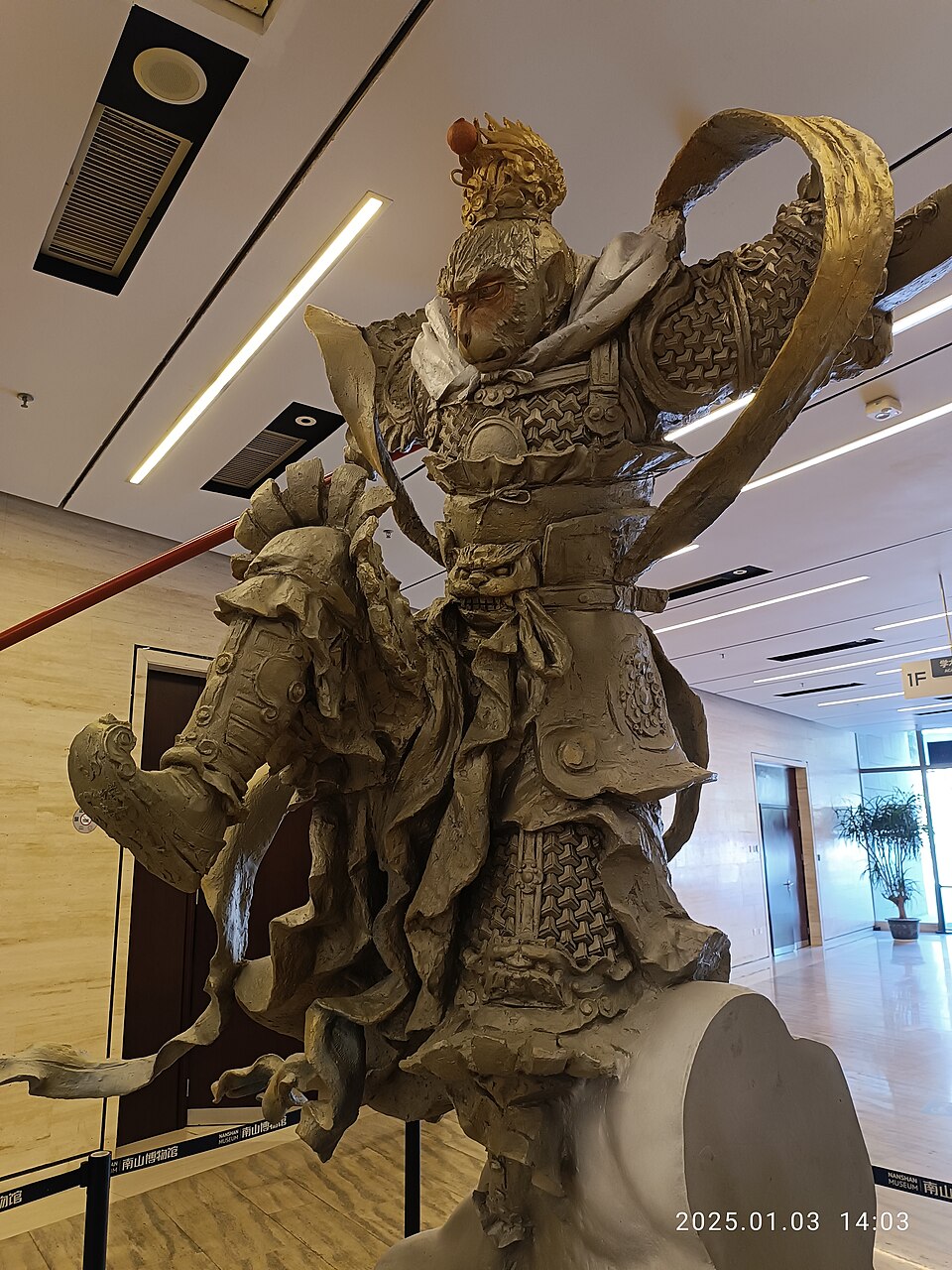
—Wukong, since we have been traveling together, demons spring up at every pass to devour me. Why do you think they covet me so, a simple monk?
Simple monk? Master, your flesh is the most precious in this world. The demons whisper that by devouring you they would gain immortality, for you are a pure soul from the West. That is why I never take my eyes off you, why I draw this circle on the ground when I must leave. My seventy-two transformations serve me less for fighting than for unmasking: I see beneath the old woman's face the ghoul, beneath the helpful monk the hungry ogre. You, your too-good heart makes you take monsters for innocents. These are our roles: you carry holiness, I carry the staff. Without one, the other would never arrive.
You carry holiness, I carry the staff; without one, the other never reaches the West.
—They say that at the end of this road await us eighty-one trials. You who have already suffered so much, what do you hope to find at the end of the journey to the West?
The scriptures, master — that is what you seek. But me? For a long time I wanted only immortality, that prize I already stole from the peaches of Heaven. Today I begin to glimpse something else. Each trial passed at your side, each demon vanquished for your survival, lightens a little the weight of my past faults. Perhaps at the end of these eighty-one trials, it is not just a chest of sutras that awaits me, but the forgiveness of the Heaven I offended. The rebel might lay down his anger like one lays down a burden at the threshold of a temple. I do not yet know if I am worthy. But I walk.
Each demon vanquished for you lightens a little the weight of my past faults.
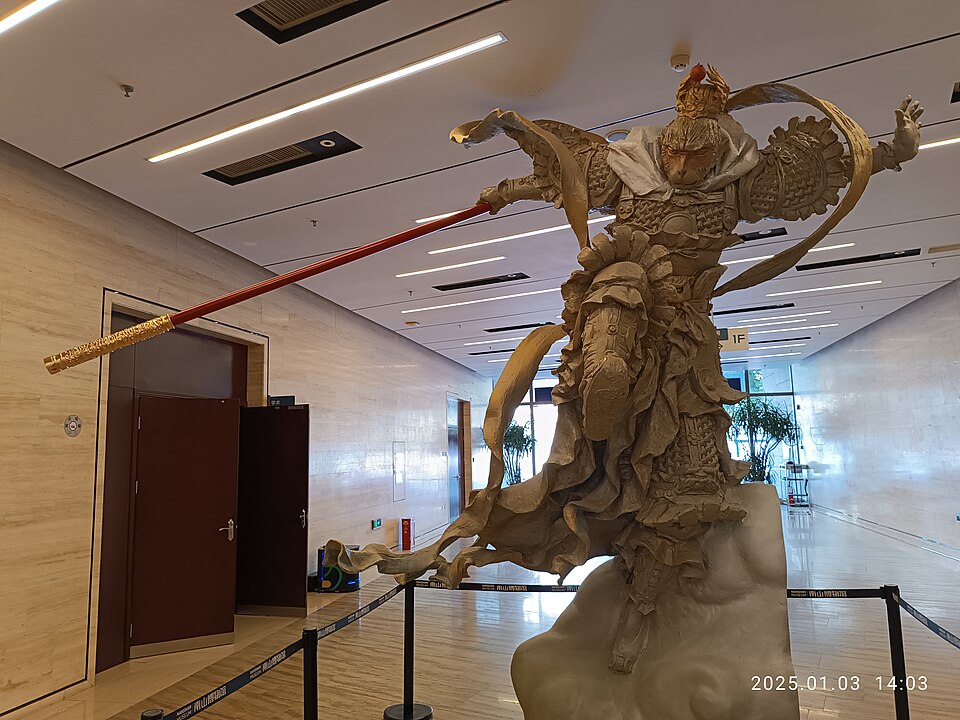
—Do you remember, Wukong, the day I freed you from this mountain where we camp tonight? What did you feel when you saw the free sky again?
How could I forget it, master? For five centuries I had seen only the edge of the rock and the passage of clouds above my prison. When you tore off the Buddha's seal stuck on the stone, the mountain split and the daylight struck me like a torrent. I leaped, I shouted, I thought my body had turned to dust from waiting. And then I saw you, this frail monk who was not afraid of me. You named me your disciple even before I promised anything. That day, without knowing it yet, I ceased to be the lone monkey of the world. I finally had a master to follow — and a road.
The daylight struck me like a torrent, and you were not afraid of me.
—Your monkey brothers still await you, they say, on the Mountain of Flowers and Fruit. Does it not weigh on you to have left your kingdom to follow me?
My kingdom, master… I was its king, and yet I abandoned it twice: once to seek immortality, and once to follow you. My monkeys loved me; we lived in the Water Curtain Cave, free as the wind. But ruling a carefree people never satisfied me. There was a hunger in me that wild peaches could not fill. Following you on this road of dust and demons is harder than anything I knew on my mountain — and yet it is here that I finally feel in my place. My brothers will see me again, I believe. But the monkey who returns will not be quite the same king.
There was a hunger in me that wild peaches could not fill.
—When you ride your cloud to split the skies as a scout, Wukong, what do you think about, up there, far from our caravan?
On my somersault cloud, master, I cross in one leap what the caravan would take months to travel. Up there, the world becomes tiny: kingdoms are mere specks, rivers threads of silver. Once I climbed so high to challenge the gates of Heaven; today I always come back down, because below there is you, slow, fragile, advancing step by step on the Silk Road. It is strange — I who could go anywhere I wished, I now set my flight to the pace of a walking man. I watch for ambushes, I count the passes. And each time, I come back to land by the fire, like tonight.
I who went where I wished, I set my flight to the pace of a walking man.
Read further
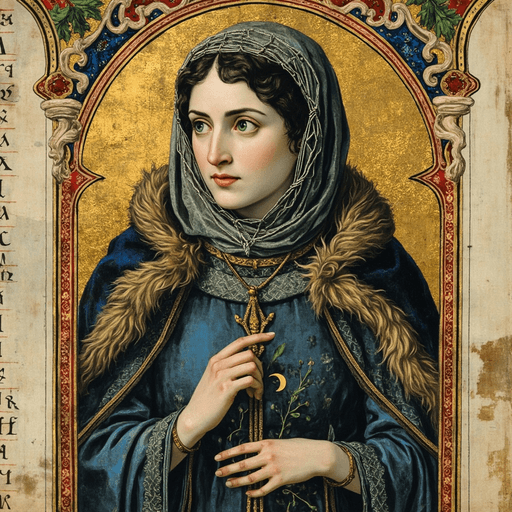
This imaginary interview was generated by artificial intelligence from sources documented in Sun Wukong's profile. It dramatises what the figure might have said based on what we know about them, but does not constitute attested historical testimony. For primary sources and factual documentation, refer to the full profile.