Imaginary interview with Tarana Burke
by Charactorium · Tarana Burke (1973 — ?) · Society · 6 min read
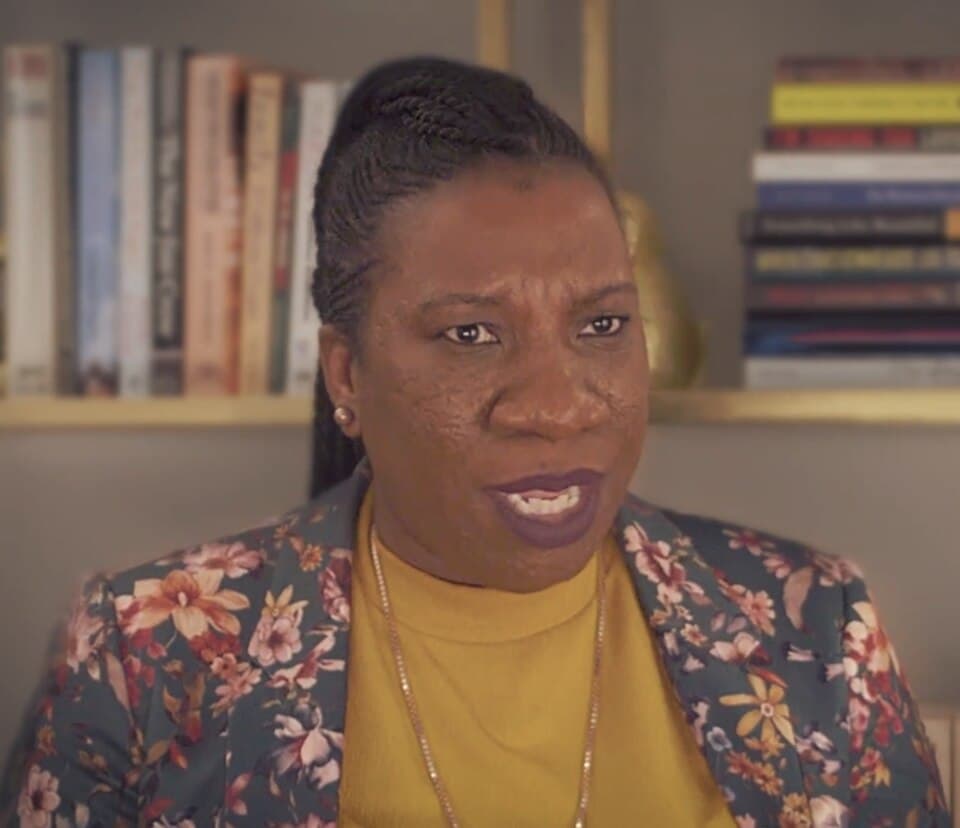
It's in a community center in Harlem, between folding chairs and the smell of lukewarm coffee, that Tarana Burke agreed to sit for an hour. The founder of Me Too speaks softly, as one speaks to someone you truly want to listen to. Here is what she told us.
—Before being a public figure, who were you, and where does this call to activism come from?
I was born in the Bronx, in 1973, among people who prayed on Sundays and organized the community the rest of the week. At home, the pulpit and the sidewalk were the same fight: no one separated faith from justice. There were pastors in my family, and activists too, and very early on I understood a simple rule — you don't bow your head before injustice, you speak up. As a teenager, I was already hanging around civil rights movements, because that was the air I breathed at home. That ground, made of prayer and well-ordered anger, is what kept me standing for everything that came after.
The pulpit and the sidewalk were the same fight: no one separated faith from justice.
—How did the years spent in the field, with young people, shape your perspective?
Before being a voice, I was an ear. I worked for years as an educator, community organizer, especially in Alabama in the 1990s and 2000s, sitting across from girls who told me things they had never dared tell anyone. You don't learn that from books: you learn it in a workshop room, when a thirteen-year-old girl falls silent mid-sentence and you understand, from her silence, what she can't put into words. That work gave me something nothing else can: field credibility. Young women didn't trust me because I had a title — they trusted me because I was there, week after week, in their neighborhood.
—Many think it all started in 2017. You go back further. Why?
Because the truth is 2006. Eleven years before the world heard those two words, I had already founded the organization and launched the idea. I said it myself: « I created the phrase 'Me Too' back in 2006 as a way to reach in to communities of color where I was working with underprivileged and underage girls. » It wasn't a slogan, it was a bridge. Two words held out to a girl to say: you are not alone, this happened to me too. At that time, there was no hashtag, no virality, no cameras. Just workshops, notebooks, gazes that recognized each other. Me Too was born in that silence, not in the noise that came later.
It wasn't a slogan, it was a bridge. Two words to say to a girl: you are not alone.
—Who were those two words, which you held out like a bridge, addressed to at the very beginning?
To the invisible. To Black girls and girls of color from disadvantaged neighborhoods, those no one counted, those whose stories never made the headlines. I founded Just Be Inc. precisely for them — an organization focused on what I call healing justice for girls of color survivors of abuse and exploitation. When you grow up poor, racialized, young, you are made to feel that your pain weighs less than that of others. I wanted to tell them the opposite, and tell them in their language, in their neighborhood, without forcing them to translate their suffering so that someone deigns to hear it. Everything else — the virality, the spotlight — came to settle on top of that foundation.
—What do you say to those who felt forgotten by mainstream feminisms?
I tell them I saw them, because I was one of them. For a long time, major women's movements spoke of a single experience, as if everyone lived the same thing — while a poor Black woman does not experience violence like another. That is what the word intersectionality designates: gender, race, class do not add up, they intertwine and worsen each other. My work has always been to bring back to the center those who were relegated to the margins. Not out of charity — out of accuracy. A movement that does not defend the most exposed among us defends, in the end, no one for real.
A movement that does not defend the most exposed among us defends, in the end, no one.
—You often talk about empowering survivors. What do you mean by that?
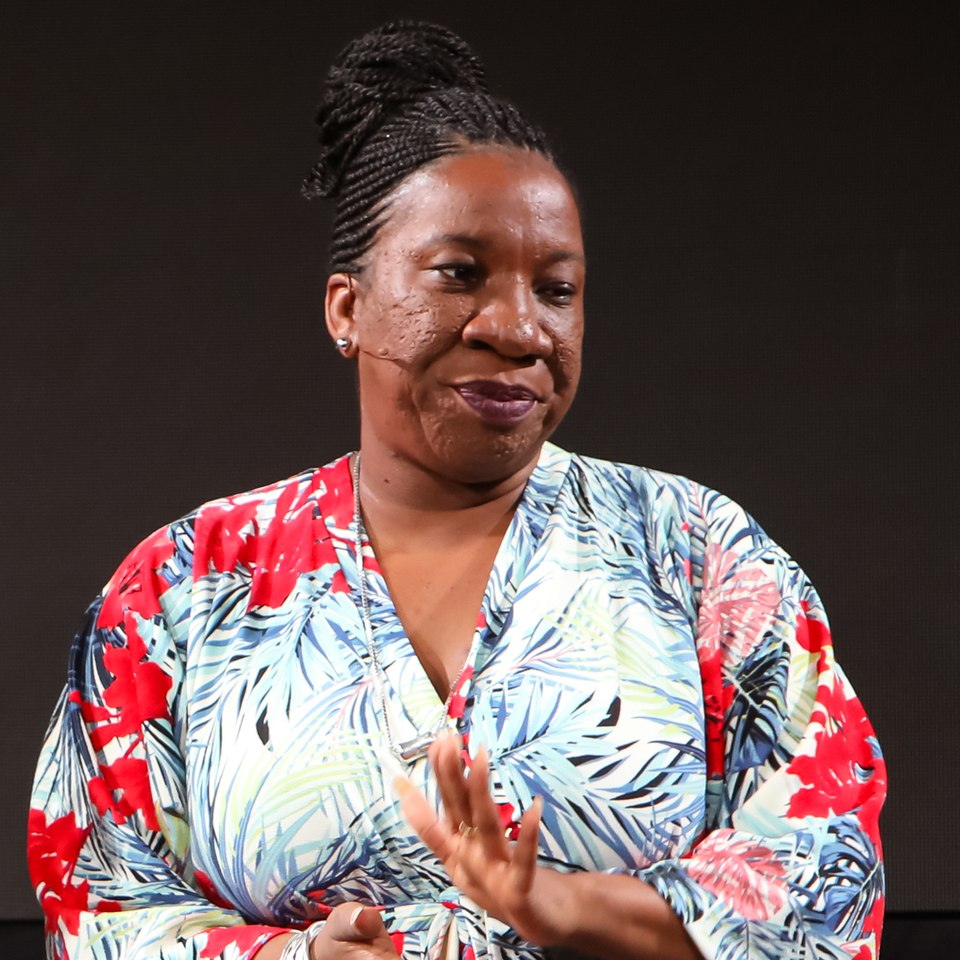
Empowerment, for me, is not a conference word, it's a very concrete gesture. It's helping a survivor move from the status of victim — a fair word, but one that can trap — to that of a person standing, master of her own story. Sexual violence first steals control: over one's body, one's story, one's voice. Returning that control is the essence of my fight. In our workshops, I never wanted to speak for the girls; I wanted to hand them the microphone and be silent. A woman who finally tells her own story, in her own words, takes back something that was taken from her. That moment is worth all the speeches.
—Do you remember the day in October 2017 when the hashtag exploded on social media?
I remember it as a dizziness. In October 2017, after the revelations about Harvey Weinstein, actress Alyssa Milano invited women to write 'me too' on social media — without knowing, at first, that those words already had a mother and a history. In a few hours, my phone became a wave: millions of women, everywhere, writing the two words I had sown eleven years earlier. I was afraid, I admit. Afraid that my work would be taken from me, that a healing tool born in the neighborhoods would be turned into a mere Hollywood trend. And then I understood that the wave was bigger than my fear — and that I had to swim with it, not against it.
Millions of women were writing the two words I had sown eleven years earlier.
—Did this sudden recognition, all the way to the Time 100 in 2018, reconcile you with that tidal wave?
Let's say it forced me to rewrite my role. In 2018, Time magazine counted me among the hundred most influential people in the world — me, the neighborhood educator who held workshops in rooms with tired fluorescent lights. It wasn't the glory that mattered, but what it allowed me to do: turn the spotlight back on ordinary survivors, those who would never be on a stage. I accepted the light on one condition — to redirect it immediately. The danger of a movement that has become global is that it forgets where it came from. My work, since then, has been to constantly remind that behind the hashtag, there are faces, neighborhoods, very real girls.
—#MeToo is often reduced to denunciation. Yet you insist on something else. On what?
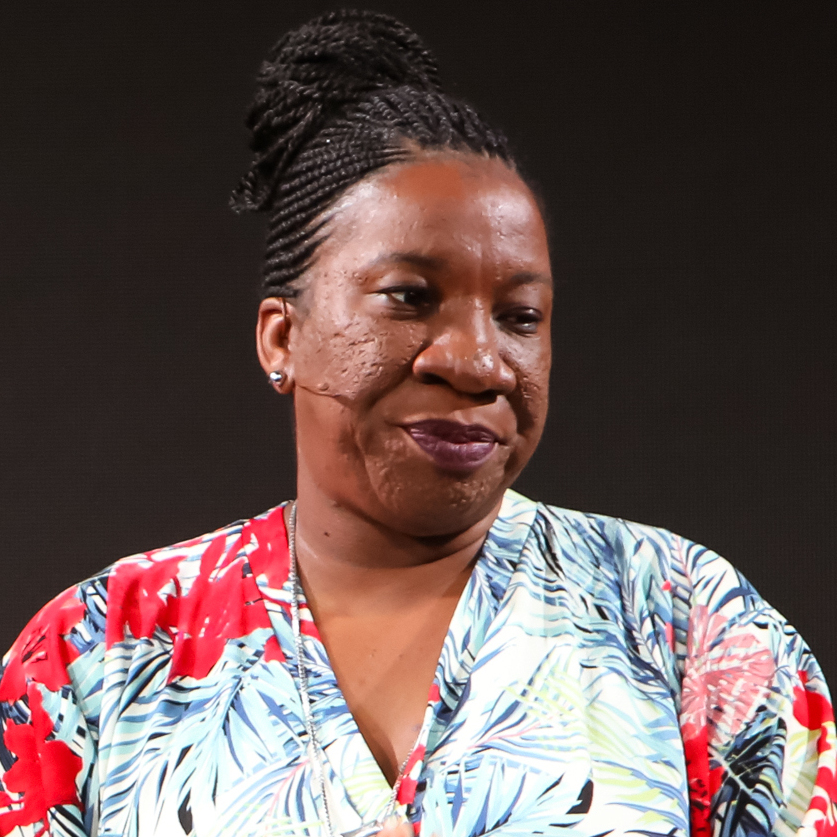
On healing. My movement has been made into a matter of bringing down the powerful, and those downfalls matter, but that's not the heart. I told the New York Times: « The movement we created is a movement about the trauma of sexual assault and sexual harassment and how we heal. » Denouncing is the first sentence of the story, not the last. What becomes of a survivor once the silence is broken? That is my real question. If we offer her only anger and spotlights, we abandon her halfway. What I advocate for is a path that goes beyond accusation, toward repair and rebuilding oneself.
Denouncing is the first sentence of the story, not the last.
—You advocate for a justice that repairs rather than punishes. How do you envision it concretely?
I believe in restorative justice, focused on transformation and collective healing, not just punishment. Prison does not restore a survivor's sleep; it does not repair what was broken in her. Of course, there must be accountability — but punishment alone leaves the community as wounded as before, just with one less guilty person free. What interests me is what we rebuild afterward: support, listening, resources, that patient work of getting back on one's feet. True justice, for me, is not measured by the number of men brought down, but by the number of women who reclaim their lives.
—Looking back, what would you like people to remember from your story?
I put my life in writing in Unbreakable: My Story, My Way, because I wanted people to hear the story from the inside, not the legend that was built around me. What I would like to be remembered is not a hashtag born in Hollywood in 2017, but two words held out in 2006, in a neighborhood, to a girl no one listened to. If my name is to survive, let it survive attached to that of the invisible, the ordinary survivors, the communities of color where it all began. I did not want to become a symbol; I wanted every woman to know she is important enough to deserve to be believed. The rest is just noise around the real work.
I did not want to become a symbol; I wanted every woman to know she is worthy of being believed.
This imaginary interview was generated by artificial intelligence from sources documented in Tarana Burke's profile. It dramatises what the figure might have said based on what we know about them, but does not constitute attested historical testimony. For primary sources and factual documentation, refer to the full profile.