Kids interview Theodora
by Charactorium · Theodora (497 — 548) · Politics · 5 min read
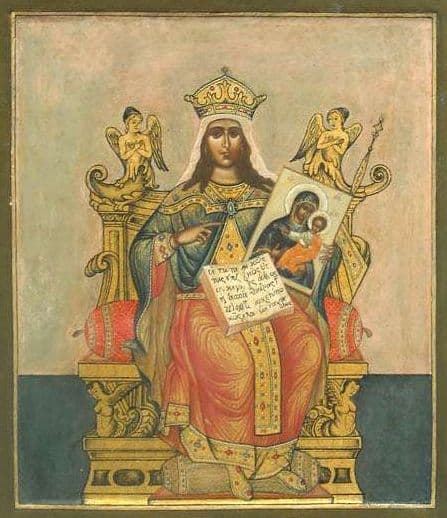
Two twelve-year-old students, on a field trip, push open the heavy door of a room with walls covered in golden mosaics. At the back, on a marble seat, a woman with a lively gaze awaits them. Her name is Theodora, empress of Byzantium, and she has agreed to tell them everything.
—Where were you born, and what did your parents do when you were little?
You know, my child, I was not born in a palace. I came into the world in Constantinople, around the year 497, into a circus family. Imagine the biggest stadium in the city, the Hippodrome, full of shouts and dust. My father tamed wild beasts there—bears, big cats. My mother, she went on stage to make the crowd laugh and dance. As a little girl, I grew up between the dressing rooms and the arena. No one ever taught me that I would become great. In my time, a circus girl was at the very bottom of the ladder. That's why my story still amazes people.
I was not born in a palace, but between the dressing rooms of the circus.
—And how can a circus girl become empress? That's crazy!
Yes, it was crazy, and many found it scandalous. Before the palace, I was a dancer and actress. In my time, that was called a courtisane—a poor woman who lived thanks to rich protectors. No one bowed before me. Then I met Justinian, the emperor's nephew. He loved me and married me in 527. That day, they placed the diadem on my forehead, that crown of precious stones, and I put on the purple, that fabric dyed a deep red reserved only for the imperial family. Imagine the girl from the arena suddenly wearing the color of sovereigns. No one had ever seen that.
They placed the crown of kings on my forehead—me, the girl from the arena.
—In 532, there was a revolt. Were you afraid to die?
Fear, yes, I felt it pass. In 532, the city went up in flames: it was what they called the Nika revolt. Angry people burned the streets of Constantinople and wanted to overthrow my husband. In the council chamber, everyone trembled. The ministers had already prepared a boat to flee by sea. Justinian himself hesitated, ready to leave. Imagine the scene: the emperor, almost defeated, staring at the exit door. I felt that if we fled that night, we would never be anything again. So I spoke. And my voice held where the men faltered.
Everyone trembled, but my voice held where the men faltered.
—And what exactly did you say to make him decide to stay?
I told them that I could not bear the thought of fleeing. Then I spoke these words, which have been remembered: 'He who has put on the purple cannot leave it to become an exile.' Do you understand? For me, it was better to die as empress than to live hidden, without a name. That day, my courage awakened Justinian's. He dried his tears, gathered his generals, and stayed. The revolt was crushed. You see, sometimes a single person who refuses to run is enough to hold everyone else back. I had grown up in fear of being nothing: I was not going to become that again by fleeing.
Better to die in purple than to live hidden, without a name.
—What was a normal day like for you in the palace?
My days were full, you know. I lived at the Sacred Palace, a huge complex of halls, gardens, and baths by the sea. In the morning, my maids dressed me for ceremonies. In the afternoon, I received ambassadors from distant lands, listened to their requests, gave my opinion on laws. Many believe an empress is only there to look beautiful at banquets. False. I weighed in on appointments, advised Justinian on Empire affairs. Imagine a woman sitting not to decorate, but to decide. In the evening, amidst the golden mosaics, I still discussed politics with my husband.
An empress is not there to decorate a banquet, but to decide.
—And what did you eat in the evening at the emperor's table?
Ah, the imperial table! Imagine dishes from all over the Mediterranean. They served us meats—lamb, poultry, beef—fish caught in the nearby sea, soft white bread, dried fruits brought from the East by merchants. Honey flowed over sweets, and wine filled precious cups. But don't think I only thought about eating. When I was hungry as a child at the circus, I didn't have all that. So at every banquet, I remembered the journey I had made. Luxury did not dazzle me: I knew where I came from, and that kept me grounded.
Luxury did not dazzle me: I always remembered where I came from.
—Is it true that you made laws specifically to help women?
It's true, and I am proud of it. In my time, a woman had few rights: she could be cast out, deprived of her property, without being able to defend herself. Through my influence on Justinian, I pushed for new laws. They were written in official texts called the Novels. From then on, a woman abandoned by her husband was better protected. She could keep her property, ask for a divorce, no longer be thrown away like nothing. I even had actresses protected, those theater girls everyone despised—just as I had been despised. Imagine: the circus girl writing the law for her own kind.
The circus girl ended up writing the law for those who were despised.
—Why did poor women matter so much to you?
Because I had been one of them, my child. I had not forgotten. Before the diadem, I had seen girls alone, without money, without anyone to defend them. No one signed laws for them. When you have known the cold of the bottom, you never forget it once you are at the top. Many powerful people, as soon as they rise, despise those they left behind. For me, it was the opposite: the more power I had, the more I wanted to use it for those at the bottom. A crown is useless if you use it only for yourself. That is what I wanted to leave: laws that remain when the empress herself is gone.
A crown is useless if you use it only for yourself.
—I heard you protected people the Church found dangerous?
Yes, and it was courageous, for I risked a lot. In my time, Christians did not all agree on the faith. One group, called the Monophysites, was judged heretical—that is, in error—by the religious leaders of Rome. They were hunted, their bishops driven out. I thought differently. I opened my doors to those hunted believers, offered them refuge, funded their shelters. Imagine hiding in your palace people the powerful want to silence. It was dangerous, but I believed you have no right to persecute someone for their prayer. My husband, he leaned the other way: we did not always agree.
You have no right to persecute someone for their prayer.
—Before you leave, what would you like us to remember about you?
Good question, my child. When I died, in 548, they continued to build and protect in my name. I helped raise churches, like that of Saints Sergius and Bacchus, and supported monasteries. But it is not the stone that I want you to remember. Rather, remember that a child born at the very bottom, in the dust of the circus, ended up changing laws and saving an Empire. If someone ever told you that you would be nothing, do not believe it. The rank into which you are born does not decide the rank at which you end. That is what I leave you, you and your friend.
The rank into which you are born does not decide the rank at which you end.
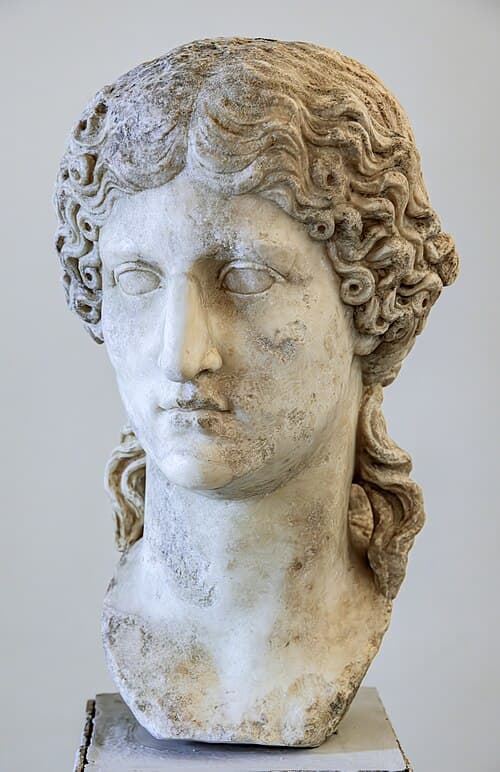
This imaginary interview was generated by artificial intelligence from sources documented in Theodora's profile. It dramatises what the figure might have said based on what we know about them, but does not constitute attested historical testimony. For primary sources and factual documentation, refer to the full profile.