Imaginary dialogue between Procope de Césarée and Theodora
by Charactorium · Theodora (497 — 548) · Politics · 5 min read
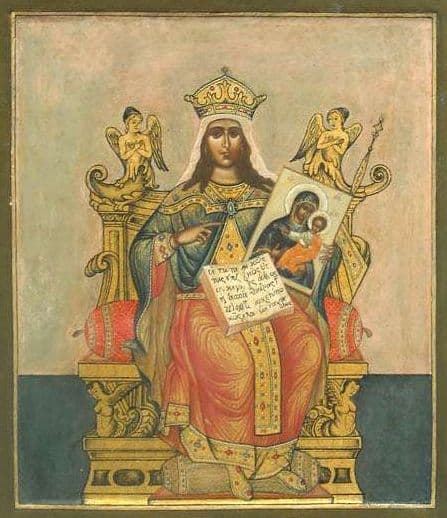
It is in an audience hall of the Great Palace of Constantinople, on an autumn afternoon in 545, that Procopius of Caesarea is admitted to the empress. Light glides over the glass mosaics and catches the gold embroidery of her purple robe. Scribe and advisor to Belisarius's campaigns, Procopius has known the court for a long time: he has seen Theodora settle state affairs between two audiences with ambassadors. This time he comes not to record a war, but to understand the woman behind the diadem.
—Augusta, I who have seen so many great men of the Empire pass through here, I do not forget where you come from. What remains in you of the child of the Hippodrome?
Everything, Procopius. People think that purple erases the past: it only covers it. My father tamed beasts for the Greens, my mother appeared on the stage, and I myself danced before that crowd you know so well. I learned there what no tutor teaches the sons of senators: hunger, the contempt of the powerful, the way a woman alone survives. When today I receive a patrician who looks down on me, I can read the fear beneath his haughtiness. I have been called an actress, a nobody. I have not disowned that. It is my strength: I know what a man is worth when he has nothing left but his nakedness.
People think that purple erases the past: it only covers it.
—Let us speak of that night in 532. The city was burning, the Hippodrome roared with the cry Nika. Advisors urged the emperor to flee by sea. You were there. What did you say?
The ships were ready at the port, the gold loaded, the horses saddled. The bravest men lowered their eyes. I spoke last, and briefly. I said that he who has donned purple cannot leave it to become an exile, that I could not bear to live a single day without being called sovereign. The purple shroud, I added, makes a fine winding sheet. Justinian raised his head; Belisarius and Mundus understood that we would no longer flee. What happened afterwards in the arena, you know better than I, you who recorded the account. But that night, it was not a battle that saved the throne: it was a refusal.
He who has donned purple cannot leave it to become an exile.
—You knew the mortal risk if the revolt prevailed. Where did you get that assurance in the face of seasoned generals who themselves wavered?
Precisely because I was not a general, Procopius. They weighed legions, positions, odds. I had seen people die all my childhood, in the street as in the arena, and I learned that fear kills more surely than iron. A throne is not defended with calculations: it is defended with disdain for death. I had already lost everything once, young, abandoned far from here. Losing again no longer frightened me. Men who have much to keep tremble; those who have risen from nothing do not tremble twice. That is what purple does not give and what the Hippodrome had taught me.
Fear kills more surely than iron.
—You receive me here, in the Sacred Palace, where embassies pass and appointments are decided. You are said to be present in all state affairs. Is it true, or a corridor rumor?
Rumors always say both more and less than the truth. Justinian and I decided from the beginning to undertake nothing without each other. I receive envoys from the Persians as well as those from the eastern bishops, I inform myself, I advise, sometimes I decide when the emperor hesitates. A governor's appointment, a pardon, an alliance: nothing is foreign to me. People are offended because I am a woman and my name was once shouted in a theater. But the Empire is not governed with a single pair of eyes. Justinian sees far; I see men up close. Together we form a single gaze. You who write the dispatches know how many decisions secretly bear two signatures.
Justinian sees far; I see men up close.
—Under your influence, the emperor promulgated Novels protecting women: divorce, property, the fate of actresses. Why are these laws so dear to your heart?
Because I was that woman whom the law did not protect. A girl who appeared on the stage was considered infamous, unworthy of an honorable marriage, given to whoever wanted her and then discarded. I had it written that such a woman could leave that profession, marry, and no one would reproach her for it. I wanted a repudiated wife to keep her property, an abandoned woman not to fall into the street. They call me sentimental; I answer that nothing is more political. An Empire that lets its poor daughters perish eats away at itself. These laws do not repair my past, Procopius — it is too late for me. They spare others what I have known.
I was that woman whom the law did not protect.
—Some murmur that you are thus buying forgiveness for your own beginnings. What do you reply to those who judge these laws too lenient?
Let them live for a month what a woman without name or protector lives, and we will talk again about leniency. The severity of judges is easy when one dines in purple. I seek no forgiveness: those who despise me will continue to do so, laws or not. But the contempt of the well-born does not make justice. Christ did not drive away the sinner; why would I? A redeemed woman, married, mother, is worth more to the Empire than a woman thrown into the gutter who curses the throne. It is not pity, it is calculation. And if they also want to see the memory of my youth, well, let them see it. I do not blush for it.
The severity of judges is easy when one dines in purple.
—You openly protect the monophysite monks that Rome deems heretical, you shelter them, you finance their refuges. Is this not defying the orthodoxy of your own emperor?
Justinian upholds the Council of Chalcedon, I know it and I respect it. But these men of the East, these monks from Egypt and Syria, are not enemies: they are subjects of the Empire who pray to the same Christ differently. To drive them out is to throw them into the arms of the Persians. I shelter them, I feed them, some even lodge under this palace. The emperor knows and turns a blind eye: where he strikes, I temper. An Empire is not governed only with anathemas. I have seen too many persecuted bishops wander the roads to believe that one saves the faith by breaking the faithful. My outstretched hand is worth more, for Constantinople, than a thousand condemnations.
Where he strikes, I temper.
—You also raise sanctuaries, like the church of Saints Sergius and Bacchus. What do you seek in building thus for God and for your own?
A stone lasts longer than a favor, Procopius. The men I shelter today will die; a sanctuary remains and continues to welcome. Sergius and Bacchus, near the palace, is also a home for those from the East who have nowhere to pray in peace. I build as I legislate: so that what I hold in my hand does not come undone at my death. They say I want to mix my mark with that of the emperor on every wall of the city. It is true. What remains of an empress, if not the laws she made and the stones she raised? The rest, men forget in a season.
A stone lasts longer than a favor.
—When I saw you earlier receive the envoy from the East, you listened to him for a long time before speaking. Is that your way of governing?
You who take the words of others to set them down on paper should understand that better than anyone. People think that power consists in speaking; it consists first in listening. An ambassador always says two things: the one he learned by heart, and the one that escapes him. It is the second that interests me. I have lived among people who lied to survive; I know how to recognize truth in the tremor of a voice. Justinian loves grand designs, laws, reconquests. I hold the thread of men, one by one. When I am silent, it is not weakness: I weigh. And when I finally decide, the emperor knows it is because there is nothing more to add.
People think that power consists in speaking; it consists first in listening.
—Finally, Augusta: if one day your life were to be told, from the stage to the diadem, what would you want to be remembered?
I care little what will be remembered, Procopius — the living write what suits them, and you know something of that. But if one must tell the truth, let it be said: a woman who started from nothing held an Empire without ever forgetting the rank from which she came. I did not reign against my past, I reigned with it. The laws for women, the asylum for the persecuted, the refusal to flee in 532: all come from the same source, that child of the Hippodrome who knew the cost of abandonment. Let them call me scandalous, so be it. But let them add that I was useful to this city. The rest, I leave to your pen and to the judgment of God.
I did not reign against my past, I reigned with it.
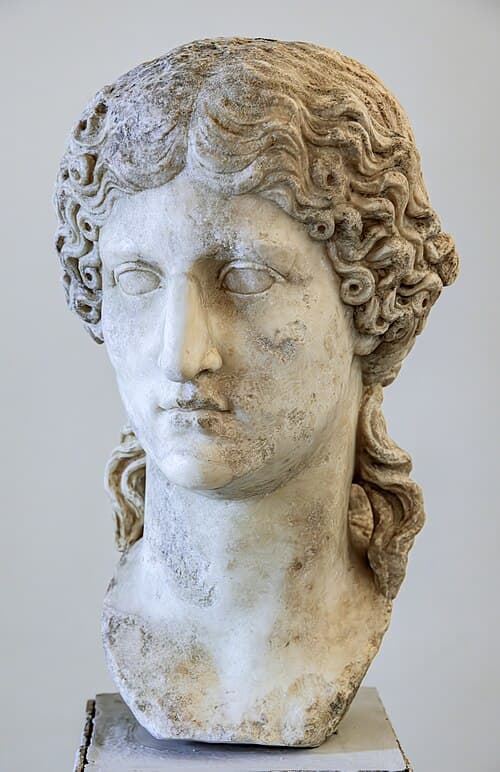
This imaginary interview was generated by artificial intelligence from sources documented in Theodora's profile. It dramatises what the figure might have said based on what we know about them, but does not constitute attested historical testimony. For primary sources and factual documentation, refer to the full profile.