Imaginary interview with Theodora
by Charactorium · Theodora (497 — 548) · Politics · 6 min read
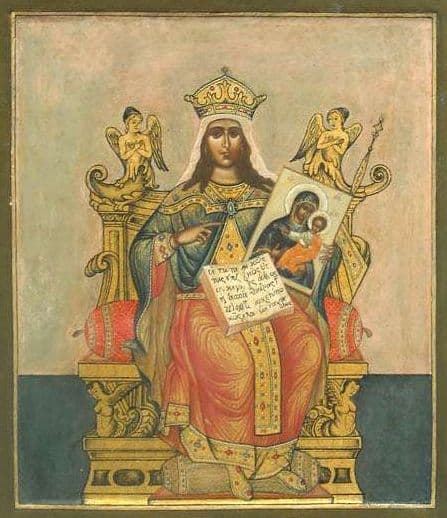
Beneath the gilded vaults of the Great Palace of Constantinople, where the stretched purple filters the light of the Sea of Marmara, the empress receives visitors, seated near a still-damp mosaic. She knew the sawdust of the Hippodrome before the marble of the throne, and her gaze falters before no one. Here are her words, gathered as one gathers water from a living spring.
—They say you were born into the circus world. How would you describe your childhood home?
My father kept the wild beasts for the faction that roared at the Hippodrome of Constantinople, and my mother took the stage when the crowd demanded laughter. As a child, I slept to the sound of bears and chariots, and I was thrown onto the stage before I could read the Psalms. To the well-born, a girl of the sawdust was nothing but a potential courtesan, a creature to be scorned even as they came to applaud her. I knew it. I grew up knowing that the world looks at you without seeing you. But God, who raises the humble, lifted me from that dusty slope to the marble. One does not forget the smell of where one comes from; it keeps you clear-eyed when the flatterers bow.
I grew up knowing that the world looks at you without seeing you.
—Many considered it scandalous that a woman of your background could ascend the throne. What did you say to those whispers?
When Justinian wanted to marry me, the law itself had to be changed, because an actress could not marry a man of senatorial rank. The old families turned up their noses: the purple, they said, cannot be cut from a theater curtain. I let them talk. Birth is a chance that God distributes; firmness of soul is forged by oneself. I had learned on the stage to hold a crowd, to read fear and envy on a thousand faces at a glance—a more useful skill, believe me, than all the coats of arms. Those who thought I came from the gutter ended up begging for audiences at the Sacred Palace. Providence mocks genealogies.
Birth is a chance that God distributes; firmness of soul is forged by oneself.
—Let us come to the terrible year: 532. What was happening in the palace when the city went up in flames?
The Nika revolt rose like a tide. The Blues and the Greens, those factions that usually hated each other at the Hippodrome, had united against us, and half of Constantinople was burning. In the council, I saw the ministers turn pale, and ships were already being prepared to flee by sea. The emperor himself hesitated. That is the hour when a woman must speak when men are silent. I said that I could not bear to leave the purple: he who has donned it cannot lay it aside to live in exile. Better an emperor's shroud than a long life as a fugitive. The silence that followed was worth all the armies.
Better an emperor's shroud than a long life as a fugitive.
—Do you remember the precise moment when your words tipped the balance?
I still see the faces in the audience hall, those grave men suddenly reduced to their childhood fears. When I finished, Justinian no longer spoke of flight. He sent his generals, and blood flowed in the very Hippodrome where my father once led his beasts—what a strange turn of fate, that the circus of my childhood became the place where the fate of the Empire was sealed. They say thousands perished that day. I do not rejoice in it: the order willed by God sometimes comes at a high price. But a throne abandoned out of cowardice delivers the entire kingdom to chaos. I chose to hold firm.
—You are credited with laws that changed the lives of women in the Empire. What wounds did you want to heal?
I had seen, backstage in the theaters, what was done to girls who were despised: sold, repudiated, cast out without bread or shelter. Once empress, I used my influence so that Novels would protect those whom no one protected. An actress could leave her condition without being forced back; a repudiated wife retained some right to her property; divorce was no longer a weapon turned against the woman alone. My enemies said I was legislating for my former world. It was true, and I was not ashamed of it. When you have known the edge of the abyss, you build railings. The law, under the hand of a Christian prince, must lift up the weak, not finish them off.
When you have known the edge of the abyss, you build railings.
—How did an empress get such laws passed in a world governed by men?
I am often depicted sitting silently near the Augustus, a mere ornament of the court. The truth is more discreet and more tenacious. It is at the evening table, in the apartments of the Sacred Palace, that what ministers think they decided alone is actually decided. I knew the dossiers, the names, the grudges; I had the emperor's ear and the patience of water that wears away stone. When a cause mattered to me, I carried it until it was inscribed in the Novels, those new constitutions that form the living flesh of law. A woman does not need to brandish the scepter to govern; she only needs to know where to lean and never let go.
I had the emperor's ear and the patience of water that wears away stone.
—You protected Christians whom Rome considered heretics. Why take such a risk?
The Monophysite monks were hunted like game, driven from their sees, pursued even to Alexandria. Many at court urged me to abandon them so as not to offend the Western bishops. But my faith tells me that one has no right to hand over pious souls to the wolves for the sake of a quarrel of words over the nature of Christ. I gave asylum to persecuted bishops within the very walls of the palace; I fed them, hid them, defended them. The emperor leaned one way, I the other—and perhaps that balance was better for the Empire than a single closed fist. Before God, I would rather answer for having protected too much than for having handed over too many.
I would rather answer for having protected too much than for having handed over too many.
—Wasn't it dangerous to defy the official orthodoxy of the Empire?
Dangerous, certainly. But I learned in the Hippodrome that the crowd, like doctrine, changes sides more quickly than one thinks. In 545, as the quarrel worsened, I threw all my weight in favor of the persecuted of the East, knowing that the Empire extends far beyond the walls of Constantinople, to the deserts of Egypt and Syria where these faithful are legion. To break those provinces for the sake of a formula would have weakened the crown as much as the Church. Firmness is not blindness. A wise prince protects even those he does not follow in everything, for that is how one keeps an entire Empire under a single purple.
—Let us talk of stone and gold. Which building did you hold closest to your heart?
The church of Saints Sergius and Bacchus, which we had built not far from the palace. I loved to watch the glass mosaics come into being, those gold tesserae that a craftsman sets one by one until the entire wall breathes divine light. To build for God is to make visible what prayer says in a whisper. We also supported the great work of Hagia Sophia, completed in 537, whose dome seems suspended by a chain let down from heaven. Much has been said of my stage past; let them look instead at these walls. The theater erected sets that were dismantled by morning; here, I wanted to erect sets for eternity.
The theater erected sets that were dismantled by morning; here, I wanted to erect sets for eternity.
—What did you seek to leave behind through this patronage of churches and monasteries?
An empress passes; the purple is passed on, the diadem adorns another brow, and even names are forgotten. But a church remains, and every generation that kneels there prays a little for those who built it. I financed monasteries, hospices, refuges, because charity is the only currency one takes to the grave. On coins, the gold nomisma, our faces are engraved alongside the emperor's; but metal wears out and changes hands. Consecrated stone, however, bears witness. I wanted to be remembered less as the dancer of the Hippodrome than as the hand that raised walls toward heaven.
Charity is the only currency one takes to the grave.
—In hindsight, would you say that night in 532 defined who you were?
Everything I had been converged that night. The girl of the sawdust who knew not to tremble before a crowd; the wife who knew her Augustus's soul better than his ministers; the woman who had brushed too close to misery to fear death more than dishonor. When you have already lost everything in advance, you flee from nothing. I held firm not out of a soldier's bravery, but because I knew the price of a crown that is abandoned. The rest—the laws, the churches, the saved bishops—flows from that same water: never let go of what providence has placed in your hands. That, I believe, is my entire reign summed up in a single night.
When you have already lost everything in advance, you flee from nothing.
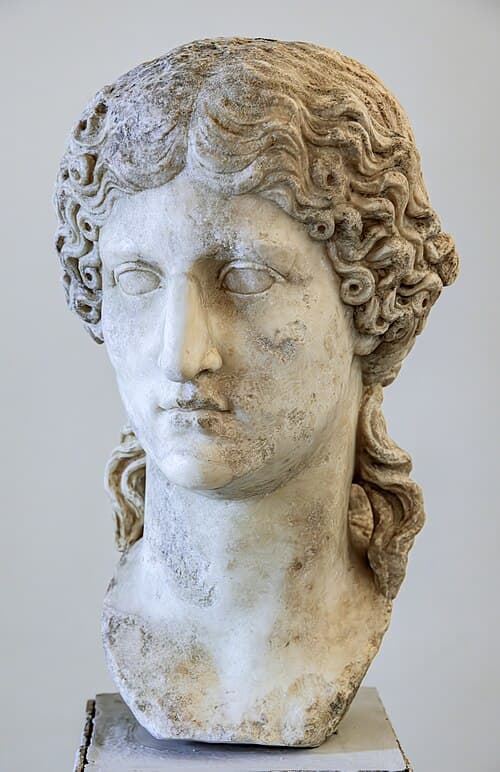
This imaginary interview was generated by artificial intelligence from sources documented in Theodora's profile. It dramatises what the figure might have said based on what we know about them, but does not constitute attested historical testimony. For primary sources and factual documentation, refer to the full profile.