Imaginary interview with Theodosius
by Charactorium · Theodosius (583 — 602) · Politics · 6 min read
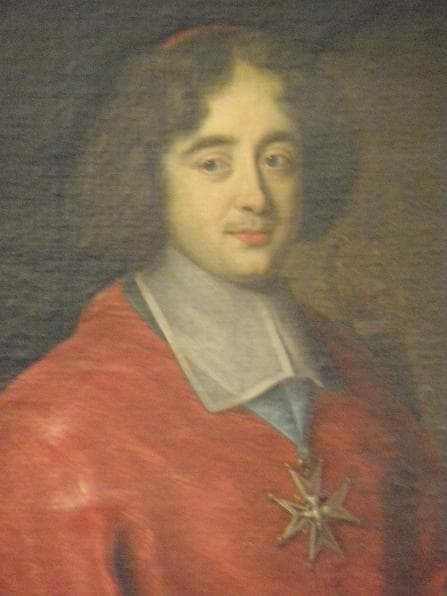
Constantinople, under the reign of the Byzantine sun. In a hall of the Sacred Palace, where the distant sound of masons on the ramparts can be heard, a still-young emperor receives us, surrounded by parchments and wax tablets. Theodosius II agrees to speak of his walls, his laws, and that sister who watched over him.
—You were made emperor as a child. What remains of that seven-year-old boy placed on the throne?
I was seven years old when the diadem was placed on my brow, in 408. A child does not govern an Empire; he learns to be silent and to observe. My sister Pulcheria held the helm while I grew up, and I owe her more than to my rhetoric teachers. Today I am criticized for having entrusted so much to my generals and counselors, whom I received every morning before the offices. But tell me: must a man claim to do everything alone to be great? My father Arcadius left me a throne, not innate knowledge. I preferred to listen to those who understood war and the frontier, rather than playing the strategist in purple. Wisdom, as the Ancients said, begins with knowing one's own measure.
A child does not govern an Empire; he learns to be silent and to observe.
—What role did your sister Pulcheria truly play by your side?
Pulcheria was my regent, my counselor, and a bit of my conscience. When I was too absorbed in my parchments and grammarian disputes, it was she who brought state affairs back to the agenda. At the Sacred Palace, mornings were alike: first the offices, for a Christian emperor prays before judging, then the ministers and questions of the Eastern army. It has been said that I let myself be governed; I reply that I let myself be surrounded, which is not the same thing. The Persians in the east, the barbarians in the west — no man holds two frontiers alone. I learned from her that a firm will is better than a shouting voice, and that a family's piety sometimes does more for a throne than ten legions.
—Let us speak of your ramparts. Why so much effort to encircle Constantinople with walls?
Because a capital without walls is a promise to the barbarians. In 410, Alaric and his Visigoths sacked Rome — Rome, the eternal city! That news swept through the Empire like a chill. I gave the order, as early as 413, to raise around my city a triple line of stone, nearly seven kilometers running from the Golden Horn to the Propontis. They are barely finished, these Walls of Theodosius, and I already know they will hold. The engineers speak to me of ditches, towers, double curtains; I think of the generations who will sleep peacefully behind them. Rome fell for lack of walls worthy of her; Constantinople will not fall for that reason.
A capital without walls is a promise to the barbarians.
—You seem certain that these walls will outlive you. What makes you so confident?
Go see for yourself, out there to the west, where the masons are still busy. This is not a simple rampart, but three staggered lines: an inner wall high as several men, an outer wall, and the ditch in front. An attacker who crosses the first dies before the second. When an earthquake shook them, my prefects had them rebuilt in a few weeks, because the whole city pitched in. I do not have the gift of prophecy, but well-laid stone speaks for itself. If I am read in a century or in ten, I would like it said: his laws have aged, his wars have faded, but his walls still stood. That is the most modest and most lasting ambition of an emperor.
—Let us turn to your great legal work. What did you intend to accomplish with the Theodosian Code?
To bring order to the chaos of laws. Since Constantine, edicts had accumulated by the hundreds, scattered, sometimes contradictory, so that no judge knew which rule to follow. In 438, I had the laws of my ancestors and my own gathered into a single collection — more than two thousand five hundred provisions, carefully transcribed so that no subject could plead ignorance. My ordinance stated it clearly: let everything be gathered into a single code, so that no one may be ignorant of the law. An Empire is held together not only by its walls and legions, but by that invisible thread which is the law known to all. This Codex is my wall of words, as necessary as that of stone.
This Code is my wall of words, as necessary as that of stone.
—Why insist so much that everyone, down to the humblest, should know the law?
Because a hidden law is not a law, it is a trap. What use is an edict if the merchant of Antioch or the peasant of Thrace cannot know what it commands? I wanted my magistrates — praetors and prefects — all to draw from the same source, not according to their mood or interest. The Theodosian Code is copied on parchment for the provinces, proclaimed, applied from East to West. My Western cousin, the court of Ravenna, received it as well. The jurists will tell me if I did well; I believe that a prince who gives his people clear rules gives them more than victories. Battles pass, written laws remain.
—In 431, you convened the bishops at Ephesus. What did you expect from such a council?
That a question tearing my peoples apart be finally settled: what is the nature of Christ? These disputes are not subtleties of idle clerics; when the faithful are divided, the Empire cracks. So I gathered at Ephesus, in 431, the bishops of the entire Christian world, from Egypt, Syria, the West. An emperor does not define the faith — that is not his office — but it falls to him to convene those who can and to enforce their sentence. My piety is praised; I prefer that my concern for unity be remembered. One faith, as one law, under one throne: that is what I sought. Theological quarrels are fires; better a council than a civil war.
Theological quarrels are fires; better a council than a civil war.
—Some will say that an emperor should not meddle in Church affairs. What do you answer them?
I answer that power and altar do not walk separately in my Empire. I begin each day with the offices before receiving my ministers; how could one expect me to be deaf to the divisions of the Church the rest of the time? I do not mount the pulpit, I do not recite dogma — that I leave to the bishops. But when orthodoxy is in peril, who but the emperor has the strength to gather the council, guarantee peace in debates, enforce their decrees throughout the East? Constantine did it at Nicaea before me; I walk in his footsteps. A Christian throne that takes no interest in the faith of its subjects saws off the branch on which it sits.
—You also founded a school in Constantinople. What good are grammarians in a century of invasions?
Precisely because the century is harsh. When kingdoms collapse and barbarians take Carthage, one thinks knowledge is a luxury; I believe the opposite. In 425, I gathered in Constantinople the best masters of rhetoric, grammar, philosophy, Greek and Latin, to teach under imperial authority. What would become of an Empire that had walls but no letters, laws but no one to understand them? The Ancients bequeathed us the language of Plato and that of Cicero; it would be shameful to let it die out through neglect. While the stone ramparts are rebuilt, I build a rampart for the spirit. One protects the city, the other civilization.
While the stone ramparts are rebuilt, I build a rampart for the spirit.
—Do you keep any time for personal study amid all this?
In the evening, yes. When the court banquets end and the dignitaries retire, I go to my apartments and read. Sacred texts, administrative documents, sometimes the calligraphers entrust me with their work — I have even been nicknamed the Calligrapher, for I love to trace beautiful letters with my own hand. Some think an emperor should spend his nights plotting or feasting; I hold that a prince who does not read governs blind. My school of Constantinople is only the public extension of this private taste. The Ancients said that the soul is nourished like the body; I believe that an Empire starved of spirit decays as surely as a besieged city. That is why I stay up late over my parchments.
This imaginary interview was generated by artificial intelligence from sources documented in Theodosius's profile. It dramatises what the figure might have said based on what we know about them, but does not constitute attested historical testimony. For primary sources and factual documentation, refer to the full profile.