Kids interview Theodosius
by Charactorium · Theodosius (583 — 602) · Politics · 5 min read
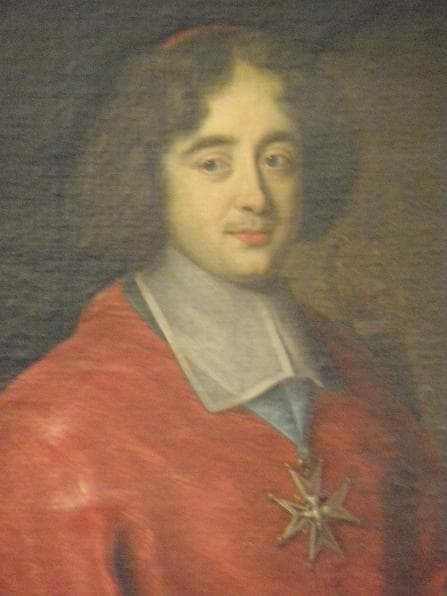
That morning, two middle school students on a field trip pass through the gates of a vast stone palace. At the end of a hall with golden walls, a man in a purple cloak awaits them, a gentle smile on his lips. He is Emperor Theodosius, and he has agreed to answer all their questions.
—How old were you when you became emperor?
Seven years old, my child. Imagine: you are barely old enough to run around a courtyard, and already they place a crown on your head. It was in 408. I was far too small to rule alone, so my elder sister Pulcheria watched over me. She was strict, but she loved me. You know, a child-emperor is no game. Everyone watches you, everyone waits. I grew up surrounded by advisors, soldiers, priests. I learned very early that an emperor never truly belongs to himself. My kingdom, the Eastern Roman Empire, counted on that little boy I was.
At seven years old, I learned that an emperor never truly belongs to himself.
—Why did you build those huge walls around the city?
Because I was afraid, quite simply. In my time, peoples from the North, called barbarians, attacked cities and plundered them. In 410, they even sacked Rome! Imagine the terror. I did not want that to happen to my capital, Constantinople. So I ordered it to be surrounded by a double stone wall, nearly seven kilometers long. Imagine a wall so high that a ladder looks tiny beside it, doubled by a deep ditch. They are still called the Walls of Theodosius. When I walked along that rampart, I finally felt a little at peace for my people.
A good wall is not stone: it is the peaceful sleep of an entire people.
—And did your walls last long?
Longer than I ever imagined, my child. Over a thousand years! Think of it: generations upon generations were born, grew old, died, and my walls still stood. No enemy army managed to breach them for centuries. At every siege, the city held out. When I laid the first stone, around 413, I thought I was protecting my children and grandchildren. I did not know I was protecting people who would be born a thousand years after my death. That is the greatest gift a builder can give: a shelter for faces he will never see.
—What exactly is that famous Code you made?
Imagine a big house where, for centuries, every emperor had thrown his papers into every room, without any organization. That is what our laws were before me: a terrible mess. Nobody really knew what was allowed or forbidden! In 438, I decided to gather everything into one great collection: the Theodosian Code. I ordered that all laws, both old and mine, be brought together, so that no one could ever say 'I didn't know.' It was painstaking work, patiently written on wax tablets and then copied. Putting order into laws is putting justice into people's lives.
Putting order into laws is putting justice into people's lives.
—How many laws were there in total?
Over two thousand five hundred, my child! Can you imagine? Picture a pile of scrolls so high it towers over your head. Each one regulated a piece of life: how to judge a thief, how to pay taxes, how to marry, how to pray. At first, it may seem boring, all these rules. But think: without them, the strongest decides everything, and the weak have no protection. My Code served as a model long after me, even to the kingdoms that arose after the fall of Rome. Well-written laws, you see, travel further in time than any army.
—Is it true that you preferred books to battles?
It is true, and I do not hide it. In the morning, many emperors dreamed of conquests; I dreamed of reading. In 425, I founded a great university in Constantinople. Imagine a house filled with the best teachers of grammar, rhetoric, and philosophy, where young people came to learn the knowledge of the ancient Greeks and Romans. While the world around was collapsing, I wanted to keep that flame alive. Some mocked me, said I was too gentle. But tell me: what is the use of defending an empire if you let everything beautiful inside it die?
What is the use of defending an empire if you let everything beautiful inside it die?
—But then, who fought your wars for you?
Good question, and an honest one. Since I spent much time with my books and prayers, I entrusted the command of the armies to my generals, men of the trade who knew war better than I. That is something a leader must learn, my child: you cannot do everything yourself. A good emperor surrounds himself with people stronger than him in certain areas. Of course, it is a risk: if you trust, you can be betrayed. But ruling alone, without anyone, is impossible. I preferred to handle the laws and the faith, and leave the sword to those whose talent it was.
—Why did an emperor have to deal with questions about God?
Because in my time, my child, faith and empire were one body. If people tore each other apart over religion, the whole country trembled. Now, in my day, a great dispute stirred the Christians: who really was Christ—God, man, or both? Tempers flared in the streets as well as in the churches. As emperor, I could not stand idly by. A quarrel about Heaven could set the earth on fire. So I made my greatest religious decision: to summon all the bishops to decide together.
A quarrel about Heaven could set the whole earth on fire.
—And how did you get them to agree?
I brought them all together. In 431, I convened a great council in the city of Ephesus. Imagine dozens upon dozens of bishops from across the empire, sometimes after weeks of travel by boat and mule, gathered in a single church to discuss, vote, pray. It was enormous. I did not decide the truth alone, you see: I gave the wise the place and time to talk to each other. You know, a leader does not always need to be right himself. Sometimes, his greatest power is simply to bring together around a table those who need to speak.
—Did you have dangerous enemies far from home?
Oh yes, and formidable ones! To the east of my empire lived the powerful Persian people. We could have fought endlessly, burned our crops, and lost our young men. But in 422, I chose another path: peace. We signed a treaty that fixed a clear border between us. Imagine two neighbors who, instead of throwing stones at each other over the wall, finally decide to mark the garden line together. That freed my mind to focus on the rest. You know, making peace is not weakness. Often, it takes more courage to sign an agreement than to draw a sword.
It often takes more courage to sign peace than to draw a sword.
—And with the attacking barbarians, how did that go?
That was harder, my child. Peoples like the Vandals had become very powerful; they had even taken the rich city of Carthage. In 441, they threatened my empire. Rather than risk everything in an uncertain battle, I negotiated again, and we concluded a peace agreement. My walls, my diplomacy, and my laws allowed the Eastern Empire to stand while the Western one collapsed. That is what I leave you, and all who come after: a reign is measured not by the number of battles won, but by everything you managed to keep alive.
This imaginary interview was generated by artificial intelligence from sources documented in Theodosius's profile. It dramatises what the figure might have said based on what we know about them, but does not constitute attested historical testimony. For primary sources and factual documentation, refer to the full profile.