Imaginary dialogue between Albert le Grand and Thomas Aquinas
by Charactorium · Thomas Aquinas (1225 — 1274) · Philosophy · 5 min read
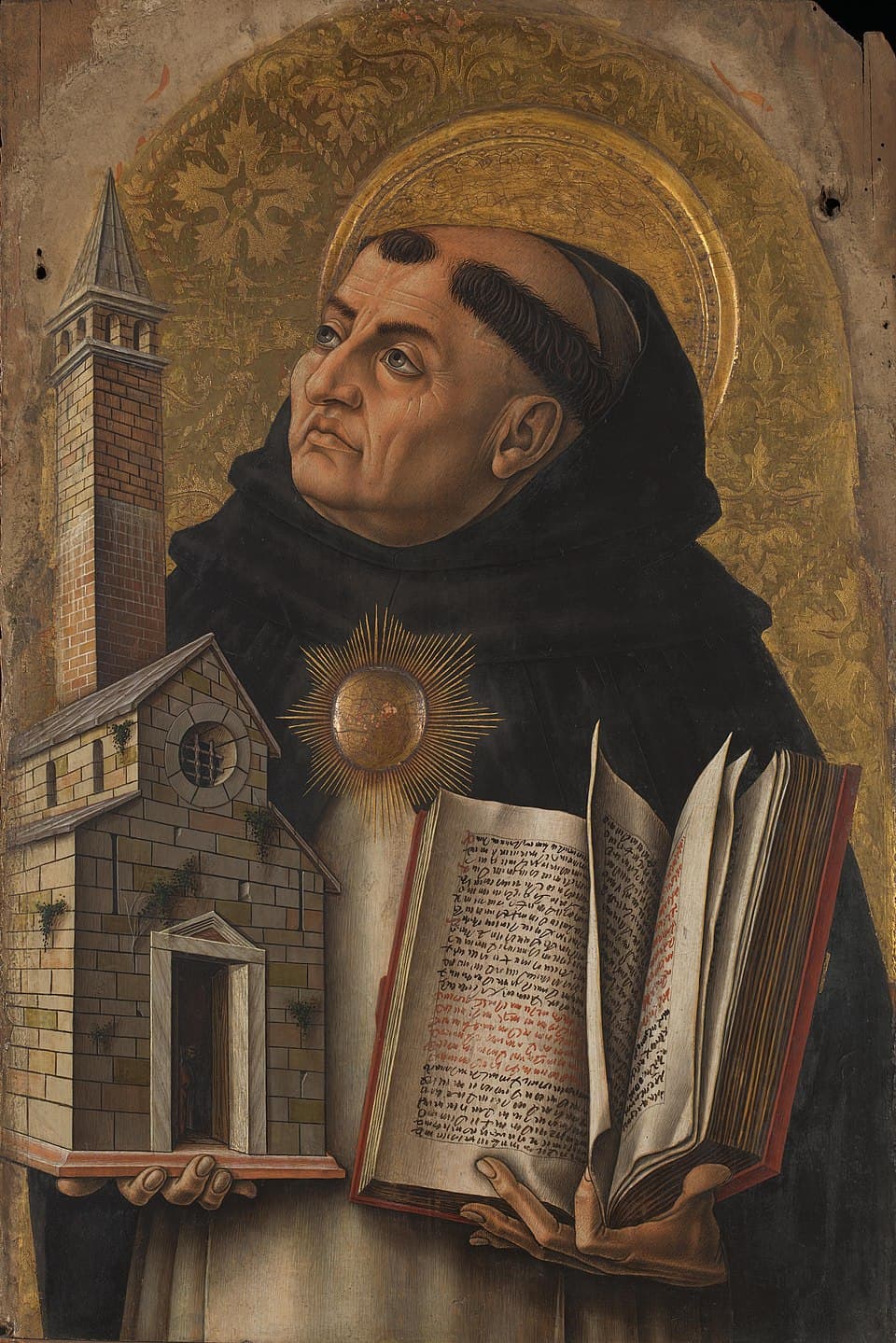
It is in the silence of a cell in the Dominican convent of Naples, in this winter of 1273, that Albert the Great finds his former pupil. A thin oil lamp lights a lectern where the pen rests, dry, abandoned for weeks. The master and the disciple have known each other since Cologne, since those years when they mocked the young man too massive and too mute; today Albert comes as an old friend, worried about this parchment left blank.
—Thomas, do you remember that in Paris your classmates nicknamed you the mute ox? Did this silence weigh on you, or did you choose it?
I chose it, master, and you alone understood. The others took my slowness for dullness of mind; you guessed that I ruminated before speaking, like the ox ruminates before nourishing. You defended me before the whole hall that day, and I kept a debt that the years have not erased. The noise of disputes exhausted me; I preferred to weigh each word in my heart rather than throw it to the wolves. Besides, silence is the first teacher of one who wants to hear God. They thought I was absent; I was actually entirely present—but to something other than the chatter of the School.
They thought I was absent; I was actually entirely present, but to something other than the chatter of the School.
—The brothers still complain that you forget to eat. Already at my old table in Cologne, I had to remind you of meals. Why this relentless drive?
Because a difficulty, when it grips me, does not let go until I have unraveled it. You laughed to see me, in Cologne, staring at the wall during supper, the spoon forgotten in my hand. It is not virtue, it is almost a flaw: the hungry intellect silences the belly. Once, they say, at the table of the king of France, I struck my fist crying out that I had finally found an argument against an error—forgive your old disciple this impropriety. The body protests, certainly; but when a truth approaches, one must seize it before it flees. Rest will come after. Or will not come.
The hungry intellect silences the belly.
—It was you, in Cologne, who put Aristotle into my hands. Many in the Church still see him as a dangerous pagan. Were you afraid of getting burned?
Afraid, no; cautious, yes. You taught me that a truth, wherever it comes from, comes from God, for God is the source of all light, even that of a Greek who died before Christ. The Philosopher saw nature as no other; why would I reject what my eyes confirm? But I know what is whispered: that I am letting the wolf into the sheepfold. Therefore I have never yielded Aristotle without measuring him against faith. Where he errs—on the eternity of the world, for example—I correct him without trembling. Reason does not contradict faith; they have the same Author. He who opposes them insults both.
Reason does not contradict faith; they have the same Author.
—You have commented on his Nicomachean Ethics, his Treatise on the Soul. What are you seeking, deep down, in this labor on such an ancient author?
I seek to restore to man what the Greek showed him without naming it. Aristotle knows what a soul is, how it informs the body, how virtue is acquired by habit, not by decree. All this is true and useful to the Christian. My work is not to repeat the Philosopher, but to lead him further than he could go alone, to the threshold of the grace he ignored. To comment, for me, is not to serve: it is to dialogue with a dead mind as one dialogues with a living one. You who opened these texts in the West, you know that we are not copyists—we are builders who take their stones where they are good.
We are not copyists; we are builders who take their stones where they are good.
—They say that you dictate to several secretaries at once, moving from one to another. How can your mind hold several subjects together?
It seems prodigious, and yet it is simple: each question, once clearly posed, unfolds almost by itself, like a thread that one pulls. While one hand writes the end of an article, I already see the beginning of the next; I just turn to the other brother and continue. It is not magic, it is order. The Summa is built like a cathedral: each stone calls for the next, and I invent nothing on the spot—I say what the structure demands. My secretaries complain mainly of my voice that does not stop. The reed pen runs behind thought, never the other way around.
The Summa is built like a cathedral: each stone calls for the next.
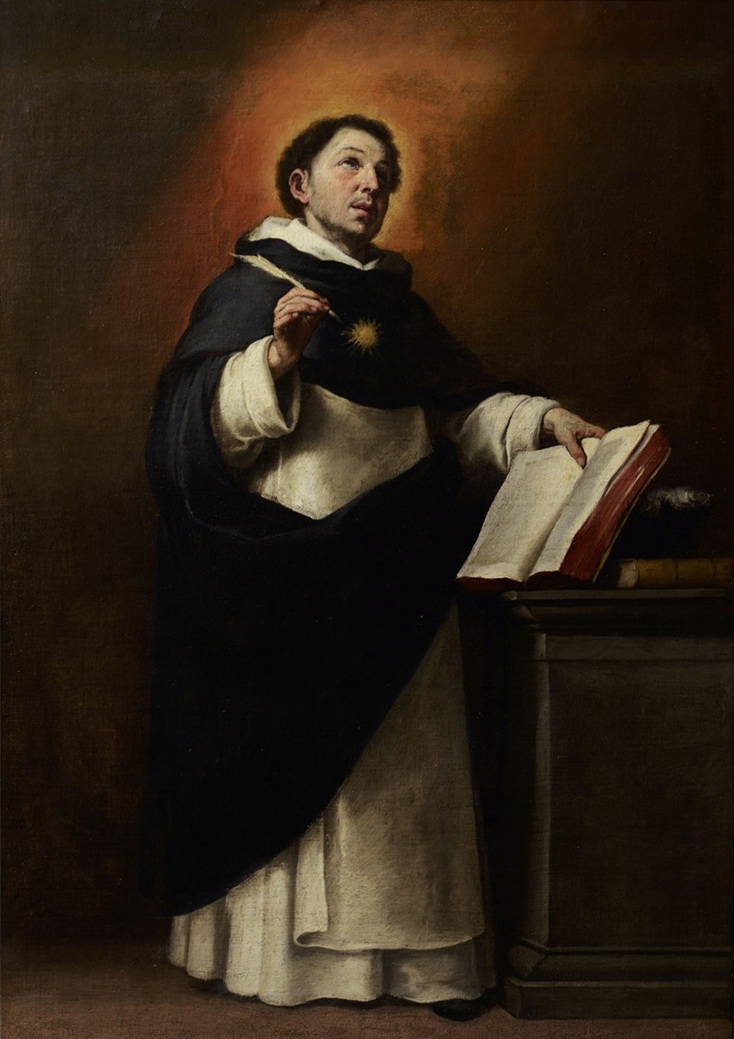
—Your Summa Theologica already exceeds all measure. For whom is it intended, you who could write for doctors alone?
For beginners, master—it is written at the head of the work. That may make you smile, you who saw me struggle with my first Sentences. I found the young brothers overwhelmed by the disorder of questions, repetitions, useless disputes that discouraged them before they had even learned. So I wanted a clear path, where everything comes in its place and at its time. They tell me the work is immense; but what is ordered, even vast, can be traversed without getting lost. Disorder, on the other hand, discourages from the first step. I do not write to display knowledge: I write so that a young mind can climb, step by step, without breaking its legs.
What is ordered, even vast, can be traversed without getting lost.
—In the Summa, you claim to show by reason alone that God exists. Is it not presumptuous to want to prove the invisible?
I do not prove the invisible, I ascend from the visible to its source. Look at the world: everything moves, and nothing moves itself without a first cause; everything is caused, and the chain of causes cannot go back infinitely. Five paths, five roads that start from what our senses touch and lead to what reason calls God. I did not see God at the end of my syllogism; I saw that it is impossible that He is not. That is less than faith, much less—faith knows a Father, reason only touches a First Mover. But to one who doubts, we must reach out a hand by which he can grasp: by the reason he already possesses.
I did not see God at the end of my syllogism; I saw that it is impossible that He is not.
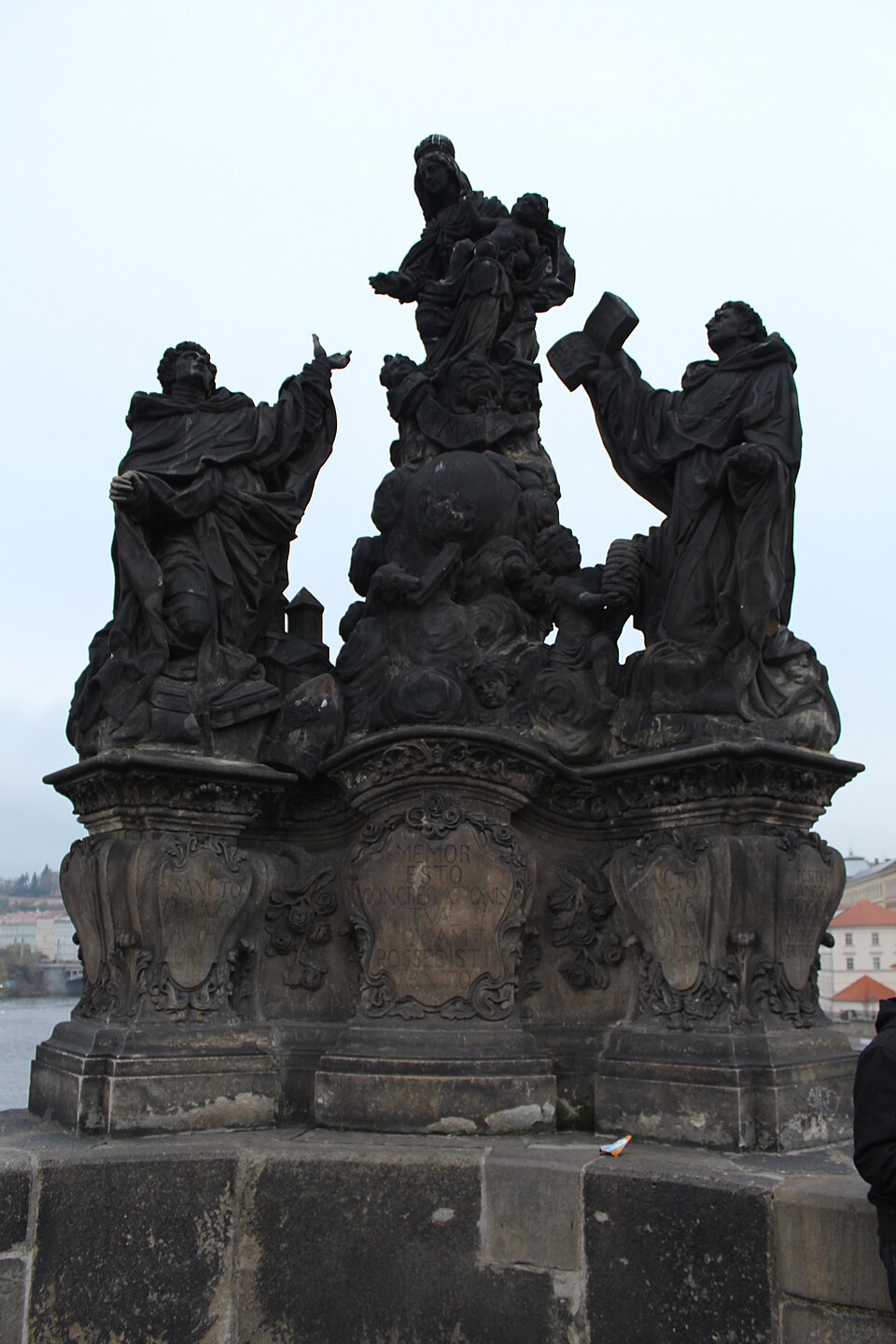
—Your Summa contra Gentiles is addressed to those who do not have Scripture. Should we really argue with the unbeliever rather than pray for him?
We must do both, and you taught me that by sending me to preach. Before the Jew or the Saracen, I cannot brandish a Gospel that he does not hold as true; I have left reason, that ground we all tread, believers or not. There I can show that faith is not absurd, that what is contrary to it is false, and that at least the threshold of God can be reached by natural intellect. Beyond that, I stop: the Trinity, the Incarnation are not demonstrated, they are received. But to have removed false objections is already to have cleared the path. Prayer will do the rest, for no argument has ever converted a heart—it has only disarmed it.
No argument has ever converted a heart; it has only disarmed it.
—Thomas, your pen has been dry for weeks. They tell me that at Mass, recently, something happened to you. What happened, my son?
I do not know how to tell you, you who urged me so much to write. While I was celebrating, it was given to me to see—no, to sense—something before which everything I have written seemed like straw. Understand me: not false, but small, infinitely small compared to what touched me. How to take up the pen after that? The words I arranged with such care now seem like children's pebbles lined up at the edge of a vast sea. You knew me relentless, unable to let go of a question; here I am unable to grasp a single one. Perhaps this is the last lesson: knowing where speech must fall silent.
Everything I have written seems like straw to me.
—You frighten me. Are you going to leave the Summa unfinished, you who so hated abandoned work?
Perhaps, and it costs me more than you think. All my life I held that a work begun calls for its end, as the cathedral calls for its spire. But I begin to glimpse that a man is also a work, and that his own is not completed by him. I sought God through reason, I served Him through writing; now He gives Himself otherwise, and I must consent to this stripping. Do not be sad for me, master. You taught me to seek truth; you did not tell me that at the end of the road it would come itself to meet the seeker, and that I would then have to let go of the lamp. Pray that I know how to be silent with as much care as I have put into speaking.
You taught me to seek truth; you did not tell me that it would come itself to meet the seeker.
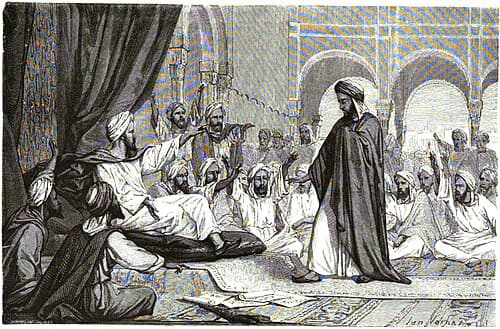
This imaginary interview was generated by artificial intelligence from sources documented in Thomas Aquinas's profile. It dramatises what the figure might have said based on what we know about them, but does not constitute attested historical testimony. For primary sources and factual documentation, refer to the full profile.