Imaginary interview with Thomas Aquinas
by Charactorium · Thomas Aquinas (1225 — 1274) · Philosophy · 6 min read
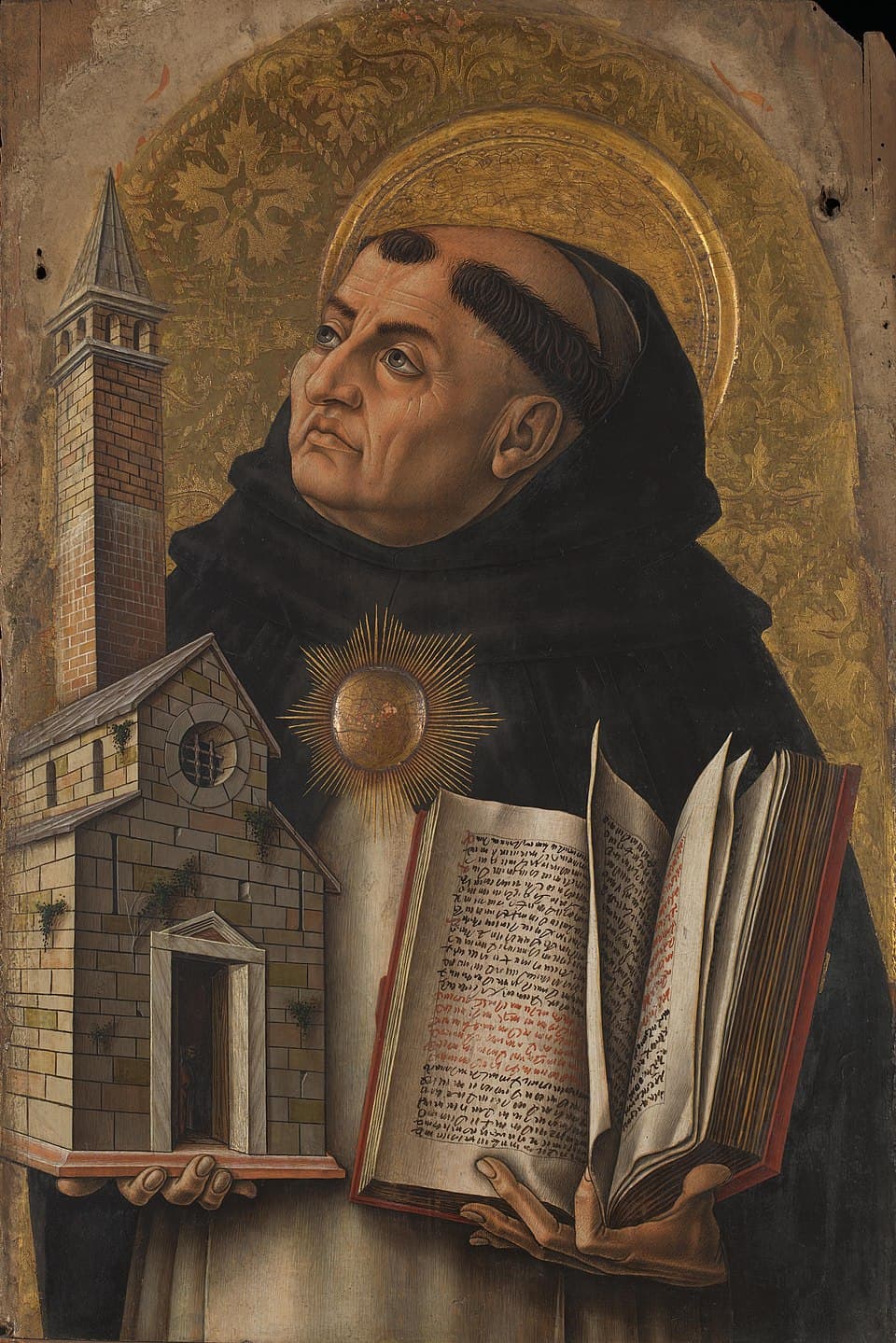
March 1272, the scriptorium of the Dominican convent in Paris smells of fresh ink and stretched parchment. A tall, slow-speaking friar waves away two secretaries waiting for his dictation. He consents, for the duration of an interview, to lift his eyes from his unfinished Summa Theologiae.
—It is said that at your early days in Paris your fellow students gave you a mocking nickname. How did you experience it?
They called me the dumb ox, and I took no offense. I was broad-shouldered, slow of speech, more inclined to listen than to harangue in the disputes of the University of Paris. My silence was taken for dullness of mind. But my master Albert the Great, who saw further than the mockers, replied that this ox would one day bellow so loudly that his cry would resound throughout the whole world. I do not know if he was prophesying or merely trying to put an end to the taunts. What I know is that a man who hastens to answer has listened to nothing, and that one does not build a Summa on noise. Silence, you see, is already a form of patience before truth.
A man who hastens to answer has listened to nothing.
—Your brothers say that you forget even to take your meals. What happens within you at such moments?
It is true, and sometimes they have to pull me by the sleeve to lead me to the refectory. When a quaestio grips me, the soup grows cold and I am none the wiser. This is not virtue on my part, nor contempt for the body that God has given us; it is that the intellect, when it seizes an object, clings to it like the eye to the sun. In my cell there is only a plank bed and a desk; nothing distracts. At the convent in Naples as here in Paris, my brothers have come to excuse these absences. I owe them many missed meals and many reminders to order. The Dominican rule prescribes sober eating; as for me, I sometimes do not eat at all, for want of thinking of it.
—Relying on Aristotle, a pagan philosopher, earned you severe reproaches. Why did you persist?
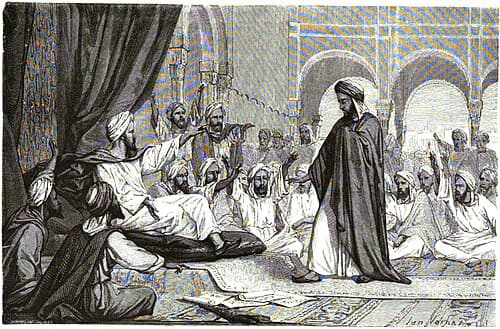
Because truth bears no baptism. Aristotle, whom we simply call the Philosopher — his books had barely returned to us, translated from Greek and Arabic, and some at the University cried scandal that a Christian should read a pagan with such love. On my desk, the Codex of Aristotle sits alongside Holy Scripture, and I see no offense in that. Reason is also a light that God has kindled in us; how could revelation contradict it, since both come from the same author? I have commented on his Nicomachean Ethics, his treatise On the Soul, not to baptize him by force, but to show that grace does not destroy nature, it perfects it. My opponents fear poison; I find only an instrument.
Grace does not destroy nature, it perfects it.
—What do you reply to those who judge Greek wisdom incompatible with the faith of Christ?
I tell them that Aristotle repeated to us that all men naturally desire to know, and that this desire is not a sin but a trace of the Creator in his creature. When I comment on his treatise On the Soul, I do not make a Greek a doctor of the Church; I use his rigor as one uses good timber to support a vault. Faith inhabits the edifice, reason hews the stones. Those who want to throw Aristotle into the fire fear that philosophy will swallow theology. That is to misunderstand both: the handmaid does not overthrow the mistress, she serves her. In the refectory I have heard brothers indignantly denounce my readings. I let them talk and return to my Codex.
—You are described as dictating to several secretaries at once. How does such a workshop work?
It is not a prodigy, it is necessity. The material presses, life is short, and a single reed pen cannot keep up with the flow. So I dictate to three or four brothers in turn, moving from one quaestio to another, one continuing the Summa while another notes a commentary. On their scriptorium desks the inkwells never dry, and the scratching of quills accompanies me like a chant of the office. I am told that the Summa Theologiae runs to thousands of folios; I have never counted them. I do not write for quantity, but because each question calls for another, and it would be dishonest to leave any unanswered. My secretaries take turns; I stop only at nightfall.
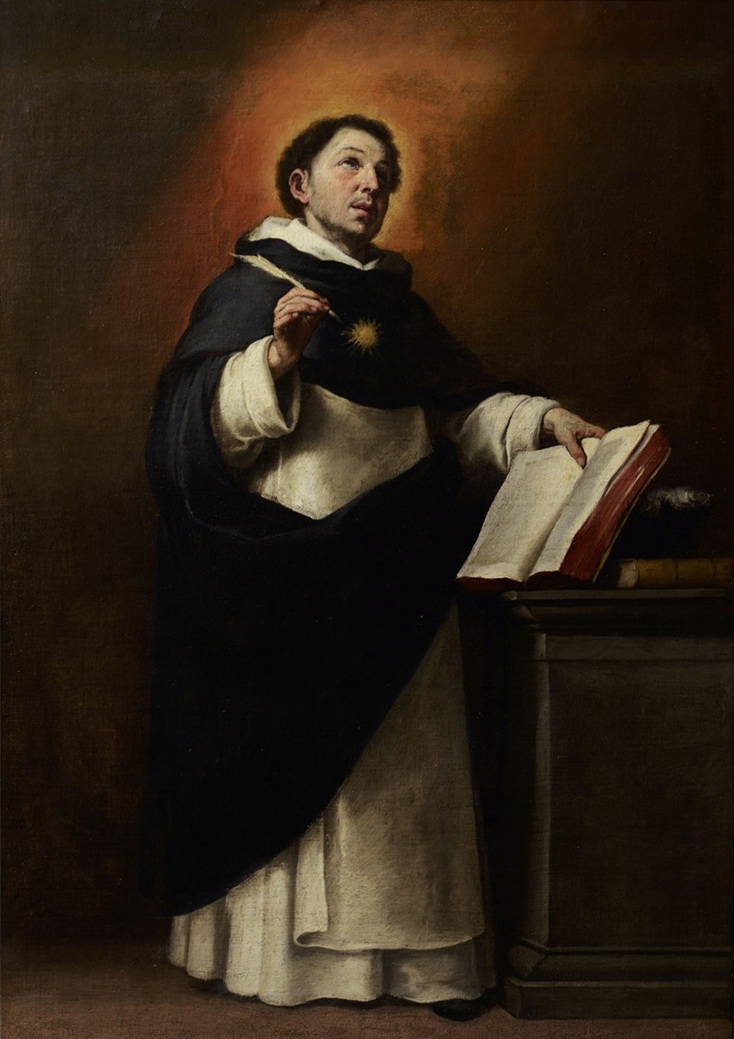
—This Summa Theologiae—for whom do you intend it, and why such immense scope?
I undertook it in 1265 for beginners, believe it or not—those students who are overwhelmed with disordered questions and endless repetitions. I wanted a clear path, where each truth finds its place, from God to the creature and from the creature back to God. Three parts, like three bays of a single nave. At my desk I always proceed the same way: I pose the question, first I listen to the objections, videtur quod non, then the sed contra, then I decide. It is the method of the schools, that of the disputations I conduct in the afternoons at the University of Paris. It is said to be immense; to me it is only honest, for a truth that is not fully expounded is half betrayed.
A truth that is not fully expounded is half betrayed.
—At the threshold of your Summa, you ask the most dizzying of questions: Does God exist?
Yes, and I ask it without detour: Utrum Deus sit? One must first pose it as if one knew nothing, give full force to the objection, otherwise the answer is worthless. Against it I set the word of Exodus, that name God gives himself: Ego sum qui sum — I am who I am. But faith alone is not enough to convince the unbeliever. So I wanted five paths, five ways that reason can climb without the aid of revelation: motion, causality, contingency and necessity, degrees of perfection, and the order of the world. Each starts from what our eyes see and ascends to what no eye sees. These are not five gods, but five paths to the same summit.
Five paths to the same summit, that reason can climb without the aid of revelation.
—Why prove by reason what faith already gives you?
Because not everyone has faith, and it would be arrogant to throw Scripture in their face as an end to debate. To a Jew I can cite the Old Testament, to a Christian both Testaments; but to one who accepts neither, what remains but reason, that good we all share? That is why I wrote the Summa Contra Gentiles, to show that what is opposed to faith is also shown false before reason alone. Natural theology is not a concession to unbelievers; it is a bridge. God does not fear being questioned; he made the intellect capable of seeking him. To refuse to reason about him would be to insult the gift he gave us.
—It is said that one day in December 1273, you stopped writing, abruptly. What happened to you?
I can speak of it only with bated breath, for words cannot reach it. It was during Mass; something was shown to me, and since then I can no longer continue. My brothers urge me to resume the Summa Theologiae, left suspended at the question of the sacraments. I reply that everything I have written seems to me now like straw compared to what I have seen. Understand me well: I do not renounce anything, neither the Five Ways nor the thousands of folios. But the inkwell has dried of itself, not from fatigue of the hand, but from silence of the soul. There is a point where reason, which has served me so well, must kneel and be silent. I have reached it sooner than I thought.
Everything I have written seems to me like straw compared to what I have seen.
—Here you are on the road to the Council of Lyon. What do you carry with you, deep down, from this life of labor?
The pope calls me to Lyon for that great matter of reconciling Latins and Greeks, and I go, though my body fails me. The road is long from Italy, and I feel that perhaps I will not make it to the end. If I should stop along the way, in some monastery, I would want my last thoughts to turn to the Eucharist, that mystery where Christ gives himself under the species of bread—I have devoted my hymns and vigils to it. I carry little: the white and black habit of the Preachers, and the certainty that I have said nothing truer than what the Church teaches. All my life I have sought to understand in order to believe better. At the end, I simply believe, like the humblest of the faithful.
This imaginary interview was generated by artificial intelligence from sources documented in Thomas Aquinas's profile. It dramatises what the figure might have said based on what we know about them, but does not constitute attested historical testimony. For primary sources and factual documentation, refer to the full profile.