Kids interview Thomas Aquinas
by Charactorium · Thomas Aquinas (1225 — 1274) · Philosophy · 5 min read
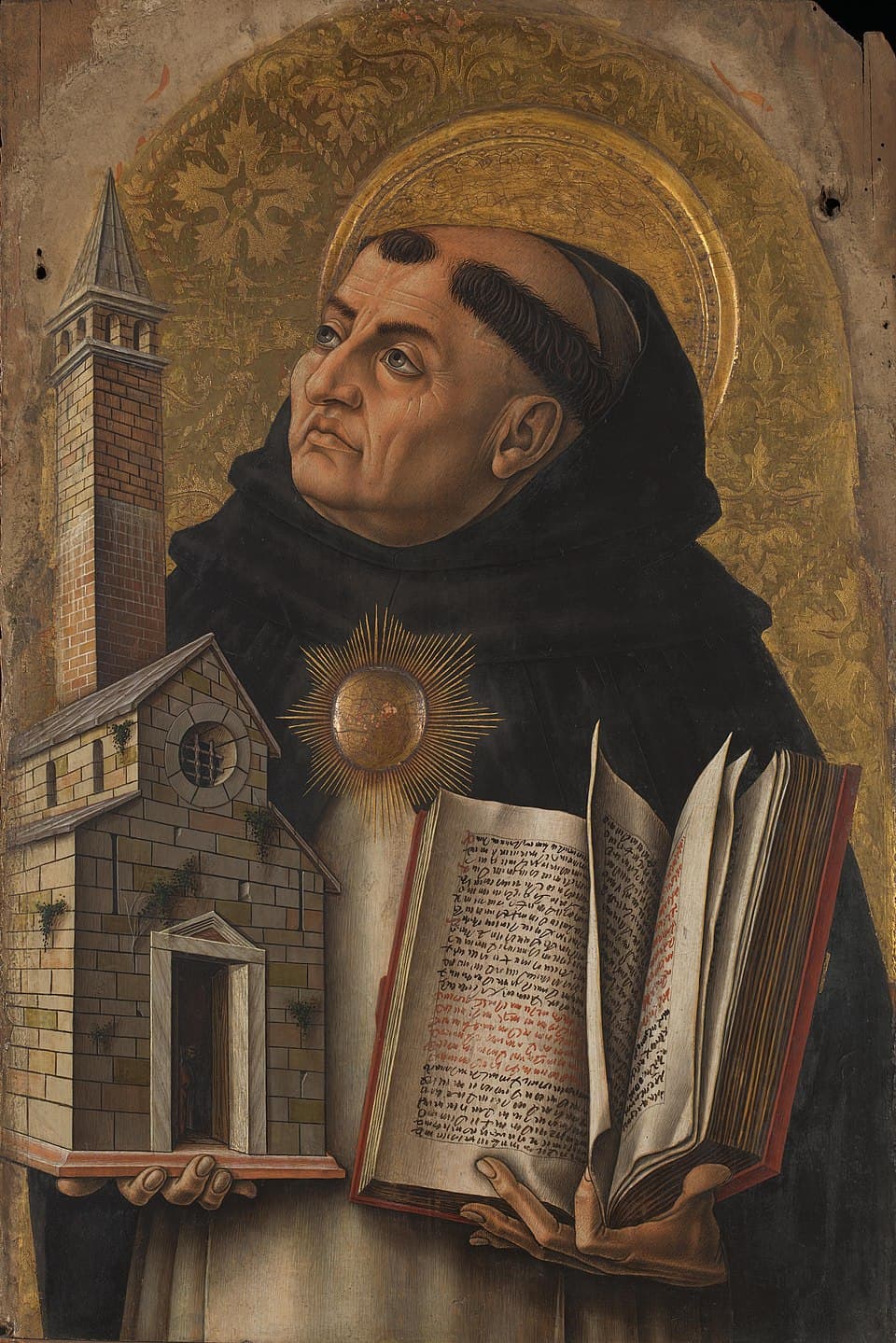
Two young visitors of twelve push open the door of a cool cell, smelling of ink and wax. A tall brother in white and black habit looks up from his desk. He smiles: they rarely ask him simple questions.
—Is it true that in Paris they called you "the mute ox"? Why?
Yes, my child, and at first it hurt me a little. At the University of Paris, I was big, heavy, and I almost never spoke in class. My classmates thought I was slow. Imagine a boy sitting in the back, silent, listening to everything without saying a word: that's how they saw me. But my master, Albert the Great, understood. One day he said that this ox would bellow so loudly that it would be heard everywhere. You know, silence is not stupidity. Often the one who is quiet is just looking at everything very closely.
Silence is not stupidity: the one who is quiet looks at everything very closely.
—They say you forgot to eat. Is that for real?
Ah, that, my brothers would confirm it! When an idea gripped me, I forgot the refectory, the bread, the soup, everything. I stayed bent over my desk, and a brother had to come and touch my shoulder to say, "Thomas, come eat!" In my time, in a convent, we ate frugally, mostly vegetables, legumes, a little cheese. Nothing grand. But even that I forgot. Imagine reading a story so exciting that you no longer hear your mother calling you. That was my daily life, except that my story was God and truth.
When an idea gripped me, I even forgot the bread on the table.
—How did you write a 3000-page book? That takes a lifetime!
You'll laugh: I didn't always write myself. I walked around the room, thinking aloud, and several secretaries wrote at the same time! I dictated one idea to one, turned to another for another. With a calamus — a reed pen — and an inkwell, they raced to keep up. That's how the Summa Theologica was born, between 1265 and 1274. In my time, there was no machine: every page was scratched by hand on parchment. Imagine the sound of several pens scratching together in the silence of a convent.
I thought aloud, and several pens raced to keep up.
—Who was Aristotle, and why did it bother people that you liked him?
Aristotle was a Greek philosopher, who died very, very long before me. A pagan, therefore: he did not know Christ. And then in the 13th century, his books reappeared in the West, translated into Latin. I devoured them. On my desk, next to the Bible, there was a Codex of Aristotle. But some churchmen were worried: "How can you love a pagan?" they said to me. I answered that a truth remains a truth, no matter who finds it. Imagine you find a treasure: you don't throw it away because a stranger buried it.
A truth remains true, no matter who found it first.
—But how can you mix reason and religion? Aren't they opposites?
Many believed that, and it's a good question. For me, reason and faith are like your two eyes: each sees, but together they see better. Reason is your intelligence that reflects. Faith is what God reveals to you. I spent my life showing that they don't quarrel. In my Commentaries on the Nicomachean Ethics, I took Aristotle's wisdom on happiness and linked it to Christian light. Imagine two streams flowing down the same mountain: they don't fight; they end up in the same river.
Reason and faith are two eyes: together, they see better.
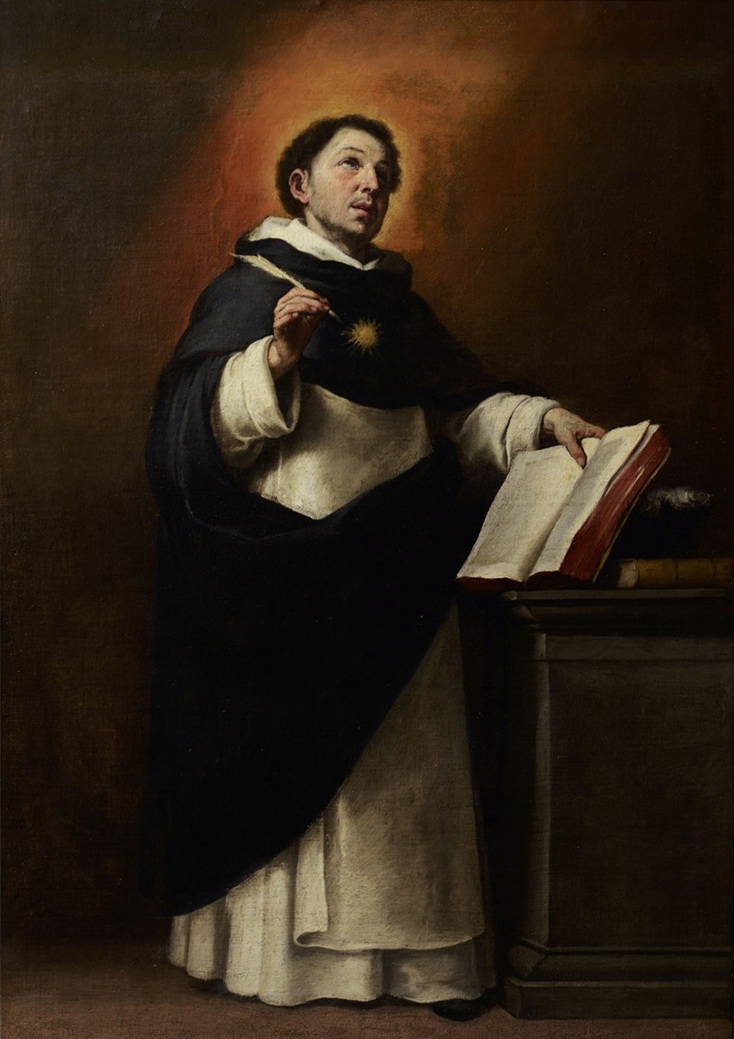
—Did you try to prove that God exists? With what, proofs?
Yes! I proposed five paths, what are called the Five Ways. They are not proofs you can touch, but reasonings. For example: everything that moves has been set in motion by something else. Trace back, trace back again... there must be a first mover that itself was pushed by no one. That first one, I call God. To build this, I used the syllogism, a way of reasoning in three steps that leads surely to a conclusion. Imagine a line of dominoes: someone must have pushed the very first one. That's the idea, in simpler terms.
Trace back the chain of the world: someone must have pushed the very first domino.
—What language did you write in, and how did you start your books?
I wrote in Latin, the language of all scholars of my time. A child of Naples and a master of Paris could read each other without ever having met. And my way of writing was particular: I often began by asking a question, like Utrum Deus sit — "Does God exist?" Then I first gave the arguments against me, honestly, before answering. This was called the Quaestiones. Imagine that, before defending your idea, you yourself give the best reasons of your opponents. It's fairer, and it's stronger. One wins only by facing real objections.
Before answering, I first gave the best reasons of my opponents.
—What did your room look like when you worked?
Very small, my child, and cold. In a Dominican convent, a cell has almost nothing: a hard bed, a few prayer items, and especially a lectern for writing. The morning began before sunrise, with the offices, in the dark, by candlelight. In my time, no engine noise, no light on the wall: just silence, the cold of the stone, and the smell of ink. I wore the white habit of the brothers, a black scapular over it. It was austere, but this bareness helped me think. The emptiness around me left room for ideas.
The emptiness of a bare cell leaves room for ideas.
—Is it true that one day you suddenly stopped writing? Why?
Yes, and even my brothers didn't fully understand. In 1273, during Mass, I experienced something I could never explain in words. An inner light, perhaps. After that, I put down my calamus. They begged me to finish the Summa Theologica, and I gently answered that everything I had written now seemed little to me. Imagine building a huge cathedral of words, and one morning you feel that the real treasure is elsewhere, greater, without words. My Summa remained unfinished. And you know what? That silence also says something.
Everything I had written suddenly seemed little to me.
—And how did you die? Were you sad not to have finished?
I left on the road, my child. In 1274, the pope called me to the great Council of Lyon. I was sick, tired, but I set out. I never got there: I stopped at the abbey of Fossanova, and that's where I passed away, on March 7, at forty-nine. They say my last thoughts were toward the Eucharist, the bread of the Mass that I loved so much. Sad not to have finished? No. I had understood that a man's life is itself an unfinished work. The rest, we entrust to those who come after. To you, perhaps.
A man's life is itself an unfinished work.
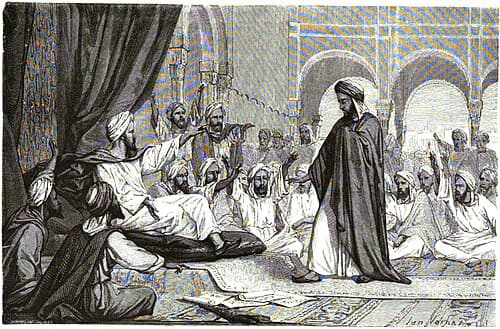
This imaginary interview was generated by artificial intelligence from sources documented in Thomas Aquinas's profile. It dramatises what the figure might have said based on what we know about them, but does not constitute attested historical testimony. For primary sources and factual documentation, refer to the full profile.