Imaginary interview with Tomoe Gozen
by Charactorium · Tomoe Gozen (1157 — 1247) · Military · 5 min read
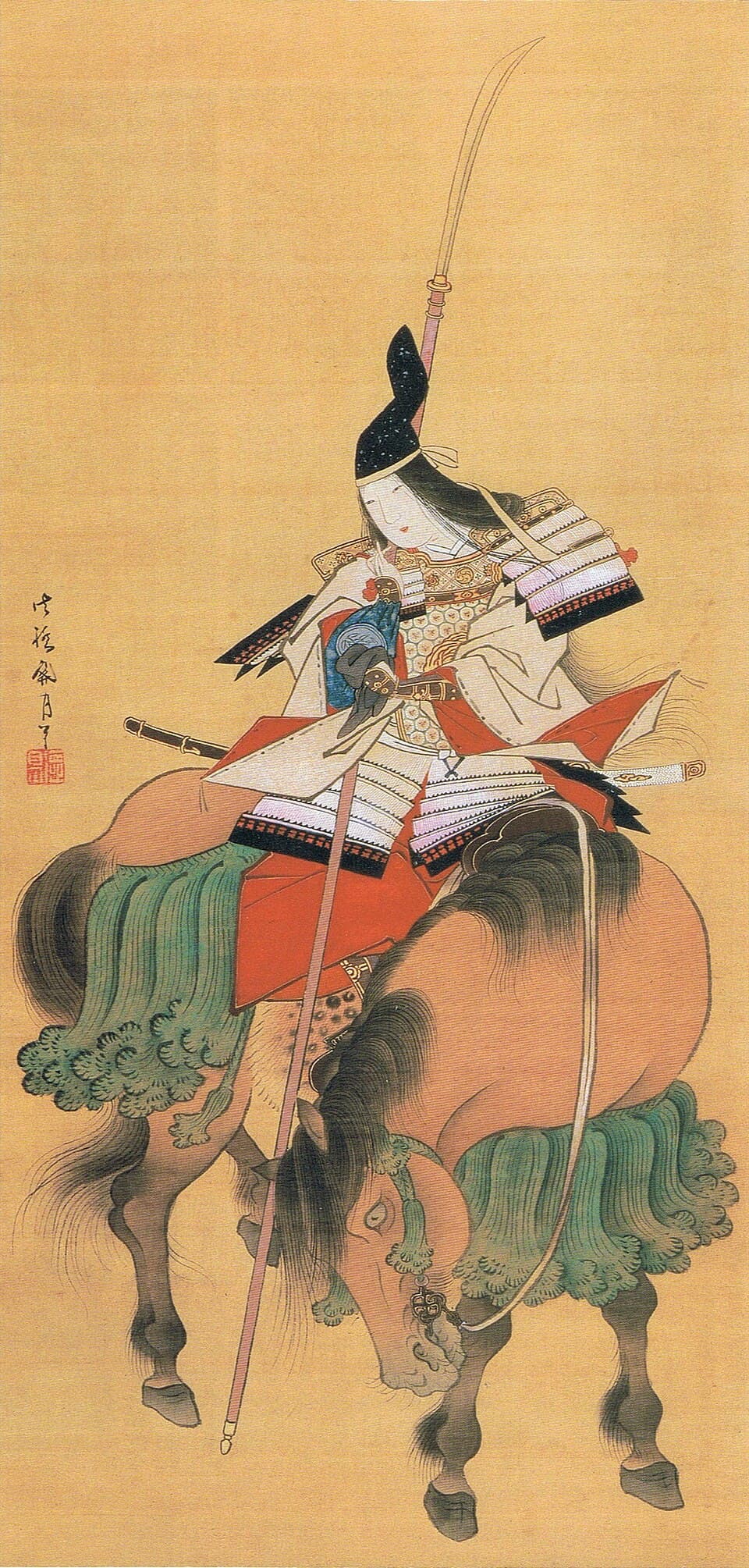
At dusk, in a wooden courtyard swept by the wind of Shinano Province, a woman in dark hakama cleans the blade of a sword that glistens like a mountain stream. They say she rode alongside Minamoto no Yoshinaka and survived where a thousand men fell. She agrees to speak, in a low voice, as if confiding a name of the dead.
—How did you enter the war that tore Japan apart?
I was born in the lands of Shinano, where one learns to ride before walking straight. When my lord Minamoto no Yoshinaka raised his banners against the Taira clan, in the year 1180, I had no choice: you serve the house that raised you, that is the order of things. At Kurikara, in 1183, I saw our horsemen drive the enemy into ravines like a torrent sweeping stones. That day, the Taira's fortunes turned. I did not tell myself I was making History; I held my reins, aimed true, and prayed to the kami to keep my horse standing. The rest belonged to Heaven and my master.
You serve the house that raised you, that is the order of things.
—What did loyalty to your lord mean to you?
A warrior without a lord is but a blade without a hilt, dangerous to whoever picks it up and useless to all. Yoshinaka entrusted me with his trust, and that trust weighed heavier than my plate armor. To serve was not to obey like a dog: it was to carry a part of his honor on my own shoulders. In our chronicles, the Minamoto are praised for their courage, but courage alone does not hold an army; loyalty is needed, that bond of blood and word that ties the vassal to his master. I rode behind his banner without ever looking back to count what I gained. That is how I was taught to live, and that is how I wished to die, when the time came.
A warrior without a lord is but a blade without a hilt.
—They say you wield the bow like no other. How did you learn this art?
The yumi, our great bow, does not obey the strength of the arms but the patience of the back and the breath. As a child, I was put on the most unruly beasts, those that grown men feared to mount, and I learned to loose my arrow at a gallop, when the earth flees under the hooves and everything trembles. Shooting straight on foot is nothing; shooting straight in the saddle, that is the warrior's trial. It has been said that I drew the bow with the vigor of a man: let them say it. I only know that a well-aimed arrow never lies, and that my warhorse understood my knees better than some captains understood their orders.
Shooting straight on foot is nothing; shooting straight in the saddle, that is the warrior's trial.
—Why did the horse hold such a place in your life as a fighter?
Because a samurai on foot is only half of himself. My warhorse was not a mount; it was a comrade-in-arms that sensed fear before I did and charged when my heart hesitated. I spent my mornings checking its hooves as I checked my arrows and the edge of my blade; a poorly tightened harness kills its rider more surely than an enemy sword. One tames a difficult beast as one tames one's own fear: without breaking it, by imposing calm. The hunts we did outside battles were not idle games; they forged the eye and hand for the day when the prey would strike back.
One tames a difficult beast as one tames one's own fear: without breaking it.
—Do you remember the last fight alongside Yoshinaka, at Awazu?
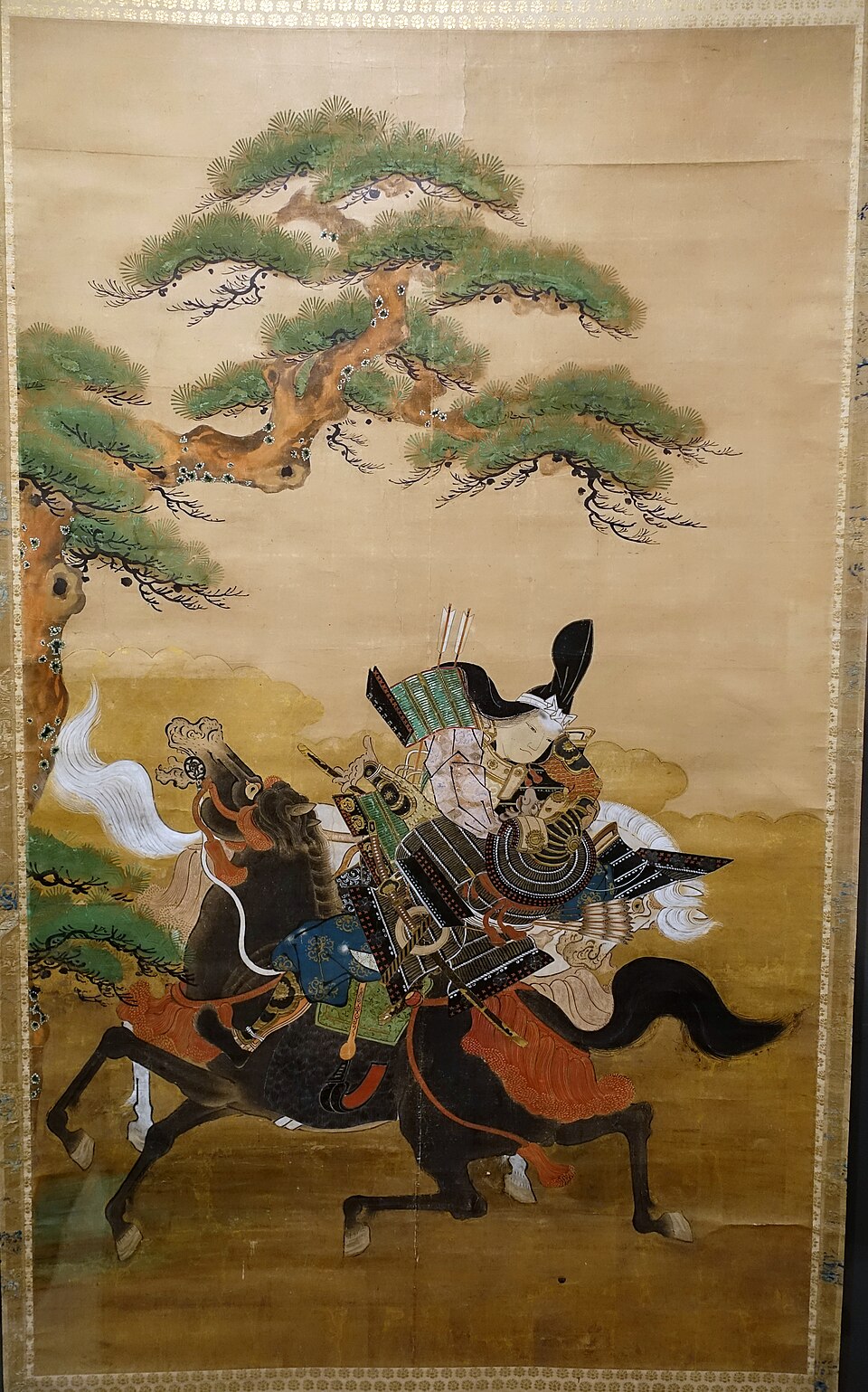
Awazu, in 1184. I remember it as one remembers a wound that does not close. We were but a handful, surrounded, and my lord Yoshinaka knew the end was upon us. I cut down the horsemen who came forward, one after another, because a warrior does not die with empty hands. Then my master ordered me to leave: he did not want it said that he had kept a woman near him at the hour of his death. Retreating was harder than charging. I obeyed, my heart in pieces, not for fear of dying, but because obeying one last time was the only gift I had left to give him.
Retreating was harder than charging.
—What would you say to those who see this retreat as a flight?
That they have never received the order to live when everything in them wanted to die. Refusing to fall in a useless defeat is not fleeing: it is bending one's will to that of one's lord, and there is no harder discipline for a warrior's heart. I could have thrown myself into the melee and ended there, glorious and foolish. But bushidō does not only teach how to die; it teaches to die at the right moment, and that moment at Awazu was not mine. I carried Yoshinaka's honor away from the field, as one carries a banner that must not be sullied. Let the gossips judge; the dead, they understood me.
Bushidō does not only teach how to die; it teaches to die at the right moment.
—The storytellers have made you immortal in the Heike Monogatari. How do you feel about becoming a tale?
A fear mixed with wonder. The Heike Monogatari says of me that I could face a thousand enemies without fear, and that my exploits surpassed those of many men. These words are not mine; they are those of the monks and blind storytellers who sing our wars accompanied by the biwa. I do not know if I deserve so much. An onna-bugeisha who fights does not think of the song that will be made of her; she thinks of her next arrow. But I will not disown this tale: it keeps alive the memory of the Genpei, and as long as my name is spoken by a fire, my lord and his horsemen will not be entirely dead.
As long as my name is spoken by a fire, my lord will not be entirely dead.
—Being one of the few women among the warriors, was it a burden?
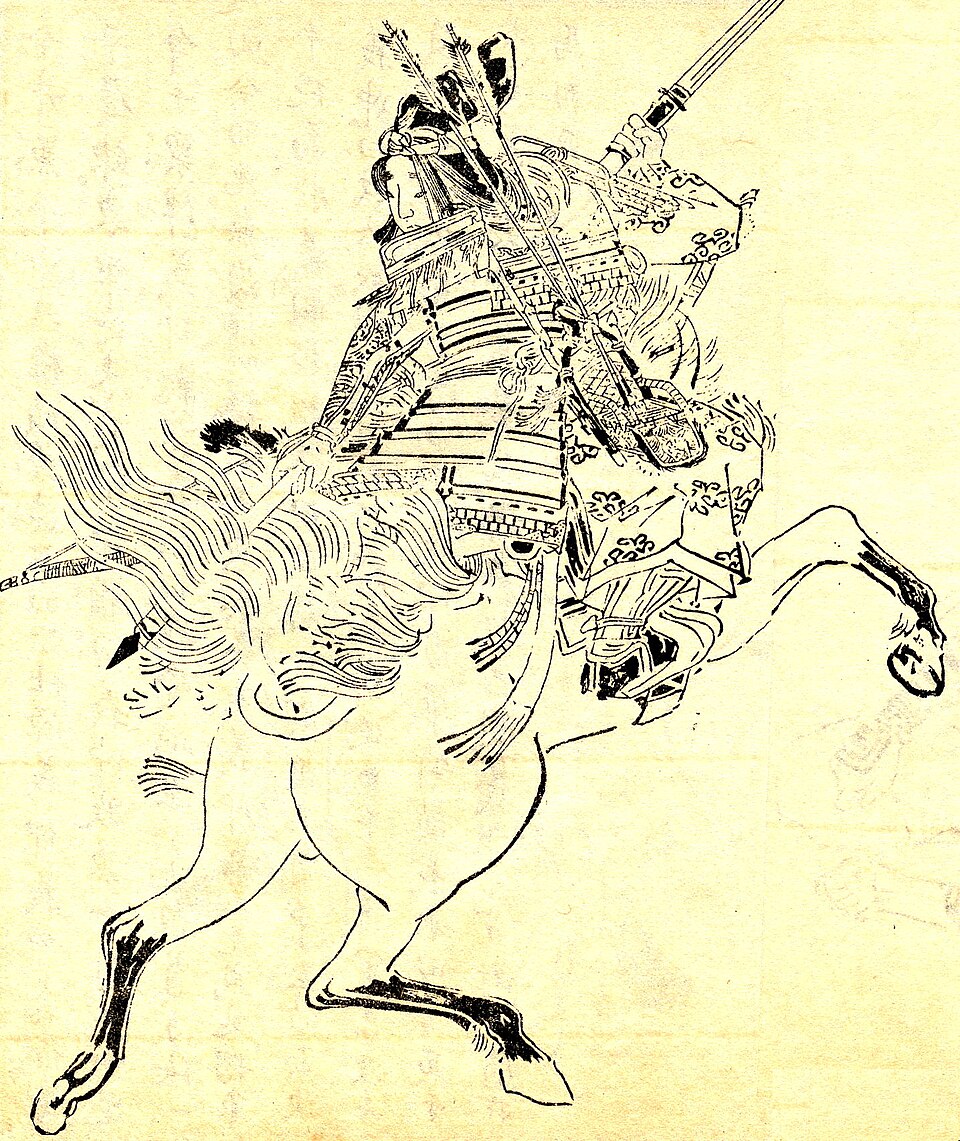
I never thought of it as a burden, for one does not weigh the air one breathes. I grew up among bows and horses; it was as natural for me to ride in armor as sewing would have been for another. It is true that the chronicles marvel at me as a rare thing, a woman whose exploits equaled those of the best warriors of the clan. But on the field, an arrow does not ask who shot it, and the enemy who falls does not inquire about the sex of his death. I let the men marvel and did my duty. Rarity is not a virtue in itself; courage, it has neither man nor woman.
An arrow does not ask who shot it.
—After the wars, you left arms for the cloister. How does one go from the blade to prayer?
When the clamor dies down, a great silence remains, and that silence must be filled. When the Minamoto wars ended, I laid down my armor and entered a Buddhist monastery, where I learned another patience than that of the bow. Many of our warriors take this path: after giving so much death, one seeks to appease the shadows one drags behind. I did not renounce bushidō; I pursued it differently. Carving away one's pride through meditation is as hard a fight as holding a line under arrows. The monk and the samurai aim for the same thing: not to tremble before death. I only changed battlefields.
The monk and the samurai aim for the same thing: not to tremble before death.
—Today, in the peace of the monastery, what remains of the warrior in you?
Everything, and nothing. My hands keep the memory of the yumi and the katana, and some nights I still think I hear the hooves of my horse on the frozen earth. But I now sharpen only my soul. What remains is loyalty: it is not put away with the armor. I pray for Yoshinaka, for the horsemen who fell at Awazu, for the enemies too, for the dead of the opposite camp did not deserve less. Tradition holds that one seeks, at the evening of one's life, inner peace after a life of combat; I still seek it, without certainty of finding it. Perhaps one never truly leaves the battlefield; one only learns to make silence there.
I now sharpen only my soul.

This imaginary interview was generated by artificial intelligence from sources documented in Tomoe Gozen's profile. It dramatises what the figure might have said based on what we know about them, but does not constitute attested historical testimony. For primary sources and factual documentation, refer to the full profile.