Imaginary dialogue between Minamoto no Yoshinaka and Tomoe Gozen
by Charactorium · Tomoe Gozen (1157 — 1247) · Military · 5 min read
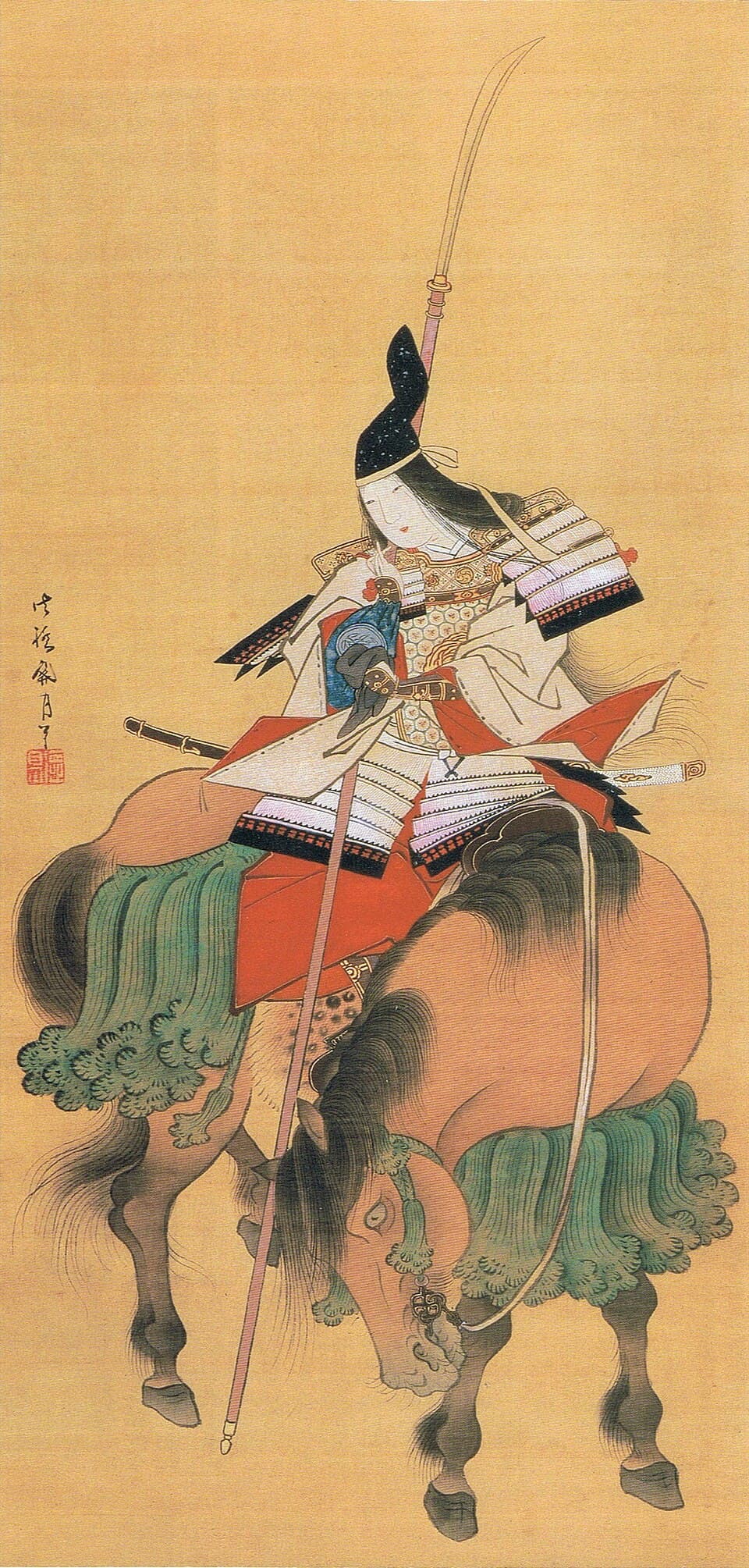
It is by the banks of the Uji River, in the gray light of a morning in 1184, that Minamoto no Yoshinaka meets Tomoe for a moment before the enemy banners rise on the horizon. Horses paw the ground, the smell of wet leather and cold steel fills the air. They have ridden together since the forests of Shinano, and the lord, perhaps sensing the shadow of Awazu approaching, wants to hear from her lips what he has seen a thousand times on the battlefields.
—Tomoe, do you remember when we left Shinano for this war? Why did you choose to follow me, rather than stay safe?
I chose nothing, my lord — or rather, I chose a thousand times, every morning, by saddling my mount before you. The province of Shinano taught me the bow and horse as if I were a son, and you know it well, you who saw me hit a target at full gallop when others fell from their saddles. Following you was not a woman's duty; it was the logical consequence of everything my hands knew how to do. The Minamoto clan stood against the Taira, and my place was where combat decided the fate of men, at your right side, bow drawn. One does not ask the river why it flows to the sea.
One does not ask the river why it flows to the sea.
—Many whisper that a woman cannot draw a bow like a warrior. But I have seen you on horseback — tell me, where does your strength come from?
Strength, my lord, is not in the arm alone; it is in the breath and in the calm. I tamed horses that your best riders refused to mount, those that bit and kicked, because I opposed them not with anger but with patience. For the bow, it is the same: you do not shoot by clenching your teeth, you shoot by breathing. When the horse gallops and the string sings, the world falls silent. You saw me pierce a helmet at full speed — that was not a miracle, it was ten thousand arrows released before dawn. Men look at my hips and my hair; I look at the target.
You do not shoot by clenching your teeth, you shoot by breathing.
—At Kurikara last year, we crushed the Taira. What did you feel, in the clamor of that first great victory?
At Kurikara I understood that we could truly win, and that frightened me more than defeat. As long as you are losing, you only have to fight; but when victory opens up, you must know where you are going. I still see the torches we tied to the horns of the oxen, the panic of the Taira streaming down the slopes in the night. You laughed, my lord, that laugh I had not heard from you since Shinano. I was already reloading my quiver, thinking of the next battle. A victory is only a respite we grant ourselves between two dangers — I learned that that day, and I have never forgotten it since.
A victory is only a respite we grant ourselves between two dangers.
—When we ride side by side, I see your horse obey your slightest movement. How did you forge that bond with a war beast?
A war horse is not a tool; it is a companion that is afraid just like you and me. The one I ride today, no one wanted: it had thrown three riders and killed a groom. I spent nights in its stall, without saddle, without bit, letting it smell my scent and my voice. The day it accepted my weight on its back, I knew that nothing on a battlefield would separate us. At full gallop, I no longer hold the reins: I guide with my legs and my breath, both hands free for the bow. You, who have ridden since childhood, know that a warrior is worth mainly by the beast that carries him.
A war horse is not a tool; it is a companion that is afraid just like you and me.
—Talesingers are already chanting your exploits in the villages. Does it trouble you to hear your name passed from mouth to mouth?
It troubles me, yes, because the singers see what they want to see. They say I can face a thousand enemies without fear — the truth is, I am afraid before every charge, and the fear only fades when the string is drawn. Tales love women who do not tremble; but I tremble, and then I advance. I do not fight so that my name is sung, my lord, but so that yours stands firm. If I am to be remembered, let it be as a blade that never shattered in your service. The rest — those market embroideries — I leave to poets who have never felt the weight of wet armor.
Tales love women who do not tremble; but I tremble, and then I advance.
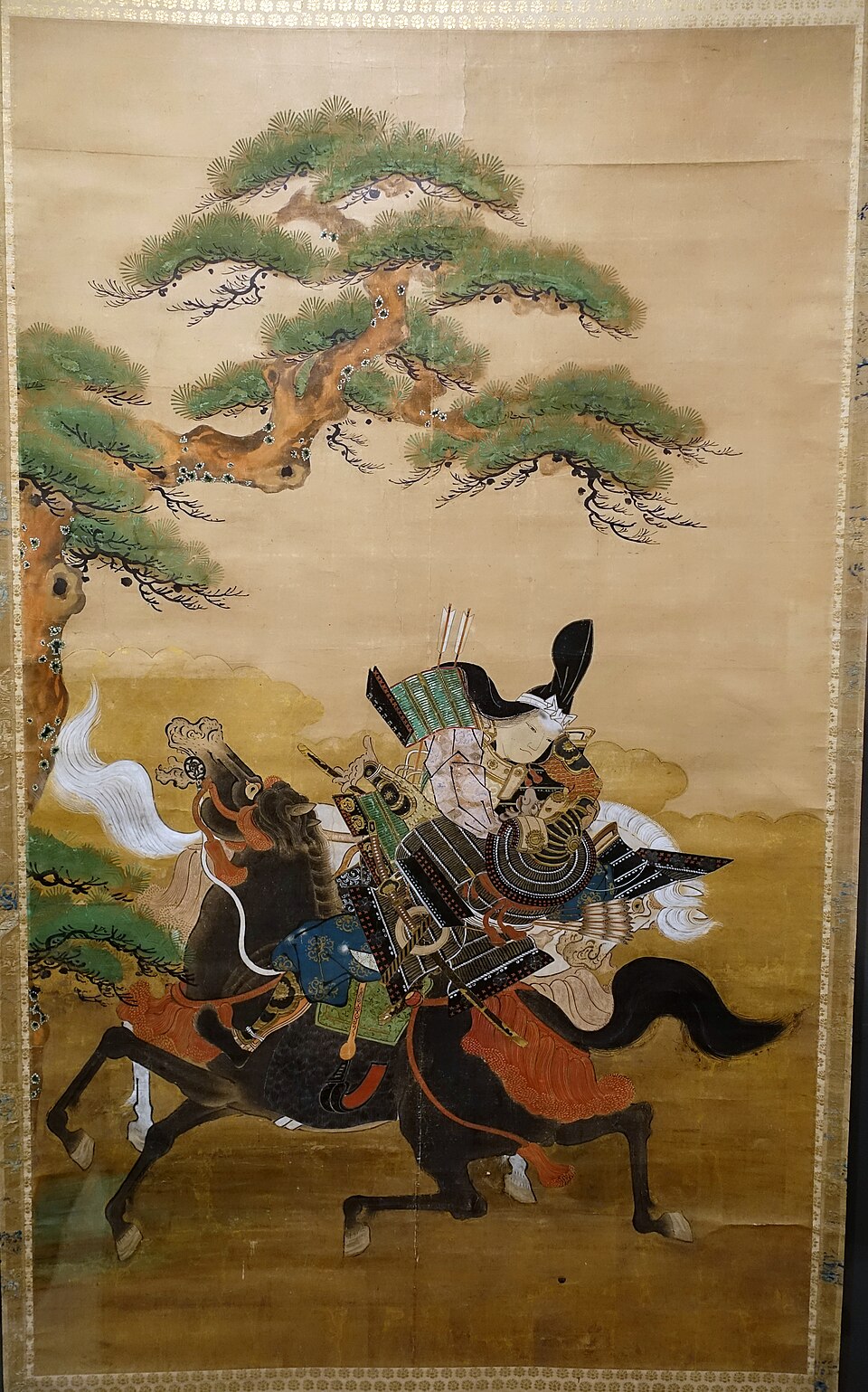
—Tomoe, if things go badly — I say this bluntly — would you rather fall at my side, or survive to bear witness?
You ask the only question I dread, my lord. I do not fear death: I fear dying badly, for nothing, in the chaos of a rout where no blade serves any purpose. If the hour comes, I want to cut down a few more of those warriors before I go, to show you one last time what my arm and my mount are worth. But to die vanquished, crushed like trapped game — no. That I refuse. A warrior woman chooses to the very end the place and moment of her fight. If I must withdraw from the field, it will not be out of cowardice, but so as not to offer my end as a spectacle to those who could not defeat me weapon in hand.
A warrior woman chooses to the very end the place and moment of her fight.
—You speak of withdrawing rather than dying defeated. Is that not, for a warrior, a failure of honor to perish with one's lord?
Honor, my lord, is not about dying any old way as long as you die. Staying by your side when my presence condemns you would not be loyalty; it would be pride. You always told me that a soldier must serve the clan alive or dead — so if my final service is to spare you the burden of protecting me in the fray, I will fulfill it. I would rather take three more enemies than fall uselessly at your flank. And if I survive, I will carry your memory like a banner; I will tell what we did. Disappearing in silence honors no one; bearing witness sometimes demands more courage than dying.
Bearing witness sometimes demands more courage than dying.
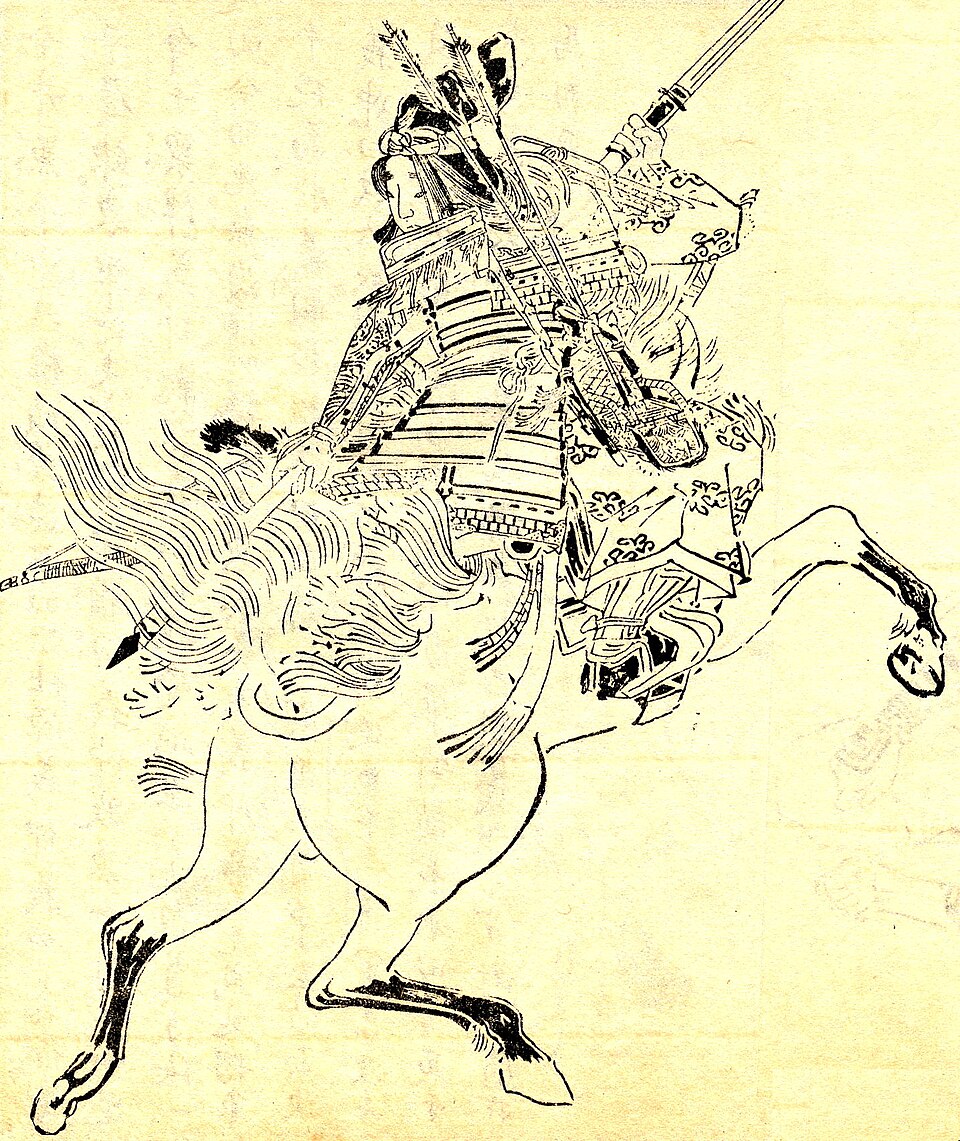
—And when all this is over, Tomoe — the war, the clans, the battles — what do you imagine doing with the days that remain?
Strange question from a man of war, my lord. Yet I think of it, some nights. When the bowstring falls silent for good, I think I will seek silence — perhaps a monastery, far from iron and blood. They say bushidō leads to death, but it also leads to peace, when you have killed enough to understand the price of a life. I have seen too many faces fade under my arrows; one day I will have to sit and ask their forgiveness, or simply mourn them. The warrior woman will fade, and there will remain a woman who prays. That does not sound like you, I know — but a blade stretched too long eventually longs for rest.
A blade stretched too long eventually longs for rest.
—They whisper that the court chroniclers are recording our feats of arms. What would you have them remember of the warrior who rides at your right hand?
Let them write what they will of battles, my lord; dates and deaths matter little to me. But if they must keep one thing, let them keep this: a woman held the bow and the katana as high as any man of the Minamoto clan, and no one had to be ashamed to have her at their side. I do not ask to be sung as a heroine; I ask not to be erased. Too many valiant arms disappear from the tales because they bore a woman's name. If one day a single girl from Shinano hears that a certain Tomoe rode straight into the fray, then the chroniclers will have served some purpose.
I do not ask to be sung as a heroine; I ask not to be erased.
—Before the banners rise, tell me finally: is that rest you speak of deserved when one has taken so many lives?
I do not know if it is deserved, my lord — I only know that it is needed. Bushidō demands that we accept death without trembling, but it does not tell us how to live with the deaths we have dealt. That is the true weight of the armor: not the iron, but the faces one cannot forget. If I one day lay down my bow before an altar, it will not be to flee combat, but to finally carry all those dead into the silence they never had. You and I learned to kill together; we will have to learn, separately perhaps, to rise from it. Rest absolves nothing — but it allows one to look back without breaking.
The true weight of the armor is not the iron, but the faces one cannot forget.

This imaginary interview was generated by artificial intelligence from sources documented in Tomoe Gozen's profile. It dramatises what the figure might have said based on what we know about them, but does not constitute attested historical testimony. For primary sources and factual documentation, refer to the full profile.