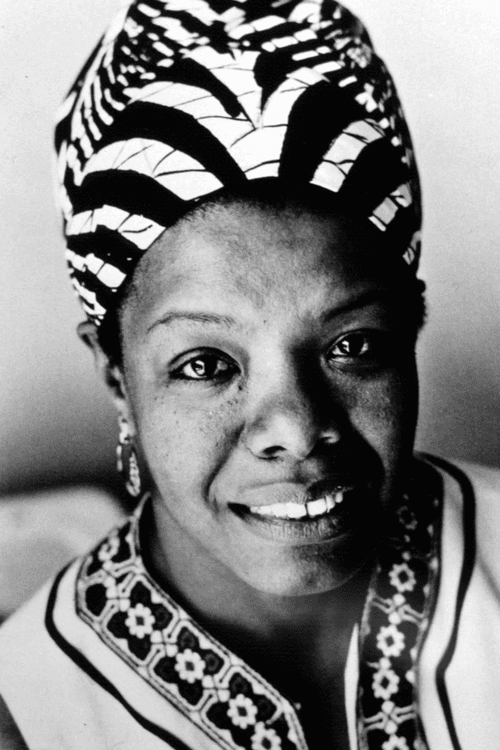
Imaginary interview with Toni Morrison
by Charactorium · Toni Morrison (1931 — 2019) · Literature · 5 min read
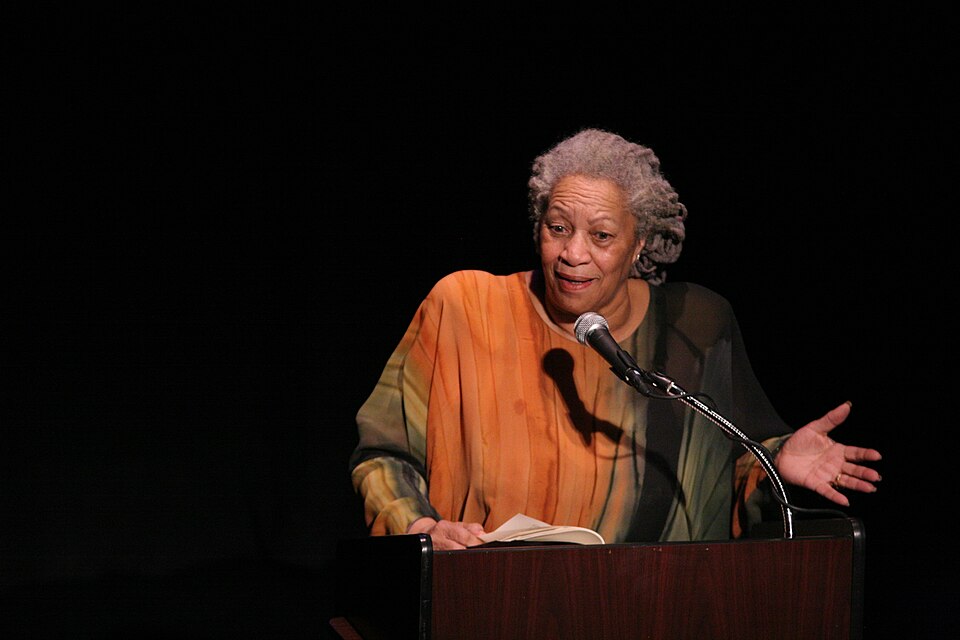
Late autumn afternoon in a house in Princeton, the shelves bending under manuscripts and the smell of cold coffee still lingering. Toni Morrison, a dark shawl on her shoulders, settles near the window where the light is fading. She speaks slowly, as one unfolds a story long kept.
—Before the novels, there was childhood. Where does this storytelling voice come from?
I was born in Lorain, Ohio, a steel town where the night had the color of molten metal. But inside the houses, in our home, there was another fire: that of stories. My father told ghost stories with a seriousness that chilled you, my grandmother read dreams like others read the newspaper. No one wrote anything; everything passed by word of mouth, from generation to generation, and I didn't yet know that this was my first library. I understood much later that this orality was not folklore but a method: bringing the reader into the story like a neighbor you welcome, not a customer you instruct. When I write, I still seek that voice, the one that leans toward you.
Everything passed by word of mouth — I didn't yet know that this was my first library.
—How, concretely, did a writing day begin?
Before dawn. Always before dawn, when the house is still asleep and the light hasn't quite decided to rise. I raised two sons alone, I was an editor at Random House in New York all day — I had to steal something from time, and it was dawn that I stole. Coffee, a table, my typewriter, and that moment when I am not yet responsible for anything or anyone. I eventually understood that I didn't write in the morning out of discipline but because I love watching the darkness retreat; there is a metaphor there that I don't invent, it imposes itself. The rest of the day, I served others' books; at dawn, I had a right to my own.
It was dawn that I stole — that moment when I am not yet responsible for anything or anyone.
—You long published others before being published yourself. What did this work as an editor teach you?
In New York, behind my desk at Random House, I spent years bringing into the catalog voices that weren't heard there: autobiographies, Black voices that no publishing house deemed worthy of ink. You learn a lot from a book when you hold it from the side of production, not just reading. I saw how easy it was to erase someone simply by refusing to print them. It was from that quiet anger that my first novel, The Bluest Eye, came in 1970: the book I wanted to read didn't exist, so I stopped waiting for someone else to write it. The editor taught me what the writer had to repair.
The book I wanted to read didn't exist, so I stopped waiting for someone else to write it.
—Let's come to Beloved. Where did that story come from?
From a fact. An enslaved woman, Margaret Garner, who preferred to kill her child rather than see her returned to bondage. When I read that, I didn't think 'what a subject' — I thought that there was a love so total that it became monstrous, and that no one had dared to enter that mother's mind. That is Beloved, published in 1987: not to tell slavery from the outside, with its numbers, but to inhabit a single consciousness to the point of unbearableness. The book closes with a sentence I held even before writing it: "It was not a story to pass on." A story that should not be passed on, and yet must be passed on. The entire ambiguity of the duty of memory lies in that double meaning.
A love so total that it became monstrous — no one had dared to enter that mother's mind.
—Why was it necessary to summon a ghost to speak of slavery?
Because intergenerational trauma does not fit into a chronological timeline. It returns, it sits at your table, it demands its name. Ordinary realism cannot say that; it needs a revenant in flesh. Beloved is not a convenient metaphor, it is what is repressed resurging with a body. I grew up, as I told you, with a father who told ghost stories without smiling — so I knew that a specter could speak truth better than a document. The collective memory of a people torn from itself is not transmitted through official archives; it resurfaces through dreams, songs, silences at the table. My work was to give that silence a door.
Trauma does not fit into a timeline: it returns, it sits at your table, it demands its name.
—Your previous novels were already digging into these wounds. Are you thinking of Song of Solomon?
Song of Solomon, in 1977, was the book where I stopped being afraid of flight. A man traces his ancestors' path until he discovers a legend of slaves who flew back to Africa. That's where I dared to blend the marvelous with the harshest History, without apologizing. A line from the novel still follows me: "If you want to fly, you have to give up the things that weigh you down." People took it for a pretty saying; it was a tragic truth. To rise, my characters must abandon something — sometimes those they love. Freedom, in my people's history, has never been free.
To rise, my characters must abandon something — sometimes those they love.
—In 1993, the Swedish Academy called you. What remains of that moment?
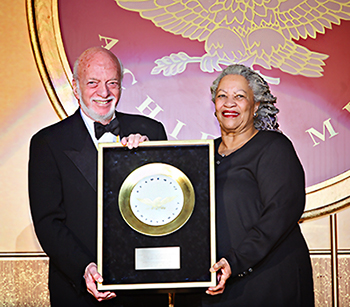
I was sixty-two years old, and I was the first Black woman to receive the Nobel Prize in Literature. I would lie if I said it only delighted me; it also frightened me, by all that this 'first' contained of History's delay. In Stockholm, I did not want to speak about myself but about language. I told of an old blind woman to whom children offer a bird, asking if it is alive or dead, and she answers that it depends on them. Language is that bird: it dies if mistreated, it lives if cared for. As I said there, "the function of narrative is to illuminate the human condition." That is the only responsibility I claim.
Language is that bird in the child's hand: it dies if mistreated, it lives if cared for.
—You speak of language as something alive, almost fragile. Why this concern?
Because I have seen language kill. That of laws which defined a man as three-fifths of another, that of segregation which named in order to crush. A word can be a chain. In The Bluest Eye, little Pecola ends up believing that everything would be fine if only her eyes turned blue: she swallowed others' language until she hated herself. That is successful oppression — when the victim borrows the master's words to describe herself. The writer therefore has a charge: not to embellish, but to restore language's ability to speak the real without lying. An oppressed, racist, lazy language does not merely reflect violence; it prepares it.
Successful oppression is when the victim borrows the master's words to describe herself.
—All those years, you also taught at Princeton. What did you expect from your students?
I spent two decades at Princeton University, and I did not go there to make copies of myself. I wanted those young people to find their own ink. I had been told that one must choose between the lectern and writing, that one dries out the other; I believe I proved the opposite. Teaching forced me to say aloud why a sentence holds or collapses, and that rigor spilled onto my own pages the next dawn. Mentoring is not about transmitting recipes; it's about teaching someone to listen to what they already know without knowing it. Many of those students write today; that is a lineage I claim as much as my books.
Mentoring is about teaching someone to listen to what they already know without knowing it.
—At the end of this journey, what do you hope to leave to those who will read you long after you?
I do not write for posterity, that lady is too talkative. But if I may imagine it, I would like my books not to be reduced to lessons of History with a embalmed capital H. Beloved, Sula, Song of Solomon are not monuments: they are houses you enter, where you hear voices, where someone tells stories as they once did in Lorain, in the kitchen, after nightfall. If in a century a young girl opens one of them and recognizes a part of herself that no book had yet given back to her, then I will have done my work. The rest — medals, firsts — already belongs to History, and History, I have served it enough.
My books are not monuments: they are houses you enter and where someone tells stories.
This imaginary interview was generated by artificial intelligence from sources documented in Toni Morrison's profile. It dramatises what the figure might have said based on what we know about them, but does not constitute attested historical testimony. For primary sources and factual documentation, refer to the full profile.