Imaginary dialogue between Barack Obama and Toni Morrison
by Charactorium · Toni Morrison (1931 — 2019) · Literature · 5 min read
It's in the book-lined study at Princeton, where the light of an autumn afternoon 1998 falls on annotated manuscripts, that Barack Obama, then a young law student fascinated by literature, comes to meet Toni Morrison. A cup of coffee cools near the typewriter that gave birth to Beloved. They know each other through the African American intellectual community, and he, an admirer as much as a student, wants to understand how a novelist transforms the wound of slavery into language. She greets him with that look that sizes you up before answering.
—Toni, before the prizes and Princeton, there was a little girl in Lorain. What remains of the stories told at home in the evening?
Everything, Barack, everything comes from there. In Lorain, Ohio, my father and grandmother told stories — ghosts, legends, the dead who came back to speak. It wasn't entertainment; it was a way to keep alive those they wanted to erase. I understood very early that words carried a weight, that they could make the absent present. When I write, I'm just extending that kitchen table. My community's orality isn't a folkloric ornament: it's the very architecture of my sentences. I give voice to those whom official history ignored, because as a child I was taught that no one is too small to deserve having their life told.
Words carried a weight; they could make the absent present.
—Let's talk about Beloved. You started from a terrible true story. How do you carry such a story without breaking?
That woman existed, Barack. An enslaved mother who preferred to kill her child rather than return it to bondage. When I read that fact, I didn't want to explain or judge her — I wanted to understand a love fierce enough to do that. Slavery doesn't just forge chains; it forges impossible choices. I wrote knowing it was a story not to be passed on, and yet I passed it on, because silence was a second violence. The Pulitzer in 1988 moved me, but this book doesn't belong to awards. It belongs to those millions of names no register kept, to those I simply wanted to name.
Slavery doesn't just forge chains; it forges impossible choices.
—There's that phrase at the end: It was not a story to pass on. Why close such a book on such a contradiction?
Because memory is exactly that, Barack: something you can neither keep nor let go. It was not a story to pass on means two things at once — a story that should not be repeated, and a story you cannot get past. I wanted the reader to remain suspended there, in that discomfort. Forgetting would be betrayal, but remembering is unbearable. That's the whole paradox we descendants carry. I don't write to resolve this tension; I write to make it livable. Language, when it is just, does not console: it forces you to look. And looking is already refusing that it never existed.
Memory is something you can neither keep nor let go.
—In Song of Solomon, men fly, the supernatural brushes against history. What does that magical realism allow that simple storytelling does not?
Flight, in that novel, is not fantasy, Barack — it's a truth of my people. My ancestors believed that some slaves could fly back to Africa. The supernatural, for me, says what realism alone cannot: the part of memory and desire that overflows the facts. If you want to fly, you have to give up the things that weigh you down — that's a spiritual law as much as an image. Intergenerational trauma doesn't transmit through documents; it passes through songs, names, silences. Mixing the marvelous with history is honoring how my community actually lived and understood the world. It's not fleeing reality: it's expanding it.
The supernatural says what realism alone cannot.
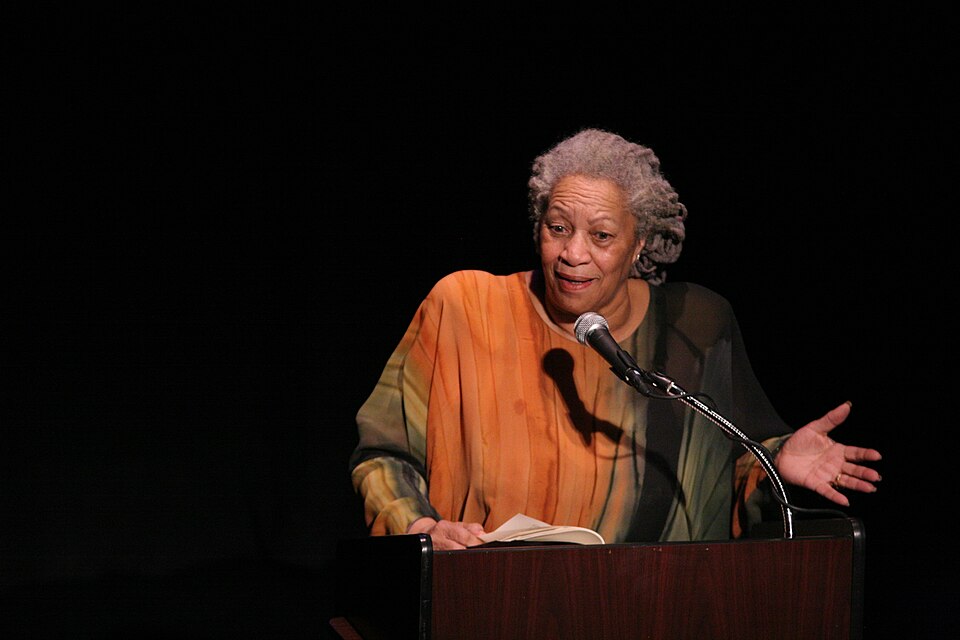
—People imagine you as a novelist, but you were an editor at Random House for a long time. How did you juggle both?
I got up before daybreak, Barack, well before dawn. That was my only truly private time. Coffee, the silence of the house, my two sons still asleep — and I would write for an hour or two before becoming an editor, then a professor. At Random House, I published Black voices that weren't being heard, and I'm as proud of that as of my own novels. People often asked how I found the time; I answered that I didn't find it, I stole it. Discipline isn't a constraint for me; it's a freedom: those dark morning hours belonged entirely to me. The rest of the day belonged to the world; dawn, though, belonged only to writing.
I didn't find time to write — I stole it, before dawn.
—You've been teaching here at Princeton for nearly ten years. What do these young people give you that the solitude of writing doesn't?
They force me to stay honest, Barack. A student isn't impressed by a prize; they want to know why that sentence, why that word. Teaching is dismantling before their eyes what I spent years assembling by instinct. Here at Princeton, I transmit less a technique than a demand: never write below what your subject deserves. I've seen generations pass, and some will become voices that matter. You yourself carry that attention to language that I recognize. Literary creation and the classroom are not opposites: one feeds the other. You only teach well what you continue to seek yourself.
Never write below what your subject deserves.
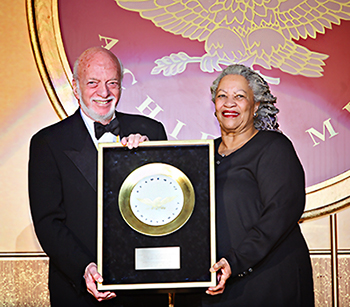
—In 1993, in Stockholm, you became the first Black woman to win the Nobel Prize in Literature. What did you feel as you stepped onto that stage?
I thought of all those who weren't there, Barack. First Black woman — that meant for nearly a century, none had been deemed worthy. I didn't step onto that stage in Stockholm alone; I carried Lorain, my grandmother, the silenced voices. The Academy spoke of an art that brings to life an essential aspect of American reality, and I understood that they were finally recognizing that that reality — the Black experience — was fully American, fully human. An honor like that, at sixty-two, isn't a personal crowning. It's a door you kick open for those who will come. I hoped that a little girl somewhere would understand that she too could be there.
I didn't step onto that stage alone; I carried the silenced voices.
—In your Nobel lecture, you spoke of the power and responsibility of language. What do you expect of a writer facing history?
Language can kill or make live, Barack — it is never innocent. The function of narrative is to illuminate the human condition and bear witness to the terrible power of history. A writer who lies about the past, who smooths or adorns it, becomes complicit in forgetting. I believe in a language that does not enslave, that does not set its foot on the neck of the weak. You, who handle public speech, know how a word can lift or lower a crowd. Our responsibility is not to console, but to make people capable of thinking what they would have us forget. A dead language is content to admire its own power; a living language dares to say what disturbs.
Language can kill or make live — it is never innocent.
—To finish, Toni: if the little girl from Lorain saw you today, what would you want her to remember from the journey?
That she never needed permission, Barack. That child listened to stories without knowing that one day she would write her own, and that they would be read in languages she couldn't imagine. I would want her to remember that her voice, exactly as it was — Black, female, from a steel mill town — had nothing to correct to deserve being heard. I spent my life refusing the gaze that wanted to diminish us, writing for us and not for tolerance. The journey didn't erase the wound; it transformed it into shared memory. If she remembers one thing, let it be this: telling your own people's story is already refusing their erasure.
Her voice had nothing to correct to deserve being heard.
This imaginary interview was generated by artificial intelligence from sources documented in Toni Morrison's profile. It dramatises what the figure might have said based on what we know about them, but does not constitute attested historical testimony. For primary sources and factual documentation, refer to the full profile.