Kids interview Toni Morrison
by Charactorium · Toni Morrison (1931 — 2019) · Literature · 5 min read
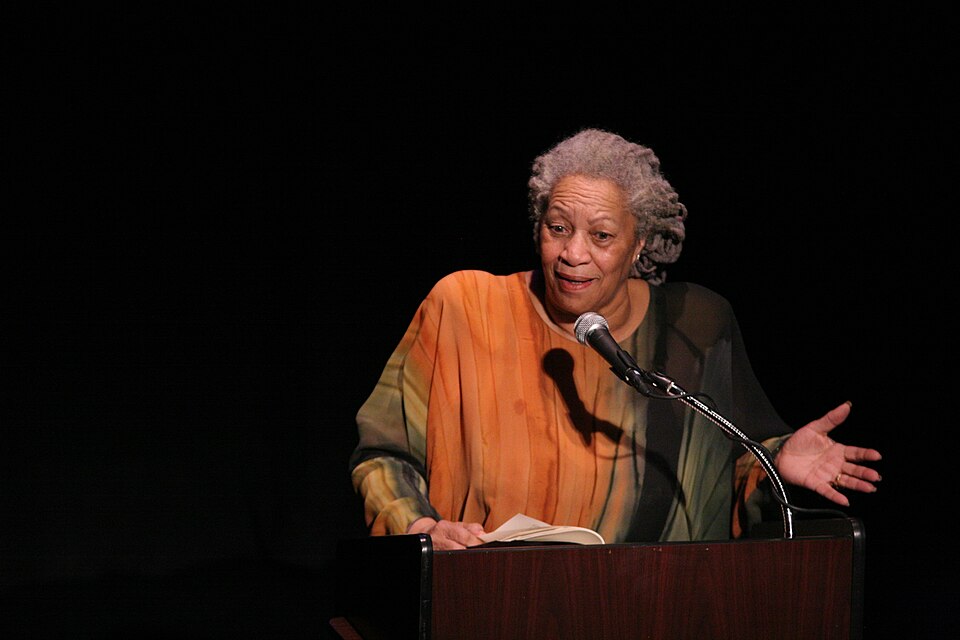
Two young visitors, twelve years old, enter a large room filled with books, manuscripts, and notebooks. A gray-haired woman greets them with a warm smile. She settles in and tells them she is ready to answer all their questions.
—Where were you born, and what was it like at home when you were little?
I was born in 1931 in Lorain, a factory town in Ohio. My real first name was Chloe. You know, at home, we didn't watch stories: we told them. In the evening, my family talked and talked, and old legends passed from mouth to ear. We call that orality: transmitting by voice, not by books. Imagine a house with no screens, just voices in the dark conjuring ghosts and heroes. That's where I learned something: a well-told story can save people who have been forgotten. That never left me.
A well-told story can save people who have been forgotten.
—Did all those stories told in the evening help you later?
Oh yes, my child, all the time. When I wrote, I still heard those voices from my childhood in Lorain. I didn't want to write like a cold book. I wanted people to hear someone speak, breathe, hesitate. Imagine closing your eyes and a grandmother telling you a secret: that's the sound I sought in my pages. Many Black people in my country had never had a book for them. So I put their way of speaking into my novels. Giving a voice to those who weren't listened to was my real job.
I wanted people to hear someone speak, not a cold book.
—What is your book Beloved, and why is it so scary?
Beloved is my book from 1987. It tells of a woman who was enslaved. Do you know what a slave is? A person owned like an object, sold, beaten. This woman did a terrible thing: she preferred to kill her child rather than see him become a slave too. It's a true story, I didn't invent the horror. To write it truthfully, I read historical archives on slavery, real documents. This book is scary because slavery was scary. I didn't want to lie to my readers.
I didn't want to lie to my readers about the horror.
—Why talk about something as old as slavery? It's over, isn't it?
It's over, yes, but pain travels. We call that intergenerational trauma: a wound so deep it passes from parents to children, then to grandchildren. Imagine a crack in a wall: you paint over it, but it's still there underneath. Families that had been enslaved carried that crack for years afterward. Beloved won the Pulitzer Prize in 1988, a very big prize in my country. But the prize didn't interest me as much as that: I wanted no one to dare say "it's in the past, let's forget." We don't forget, my child. We remember to heal.
A deep wound travels from parents to children.
—In one of your books, there's a man who wants to fly. Is that magic?
Ah, you mean Song of Solomon, my book from 1977! A young man searches for his family's origins, his true roots. And yes, there's a bit of the marvelous in it. We call that magical realism: you tell everyday life, but you slip in something impossible, like a man who flies. Why? Because for people deprived of freedom, flying was the greatest dream. In the book, there's this line: "If you want to fly, you have to give up the things that weigh you down." Nice, isn't it?
For those who are chained, flying is the greatest dream.
—What does it mean to give up what weighs you down?
Good question, it's harder than it seems. In Song of Solomon, the hero carries many things: anger, money, fear, family secrets. Imagine a backpack so heavy you can't run. To move forward, he must understand his story and set down that pack. This book won a major critics' prize, the National Book Critics Circle Award, and then the whole world began to read me. But the real message is for you: you only become free by facing your past. Only then can you lighten the pack.
You only become free by facing your past.
—What did you do during your days when you weren't writing?
Oh, I had a full life, my child! I wrote early in the morning, before sunrise, with my coffee. But in the afternoon, I worked. First in New York, I was an editor at Random House: my job was to help other writers publish their books. Imagine someone who opens doors for others. Then, for over twenty years, I taught at Princeton University. Young people came to show me their texts, and I guided them. Writing and teaching, for me, went together. I loved giving birth to my books as much as helping others' books grow.
My job was also to open doors for others.
—Was it tiring to write AND work AND have a family?
Yes, sometimes, I won't lie. I got up before dawn because it was the only moment of silence. The coffee steamed, the house slept, and then I wrote. Imagine the house still dark, and a single lamp lit on the table: that was my moment. The rest of the day belonged to the students at Princeton, to others' manuscripts, to my children in the evening. I learned one thing: you don't wait for the perfect time to do what you love. You steal it, minute by minute, before the world wakes up.
You don't find time to write, you steal it before dawn.
—You won the Nobel Prize! How old were you, and what does it feel like?
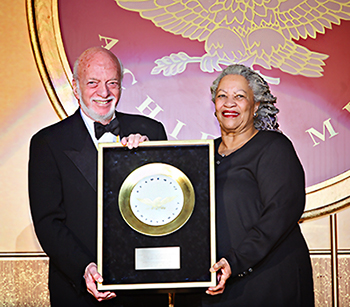
I was 62 years old, in 1993. The Nobel Prize in Literature is the greatest award for a writer in the whole world. And I was the first Black woman to receive it, since it began. Can you imagine? The first. The Academy said that my art gave "a poetic force that makes an essential aspect of American reality come alive." In short: that my books made people feel the real life of others. I was moved, of course. But I thought mostly of all those who had never been given a voice. That day, a bit of their history stepped into the light.
I was the first Black woman to receive this prize. The first.
—In your speech, what exactly did you talk about?
I talked about something very simple and very powerful: words. I said that the role of a story is to illuminate the human condition and to bear witness to "the terrible power of history." You see, a word can hurt, or a word can heal. Imagine a match: it can burn a house or light a candle in the dark. Language is the same. So I told people: be careful with your words, they have real power. A writer is responsible for what he writes, just as you are responsible for what you say.
A word, like a match, can burn or illuminate.
—If we had to remember one thing from you, what would it be?
If you must remember one thing, my child, remember this: everyone deserves to have their story told. All my life, from Lorain to the Nobel Prize, I wanted to give a voice to those who weren't listened to. The slaves, the forgotten women, the wounded children. Imagine a crowd of people in the dark, and you light one by one little lights on each face. That's my work. One day, it may be your turn to listen to those unheard, and to tell their story in turn. Promise me.
Everyone deserves to have their story told.
This imaginary interview was generated by artificial intelligence from sources documented in Toni Morrison's profile. It dramatises what the figure might have said based on what we know about them, but does not constitute attested historical testimony. For primary sources and factual documentation, refer to the full profile.