Imaginary interview with Toussaint Louverture
by Charactorium · Toussaint Louverture (1743 — 1803) · Politics · 5 min read
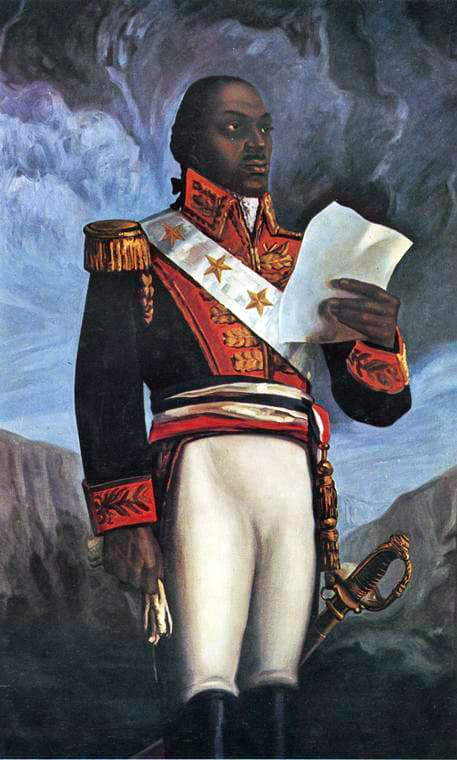
April 1802, at Fort de Joux, in the biting cold of the Jura that this man of the tropics had never known. Behind the dripping stone walls, an old general in a worn uniform receives his visitor without rising. His voice is low, measured, that of a man who learned early that words, like battles, are won by patience.
—How did a child born into slavery on a plantation learn to read?
In secret, always in secret. On the Bréda plantation, a slave who held a book risked the whip, and yet a priest slipped me the letters one by one, like passing bread to a starving man. I devoured what I found in my masters' library — the memoirs of Caesar, of Hannibal, of Alexander. Those men taught me that one could command armies; so I told myself that it might not be impossible to become a general in my turn. A freedman who can read becomes dangerous: he understands that chains are not in the order of the world, but in the hands of men. That is what I held between my fingers, more precious than gold.
A freedman who can read understands that chains are not in the order of the world, but in the hands of men.
—What were you really looking for in those stories of ancient generals?
A proof. The proof that man makes himself, that he is not nailed forever to the condition into which he was born. When I read how Alexander led his phalanxes, I was not reading dead history: I was reading a manual. I learned that war is a matter of terrain, patience, knowing the enemy better than he knows himself. Later, in the hills of Ennery, I put all that into practice with men who, the day before, were cutting cane. The Enlightenment said that all men are born free; I, a slave, needed Caesar to believe that they could also be made free by arms. The book and the saber, those were my two masters.
—Do you remember the moment when the 1791 uprising turned?
August 1791, the Northern Plain. The workshops were burning, the sky was red with burning cane, and a multitude rose without order, without leaders, drunk with anger. Anger, you see, is not enough — it spends itself in one night. My work was to transform that fury into discipline, to turn furious slaves into soldiers who hold the line under fire. I was nicknamed l'Ouverture because, they say, I always found the passage, the breach in the enemy line where others saw only a wall. The saber I carried was not a parade ornament: it was the tool by which a nameless people began to exist.
My work was to turn furious slaves into soldiers who hold the line under fire.
—Why hold so strongly to discipline, when the revolt lived on spontaneity?
Because an undisciplined army is already defeated. The powers of Europe sent their seasoned regiments against us, and we were to oppose them with a crowd? I trained my men in the heights of Ennery, where the mountain becomes an ally: strike, disappear, exhaust the adversary who does not know the terrain. I had them repeat maneuvers, demand silence, respect for the leader. A despised slave learned to hold himself like a French grenadier. That transformation was worth all my victories: the day the enemy feared my columns, he ceased to see us as rebellious cattle. He saw us as a nation in arms.
—When you abolished slavery on your lands, what did you feel?
Less triumph than gravity. To abolish is not only to break an iron; it is to answer the question: what will these free men do tomorrow morning? From 1793, on the territory I held, I proclaimed that there would be no more slaves, a year before the Convention in Paris resolved to do so. But I immediately put the former captives back to work — free, paid, but at work — because a fallow land starves those it has just freed. I was reproached for this severity. I replied that a freedom that does not feed a man is just a fine word engraved on a deserted plantation. Freedom is cultivated like cane, or it dies.
A freedom that does not feed a man is just a fine word engraved on a deserted plantation.
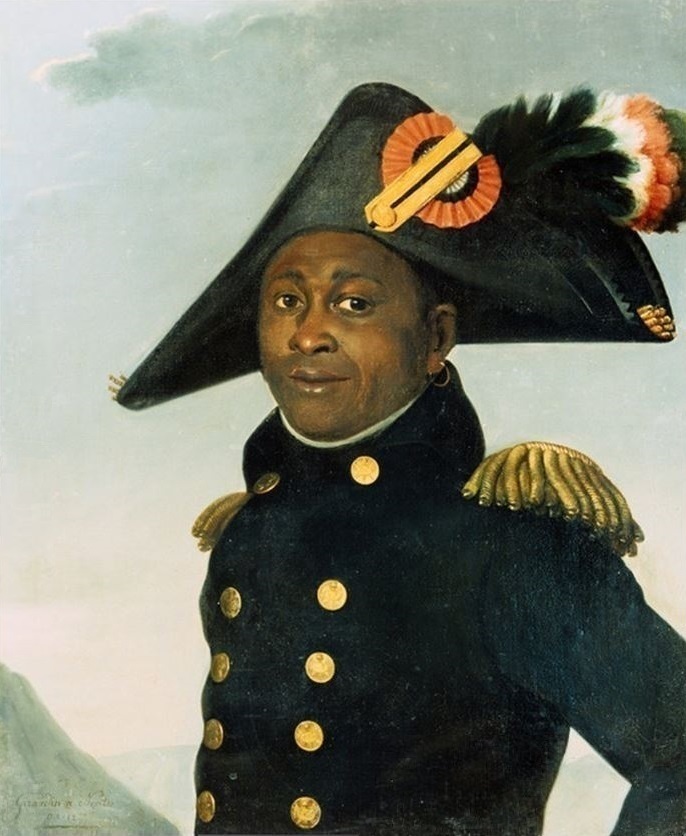
—What did you want to inscribe in the Constitution of 1801?
One thing that no metropolitan decree could ever undo. I had it written, at the head of the Constitution of 1801, that slavery is forever abolished, that all men are born, live, and die free and French. Understand the weight of those words: not freed by grace, but born free, by right. I consolidated my government there, yes, I was reproached enough for it; but a law without arms to defend it is but a dream. This document was to survive men, including me. I wanted that, even if I were taken, no one could ever reopen the register of slaves in Saint-Domingue.
—You have been reproached for serving first Spain, then France. How do you explain that?
One judges my alliances as one judges a merchant's accounts: I had only one currency, the freedom of my people. I first wore the uniform of the king of Spain, who armed our columns, as long as France still held its slaves in chains. The day the Republic abolished slavery, I turned my sword and marched under its colors. At the Treaty of Basel, in 1795, Spain ceded its part of the island, and I undertook to unify Saint-Domingue entirely under a single law. Changing flags is not betrayal when one has served only one cause. Kings and consuls passed; my compass never wavered.
Changing flags is not betrayal when one has served only one cause.
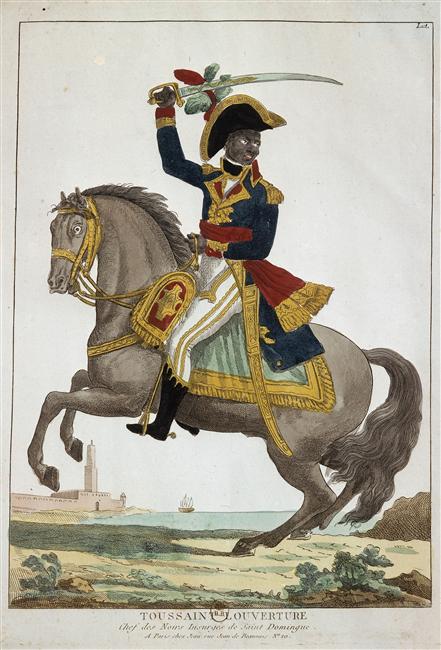
—Unifying the whole island: why was that so necessary in your eyes?
Because a divided land delivers itself to its enemies. As long as the French part and the Spanish part glared at each other like china dogs, each offered Europe a door to enter and restore the whip. From 1795 to 1801, I marched from one end to the other, subdued factions, silenced the color quarrels between freedmen, former slaves, and remaining whites. A single administration, a single army, a single law: that was what could stand against a metropolis determined to take us back. I built from Cap-Français and Port-au-Prince a state where there was only a plundered colony. A divided people is never but a patient prey.
—When Napoleon's expedition landed in 1802, what did you understand immediately?
That the fine words were over. I had written to him, the First Consul, that the colony ravaged by civil war finally enjoyed calm and tranquility under my administration. I expected an ally; he sent me General Leclerc and twenty thousand soldiers to put back the chains. So I ordered that the cities be burned rather than surrendered, that we retreat into the hills, that every inch of land be made costly in blood. I knew that yellow fever would kill for us what our guns could not reach. I saw, in the distance, the return of the specter of the iron chains I thought broken forever. A man can be taken; a well-sown cause cannot.
I saw the return of the specter of the iron chains I thought broken forever.
—Here, at Fort de Joux, far from your tropics, what remains with you?
The cold, first — this cold of the Jura that my skin had never imagined, and which creeps even into thought. I was torn from Saint-Domingue, deported, locked within these stone walls where they hope, no doubt, that I will die in silence. But here is what my jailers do not know: in cutting me down, they have only felled the trunk. The roots of freedom already run under the whole island, deep, countless, and they will grow back. My lieutenants know the hills as well as I do. Let them read me one day, in a century perhaps, and say: he opened a path that no iron could close. I am not afraid to die. I once feared dying useless — that fear has left me.
In cutting me down, they have only felled the trunk; the roots of freedom will grow back.
This imaginary interview was generated by artificial intelligence from sources documented in Toussaint Louverture's profile. It dramatises what the figure might have said based on what we know about them, but does not constitute attested historical testimony. For primary sources and factual documentation, refer to the full profile.