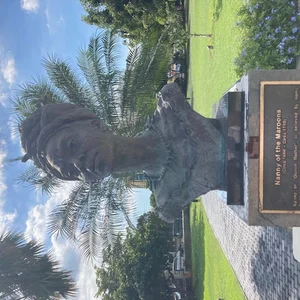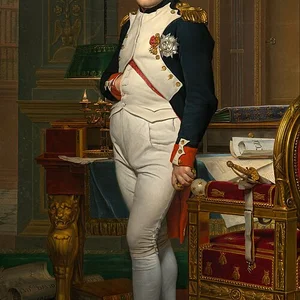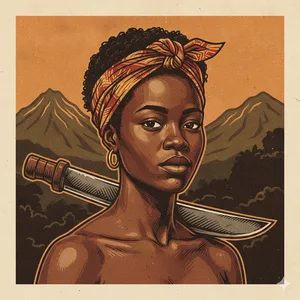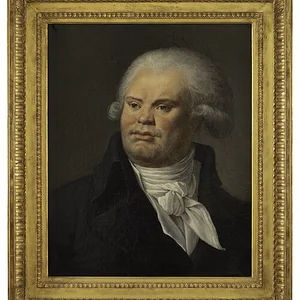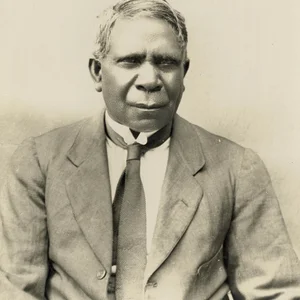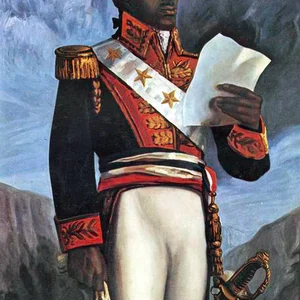

A freed slave and Haitian military leader (1743–1803), Toussaint Louverture led the Haitian Revolution and abolished slavery in Saint-Domingue. An iconic figure in the fight for freedom, he transformed a slave colony into the first independent Black republic.
Toussaint Louverture(1743 — 1803)
Toussaint Louverture
France, Saint-Domingue
8 min read
Frequently asked questions
Key Facts
- 1791: Takes part in the slave uprising in Saint-Domingue, marking the beginning of the Haitian Revolution
- 1794: Official abolition of slavery in Saint-Domingue by the French National Convention
- 1797–1801: Becomes de facto governor of Saint-Domingue and implements administrative and economic reforms
- 1802: Arrested by Napoleonic troops sent to restore slavery
- 1804: Following his death in captivity in 1803, Haiti declares independence, becoming the first free Black nation in the world
Works & Achievements
Toussaint Louverture organized and led the slave uprising in Saint-Domingue, igniting the Haitian Revolution. This event became one of the most significant slave revolts in modern history, inspiring abolitionist movements around the world.
Louverture proclaimed the abolition of slavery across the territory he controlled, anticipating the French decree of 1794. This act freed hundreds of thousands of enslaved people and became a founding moment of liberty in Haiti.
Toussaint Louverture conquered and unified the island's various regions, ending the divisions between the French and Spanish portions. He established his authority over the entire Haitian territory.
Louverture promulgated a constitution proclaiming equality of rights, consolidating his power and transforming Saint-Domingue into an autonomous state with himself at its head. This founding document laid down the principles of the future Republic of Haiti.
Louverture restructured Haitian society by establishing formerly enslaved people as free workers, restoring agricultural production and the economy. He built a modern administration and a disciplined army, transforming a devastated colony into a functioning state.
Faced with Napoleon's army, sent to restore slavery, Louverture organized the island's defense. Although he was captured and imprisoned in France, his strategy allowed his successors to achieve a final victory in 1804.
Though Louverture did not live to see this moment, his life's work culminated in the creation of the world's first independent Black state, establishing Haiti as a free and equal nation. His political legacy was the direct foundation of that independence.
Anecdotes
Toussaint Louverture learned to read and write in secret while still enslaved, thanks to a priest who taught him literacy. This rare education for an enslaved person allowed him to master several languages and engage with Enlightenment ideas, which shaped his vision of freedom.
In 1791, during the Saint-Domingue slave uprising, Toussaint initially served as an officer in the Spanish army before joining the French revolutionaries. He shifted allegiances several times — Spain, then France, then independence — adapting to political circumstances while always pursuing the liberation of enslaved people.
Toussaint Louverture earned the nickname 'l'Ouverture' (the one who opens the way) because he was said to break through enemy lines in decisive battles. His military talent allowed him to transform enslaved people into disciplined soldiers capable of facing the finest European armies.
In 1801, Toussaint promulgated a constitution that proclaimed him governor-for-life of Saint-Domingue. This act enraged Napoleon Bonaparte, who dispatched an army to retake the island and restore slavery, triggering a new phase of the war.
Captured and imprisoned by the French in 1802, Toussaint Louverture died at Fort de Joux in the Jura in 1803 — but the Haitian Revolution he had set in motion continued without him. In 1804, Haiti became the world's first independent Black republic, realizing his dream.
Primary Sources
The governor of Saint-Domingue declares that the constitution he has just given to the colony is an act of wisdom and resolve, intended to secure the happiness of its inhabitants and the prosperity of the land.
Citizen First Consul, I wish to inform you that the colony of Saint-Domingue, long ravaged by civil war, now enjoys calm and tranquility under my administration.
The colony of Saint-Domingue and its dependencies form the territory of a French possession. Slavery is forever abolished therein. All men are born, live, and die free and French.
Toussaint Louverture has established an orderly government and a remarkable administration. This extraordinary man has managed to create order and prosperity on an island that was once given over to chaos.
I began to think that it was not impossible to become a general. I studied the memoirs of Caesar, Hannibal, and Alexander the Great, which I found in my masters' library.
Key Places
Plantation in Saint-Domingue where Toussaint Louverture likely worked as an enslaved person before gaining his freedom. It was in this region that he began his military career in 1791.
The colonial capital of Saint-Domingue and a major strategic base during the Haitian Revolution. Toussaint Louverture established his authority there and fortified it as his center of power.
The current capital of Haiti, where Toussaint Louverture consolidated his administrative and political power following his military victories.
A French fortress in the Doubs region where Toussaint Louverture was imprisoned from 1802 to 1803 after his arrest by Napoleon's forces.
The former French colony that became the first independent Black republic through the revolution led by Toussaint Louverture, fundamentally transforming the status of slavery throughout the Caribbean.
A mountainous region of Saint-Domingue where Toussaint Louverture developed his early military tactics and established guerrilla bases against the French armies.
Typical Objects

The general's uniform worn by Toussaint Louverture, symbolizing his military authority and his journey from slavery to commanding the revolutionary armies of Saint-Domingue.

The bladed weapon carried by military officers in the 18th century, emblematic of Toussaint Louverture's role as a military strategist during the Haitian Revolution.

A symbol of the slavery and colonial oppression that Toussaint Louverture endured before rising to become a revolutionary leader and abolishing slavery in Saint-Domingue.

The emblem of the new independent state brought into being by the revolution led by Toussaint Louverture, representing the world's first Black republic.

The abolitionist decrees and proclamations signed by Toussaint Louverture, most notably the abolition of slavery in 1793, which was fundamental to the transformation of Saint-Domingue.

The mount characteristic of 18th-century generals, symbolizing the mobility and military command of Toussaint Louverture throughout his revolutionary campaigns.

The founding document that Toussaint Louverture had drafted to organize the autonomous government of Saint-Domingue, laying the institutional groundwork for the future independent state of Haiti.
School Curriculum
Vocabulary & Tags
Key Vocabulary
Tags
Époque
Daily Life
Morning
Toussaint Louverture rises before dawn to inspect the plantations and oversee the organization of labor. He devotes several hours to administrative correspondence and military reports, having learned to read and write thanks to his former master. These tasks reflect his role as military governor and administrator of Saint-Domingue.
Afternoon
The afternoon is devoted to audiences with his officers, diplomatic negotiations, and political decisions concerning the administration of the colony. He regularly inspects fortifications and troops, demonstrating an active presence in military affairs. These activities keep him occupied until sunset.
Evening
In the evening, Toussaint dines simply with his family and close collaborators, often discussing matters of state and military strategy. He also uses these moments to study and further his education, reading political and military works. He retires early to maintain his physical fitness and alertness.
Food
His diet is that of a colonial dignitary, including meats, fish, tropical fruits, and vegetables. Despite his power, Toussaint maintains a relatively frugal regime, favoring the balanced nutrition his military activities require. He drinks rum in moderation, as was common at the time.
Clothing
Toussaint wears the French military uniform with the insignia of a general, a symbol of his official authority. He favors practical attire suited to the tropical climate and military inspections. His clothing reflects his status as a political and military leader rather than any mark of his former enslavement.
Housing
He resides in administrative residences, notably in Cap-Français and Port-au-Prince, which served as centers of colonial power. These dwellings provide offices, private quarters, and reception spaces for official meetings. His living environment reflects his status as governor rather than that of an ordinary citizen.
Historical Timeline
Period Vocabulary
Visual Style
Un style néoclassique héroïque combinant le portrait officiel du XVIIIe siècle avec des éléments révolutionnaires et tropicaux, utilisant un jeu de lumière dramatique pour magnifier le leadership militaire et la dignité du personnage historique.
Sound Ambience
Une ambiance immersive mêlant les sons de la lutte révolutionnaire haïtienne : tambours sacrés et chants de liberté, bruits de camps militaires, sons de la nature tropicale, avec en arrière-plan les échos de la révolte et de l'espoir d'une nation en train de naître.
Liens externes & ressources
Références
Œuvres
Insurrection de la plaine du Nord (1791)
1791
Abolition de l'esclavage à Saint-Domingue
1793-1794
Unification de Saint-Domingue
1795-1801
Constitution de 1801
1801
Réorganisation économique et administrative
1795-1803
Résistance à l'expédition française de 1802
1802-1803
Fondation de la République d'Haïti (1804)
1804