Imaginary dialogue between Général Leclerc and Toussaint Louverture
by Charactorium · Toussaint Louverture (1743 — 1803) · Politics · 5 min read
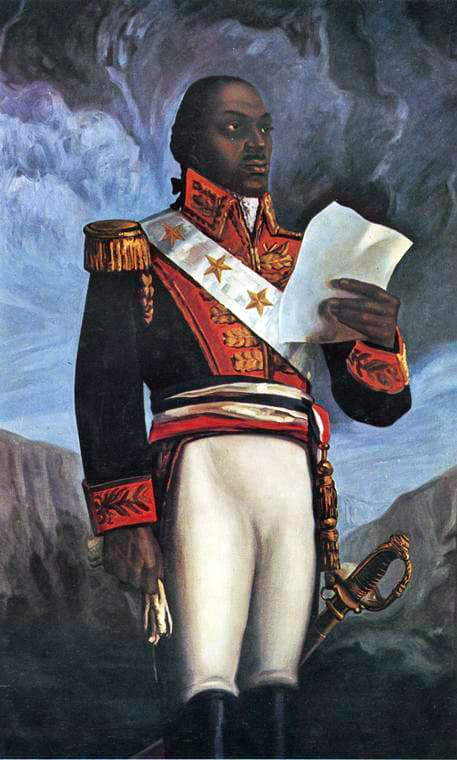
It is in a fortified room in Cap-Français, in this month of February 1802, that General Leclerc obtains an interview with Toussaint Louverture, shortly after the landing of the expedition sent by the First Consul. The light falls obliquely on the maps spread out, and the smell of candle wax mingles with that of gunpowder. The two men observe each other as adversaries: one commands the army that came from France, the other holds the island he has unified and pacified. Leclerc, who in his reports calls Toussaint an extraordinary man, comes to probe the soul of the one he must nevertheless subdue.
—Governor, they say that as a child slave on the Bréda plantation, you secretly learned to read. Is that true?
It is the truth, General, and I do not hide it. On the lands of Bréda, an old priest showed me the letters away from prying eyes, for a slave who knows how to read is a dangerous slave. I devoured whatever fell into my hands, then, in my masters' library, the memoirs of Caesar, Hannibal, Alexander. I was nicknamed l'Ouverture because I broke through enemy lines, but I tell you: the first breach I opened was in my own ignorance. A man who knows how to read is not so easily chained again. You, a career soldier, received your schooling; I stole mine.
The first breach I opened was in my own ignorance.
—You abolished slavery on your lands as early as 1793, even before the Convention decreed it. Why such haste?
Because freedom is not begged for, General; it is taken and kept. In 1793, on the territory I controlled, I proclaimed that no one would be a slave any longer, without waiting for a decree from Paris in 1794 to confirm what my brothers had already conquered with arms in hand. You may carry in your luggage orders from the metropole; I inscribed in the Constitution of 1801 that slavery is forever abolished there, that all men are born and die free there. These are not words of circumstance. Hundreds of thousands of freedmen now work as free men. Do you believe they can be put back in irons without shedding their blood?
Freedom is not begged for, General; it is taken and kept.
—This Constitution of 1801 makes you governor for life. The First Consul saw it as a challenge. Did you not measure his anger?
I measured it, and I did not back down. I wrote to the First Consul that this island, long ravaged by civil war, at last enjoyed calm and prosperity under my administration. It was not a bravado: I restored the plantations, placed former slaves as free and salaried workers, disciplined an army, reestablished order where chaos reigned. A country that governs itself needs laws written by its own hand. If Bonaparte sees insolence in it, let him rather consider the work. You yourself, General, have traveled these ports, these roads, these harvests — tell me in conscience whether you found a colony in ruins or a country standing.
A country that governs itself needs laws written by its own hand.
—You are reproached for having served first Spain, then France. How does a man change his banner so?
I have only ever changed my banner, never my cause. In 1791, when the Northern Plain blazed, I first wore the Spanish uniform, because Spain armed the insurgents against the masters. Then revolutionary France abolished slavery, and I turned my cannons toward her, because she at last served my people's freedom. At the Treaty of Basel, in 1795, the island's borders shifted under my feet. Each time, General, I followed not the interest of a king or a consul, but the only compass that does not lie: the deliverance of my people. Call me fickle; I say faithful. A flag that restores chains no longer deserves to be carried by me.
I have only ever changed my banner, never my cause.
—You know why I am here, in Cap-Français, with my ships. What will you do if they come to retake the island by force?
I can read a landing as well as a book, General, and yours has come in great numbers. You speak to me of order and a common flag; but behind you, I hear the rumble of the restoration of slavery, already reestablished in Guadeloupe. If they touch the freedom of this people, these hills you see will become so many tombs for your columns. They may capture me, perhaps — an old man can be taken. But you cannot stop a revolution with irons. You may take me to some fortress beyond the seas; behind me will remain thousands of men who have nothing left to lose but chains. The root is deep, and you will only cut down the trunk.
They may capture me, perhaps; but you cannot stop a revolution with irons.
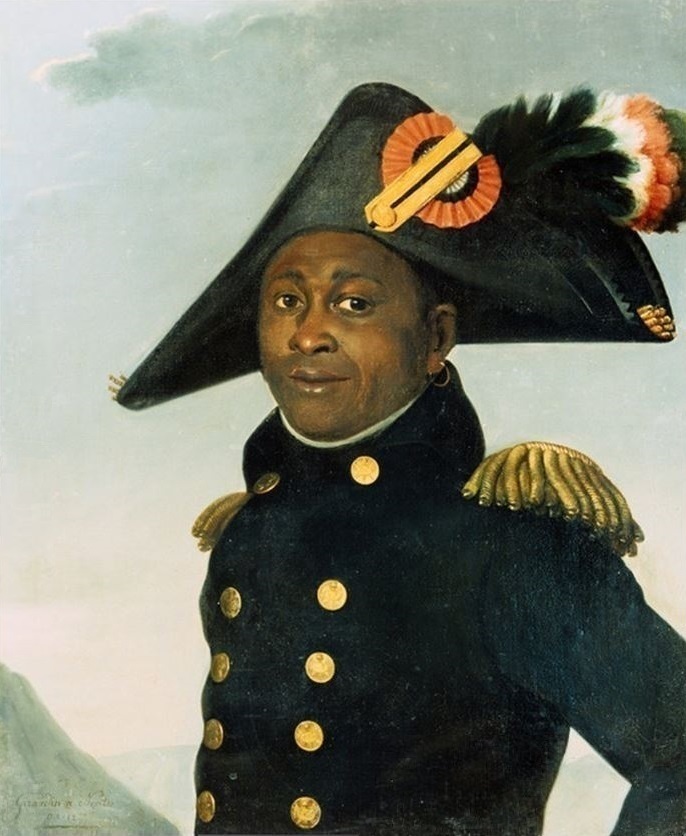
—In your letter to the First Consul, you boasted of regained tranquility. Was that sincere, or the prudence of a man who sensed the storm?
Both, General — a head of state does not have the luxury of separating sincerity from prudence. When I wrote that Saint-Domingue at last enjoyed calm, it was true: the fields produced, the ports traded, the troops obeyed. But I was not blind to the clouds coming from France. I governed those years as one holds a dike: with one hand the pen for administration and correspondence, with the other the saber for defense. You who inspect my fortifications today see the work of a man who never believed peace was won forever. I built solidly, precisely because I sensed that everything would be tested. Wisdom and firmness, that is what I put into every act.
I governed those years as one holds a dike: with one hand the pen, with the other the saber.
—You speak of freedmen become free workers. But they still toil in the fields. How are they freer than before?
The difference is entire, General, even when the gesture looks the same. A slave cuts cane under the whip, without a name, without a wage, without a tomorrow; a free man cuts it for a wage, under a law that protects him, and no one can sell him or separate his children from him. I demanded work from them, yes, because a colony without harvest is a colony that starves and falls back under foreign control. But the cultivator of today is no longer a commodity listed in a master's inventory. Ask them if they can be put back in irons: you will read the answer on their faces. Freedom is not idleness; it is belonging only to oneself.
Freedom is not idleness; it is belonging only to oneself.
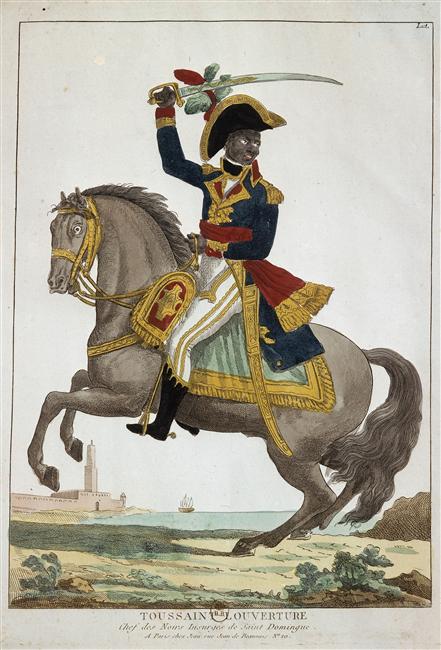
—You cited Alexander and Hannibal. A former slave comparing himself to the great captains of Antiquity — is that not too much pride?
It is not pride, General, it is learning. I read those memoirs not to believe myself their equal, but to understand how men in inferiority defeated stronger armies. Hannibal crossed the Alps; I know every hill, every ravine of this island, and that terrain is worth all the legions. I took slaves who had never held anything but a hoe and made them into disciplined soldiers, capable of holding their own against the best troops of Europe — perhaps soon against yours. A man who started so low has the right to seek his masters where he finds them. I took my lessons from the illustrious dead for lack of being able to take them in an academy. Knowledge has no color, General.
I took slaves who had only held a hoe and made them into soldiers.
—If tomorrow I had to arrest you and take you to France, would you believe your work lost with you?
No, General, and that is what your masters do not understand. A man can be deported, locked up in some frozen fort far from his sun; his body may break in the cold. But an idea sown in a people cannot be arrested. I lit a fire in 1791; it ran from plantation to plantation, and it now burns in men younger and tougher than me — Dessalines, Christophe, and others. If I fall, they will raise the flag. You think you are dealing with only a general; you are dealing with an entire people who have tasted freedom and will not give it back. That is why your victory, if it comes, will be shorter than you hope.
An idea sown in a people cannot be arrested.
—Deep down, Toussaint, what drives a man who has changed sides so often? What were you seeking, since those first fires of 1791?
One thing only, General, and I have pursued it from the first day: that no man born on this earth could ever be the property of another. Everything else — Spain, France, treaties, uniforms — was only paths toward that goal. I united the island from one end to the other, erased divisions between the parties, gave a Constitution, because a free people needs a roof to shelter under. They call me ambitious; I answer that my ambition fits in one word, and that word is freedom. When you return to the First Consul, tell him this: he may defeat me, but he will not defeat what I have placed in the hearts of these people. No army can ship that back.
My ambition fits in one word, and that word is freedom.
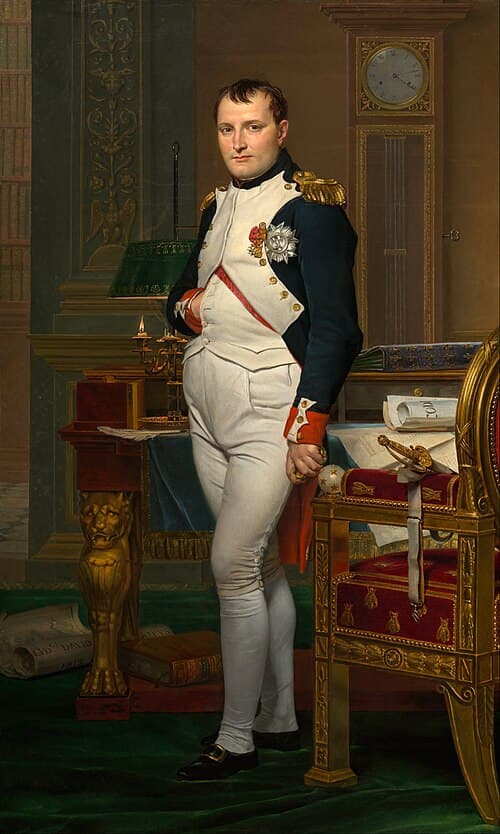

This imaginary interview was generated by artificial intelligence from sources documented in Toussaint Louverture's profile. It dramatises what the figure might have said based on what we know about them, but does not constitute attested historical testimony. For primary sources and factual documentation, refer to the full profile.