Kids interview Toussaint Louverture
by Charactorium · Toussaint Louverture (1743 — 1803) · Politics · 4 min read
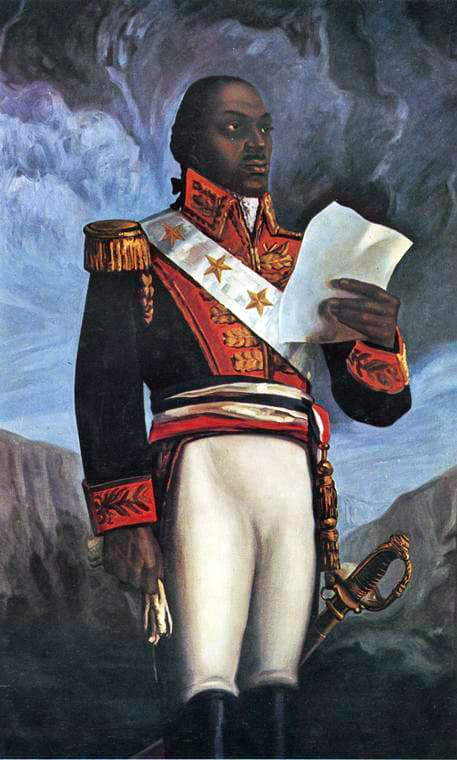
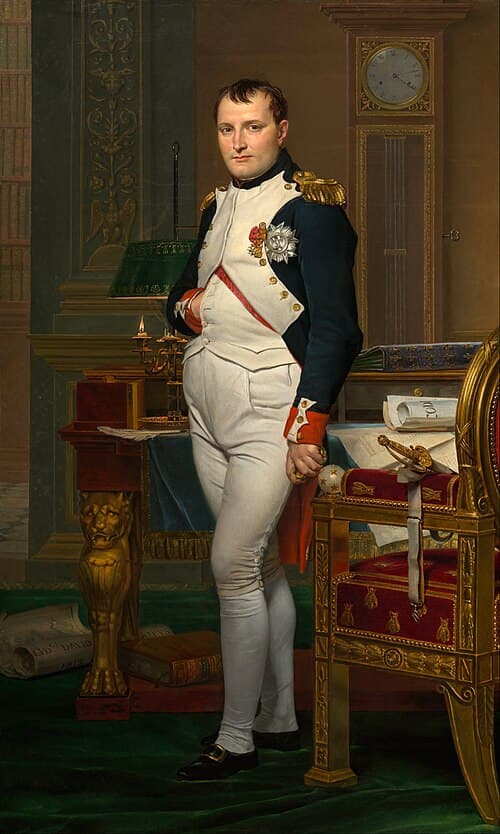
Two twelve-year-old students visit an exhibition on the Caribbean. In front of an old portrait of a man in a general's uniform, they stop, intrigued. And then the man in the painting begins to speak to them, softly, like a grandfather with many stories to tell.
—Is it true that you learned to read while you were still a slave?
Yes, my child, and it was dangerous. I was born in 1743 on the Bréda plantation in Saint-Domingue. A slave who could read worried the masters. So a priest taught me letters in secret, almost in whispers. Imagine a child hiding a book under his shirt like a treasure. Each word learned was a little door opening in my mind. Later, I read several languages. And those words, you see, no one could take them back from me. A master can chain your hands. He cannot chain what you have understood.
They can chain your hands, never what you have understood.
—Why were you called "L'Ouverture"? That's a funny name!
Ah, that name makes me smile! They say that in battles, I always found a passage where the enemy thought his line was tightly closed. An ouverture, like a crack in a wall that no one had seen. So the name stuck. Imagine a wall of soldiers, packed tight, and a man who spots the only gap. That was my job. I had learned to turn former slaves, who had never held a weapon, into disciplined soldiers. My general's uniform was not a gift. I earned it gap by gap, battle by battle.
I always looked for the crack that no one had seen.
—When you were a prisoner, what did you think about to keep going?
At the end of my life, locked away far from my people, I began to write my memoirs. And you know what I thought back to? The great commanders of old that I had read as a young man: Caesar, Hannibal, Alexander. In my masters' library, I devoured their war stories. I told myself something crazy for a slave: maybe one day, I too could become a general. Imagine a boy who has nothing, and dares to dream of equaling the greatest. That dream kept me warm, even in the cold of prison.
I dared to think that a slave could become a general.
—Is it true that you switched sides several times? Spain, France... why?
Yes, and some reproached me for it. When the great uprising broke out in 1791, I first fought under the colors of Spain, an enemy of France. Then, when France promised to free the slaves, I joined its camp. You see, I did not change out of whim. One thing guided me, always the same: that my brothers should never be slaves again. Imagine a traveler who changes paths, but always walks toward the same mountain. The paths changed. My goal never budged an inch.
I changed paths, never my goal: freedom.
—Did you abolish slavery before France did?
It's true, my child, and I am proud of it. As early as 1793, on the lands I controlled, I proclaimed the end of slavery. France itself only voted it in 1794. So I led the way. Hundreds of thousands of men and women, from one day to the next, were no longer anyone's property. Imagine a huge crowd rising up at once, because someone finally tells them: you are free. Those people had known iron chains. I wanted them to know only the work of free men from then on.
I said 'you are free' before France even voted it.
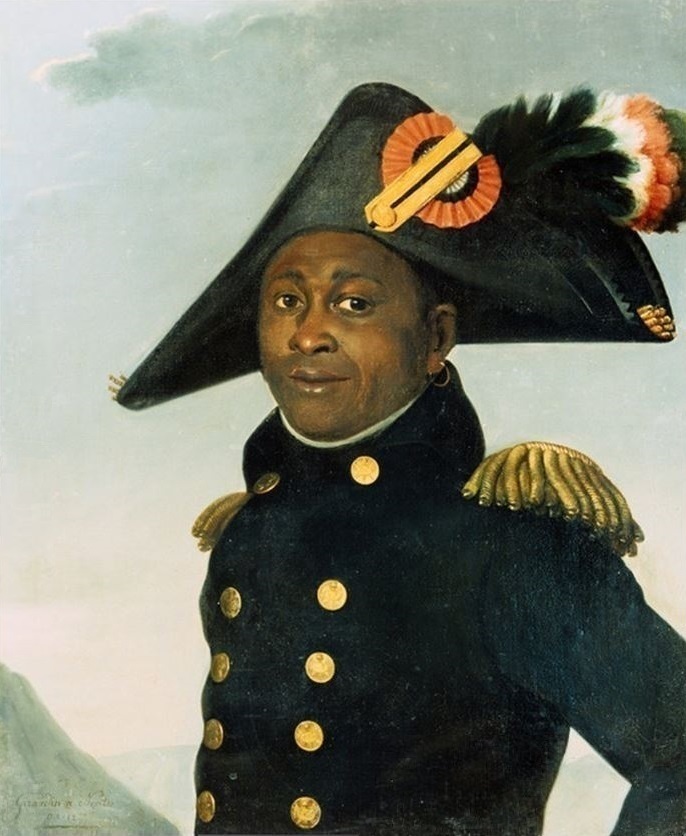
—You wrote a Constitution? What exactly is that?
A constitution is a great text that says how a country should be governed: its most important rules, its founding laws. In 1801, I gave one to Saint-Domingue. And I had a sentence written in it that was dear to my heart: “Slavery is forever abolished. All men are born, live, and die free and French.” Do you hear those words? Forever. Not for a year, not for ten years. Forever. Imagine carving a promise into stone, so deep that no one can ever erase it. That is what I wanted to do.
Slavery abolished forever: carved like in stone.
—And why did that Constitution make Napoleon angry?
Because in that text, I named myself governor of the island for life. Saint-Domingue remained linked to France, but it governed itself almost alone. Now Napoleon wanted to command everything from Paris, and worse: he dreamed of bringing back slavery. Imagine building your house with your own hands, and a powerful man far away suddenly decides it belongs to him. My Constitution told him no. So he sent a great army, led by General Leclerc, to take the island back from me. My text of peace became, without my wanting it, a declaration of war.
I had built a house; they tried to take it from me.
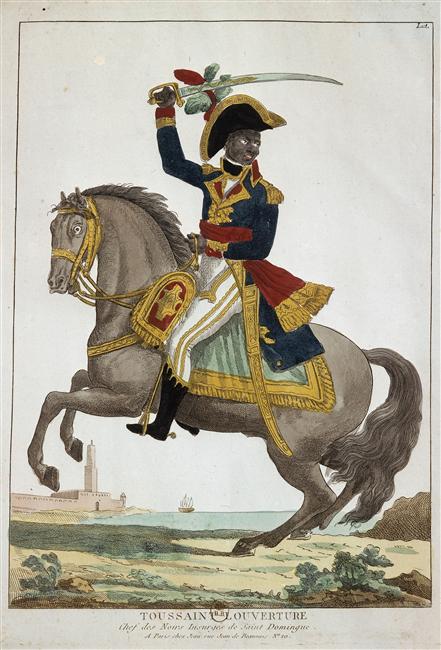
—What did you do with your days when you ruled the island?
I rose before daybreak, well before the sun. I went to inspect the plantations, check that everything was running. For I had a fixed idea: former slaves would no longer be beaten, but would work as free men, and paid. An island ravaged by war had to be fed, put back on its feet. Imagine a trampled garden that you patiently replant, row after row. In the afternoon, I received my officers, made decisions, wrote endless letters. Even my enemy Leclerc acknowledged it in a report: I had built a regular government, order where chaos had reigned.
A trampled island, I patiently replanted it, row after row.
—How did it end for you? Did they catch you?
Yes, my child, and this is the sad part. In 1802, the French captured me by trickery, then deported me. They locked me far from my warm islands, in an icy fortress, the Fort de Joux, lost in the mountains of the Jura. Imagine a man born under the tropical sun, suddenly alone in the cold, the fog, the dampness of stone. I did not last long. I died there in 1803, a prisoner. But you see, they can imprison a man. They cannot imprison an idea that has already caught fire in the heart of a whole people.
They imprison a man, never an idea that has caught fire.
—And after your death, did your dream come true anyway?
Yes! And that is what consoles me. I did not see that day, but in 1804, barely a year after my death, my comrades won the war. Saint-Domingue became Haiti: the very first independent black republic in the world. Imagine planting a tree, knowing you will never see its fruit. I planted freedom. Others picked the fruit. When you learn history, remember that a man who started on a slave plantation helped an entire people become free. If I did it, then you too can change great things.
I planted freedom; others picked the fruit.
This imaginary interview was generated by artificial intelligence from sources documented in Toussaint Louverture's profile. It dramatises what the figure might have said based on what we know about them, but does not constitute attested historical testimony. For primary sources and factual documentation, refer to the full profile.