Kids interview Tristan and Iseult
by Charactorium · Tristan and Iseult · Mythology · 5 min read
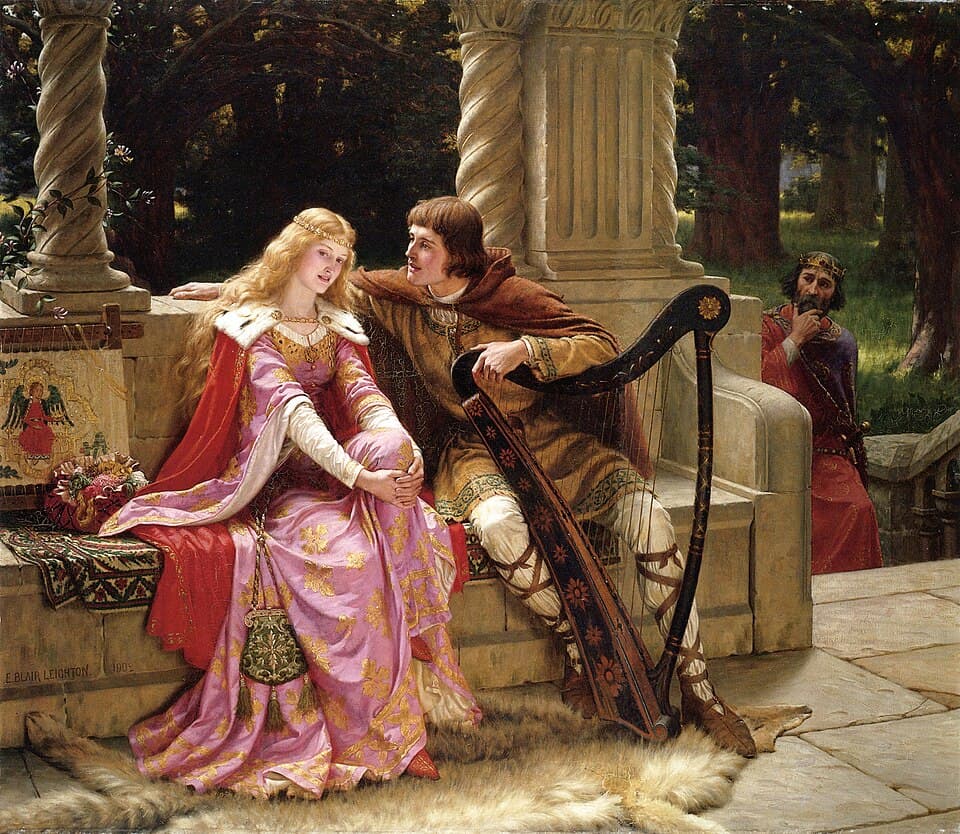
Two young visitors, on a school trip, stop in front of an old tapestry where a knight and a queen hold hands. Suddenly, Tristan's voice seems to rise from the thread and color. He smiles at them and agrees to tell his story.
—What were your days like at King Marc's court?
You know, my child, I was a knight, but also a musician. In the morning, the castle bell would ring and I'd go to mass, then I'd eat some bread and cheese. In the afternoon, I'd train with the sword or go hunting on horseback. But in the evening, I would take my harp. Imagine a great stone hall, torches crackling, and everyone falling silent to listen. I would sing stories of love and combat. In my time, that was called courtliness: being noble in one's gestures and in one's heart. A knight who knows how to wield both sword and harp, you see, is a knight twice loved.
A knight who knows how to wield both sword and harp is twice loved.
—What did you eat in the evening, in the castle?
Ah, it wasn't like a peasant's meal, I'll admit. At King Marc's table, we were served roast game, poultry, sometimes fish, white bread, and wine. Imagine the smell of meat grilling in the great fireplace, and spices from far away, so rare they were worth a fortune. We all ate together in the great hall, and troubadours played during the feast. It was a world of celebration, colors, and songs. But you know, a full belly never consoles a heavy heart. Amid all that happiness, mine was already elsewhere.
A full belly never consoles a heavy heart.
—Is it true that a magic philter forced you to love each other?
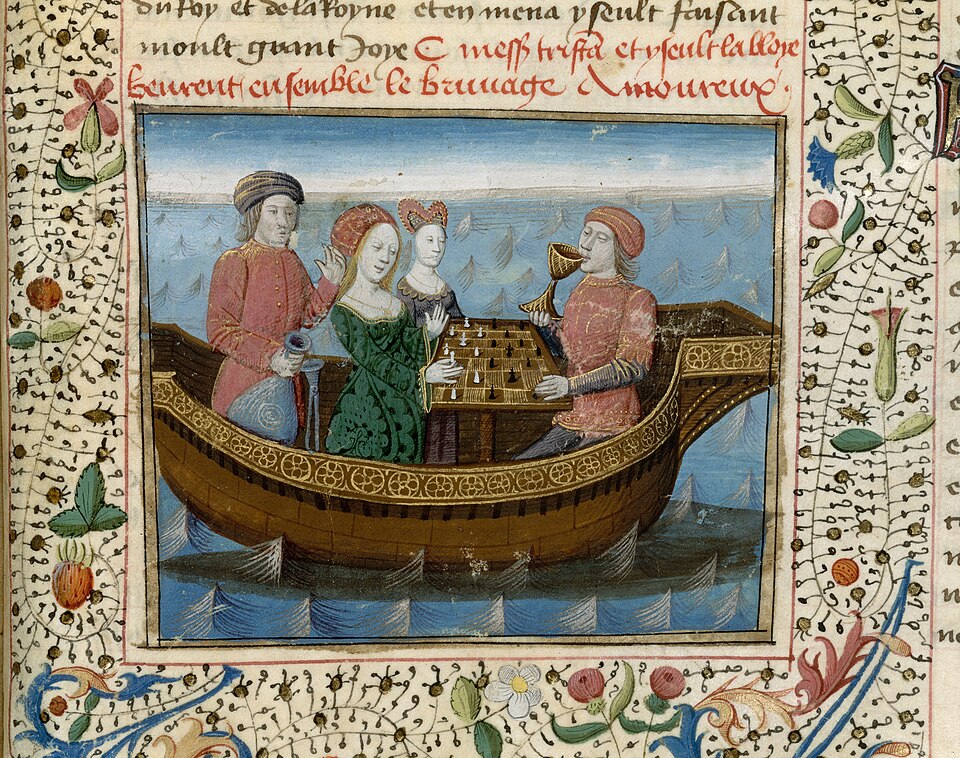
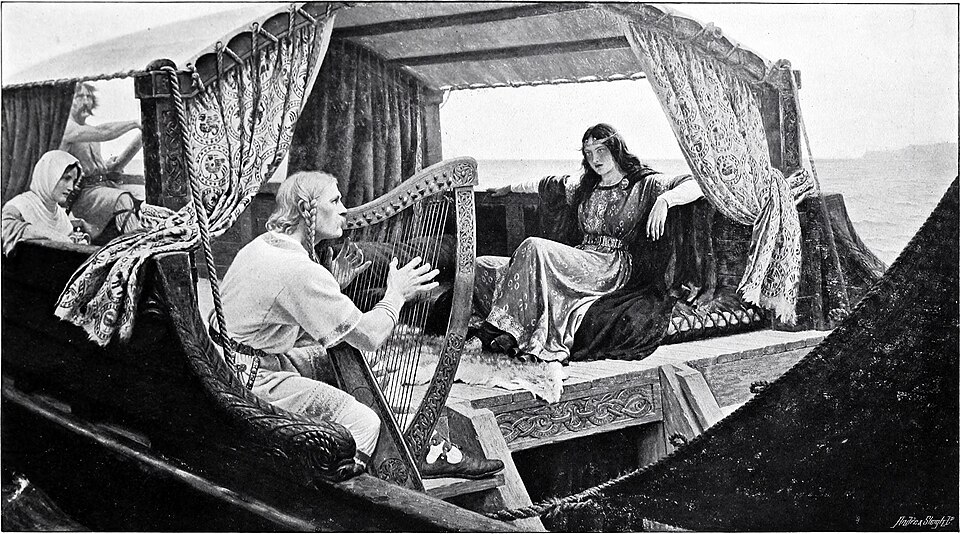
Yes, and that is the heart of my entire story. I had gone to fetch Iseult in Ireland to bring her back to my uncle, King Marc, whom she was to marry. On the ship bringing us back to Cornwall, a servant handed us a cup, a hanap, without knowing what it contained. That wine was meant for the married couple, so that they would love each other for life. We drank it by mistake, both of us. And the next moment, I understood: what I was drinking was the wine of love. Imagine drinking clear water, and feeling your heart change forever. One does not always choose whom one loves.
One does not always choose whom one loves.
—Were you afraid when you realized about the philter?
Afraid, yes, and very sad too. For I knew what it meant. Iseult was to become queen, the wife of my uncle, my king to whom I owed loyalty. And I would never be able to stop loving her. That philter, that enchanted brew, could not be undone. It was like an invisible thread tied to both our hearts: pulling only made it tighter. Imagine having to hide the most important thing in your life, every day, from everyone you respect. That is what the philter gave me: a great love, and a secret just as heavy to bear.
The philter was a thread between our hearts: pulling only tightened it.
—Why did you go hide in a forest?
Because our secret was eventually discovered, my child. When the king learned of our love, we had to flee the court. We went into the Morois forest, far from castles and men. Imagine a dense forest, with no paths, where you hear only the wind and the birds. We no longer had a king's bed, no more feasts. We slept on the bare ground, we hunted to eat. And yet, you know what? We were almost happy. For in the castle, we were separated by rules; in the forest, we were finally free, even hungry.
In the castle we were rich and separated; in the forest, poor and free.
—Weren't you scared sleeping in the forest at night?
Of course we were! At night, in the Morois, everything creaks and moves. Imagine total darkness, no torches, just the cold rising from the ground and the sounds of beasts in the distance. We had no fortress to protect us, only the trees. But you see, when you are two and you love each other, fear becomes smaller. With Iseult near me, I no longer trembled the same way. We were fugitives, yes, hunted like game. But that forest, which should have been our prison, became our refuge. Strange, love: it transforms a miserable hiding place into the most beautiful of palaces.
Love transforms a miserable hiding place into the most beautiful of palaces.
—Why is your story told in so many different ways?
Good question, my child! It's because I didn't have just one storyteller, but several. In the time of manuscripts, around 1170, a poet named Béroul told my burning, wild, carnal passion. Another, Thomas of Britain, preferred to speak of courtliness and the delicate beauty of feelings. Imagine two painters before the same landscape: one paints the storm, the other paints the moonlight. It's the same land, and yet two paintings. My story traveled from mouth to mouth, from country to country, and each person put a bit of their heart into it. That's why no version is quite the same.
The same landscape: one paints the storm, the other the moonlight.
—Were there women who told your story too?
Yes, and one of them was wonderful: Marie de France. She was a poetess of my time, who wrote short verse tales called lais. In one of them, The Honeysuckle, she slipped a moment of my story. The honeysuckle is a plant that twines around a tree: if you separate them, both die. Imagine that image for me and Iseult! That's what poets of old did: they took a flower, a simple object, and hid a great feeling inside. A good story, you see, never dies: it just passes into other hands.
A good story never dies: it passes into other hands.
—Is it true you married another Iseult?
Yes, and that's the saddest part, I must admit. After leaving Cornwall, I traveled far, to Léonois. There, I married another woman who bore the same name: Iseult of the White Hands. You wonder why? Because her name reminded me of the one I truly loved, so far away. But you cannot replace a love with a name. Imagine calling someone by the name of an absent person, hoping to fill the void. It doesn't work. That marriage only prolonged my pain, instead of erasing it. My heart had never left the other Iseult.
You cannot replace a love with a name.
—Why does your story always end badly?
Because it's what was called a tragic destiny, my child: a misfortune that cannot be avoided, no matter what. The philter had bound us forever, but the world always separated us. Iseult was queen, I was the king's nephew: we could not live our love openly. Imagine two rivers wanting to join, with a mountain between them. Our story had to end in tears, it was written. And yet, you see, perhaps that is why it is still remembered after more than eight hundred years. Easy loves are forgotten. Impossible loves cross the centuries.
Easy loves are forgotten; impossible loves cross the centuries.
Read further
This imaginary interview was generated by artificial intelligence from sources documented in Tristan and Iseult's profile. It dramatises what the figure might have said based on what we know about them, but does not constitute attested historical testimony. For primary sources and factual documentation, refer to the full profile.