Imaginary interview with Vasco de Gama
by Charactorium · Vasco de Gama (1460 — 1525) · Exploration · 6 min read
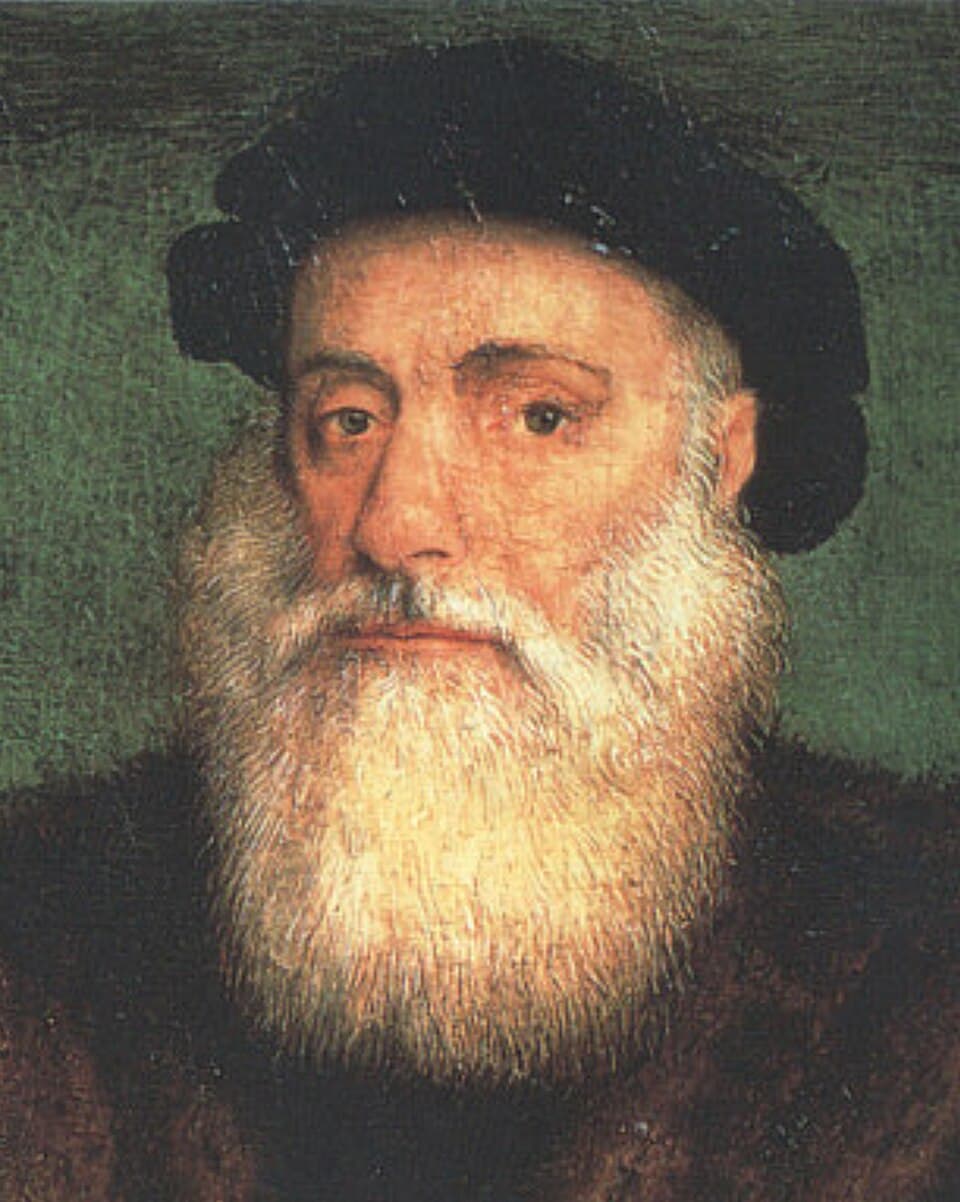
Lisbon, a late afternoon in 1524, a few weeks before his third departure for the East. The admiral receives guests in a house near the Tagus, rolled maps and an astrolabe on the table. His voice is slow, his gaze hard — the gaze of those who have counted their dead.
—How did you approach a route that many before you considered impossible?
I did not set out into the unknown. Ten years before me, Bartolomeu Dias had already rounded the Cape of Good Hope under his prow in 1488, without daring to go further. He had opened the door; I was asked to enter. When I left Lisbon on July 8, 1497, I knew the Cape could be rounded — what remained was to see whether the ocean beyond led to the Indies or to nothingness. All of Europe dreamed of the spices of the East but paid a fortune to the intermediaries who controlled the land routes. My king wanted a sea route, ours alone. So I sailed not as a discoverer drunk on the unknown, but as a man finishing another's work, a stone cross in the hold to mark every shore.
Dias had opened the door; I was asked to enter.
—Why did Portugal invest so heavily in a sea route when spices already arrived by land?
Because those routes did not belong to us. Pepper, cloves, nutmeg passed through Muslim hands from Alexandria to Venice before reaching our tables, and every hand took its cut. The old Silk Road enriched everyone except us. Rounding the Cape meant cutting off those intermediaries with a single keel stroke: bringing our ships to the source, in the Indian Ocean, and bringing back the cargo without any sultan taxing it. My king Manuel saw it not only as commerce; he saw it as a paying crusade. I was named Admiral of the Sea of the Indies before I even knew whether that sea existed for us. That is what a sea route weighs: it does not only shorten the path, it changes who holds the world's purse.
—What did you concretely do to avoid getting lost on a sea about which no chart said anything?
We measured latitude with the astrolabe and direction with the magnetic compass, and the rest we guessed from the smell of the wind. Every day I took the height of the sun or the stars to know how far south I had gone, then how far north I was rising toward India. Off southern Africa, I made the mad decision to leave the coast and swing a great arc into the open ocean — one hundred and forty-four days without seeing anything but water, until the coasts of Kerala. My pilots noted everything in the logbook: drift, calms, banks of unknown stars in the southern sky. A navigator who stops measuring is already a drowned man who does not know it. The sea does not forgive approximation; it rewards only the man who writes down every day where he thinks he is.
A navigator who stops measuring is already a drowned man who does not know it.
—Do you remember what you were careful to record, evening after evening, in your writings of the crossing?
Everything that might serve those who came after me. In the evening, in my cabin, I dictated or wrote what the Roteiro of our voyage should keep: depths, currents, the reception of coastal kings, the price of a measure of pepper. When we finally reached Calicut in May 1498, I insisted it be noted that we had found there spices and precious stones — proof that the sea did indeed lead to the Indies. Those pages are not confidences; they are instructions for future fleets. An accurate account is worth more than a cargo, because the cargo is sold once, but knowledge is reopened at every departure. I sailed with the pen as much as with the tiller, knowing that a kingdom is built on what one has known how to write.
—What happened when your exhausted crew demanded to turn back?
It was in 1498, and the sea had already eaten part of my men from the inside. Scurvy swelled their gums, loosened their teeth, drained the strength from their legs; some begged to turn around and go home to die rather than at sea. A mutiny on a ship is more dangerous than a storm, for a storm at least has no reason. I held firm. I arrested the ringleaders, reminded each man that we had not rounded the Cape to retreat three hundred leagues from our goal. A captain who yields once never commands again. The sea route to India was not paid in gold first; it was paid in men — and he who leads must coldly decide how many he is willing to lose.
The sea route to India was not paid in gold first; it was paid in men.
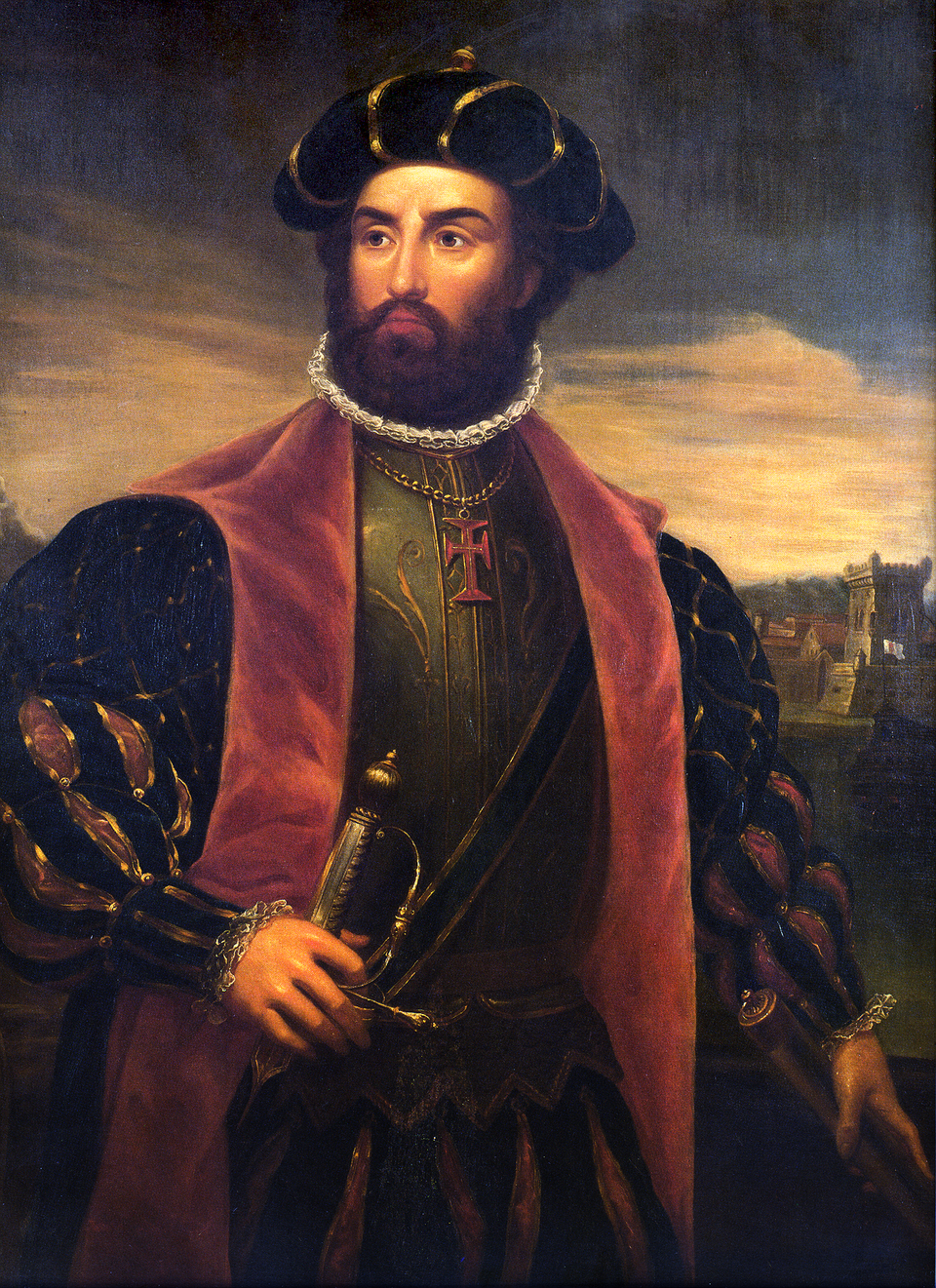
—How does one live with the return of a triumph when it cost so many lives?
One returns victorious and counts one's graves. We were nearly one hundred and sixty at departure; we returned to Lisbon in 1499 at fifty-five. The others the sea kept, most often eaten by the gum disease, thrown overboard without a cross on the water. I myself had a tropical fever that kept me low for months after the return, so low I thought I would not see the honor being prepared for me. They celebrated me as a man who had opened the route to the East — and it was true. But when the crowd shouted on the quay, I saw above all the faces missing from the roll call. A triumph is not the absence of mourning; it is a mourning one has decided to deem worthwhile.
—What did you really come to seek when you landed at Calicut?
I said it plainly to the men of the king of Calicut, after ten months at sea: we had come seeking Christians and spices. The two fit in the same sentence because they fit in the same ambition. Portugal believed it would find in the East long-lost brothers in faith, allies against Islam; and it wanted the pepper of Kerala at the source, without paying three times over. On the Malabar coast, I found spices in abundance — but Christians, not of the sort we hoped for, and Muslim merchants already well established who did not look kindly on these newcomers. The stone cross I planted on the shores spoke of our faith; the market scales spoke a harsher language.
We had come seeking Christians and spices — the two fit in the same sentence.
![Retrato de Homem [Suposto retrato de Vasco da Gama]](https://s3.charactorium.com/moiki-packages/gallery/337a682a1e77555b.png)
—What would you say about the gap between what you hoped for from the East and what you found there?
We had set out with images in our heads and landed in a world that owed us nothing. I imagined princes ready to ally with a Christian king; I met the Samorin of Calicut, rich, powerful, surrounded by merchants who already controlled the spice trade and had no need of us. Our gifts for him — cloth, honey, basins — made a court used to the gold and silks of Arabia smile. I understood then that the sea would not suffice: to hold this trade, we would need trading posts, fortresses, cannon. That is why I later returned to found a settlement at Cochin. One enters the East as a supplicant; one stays only by imposing oneself. That lesson no chart had taught me.
—What does it mean to you, after so many years, to be sent back to the Indies as viceroy?
It is the highest honor, and it comes the latest. In 1524, my king appointed me Viceroy of the Indies, entrusting me with the government of all we hold there, from Cochin to the Malabar coast. Twenty-seven years had passed since my first departure from Lisbon — long enough for another generation of captains to have grown up on the route I had opened. They send me back not to discover but to put things in order: to punish the abuses in the trading posts, to strengthen a dominion that was weakening. I leave without illusions about my health; that sea has already cost me dearly on my first voyages. But a man who has traced a route must accept one day to be its guardian, even at the end of his strength.
—Do you sometimes think about what your life would weigh if one had to take stock of it?
If I am ever read, I would like them to say simply: he opened the sea of the Indies, and he stayed there. I know I will end there, on that coast of Cochin where I am about to govern, far from the Portugal I left almost thirty years earlier as a young captain. My voyages changed the price of spices in Lisbon, made my king the master of a trade that Venice thought its own — so much for glory. But I also saw three-quarters of my first companions die, I put down revolts, planted crosses on shores that had asked me for nothing. A man is judged by the route he leaves behind him more than by the rest he grants himself. Mine leads to the East; let them make of it what they will.
He opened the sea of the Indies, and he stayed there.
Read further
This imaginary interview was generated by artificial intelligence from sources documented in Vasco de Gama's profile. It dramatises what the figure might have said based on what we know about them, but does not constitute attested historical testimony. For primary sources and factual documentation, refer to the full profile.