Imaginary dialogue between Manuel Ier de Portugal and Vasco de Gama
by Charactorium · Vasco de Gama (1460 — 1525) · Exploration · 5 min read
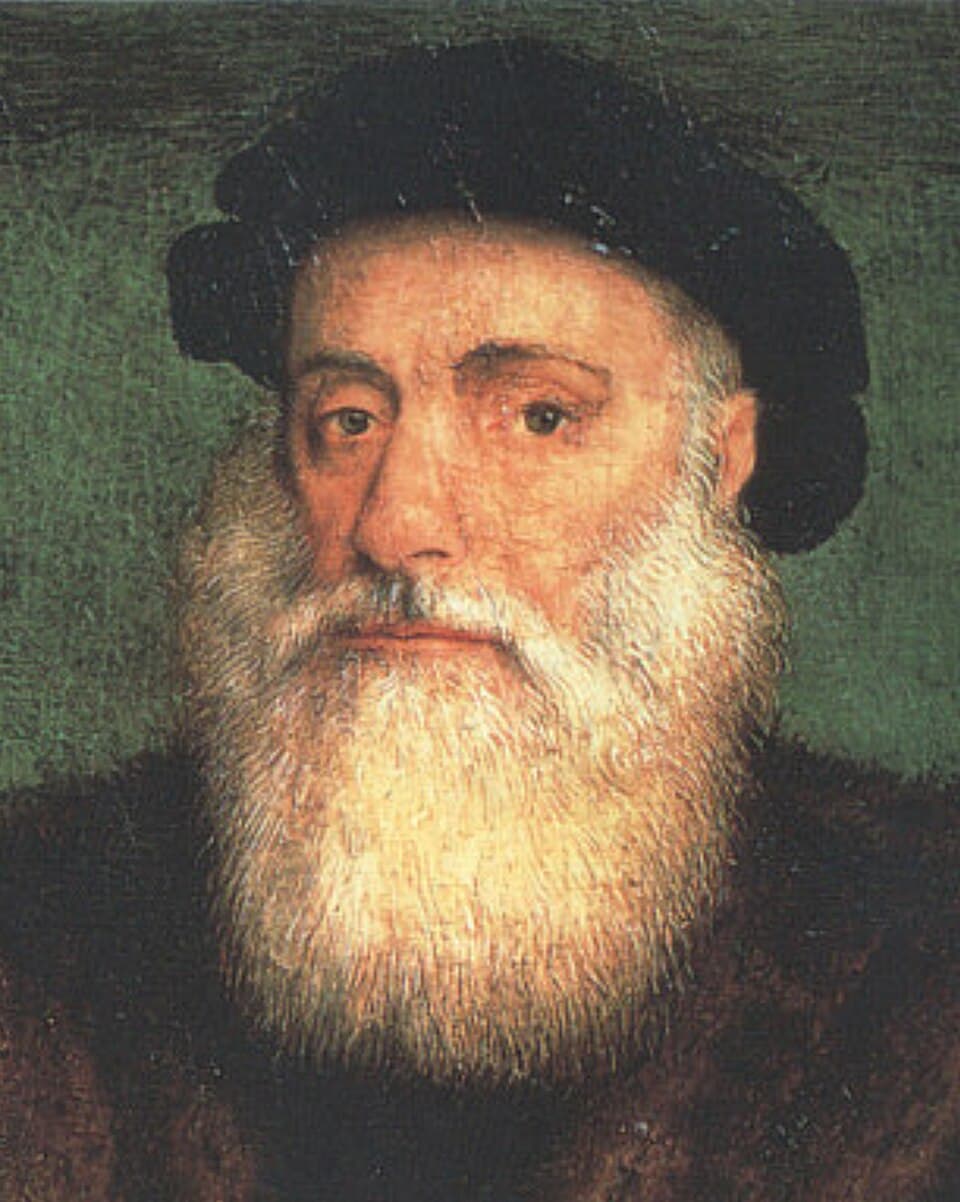
It is in a vaulted hall of the palace of Lisbon, open to the Tagus, that King Manuel I receives his navigator in the autumn of 1499. The scent of pepper brought from Calicut still lingers in the half-open chests, and the light of the setting sun glides over an astrolabe placed between them. The sovereign and the captain have known each other since the crown entrusted to this man from Sines the expedition that many deemed impossible. Manuel comes to listen, not to the triumphant admiral, but to the man who returns with fifty-five survivors.
—Before your departure, I gave you my letter appointing you Admiral of the Sea of the Indies. What weight did this charge place on your shoulders?
Sire, you who sealed that letter with your own hand, you know what you placed upon me. Admiral of the Sea of the Indies — a title for a sea that none of our people had ever sailed. I carried that parchment as one carries a relic: it bound me to your will as much as to Christ's. Every night of doubt, I repeated to myself that it was not my honor I risked, but yours and that of the kingdom. When my men murmured, it was your authority I made speak through my mouth. I was not alone at the helm, my king: you sailed with me, from that study where we prepared the route.
I was not alone at the helm, my king: you sailed with me.
—I have been told that you rounded the tip of Africa, the Cape of Good Hope, where Bartolomeu Dias had stopped. What did you feel when crossing that threshold?
That cape, Sire, Dias had touched with his finger in 1488, but he turned back. I had to go beyond it and enter the unknown. We set course far out to sea, away from the coasts, for weeks seeing nothing but water and sky — the astrolabe and compass our only companions. When the Indian Ocean opened before us, I understood that the old sea was closing behind us and a new sea was beginning. One hundred and forty-four days after leaving South Africa, we sighted India. Many believed this voyage impossible, my king. We made it real, plank by plank, star by star.
The old sea was closing behind us, a new sea was beginning.
—Your sailors, it is said, mutinied, eaten by scurvy. How did you hold a crew that demanded return?
That is the part of this voyage I speak of least willingly, Sire. In 1498, my men fell one after another, gums black, legs dead. They begged me to turn back, and I could not blame them: they were dying for a route they might never see. I had to become hard as the rock of the cape. I held firm, because yielding would have betrayed your trust and lost all that had already been gained. But on the return, of one hundred and sixty who set out, only fifty-five saw the Tagus again. I still count their faces, my king. This route has a price that no register records.
Of one hundred and sixty who set out, only fifty-five saw the Tagus again.
—When you appeared before the authorities of Calicut, what did you go to tell them in the name of Portugal?
I told them the truth of our coming, Sire: we had come in search of Christians and spices. These two words sum up everything you had sent me to seek. Spices, because the pepper and cinnamon that passed through the hands of Muslim merchants were ruining us; we wanted the source, no longer the intermediaries of the old land route. And Christians, because we hoped to find in the East brothers in faith to take the enemies of the Cross from behind. At Calicut, I saw a vast, rich world, indifferent to our smallness. We had reached the end of the sea, but at the threshold of a commerce whose extent we did not yet measure.
We came in search of Christians and spices: your whole design is contained in these two words.
—On those distant shores, you had a stone cross erected. What meaning did you give to this gesture, in my name?
That cross, Sire, I planted as a seal on land and water. It said two things at once: that these shores acknowledged the Christ who had guided us, and that your royal banner had passed there. We had the Treaty of 1493 of the pope behind us, which divided the world between Spain and you; it was necessary to mark what belonged to you before others claimed it. I was not unaware that Columbus sailed for Castile on the other side. Each cross raised, each coast charted, was a word given to your kingdom: this path is Portuguese, because a Portuguese opened it first in the name of God and the king.
Each cross raised was a word given to your kingdom.
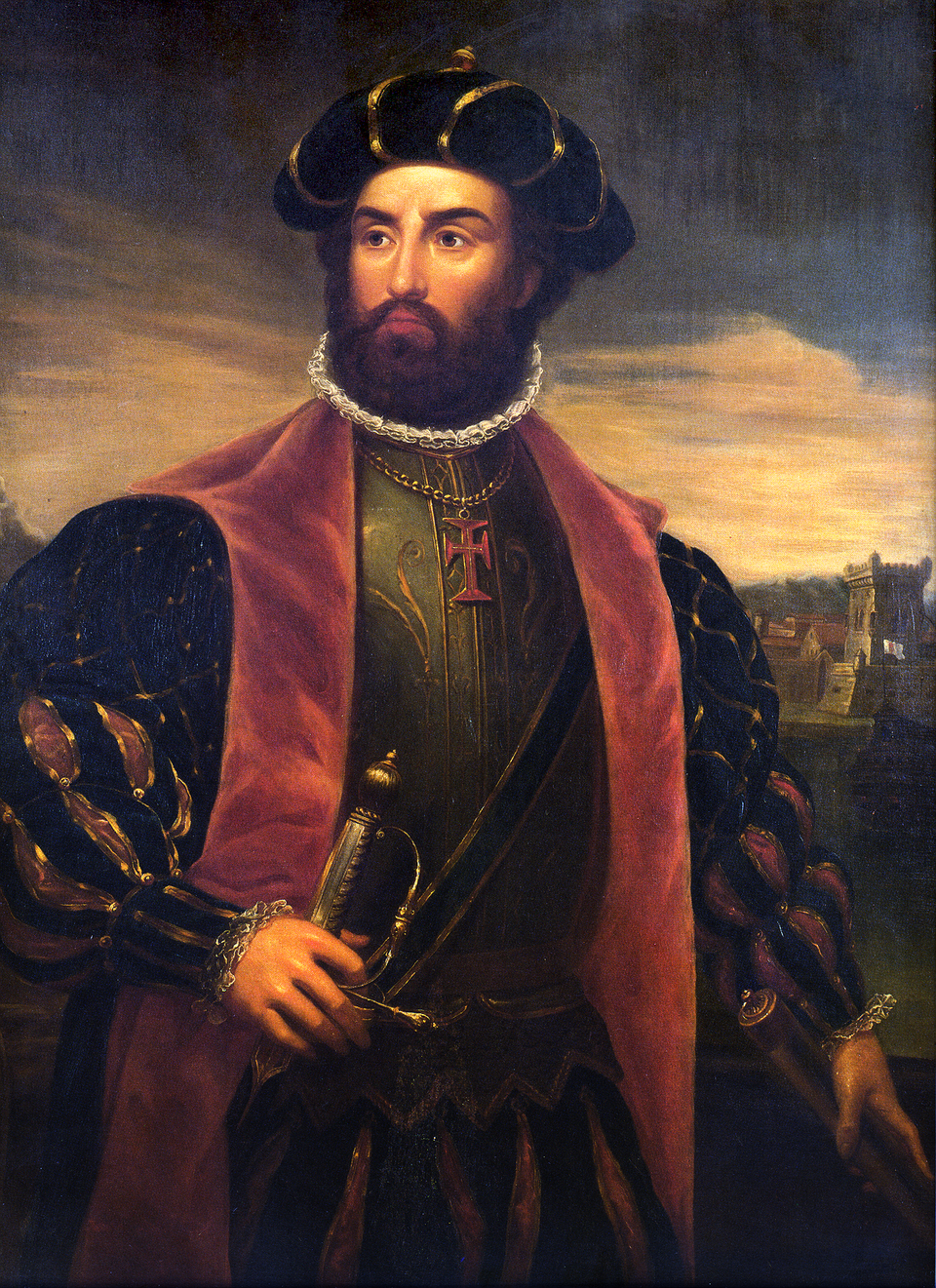
—Tell me, captain, how does one find one's way on a sea without landmarks, for weeks, out of sight of any coast?
With few things, Sire, and much patience. The astrolabe to read the height of the stars and guess our latitude; the compass to hold a course when the sky clouds over; charts and portolans for what others had recorded before us — and the void, where no one had traced anything. The rest is measured by the hourglass and estimated by the pilot's eye. We often advanced on trust more than certainty. The sea does not forgive pride: I learned to doubt my calculations and redo them ten times. To navigate thus is to believe in a land not yet seen, and to believe enough to lead men there.
To navigate is to believe in a land not yet seen.
—You returned ill, I have been told, brushing death. What remains in a man's body after such a crossing?
The body keeps everything, Sire, long after the sail is furled. I brought back a fever from the warm seas that kept me bedridden for months after my return. There are nights when I see the water rising again, when I still feel the roll under a motionless floor. Scurvy, hunger, fear of unknown depths — these do not leave a man as one leaves a ship. But I do not complain before you: you entrusted me with a mission, I returned it accomplished. If my body paid, it was willingly. A captain owes himself to his king and his word, even if he returns half dead.
The water, the scurvy, the fear of the depths: these do not leave a man as one leaves a ship.
![Retrato de Homem [Suposto retrato de Vasco da Gama]](https://s3.charactorium.com/moiki-packages/gallery/337a682a1e77555b.png)
—Do you think this route you opened will truly change the fate of our kingdom's trade?
I firmly believe so, Sire, and you who count the crown's revenues will measure it better than I. As long as spices passed through the Silk Road and the ports of the Levant, every hand that touched them took its share, and it was Europe's gold that flowed. Henceforth our ships will fetch them at the source and bring them back by sea, owing nothing to intermediaries. If we hold this route, if we know how to keep it, Portugal will hold the world's pepper in its hand. It is a monopoly that must be defended arms in hand, for others will want our place. But the path, it is traced. No one can erase it anymore.
If we hold this route, Portugal will hold the world's pepper in its hand.
—If I were one day to send you back there to govern these Indies in my name, would you agree to leave so far again?
If you ordered it, my king, I would leave without hesitation, old or not. Establishing trading posts, holding Cochin and the coastline, asserting your law over that sea — that is the work that extends the voyage. But I will not hide from you that there is a weight to it. Leaving for the Indies is leaving for years, perhaps never to see the Tagus again or the stones of Sines where I was born. I have already left too many companions there in the sand and water. If I must end in the service of your crown, on those distant shores, so be it. A man does not always choose where his loyalty leads him — he follows it to the end.
A man does not always choose where his loyalty leads him — he follows it to the end.
—When all is said and done, captain, what would you like to be remembered of the man who left Lisbon on July 8, 1497?
Little, Sire, and much at once. Not the gold brought back nor the titles with which you honored me, but that a man who left from a Portuguese port held a route that was said to be a dead end, and gave it to his king. I did not invent the sea nor the winds; I only refused to turn back when everything shouted at me to return. Let them say of me that I kept my word and yours to the end of what was possible. The rest — the glories, the regrets — belongs to those who come after. As for me, I did my part: I opened the way. To others, henceforth, to hold it and broaden it in the name of Portugal.
I did not invent the sea nor the winds; I only refused to turn back.
Read further
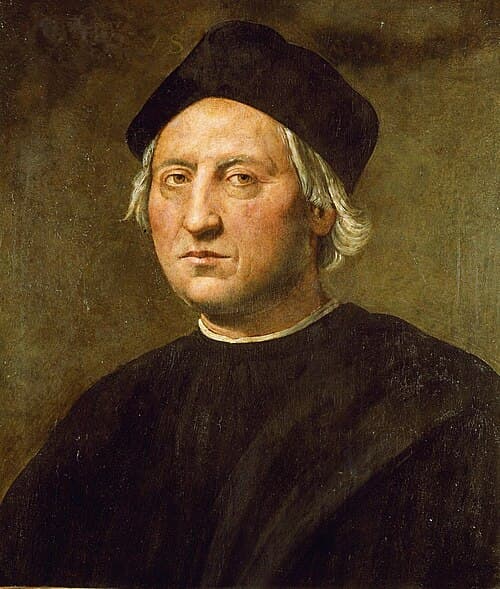
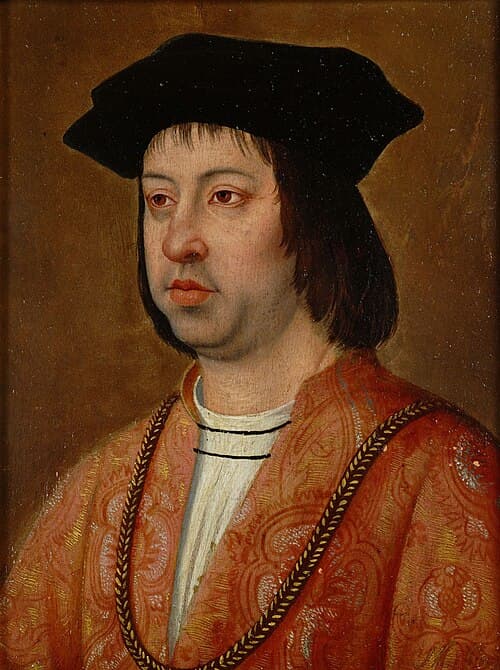
This imaginary interview was generated by artificial intelligence from sources documented in Vasco de Gama's profile. It dramatises what the figure might have said based on what we know about them, but does not constitute attested historical testimony. For primary sources and factual documentation, refer to the full profile.