Kids interview Vasco de Gama
by Charactorium · Vasco de Gama (1460 — 1525) · Exploration · 5 min read
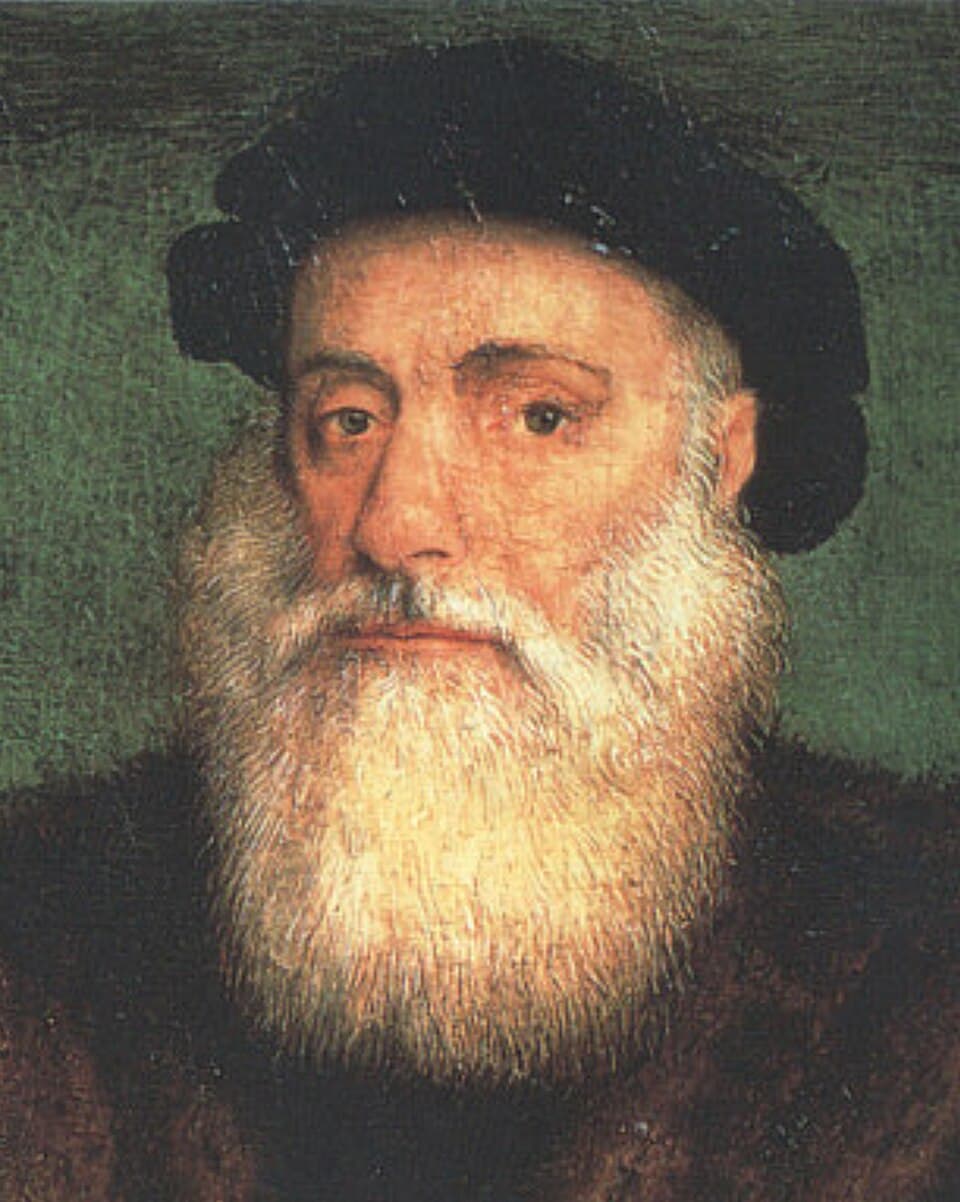
Two young visitors, aged twelve, on a school field trip, have an appointment with an old Portuguese navigator. On the table, an ancient map and a strange copper instrument. The man smiles: he has so much sea to tell.
—How old were you when the king chose you to set out for India?
You know, my child, I was about thirty-seven years old. One morning, King Manuel I handed me a letter. On that paper, he appointed me Admiral of the Sea of India. Imagine being suddenly given responsibility for several ships and one hundred and sixty men. My hands trembled a little. This mission, many believed it impossible: to find a sea route to the spices of Asia. On July 8, 1497, I left Lisbon. The port smelled of tar and salt. Behind me, my noble house; ahead, total unknown. I was afraid, but a fear that pushes you forward.
A letter from the king, and suddenly the unknown becomes your trade.
—What was it like going all the way around the bottom of Africa?
Oh, it was the most dreaded passage, little one. It is called rounding the Cape: sailing around the southern tip of Africa, the Cape of Good Hope, to enter the Indian Ocean. Imagine waves as high as hills, the wind howling, and the ship's wood creaking at night. We saw no land for weeks. In my time, no one was sure a route existed on the other side. A sailor before me, Bartolomeu Dias, had shown the way in 1488. But crossing it with an exhausted crew was another matter. When we rounded the cape, I knew we were entering a new sea.
Rounding the Cape was like opening a door no one had passed through.
—How did you know where to go, with no land around?
Good question, it saved my life! On the open sea, I had only the sky and a few tools. In the afternoon, I would take my astrolabe: a copper disc used to measure the height of the sun to know the latitude, that is, how far north we were. I also had a compass, a magnetized needle that always points the same direction. And charts of the coasts, which we called portolans. Imagine walking with your eyes closed and these three objects are your only friends. Every evening, I wrote everything in my logbook: the wind, the stars, the route. Without these instruments, we would go in circles and die.
On the high seas, the astrolabe and compass were my only friends.
—Were your sailors sick? What was life like on board?
Ah, it was hard, very hard. Many of my men caught scurvy, a disease from lack of fresh fruit: gums bleed, teeth fall out, you have no strength. In 1498, exhausted and sick, some wanted to turn back. It was almost a mutiny, you see, a revolt against the captain. I had to hold firm, talk, reassure, sometimes punish. I ate a bit better than them, cheese and wine from Portugal, and it bothered me. Imagine a floating attic where every biscuit is counted. Keeping one hundred and sixty men united in fear is the true trade of a captain.
Commanding is not shouting: it's keeping men standing in fear.
—And the return, were you happy to come home?
Happy... and broken at the same time. The return voyage was a nightmare. Of the one hundred and sixty men who left, only fifty-five returned to Lisbon in 1499. The others rest at the bottom of the sea or under distant soil. I myself nearly died, ravaged by a tropical fever that weakened me for months. Imagine returning from a long journey and half your friends are missing. Bells rang, I was celebrated as a hero. But in my heart, I counted the absent. Glory always tastes of salt and tears.
They celebrated me as a hero, but I counted the absent.
—What were you really looking for in India?
Two things, my child, as I said upon arrival: Christians and spices. In May 1498, after ten months at sea, I reached Calicut, on the coast of India. Spices are pepper, cloves, those rare flavors that in Europe were worth almost their weight in gold. Imagine a bag of tiny seeds more precious than a chest of coins. We wanted to buy them directly, without a thousand middlemen. And we also sought Christian allies, for we thought we were alone in our faith. At Calicut, I saw an immense world, temples, colors, scents I did not know.
Christians and spices: that is what drove me to Calicut.
—What did India smell like when you arrived?
Ah, close your eyes and imagine! The port of Calicut smelled of pepper, cinnamon, wet wood, and flowers. A scent so strong you kept it in your nose for days. On the markets were piles of spices, precious stones, bright fabrics. For a sailor who had eaten only salted fish and hard biscuit for months, it was like entering a dream. But not everything was simple: the local merchants, already rich, looked askance at these strangers from the sea. I remained cautious. Behind the perfumes, you had to negotiate hard, and sometimes show your teeth.
Calicut smelled of pepper and cinnamon, a scent you kept for days.
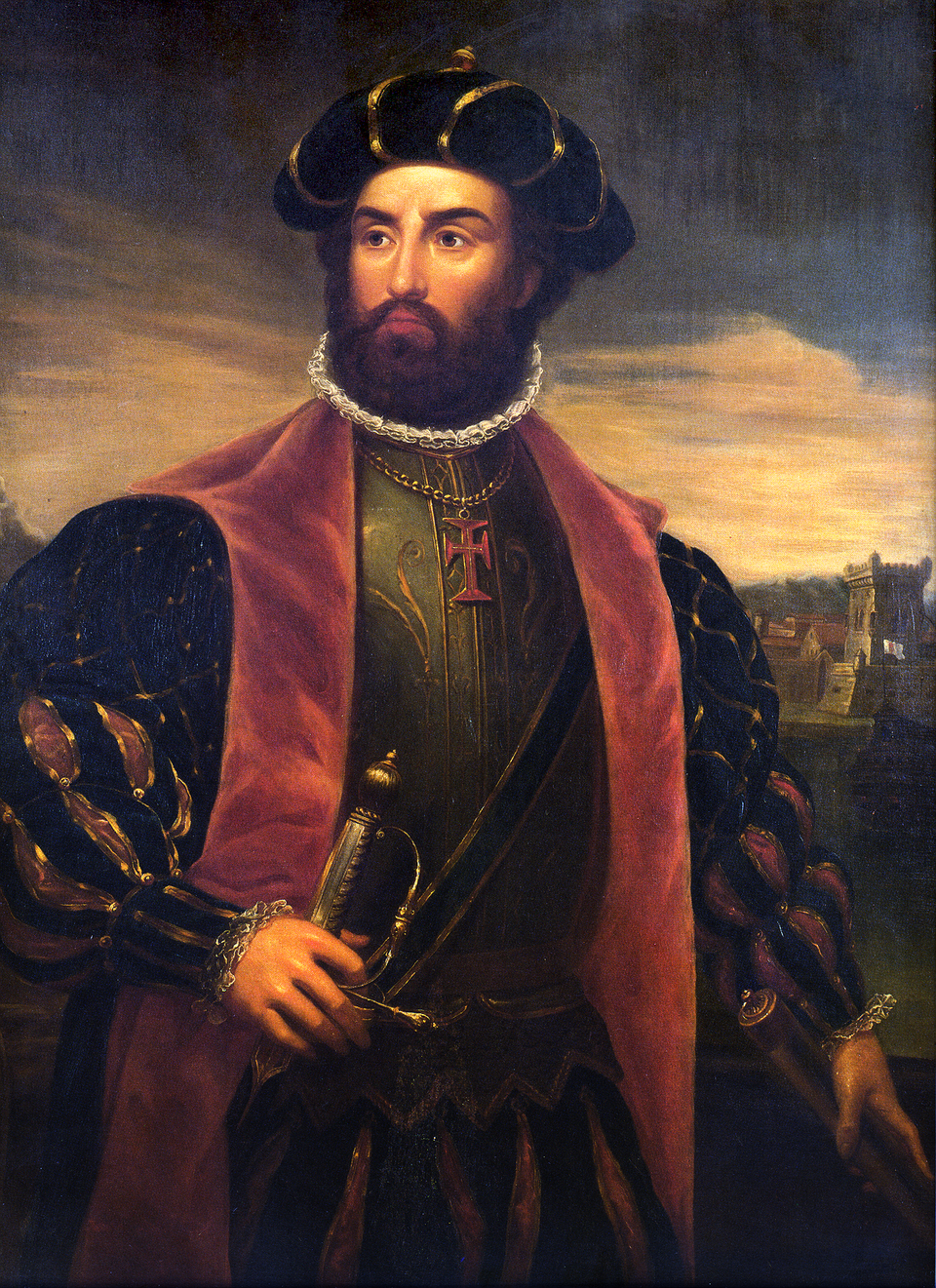
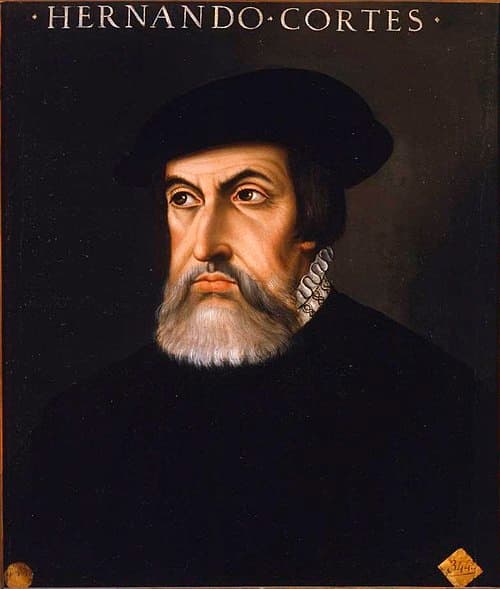
![Retrato de Homem [Suposto retrato de Vasco da Gama]](https://s3.charactorium.com/moiki-packages/gallery/337a682a1e77555b.png)
—What was your normal day like on the ship?
A busy day, believe me! I rose at dawn. First, mass: in my time, a Portuguese noble prayed every morning before anything. Then I inspected the sails, the crew, the provisions. In the afternoon, I consulted my charts and astrolabe with the officers to decide the route. In the evening, I dined in my cabin, the best on the flagship, separate from the others. Then I wrote my journal by the light of a lamp that danced with the waves. Imagine a small wooden room that moves constantly, where every object is tied down. The sea never lets you truly rest.
The sea never lets you truly rest.
—Why did you go back there when it was so dangerous?
Because Portugal wanted to settle, not just visit. On my second voyage, in 1502-1503, I returned to India to build trading posts, small commercial stations. At Cochin, we established a permanent exchange point. The idea was to have control, what we called a monopoly: to be the sole masters of the spice trade. Imagine you find a secret path to a treasure: you want to keep it for yourself. I will not hide that we used force, and it was not always fair to the peoples we met. History, my child, often mixes glory and shadow.
History often mixes glory and shadow.
—Where did you die, at the end of your life?
Far from home, little one, very far. In 1524, the king appointed me Viceroy of India, the highest honor, his representative there. I set out one last time on that sea I knew by heart. But I did not enjoy it long: I died in Cochin, in 1525, almost twenty-eight years after leaving Lisbon. Imagine leaving your home as a young man and closing your eyes as an old man, on a distant land, to the sound of a foreign tongue. I did not see the port of my departure again. But the route I had opened never closed.
I did not see my port again, but my route never closed.
Read further
This imaginary interview was generated by artificial intelligence from sources documented in Vasco de Gama's profile. It dramatises what the figure might have said based on what we know about them, but does not constitute attested historical testimony. For primary sources and factual documentation, refer to the full profile.