Kids interview Vercingetorix
by Charactorium · Vercingetorix (79 av. J.-C. — 45 av. J.-C.) · Military · 5 min read
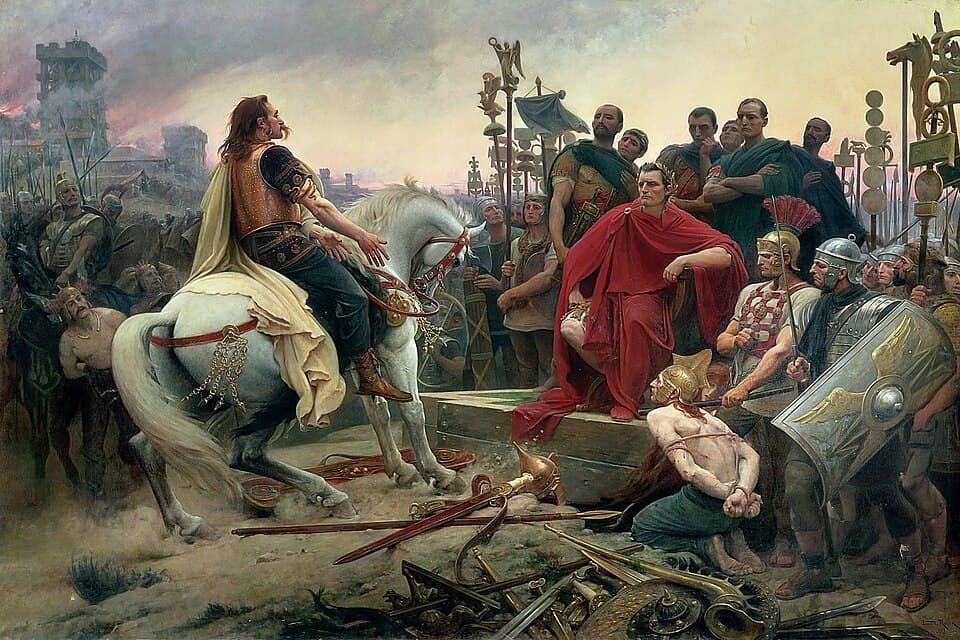
Two young visitors, on a school field trip, climb a windswept plateau in Auvergne. There, near the ruins of an oppidum, a warrior with a golden torque awaits them. Vercingetorix sits down in the grass, smiles at them, and agrees to tell everything.
—Is it true that your name means something? It's fun to say!
You're right, my child, it snaps in the mouth! In my Gallic language, my name roughly means 'supreme chief of warriors.' Imagine: they didn't give it to me at birth as a gift. It's a title, a bit like a promise I had to keep. I was born around 79 BC, in the land of the Arverni, in the heart of the mountains you call Auvergne today. They were a proud, powerful people. To bear that name was to carry a very heavy weight on your shoulders all day. I had to earn it every morning.
My name wasn't a gift, it was a promise to keep.
—And your dad, what did he do? Was he a chief too?
Ah... my father, Celtillus, that's a sad story. He was a great prince of the Arverni. But you see, he wanted to rule alone, to become like a sole king. Among us, that wasn't done. The other nobles were afraid of him. So they put him to death. Imagine growing up with that in your heart: your father killed by his own because he wanted too much power. I learned a hard lesson that day. Power is like fire: it warms you, but if you get too close, it burns you. I kept that in mind all my life.
Power is like fire: it warms you, but it can burn you.
—How old were you when you became the leader of all the Gauls?
I was young, you know! I was barely 27 years old, in 52 BC. Imagine for a moment: more than sixty different Gallic peoples, who often hated each other for generations, agreed to listen to me. It's like in your schoolyard, all the cliques that are always bickering suddenly decide to shake hands. That had never been seen in Gaul. The Arverni, the Aedui, the Helvetii... all united. They called it a federation, a great alliance of peoples. It was as fragile as glass, but for the first time, we were a single fist raised against Rome.
For the first time, sixty peoples were no more than a single raised fist.
—But how did you get them all to obey you?
Good question, it wasn't easy at all! I couldn't just speak kindly to them. Firmness was needed, sometimes even severity. But above all, I showed them something they could touch. See this stiff collar I wear around my neck? It's called a torque, it's made of gold. Among us, it's the sign of a true chief. I even had coins minted, staters, with my name on them. Imagine: people at the market exchanged coins with my face on them! It reminded them, with every purchase, who led the Gallic coalition.
—We read that you burned your own villages! Why did you do that?
Yes... and believe me, it tore my heart out. But listen closely to the reasoning. Caesar's army was immense. In every pitched battle, his legions crushed us. A legion was about five thousand soldiers trained like a single machine. So I had an idea: what if I didn't fight them? Imagine a hungry traveler crossing a country. If you burn the crops, empty the granaries before he arrives, what does he eat? Nothing. That's my scorched earth strategy. Starve the enemy rather than die facing him. An army with an empty belly loses the war without even fighting.
An army with an empty belly loses the war without even fighting.
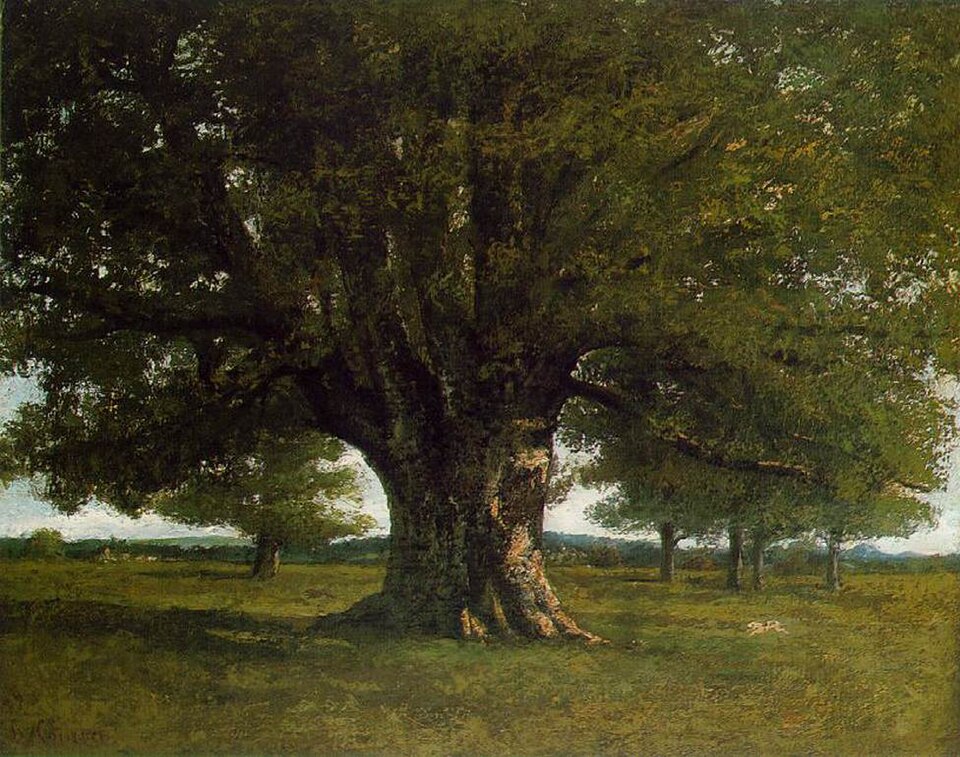
—It must have been horrible for the people to see their food burn, right?
You put your finger on my greatest pain, my child. Yes, it was horrible. Those villages, those wheat fields, were the homes of my own people. Families watched the grain that was supposed to feed them in winter go up in smoke. Some wept, some cursed me. I understood their anger. But imagine a doctor who must cause pain to save a life. I believed that this short suffering would spare us from slavery forever. Was I right? I asked myself that every night. War, you see, never leaves clean hands, even when you fight for freedom.
War never leaves clean hands, even when you fight for freedom.
—You won a battle against Caesar, right? Were you proud?
Oh yes, what a day that was! It was before Gergovia, my Arverni oppidum perched on its hill. An oppidum is a hillfort where my people took refuge. Caesar thought he could take us easily. But we were waiting for him up there, and his legions retreated, defeated! Imagine the joy: we danced, we shouted on the ramparts. The great Caesar, the one who had never lost in Gaul, repulsed by us! That day, all the Gallic peoples held their heads high. They believed, like me, that it was possible. It was my most beautiful morning as a warrior. The only one, alas, when I tasted victory.
The great Caesar, repulsed by us: that was my most beautiful morning as a warrior.
—And then, at Alesia, how did you get trapped?
Ah, Alesia... the word still chokes me. After Gergovia, I took refuge in that oppidum, in Burgundy. But Caesar was clever. Instead of attacking, he built immense walls, ditches, and traps around us. Imagine being locked in a giant box whose lid is slowly closing. I sent my best cavalrymen, in the dead of night, to beg the other peoples to come and free us. We watched the horizon every day. Reinforcements did come... but too few, too late. They couldn't break the Roman blockade. And hunger inside began to kill my people.
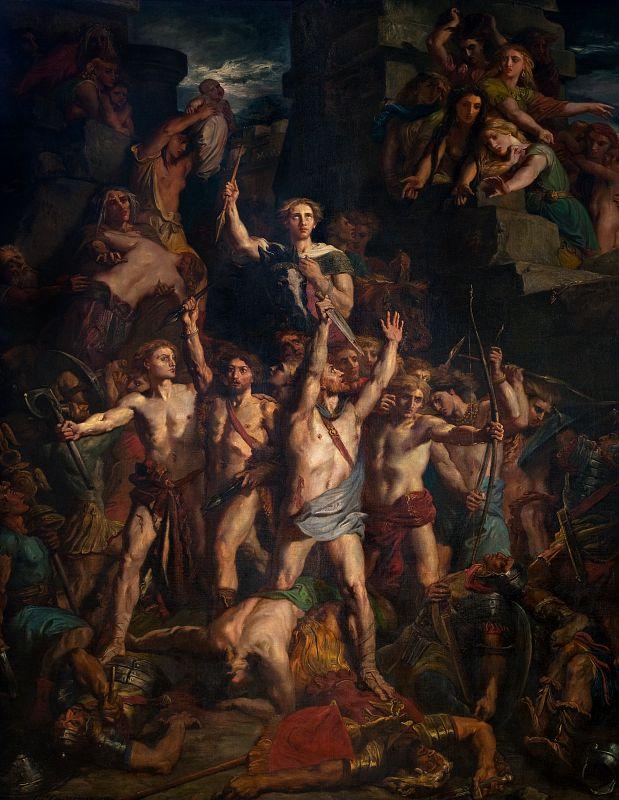
—Why did you surrender? You could have kept fighting, couldn't you?
I could have, yes. Continue, die with sword in hand, as a hero. That would have been easier for me, you know. But look around me in Alesia: thousands of starving men, women, children. If I persisted, they would all die with me. So I made the hardest choice of my life. I laid down my arms and went to surrender to Caesar myself. I exchanged my freedom for their lives. A true leader, you see, is not the one who dies most gloriously. It's the one who protects his own, even when it costs him everything.
A true leader protects his own, even when it costs him everything.
—And after that, what happened to you? Were you afraid?
I won't lie to you: yes, I was afraid, but a calm fear, like that of a man who already knows the end. They took me in chains to Rome, that immense city I had never seen. Imagine streets full of people, marble, noise, where you are the prisoner pointed at. They kept me locked up for six long years in the dark. Six winters without seeing my Auvergne mountains again. Then, on the day of Caesar's great parade, they made me walk before the crowd before executing me. But you know what? I didn't bow my head.
—How does it feel that people still remember you today?
My child, that two young people like you come up here to talk to me... that's the most beautiful gift. I lost my war, it's true. Gaul became Roman after me. But look: you know my name, twenty centuries later! I understood one thing, in the end. You can lose a battle and win the memory of men. I wanted the Gallic peoples to remember that one day, they dared to stand tall, united, against the greatest empire in the world. As long as you remember that courage, then my defeat will not have been entirely in vain.
You can lose a battle and win the memory of men.
This imaginary interview was generated by artificial intelligence from sources documented in Vercingetorix's profile. It dramatises what the figure might have said based on what we know about them, but does not constitute attested historical testimony. For primary sources and factual documentation, refer to the full profile.