Imaginary interview with Vigdís Finnbogadóttir
by Charactorium · Vigdís Finnbogadóttir (1930 — ?) · Politics · 5 min read
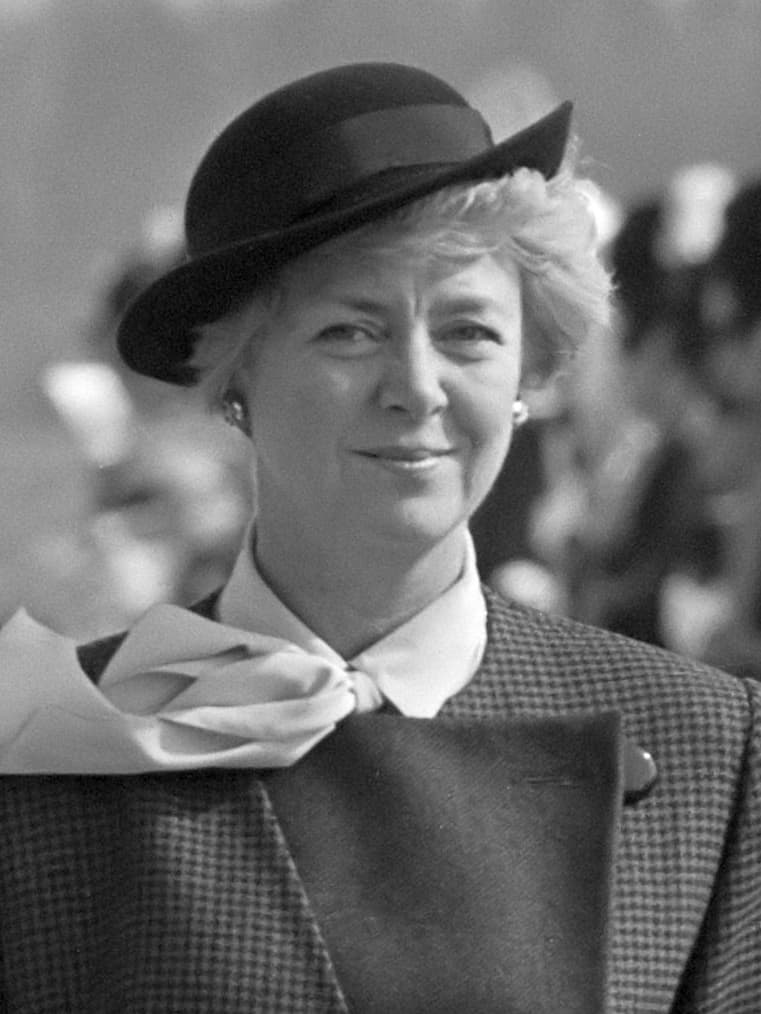
Reykjavík, a spring morning. Cold light streams through the windows of the Vigdís International Centre, where the world's languages are stored like treasures. A ninety-year-old woman receives us, her gaze sharp, and begins to speak — about theatre, the ballot box, and a Christmas night that changed her life.
—How did you agree to run for president, you who had not sought it at all?
I was running the Reykjavík City Theatre, teaching French on television, and politics seemed like a different profession from mine. And then, in the spring of 1980, women I barely knew came knocking at my door. They had petitions, stubborn looks, and this crazy idea that an actress could embody the Republic. I refused, for a long time. But when you are told repeatedly that you represent something greater than yourself, you end up listening. I faced three men and won with 33.6% of the vote. On the evening of my inauguration, I caught myself saying that I bore the responsibility of representing not only Icelandic women, but all citizens of our small republic of rocks and wind.
You end up listening when you are told repeatedly that you represent something greater than yourself.
—What does it feel like to become the first woman in the world democratically elected as head of state?
You feel watched, believe me. Not only by Icelanders, but by all those elsewhere who had never seen a woman hold a presidential insignia without being someone's wife, daughter, or widow. I was a single mother, teacher, theatre director — nothing that resembled a head-of-state destiny. That is precisely what mattered. At Bessastaðir, in that old manor beaten by the Atlantic, I received letters from unknown women around the world telling me: if she did it, then it is possible. I did not conquer power; I opened a door ajar. And a door ajar, you see, never quite closes again.
I did not conquer power; I opened a door ajar.
—Do you remember the moment you decided to adopt a child, alone?
It was in 1972, long before anyone talked about me for anything. I was an unmarried woman, and a child was not easily granted to an unmarried woman in Iceland at that time. I insisted, I waited, and they entrusted me with a little girl. I had no idea that this intimate choice would one day become a symbol. But when I ran, eight years later, some whispered that it disqualified me. The people decided otherwise. I think deep down many understood that a woman capable of raising a child alone, in this harsh country, might be capable of holding a nation. Modernity is not a theory: it plays out in a child's room on a winter's evening.
Modernity is not a theory: it plays out in a child's room on a winter's evening.
—Why did you make your personal situation a public message rather than a secret to protect?
Because hiding implies a shame I did not feel. I could have kept quiet that my daughter was adopted, that I raised my household alone in an apartment in Reykjavík, among my books and lecture notes. But the gender equality I wanted to speak about would have rung hollow if I myself concealed my own life. A president who preaches women's independence in the morning and blushes about her own in the evening convinces no one. So I chose clarity. That was, I believe, my first truly political decision, made even before I became one: to live openly what I asked others to dare.
Hiding implies a shame I did not feel.
—How did theatre and the French language prepare you for the presidency?
People smile when I say that a theatre stage is an excellent school for the Republic. Yet it is true. I studied theatre in Paris, I directed the Reykjavík City Theatre, and there you learn the essential: that the right word, spoken at the right moment, can hold an entire room. France gave me a language of precision, a friendship for ideas, a taste for moderation. When I addressed Icelanders on television, I was not reciting a speech: I was acting, in the noble sense, meaning I inhabited every sentence. I remain, I believe, the only theatre director to have governed a country. That is not an anomaly: politics, too, is an art of presence.
A theatre stage is an excellent school for the Republic.
—What does France represent in your journey as an Icelander?
France was my second intellectual homeland. In Paris, as a young woman, I discovered that one could passionately love words and make them a profession. There I learned that language which I later taught to my compatriots, convinced that a small people grows by opening itself to great cultures. Later, as president, I maintained those ties with almost tender care, because diplomacy is not only about treaties: it is nourished by literature, theatre, conversations. Iceland has no army nor great economic power. Its strength is its cultural voice. And that voice I partly tuned in the company of Parisian libraries.
A small people grows by opening itself to great cultures.
—What happened that Christmas night in 1985 that is still talked about?
Christmas 1985. I was presented with a text that my role invited me to sign, and which, as it stood, would have undermined women's right to self-determination. The Icelandic presidency is largely symbolic, but the symbol, sometimes, is all that remains. I refused to affix my signature that night. The debate was heated, some cried institutional scandal. But I had sworn to myself, ever since Nairobi where I said before the world that without gender equality no nation truly progresses, never to betray that conviction for comfort. A signature, you see, is never just a gesture of the hand — except when it commits the soul of a country.
A signature is never just a gesture of the hand — except when it commits the soul of a country.
—Why did you make gender equality the common thread of your sixteen years in office?
Because I had seen it missing, everywhere, all my life. When I grew up, an Icelandic woman could work hard without ever seeing her name written anywhere. I experienced the great women's strike of 1975, when the country stopped because they had folded their arms for a single day — and suddenly, people understood who kept the house running. In Nairobi, in 1985, I repeated that women's education is the key to sustainable development. That was not a formula: it was the experience of a people. During my terms, I did not legislate, that was not my role, but I ensured that this issue never left the table.
The country stopped because women had folded their arms for a single day.
—Why defend Icelandic, the language of only a few hundred thousand people?
Because a language is not great by the number of its mouths, but by the depth of its memory. Icelandic carries sagas eight centuries old that we still read almost effortlessly — what other people can say as much? When I was appointed UNESCO Goodwill Ambassador for languages in 1998, I accepted this mission with joy. Every language that dies is a window on the world that closes forever. A small people that renounces its speech renounces itself. That is why I fight so that the voice of a North Atlantic fisherman counts as much as that of an empire.
A language is not great by the number of its mouths, but by the depth of its memory.
—What meaning do you give to the centre you founded in Reykjavík for the world's languages?
It is, in a way, the natural extension of my entire life. I was a French teacher, theatre director, then president: three ways of serving speech. The Vigdís International Centre for Multilingualism that I wanted in Reykjavík gathers this conviction in one place: that understanding the other's language is already refusing to fear them. The cultural diplomacy I practiced for sixteen years had no other goal. In a world tempted by blocs and walls, I believe one disarms better with a dictionary than with a treaty. It is my last theatre, and the largest: the stage holds the entire world.
One disarms better with a dictionary than with a treaty.
This imaginary interview was generated by artificial intelligence from sources documented in Vigdís Finnbogadóttir's profile. It dramatises what the figure might have said based on what we know about them, but does not constitute attested historical testimony. For primary sources and factual documentation, refer to the full profile.