Kids interview Vigdís Finnbogadóttir
by Charactorium · Vigdís Finnbogadóttir (1930 — ?) · Politics · 4 min read
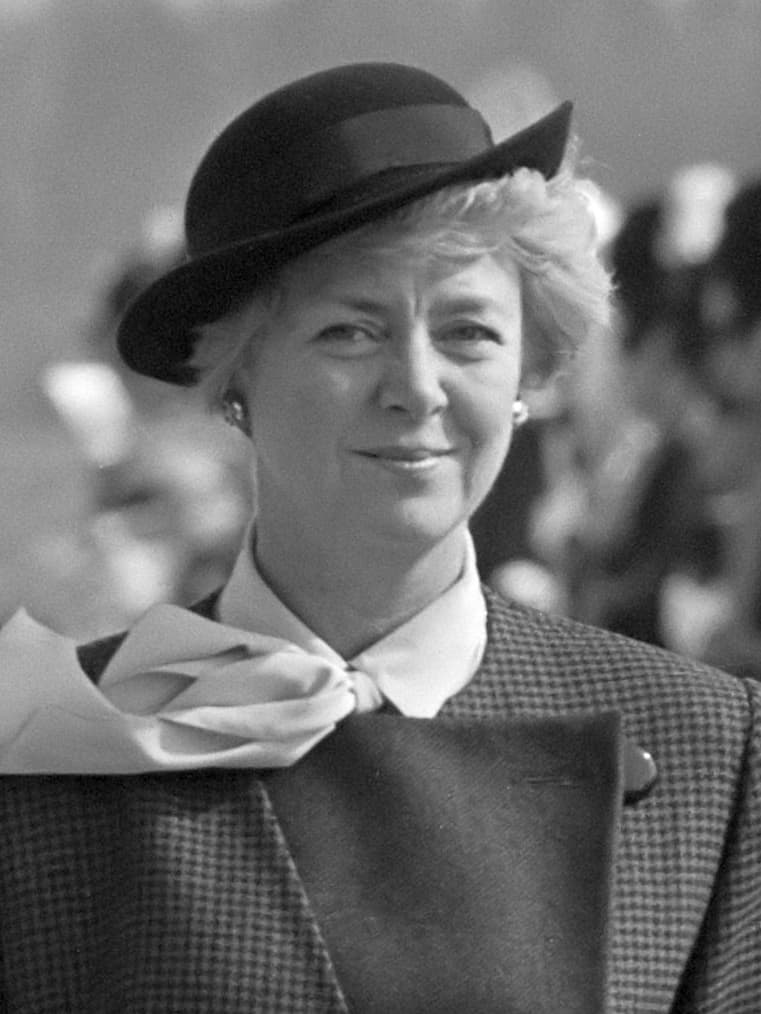
That morning, two students from a school trip pushed open the door of a bright, spacious house in Reykjavík. A white-haired lady welcomed them with a smile. She had been the first woman in the world elected president of a country, and she loved curious children.
—What was your job before becoming president?
You know, my child, before politics, I lived in theaters! I studied the art of the stage in Paris, in that city I loved so much. Then I came back to run the Reykjavík Municipal Theatre. Imagine a large dark room, heavy curtains, and actors rehearsing until night. My job was to tell stories to people. And then one day, I was asked to tell another story: that of a whole country. I think I'm the only theater director who became president. Theater taught me how to speak to the heart of the crowd.
Theater taught me how to speak to the heart of the crowd.
—Did you really want to be president when you were little?
Oh no, never! Quite the opposite happened. In 1980, I didn't feel like a candidate at all. But a group of women and citizens came to me. They said, “Vigdís, run, Iceland needs you.” I hesitated for a long time. Imagine being asked to climb a mountain you hadn't planned to scale. I said yes. And I won the election with barely 33.6% of the vote, against three men. On the morning of the result, I was trembling. I had become the first woman in the world elected head of state.
Sometimes duty comes looking for you before you look for it.
—What did it feel like to be the first woman in the world in that position?
It was heavy to carry, you know, but beautiful. On inauguration day, I said something simple: I represented not just Icelandic women, but all citizens. Imagine carrying a flag for millions of girls you don't know. Little girls wrote me letters drawing me with a crown — even though a president has no crown! I replied that now, a little Icelandic girl could dream of anything. No law could ever take that away from them. That was perhaps my greatest pride.
From now on, a little girl could dream of anything.
—Is it true you adopted a little girl all by yourself?
It's true, my child, and it was rare at the time. In 1972, I was not married, and I adopted a little girl on my own. Back then in Iceland, a single woman raising a child — many found it strange. People whispered behind the windows. But I knew my heart was enough to love a child. Imagine a house with only a mother and her daughter, where they still laugh very loudly in the evening. A few years later, the same people who were surprised chose me as president. Life sometimes has beautiful answers.
My heart was enough to love a child.
—They say you refused to sign a law on Christmas night?
Yes... and it was a difficult night. In 1985, I was presented with a text that would have harshly punished women for very intimate choices concerning motherhood. Signing it would have turned that text into law. Imagine being handed a pen and your hand refusing to move. It was Christmas night, the whole country was asleep in the snow. I was awake. I refused. During my sixteen years, I never gave in on matters touching women's dignity. A president is not just a signature: sometimes, it is also a refusal.
A president is also, sometimes, a refusal.
—Weren't you afraid people would be angry with you?
Of course I was, one is always a little afraid. When you say no to the powerful, your heart beats fast. Some were unhappy; there were heated debates across the country. But you know, I had learned in the theater that sometimes you have to stand firm on stage, even when the audience grumbles. I told myself: if I give in out of fear, what's the point of being president? Better to be loved for who you are than for who you pretend to be. I kept the trust of the Icelanders: they re-elected me until 1996.
If I give in out of fear, what's the point of being president?
—Did you live in a castle when you were president?
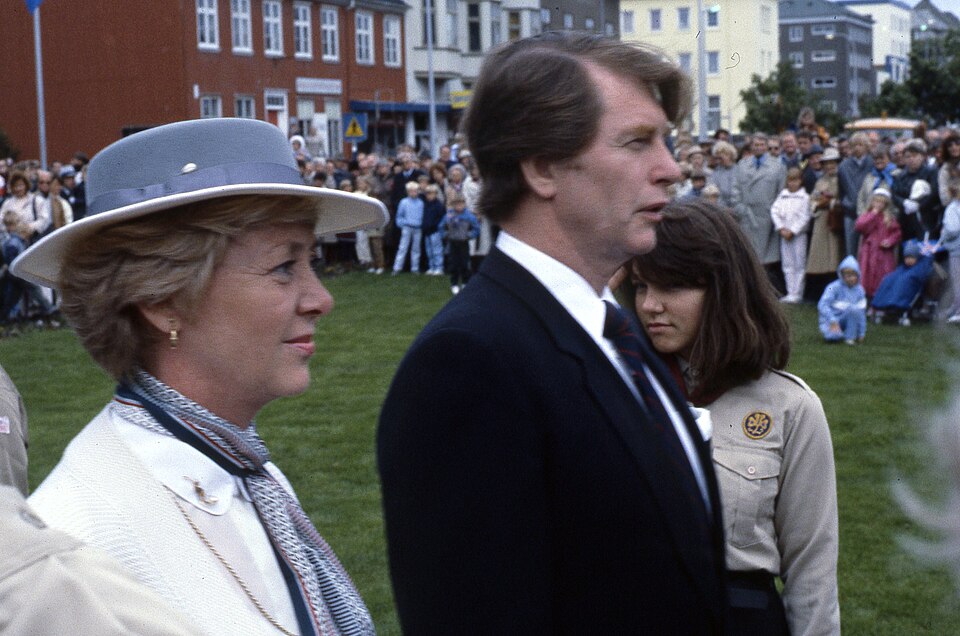
Not a fairy-tale castle! I lived at Bessastaðir, the presidential residence, set near the sea. Imagine a low white house, the cold Atlantic wind whistling, and Icelandic horses in the fields around. In the morning, I had coffee with dark, dense rye bread, the kind we eat at home. Then came visitors, speeches, letters to sign. In the evening, I returned to my books and my love of theater. A president remains an ordinary person doing an extraordinary job.
An ordinary person doing an extraordinary job.
—Why did you care so much about your Icelandic language?
Because it is my treasure, my child. We are a very small people, only a few hundred thousand souls. Our language, Icelandic, is ancient and fragile. Some think a small language matters less than a big one. I say: that is false. Imagine a rare flower that grows on only one island. Should we let it die because it is small? Later, I became a UNESCO Goodwill Ambassador for languages, and I founded a large center in Reykjavík to protect them. Every language is a unique way of seeing the world.
Every language is a unique way of seeing the world.
—When you traveled abroad, what did you talk about?
A lot about education, especially for girls! In 1985, at a major women's conference in Nairobi, I said that without gender equality, no nation can truly progress. Imagine a bird trying to fly with one wing: impossible. A country is the same. I loved representing Iceland, that small country in the North Atlantic, and showing that it had ideas to offer. I spoke several languages, including French, which I love so much. Traveling, for me, was about building bridges between peoples, not walls.
A nation that forgets its women flies with one wing.
—If you're growing up today, what would you want to tell us?
I would say: don't be afraid to be first. When I was young, no one had seen a woman lead a country. They said it was impossible. Well, I walked where there was no path. Imagine a plain of white snow: it's up to you to make the first tracks. Whether you are a girl or a boy, do it with courage and with kindness. Protect your language, protect those who are not listened to, and stay true to what your heart knows is right. The rest, time will take care of.
I walked where there was no path.
This imaginary interview was generated by artificial intelligence from sources documented in Vigdís Finnbogadóttir's profile. It dramatises what the figure might have said based on what we know about them, but does not constitute attested historical testimony. For primary sources and factual documentation, refer to the full profile.