Imaginary dialogue between Théo van Gogh and Vincent van Gogh
by Charactorium · Vincent van Gogh (1853 — 1890) · Visual Arts · 6 min read
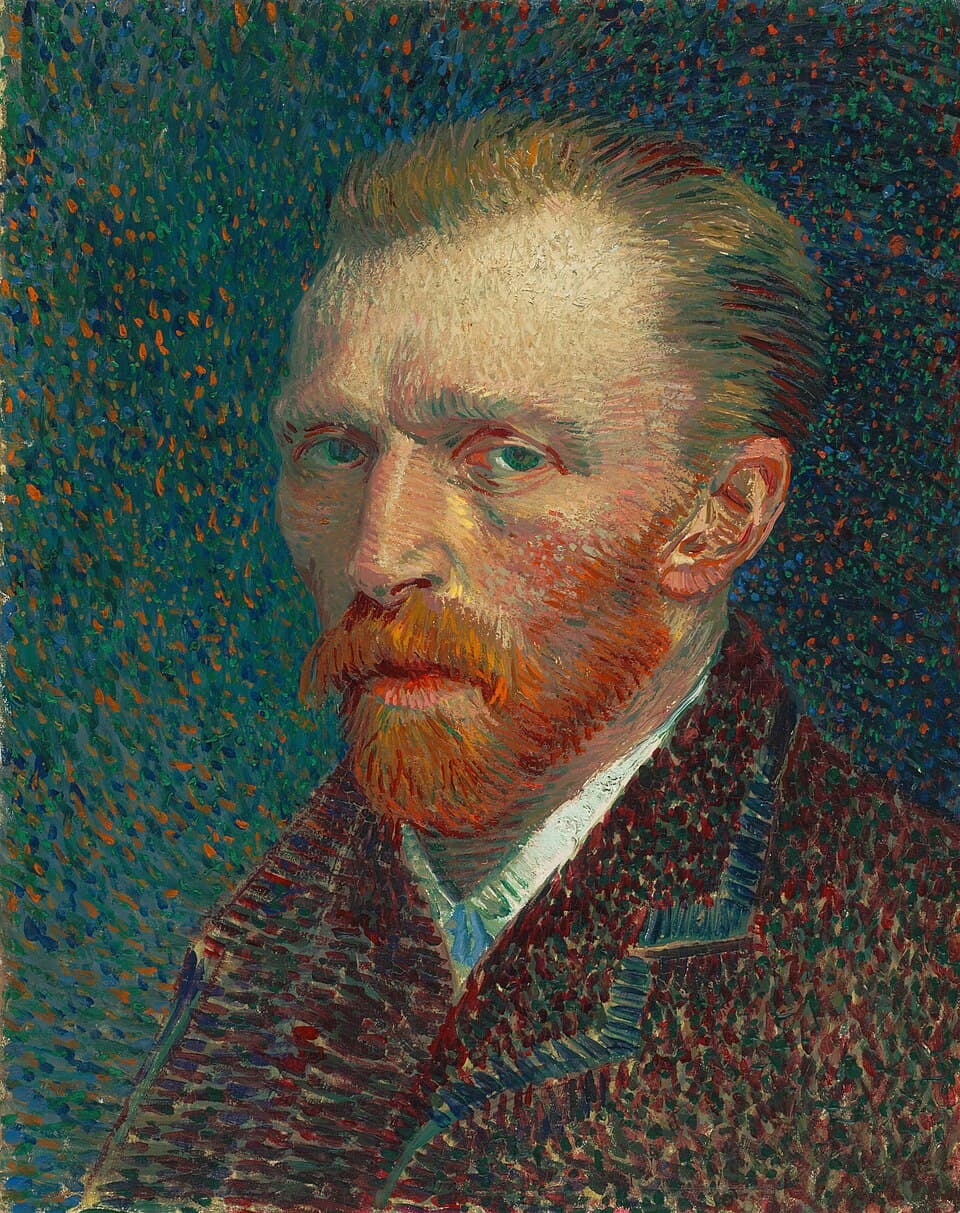
It is in a rented room of the Auberge Ravoux, in Auvers-sur-Oise, that Theo finds his elder brother in this month of June 1890. Still-wet canvases dry against the wall, and the smell of turpentine mingles with that of warm wheat rising from the fields through the open window. The two brothers know each other better than anyone: for years, Theo has sent money and colors, and received in return the long evening letters. That day, he comes without asking anything other than to listen to Vincent talk about himself.
—Vincent, do you remember the parsonage of Groot-Zundert, where Father preached? You who saw me try everything before painting — what finally decided you?
You know better than anyone, Theo, since you followed it all. I wanted to be a pastor like Father, I carried the Bible to the miners in the Borinage, I sold paintings at Uncle Cent's. Nothing stuck. It was while drawing those black-faced miners, at twenty-seven, that I understood: I didn't know how to preach with words, but maybe with a pencil. The vocation came late, yes, and it came through poverty. I believe everything I failed at before was not lost: a painter who wanted to console men does not paint like another. You always told me not to despair of this lateness. You were right.
I didn't know how to preach with words, but maybe with a pencil.
—Father saw you as a lost son. Do you think, my brother, that some of the parsonage still survives in the way you paint?
All of it remains, I think. When I paint a sower in a field, or an old pair of worn shoes, I am still seeking what Father sought from his pulpit: something eternal in simple people. I no longer believe in sermons, but I believe that a canvas can serve as consolation. The miners of the Borinage taught me that better than the Scriptures. Do you remember when I wrote to you that I wanted to paint men and women with something of the eternal? That halo they once painted as an aureole, I try to render it through color alone, through radiance. The pastor failed; the painter is still trying.
I no longer believe in sermons, but I believe that a canvas can serve as consolation.
—You constantly write to me that you are searching for true color. In Arles, before your Sunflowers, what exactly were you pursuing in that yellow?
Yellow, Theo, is the sun made possible on a canvas. In Arles, in 1888, I wanted to decorate the yellow house for Gauguin with a symphony of sunflowers, nothing but yellows, from the palest lemon to the most burning orange. I laid the paint thick, almost pure, straight from the tube, with a loaded brush, as if throwing something alive. I am not trying to copy the flower; I am trying to make you feel the warmth it contains. You who sell others' paintings know that no one wants such impasto. But I am always in search of true color, and I believe my paintings breathe through that matter I apply with frenzy. It is exhausting. One paints as one burns.
Yellow is the sun made possible on a canvas.
—I receive your canvases and I see these relief-like strokes, almost sculpted. Where does this way of loading the brush come from?
It comes from the need to go fast, and from the need to touch the thing. When the light of the Midi changes hour by hour, I don't have time to smooth, to finish as they say at the Academy. So I take the thickest brush, I draw the stroke in a single gesture, and the trace remains visible — the brushstroke itself becomes the emotion. A well-placed stroke is worth a just word. Dealers find it coarse, unfinished; they want polished, slick. But finishing is the death of the painting. I prefer a canvas that still trembles. You send me tubes by the crate, and I empty them almost as fast as they arrive — forgive me this gluttony of color.
A well-placed stroke is worth a just word.
—Vincent, let's talk about that terrible night in Arles, after Gauguin left. Do you feel able, today, to tell me what happened?
I owe you the truth, you more than anyone, even if I don't possess it entirely. Gauguin and I had argued too much, drunk too much, stayed up too late; we clashed on everything, and the yellow house became a storm. That night, something in me gave way — a crisis, a fever of the mind I cannot name. I laid a hand on my own ear. I am not telling you this to complain; I know what fear you felt when you rushed over. Gauguin left, and I don't blame him: one cannot ask a man to live beside another who burns like this. It was after that that I understood I needed to be watched, cared for. Illness walks beside work, like a shadow.
Illness walks beside work, like a shadow.
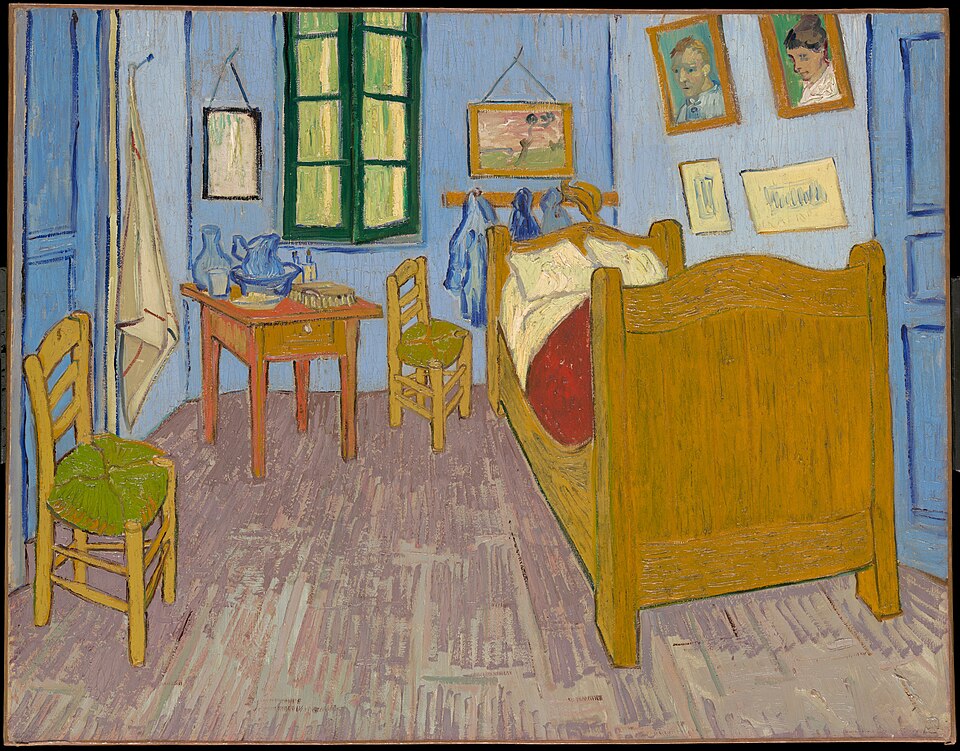
—You wrote to Gauguin himself afterwards. What remains between you, now that the yellow house is a finished dream?
There remains esteem, and a little sorrow. Gauguin is a great painter, more learned than I in constructing a painting; I learned a lot by watching him work. We had dreamed of a studio in the Midi, a community of painters working together, and that dream was precious to me. It shattered on my nerves as much as on his character. I wrote to him without rancor; I wanted him to know that I held nothing against him. You, who also know him through your business, know that one cannot keep two suns in the same room for long. The project failed, but the friendship, I want to keep intact in my memory. That is all that remains to me from Arles, along with the canvases.
One cannot keep two suns in the same room for long.
—In Saint-Rémy, behind the asylum walls, you painted that night that whirls. How does such a sky come from a closed room?
It is born from memory and from the window bars, Theo. At Saint-Paul-de-Mausole, I saw the landscape rise before the sun in the morning, and the enormous evening star in the blue. But The Starry Night, I did not paint it from life; I composed it in my head, in my room, arranging things like music. The stars become whirlpools because that is how I feel them vibrate, not as one sees them coldly. Confinement, you see, did not stop me from working — on the contrary, in one year there I must have painted nearly a hundred and fifty canvases. Painting was my window when all others were barred. It was through it that I breathed.
Painting was my window when all others were barred.
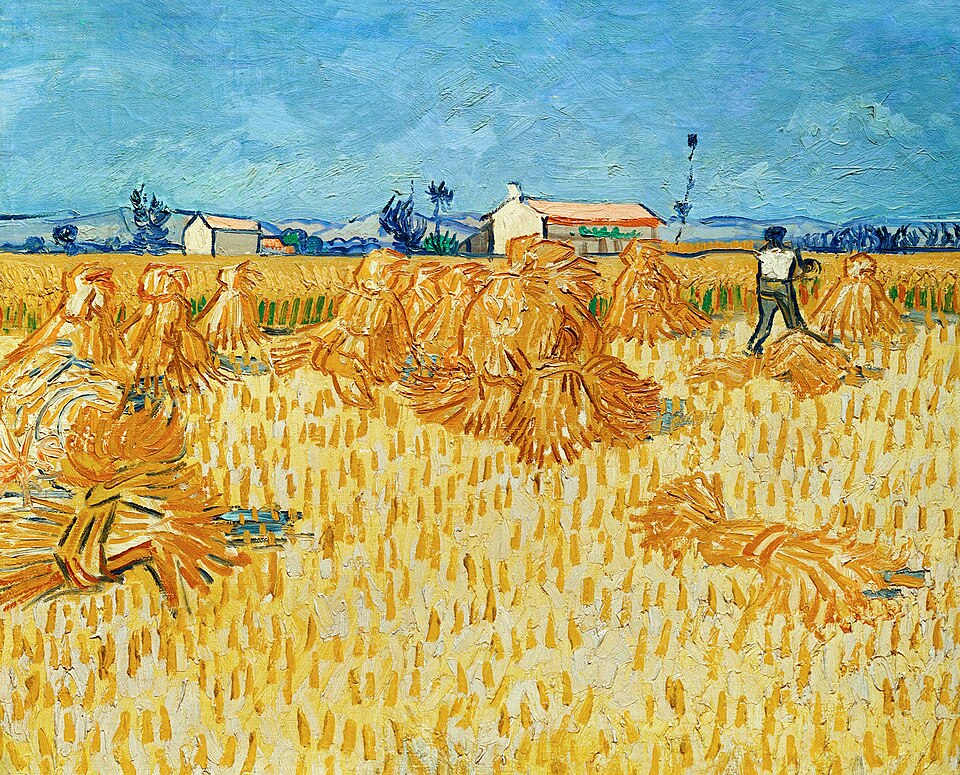
—So you painted in fever, between crises. Were you never afraid that the illness would eventually tear the brush from your hand?
I fear it every day, and that is precisely why I work so much. Between two crises, there are weeks of clarity; then I throw myself onto the canvas like a man who knows the night will return. At the asylum, as soon as they let me out with my easel, I painted olive trees, cypresses, fields — everything that lived in the sun, against everything that was dying in me. The doctor allowed it, and I believe that work heals me better than his remedies. If one day the hand trembles too much, then it will be over; but as long as it obeys, I paint. I prefer to use up my strength than let it rust in worry. You understand that, you who always pushed me to continue.
I throw myself onto the canvas like a man who knows the night will return.
—My brother, for ten years I have sent you what you need to live and paint. This debt to me, is it a weight you carry?
It is my heaviest burden, and you know it well, Theo. Not a month passes without you sending me money, canvases, colors, receiving nothing in return but a pile of paintings no one buys. I have sold only one painting in my life, The Red Vineyard — one, in ten years! How can I not feel like a burden to you, now that you have a wife and child? I wish these canvases would repay you one day, finally pay for your kindness. I tell myself they are your merchandise as much as my work, that we have made them together. But at night, this calculation gnaws at me. I eat little to buy colors, and I know it is your bread that I turn into paint.
I know it is your bread that I turn into paint.
—And these hundreds of letters you write to me in the evening, when you come home alone from the café — what do you expect from me in writing them?
I expect someone to read me and not believe I am mad. In the evening, after work, when I am too tired for anything else, writing to you is still a way of painting — with words, for lack of color. I tell you what I have seen, the yellow of a wall, the face of a postman, what I want to do tomorrow. You are the only one to whom I can say everything without a mask. These letters are our childhood conversations continued across distances. If I stay standing, it is largely because of them, because of this presence you keep for me at the tip of the pen. Keep them, Theo: if ever anyone wants to understand what I was seeking, it is there, more than in my paintings, that they will find it.
Writing to you is still a way of painting — with words, for lack of color.
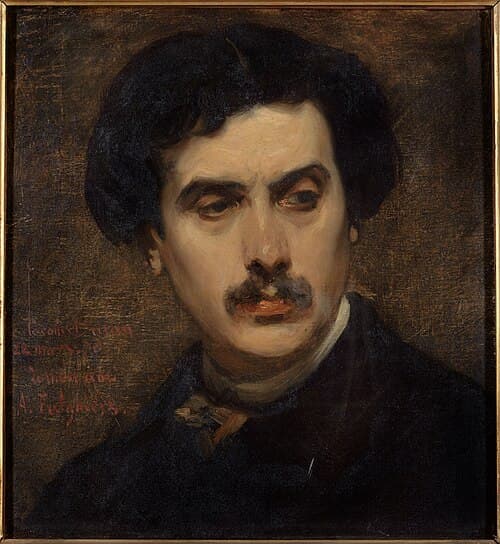
This imaginary interview was generated by artificial intelligence from sources documented in Vincent van Gogh's profile. It dramatises what the figure might have said based on what we know about them, but does not constitute attested historical testimony. For primary sources and factual documentation, refer to the full profile.