Imaginary dialogue between Vita Sackville-West and Virginia Woolf
by Charactorium · Virginia Woolf (1882 — 1941) · Literature · 5 min read
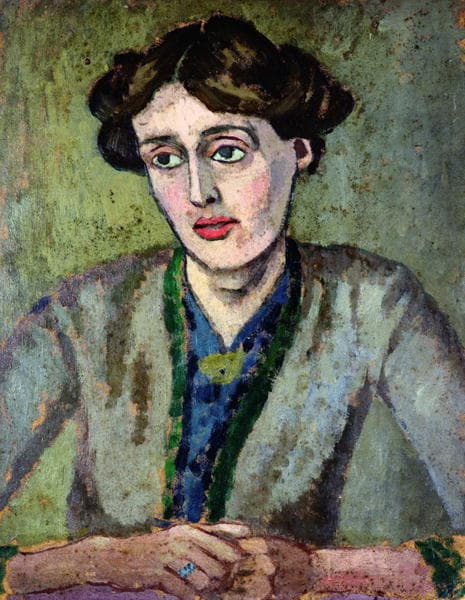
It is at Monk's House, in the village of Rodmell in Sussex, that Vita Sackville-West finds her friend on this freezing winter morning of 1940. Outside, the garden is bare and in the distance one hears the dull rumble rising from bombed London; on the table, a pen and an open notebook still smell of fresh ink. They have known each other for fifteen years already, and Vita has come, a shawl over her shoulders, not to interrogate a great lady of letters but to resume an old conversation between them, where the letters had left it.
—Virginia, do you remember that year 1928 when you made me your Orlando? What were you thinking, throwing me across the centuries?
How could I forget, you who were its pretext and its secret? I wanted to write your biography without writing one at all, to follow you from reign to reign, to make you man then woman, because no other form would have allowed me to grasp you entirely. Orlando was born of a game, almost an extended letter, and I put into it everything I could not say otherwise. Fantasy, you see, gave me a freedom that serious fiction denied me. I could laugh, exaggerate, cross three hundred years in a few pages. It was a homage, yes, but also a way to keep you in a book when I could not keep you elsewhere.
I wanted to write your biography without writing one at all.
—You made your hero change sex without him being upset. Do you truly believe a mind can be both man and woman?
I believe it more than ever. It seems to me that the most accomplished mind is neither purely masculine nor purely feminine, but androgynous, capable of embracing both natures without being confined to either. When I write, I no longer know very well what I am; writing delivers me from the boundaries that society imposes from the cradle. Orlando crosses that threshold without drama because, at bottom, these partitions are conventions, not truths. You, who have always worn your boots and hat as you pleased, know better than anyone how these costumes stifle us. I sought, in this book, to show a being finally reconciled with their own multiplicity.
When I write, I no longer know very well what I am; writing delivers me from boundaries.
—The year before, in 1928, you went to speak to the students at Cambridge. What did you go to tell those young women?
I went to tell them a very simple and almost scandalous thing: that a woman must have money and a room of her own if she wants to write. Much has been made of my genius, but genius is not enough when you are denied an income and a door that closes. I looked at those underfed students in their poor college, then I thought of the feasts at the men's colleges, and everything became clear to me. How many sisters of Shakespeare died without a line, for lack of those five hundred pounds a year and that lock? I drew from that lecture the essay you know, A Room of One's Own. It was not a complaint, it was a calculation.
Genius is not enough when you are denied an income and a door that closes.
—Five hundred pounds and a lock, really? Aren't you reducing creation to a matter of accounts and cooking, you who believe in dreams?
It is precisely because I believe in dreams that I speak of accounts, my dear. The dream needs a roof. You cannot dream with a pen in hand when you are interrupted every ten minutes by children, housework, or fear of the future. Men have had their libraries, their annuities, their centuries of leisure; it should not surprise us that they wrote more. I am not demeaning art by talking about money; I am revealing the hidden condition without which it does not exist. Material independence is the freedom of the mind disguised in numbers. Give a woman that security, and you will see works emerge whose existence we do not even suspect.
I am not demeaning art by talking about money; I am revealing the hidden condition without which it does not exist.
—Let's talk about Mrs Dalloway, that book from 1925 where almost nothing happens, except a day and some flowers. How did you dare to do that?
I dared because the novel as it was handed down to me lied. Life is not a series of orderly events; it is a halo, a myriad of impressions that rain upon the mind from morning to night. I wanted to follow a single day of Clarissa and make a whole existence fit into it, slipping under each gesture the flow of thoughts, memories, regrets. They call it interior monologue; I call it finally being honest. Instead of describing furniture, I wanted to descend into consciousness and capture that continuous murmur we all carry. Buying flowers yourself, you see, can contain more drama than a battle, if you know how to listen to what passes behind the brow.
Life is not a series of orderly events; it is a halo, a myriad of impressions.
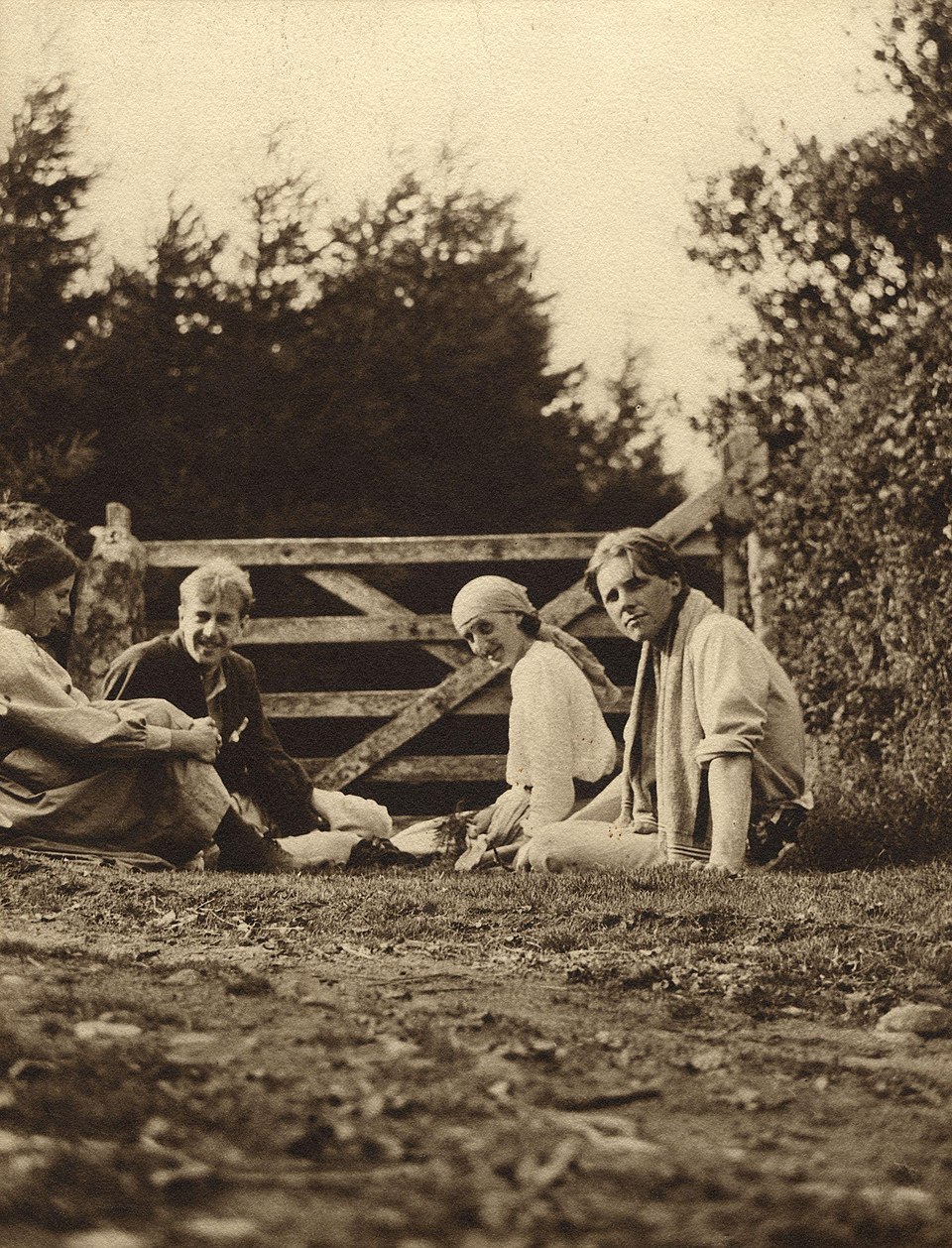
—When I write to you, your letters already overflow with that flow. What do you write this torrent on? Show me your notebooks, your secret tools.
My tools are poor and that's all the better: a notebook, a pen, ink, and the whole morning. I settle as best I can and first let my hand run, without judging, as one lets a spring flow; I correct later, on the typewriter or during revision. The first draft must embrace the disorder of the mind, otherwise it stiffens and dies. I fill these notebooks with drafts, doubts, crossed-out sentences, and it is there, in that mud, that the rhythm of the book gradually forms. You sometimes reproach me for starting over ten times; but it is only in the tenth version that the thought finally finds its wave and its breath. Writing, for me, is first a matter of cadence.
The first draft must embrace the disorder of the mind, otherwise it stiffens and dies.
—With Leonard, you print your own books at the Hogarth Press. Why this artisan labor, you who could simply write?
Because that press made me free, which no publisher would have granted me. Composing the type ourselves, inking, assembling, was first a remedy for my nerves, a manual task that rests the sick mind. Then we understood what a treasure it was: to be able to publish what we wanted, how we wanted, without asking anyone's permission. Jacob's Room, I printed it without fearing that a timid publisher would demand a nice, proper story. Hogarth was our avant-garde workshop, open to the young, to foreigners, to the bold whom the big houses rejected. Holding in one's hands a book one has sewn oneself is a joy of a different kind from that of writing.
That press made me free, which no publisher would have granted me.
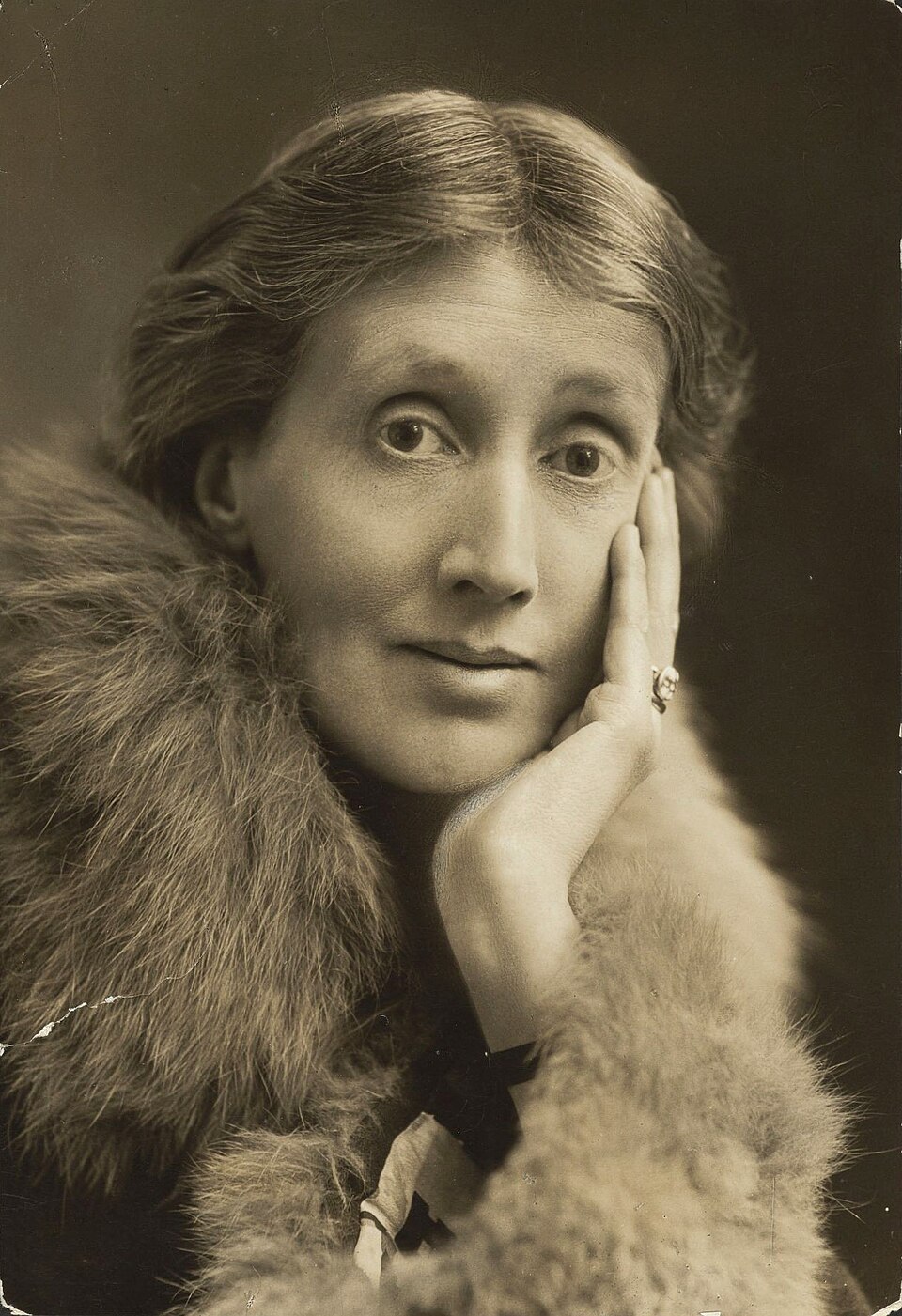
—And this Bloomsbury circle about which so much is whispered? When you welcomed me into it, I felt a freedom that frightened London. What were you seeking there?
We sought the right to think without a policeman. When we settled in Bloomsbury, young and orphaned of our father, we decided that nothing would be forbidden in conversation: neither art, nor feelings, nor the things one does not name in society. On Sunday evenings, painters, economists, writers mingled in our smoky drawing rooms and we discussed until dawn about beauty, truth, love. You felt it well, you who came from a world of castles and conventions: here, one breathed differently. It was the laboratory of everything I later dared. Without that free and demanding friendship, I would never have found the courage to break with old forms.
We sought the right to think without a policeman.
—This morning still, we hear London suffering in the distance. How do you write under the bombs, Virginia? How do you hold on, this notebook before you?
I hold on as best I can, by noting everything, because writing is my way of not sinking. Our house on Tavistock Square was gutted by a bomb; I saw my walls open to the sky, my books in the rubble, and I had to continue. I record each day in my diary the noise of planes, the creeping fear, the German planes over Sussex. This notebook is my anchor; as long as I describe the disaster, I am not quite swept away by it. But I will not hide from you, of all people, that the old waters are rising again. I once wrote a sentence that comes back to me: I feel certain that I am going mad again. War makes that murmur harder to silence.
Writing is my way of not sinking; as long as I describe the disaster, I am not swept away by it.
—That shadow has pursued you for so long, since childhood they say. And yet you are still writing a new book. What are you preparing, in this silence of Rodmell?
That shadow first seized me at thirteen, when my mother died; since then, it comes and goes like a tide, and I have learned to work in its lulls. At the moment, I am writing something fragmented, where an old play is performed in a country garden while war lurks behind the trees. I mix the voices of a whole community, England's past and the threatened present; I do not yet know if it holds together. It is more broken, more choppy than my earlier novels — perhaps it is the world itself that is breaking. I write without knowing if I will finish it, and it is precisely that uncertainty that drives me forward each morning, pen taken up again.
That shadow comes and goes like a tide, and I have learned to work in its lulls.
This imaginary interview was generated by artificial intelligence from sources documented in Virginia Woolf's profile. It dramatises what the figure might have said based on what we know about them, but does not constitute attested historical testimony. For primary sources and factual documentation, refer to the full profile.