Imaginary interview with Virginia Woolf
by Charactorium · Virginia Woolf (1882 — 1941) · Literature · 6 min read
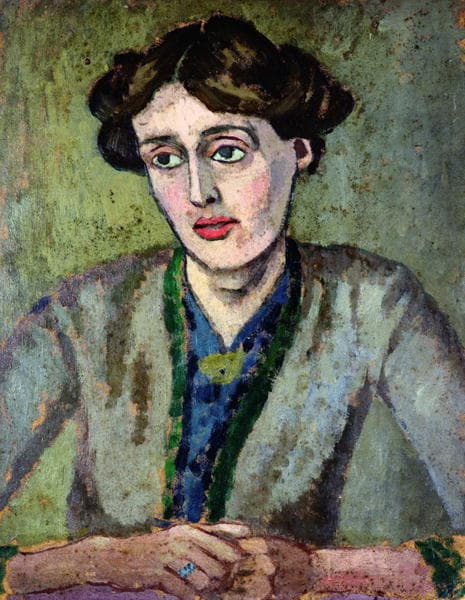
Monk's House, Rodmell, on a windy afternoon in the late 1930s. In the Sussex garden, under a low sky, Virginia Woolf receives between walks, a notebook on her lap. The conversation begins in a low voice, like turning the pages of a diary one would rather not show.
—How would you describe what you were trying to capture in writing Mrs Dalloway?
I wanted a day, just one, in London, in 1925 — and everything that jostles in a head between the moment one decides to buy flowers and the evening of a party. Mrs Dalloway said she would buy the flowers herself. You see: the sentence starts, and already the mind wanders elsewhere, toward a memory, a bell, a fear. I record these shifts in my notebooks, in fragments, before stitching them together. They called it the interior monologue; I simply see it as the truth of how the mind works, which never moves in a straight line. The Victorian novel arranged hours like soldiers. I wanted, instead, to let the continuous murmur of consciousness be heard, that stream that stops neither for grammar nor for decorum.
The Victorian novel arranged hours like soldiers; I wanted to let the murmur of consciousness be heard.
—With The Waves, you went even further. What were you attempting there?
The Waves, in 1931, is six voices that never fall silent, six beings whose thoughts rise and fall like water on the sand. I wanted a book without plot, almost without body, where only the flux of minds remains. One of them says: I am not one and simple, but complex and many. That is my entire program summed up in a single line. We are not a neat, identifiable person; we are an inner crowd, moods that contradict themselves from one minute to the next. I sought a rhythm closer to poetry than to narrative, a tide of sentences. It was the most difficult book, and the one where I felt my stream-of-consciousness technique finally reached its extreme point, at the risk of losing every reader along the way.
We are not a neat person; we are an inner crowd.
—A Room of One's Own was born from a lecture. Do you remember that moment?
1928. I had been invited to speak to female students at Cambridge — young women sitting in rooms that the university had long reserved for men, with their locked libraries and forbidden lawns. I looked at those faces and understood what I had to tell them, without mincing words: A woman must have money and a room of her own if she is to write fiction in the twentieth century. Five hundred pounds a year and a door you can close — that, far before genius, is what women lack. Talent is not enough if you write on a corner of the table, interrupted every hour. From that lecture I drew the essay published in 1929. It was not a theory: it was a long-matured anger that had become reasonable.
Five hundred pounds a year and a door you can close — that, far before genius, is what women lack.
—Why insist so much on money, rather than on mere freedom of mind?
Because freedom of mind without bread is a pretty salon fiction. I saw around me so many gifted women who did not write: not from lack of talent, but because they had neither their own income nor a square meter to themselves. Feminism, for me, begins there, in the very concrete — a lock, an annuity, time not claimed by others. I had the luck that many did not: a small inheritance, then the Hogarth Press that I ran with Leonard, which allowed me to publish without asking any publisher's permission. Imagine Shakespeare's sister, as gifted as he, and deprived of everything: she would have left not a line. Material independence is not the opposite of art; it is its humblest and most necessary condition.
—Orlando is a strange and joyful book. What gave birth to it?
Orlando, in 1928, was written in a sort of loving laugh. I composed it for Vita Sackville-West, whose bearing, ancestors, and house haunted my imagination. I wanted to give her a hero who crosses centuries and changes sex along the way without hardly being disturbed: He—for there could be no doubt of his sex, though the fashion of the time did something to disguise it. See the irony already taut in that sentence. What I was after was androgyny — the idea that no truly creative mind is purely male or purely female, but both mingled. Clothing, title, gender: so many costumes that the age makes us wear. Under the disguise, Orlando remains himself, or herself, which amounts to the same.
No truly creative mind is purely male or purely female, but both mingled.
—What would you say about the part of your life that thus passes into your novels?
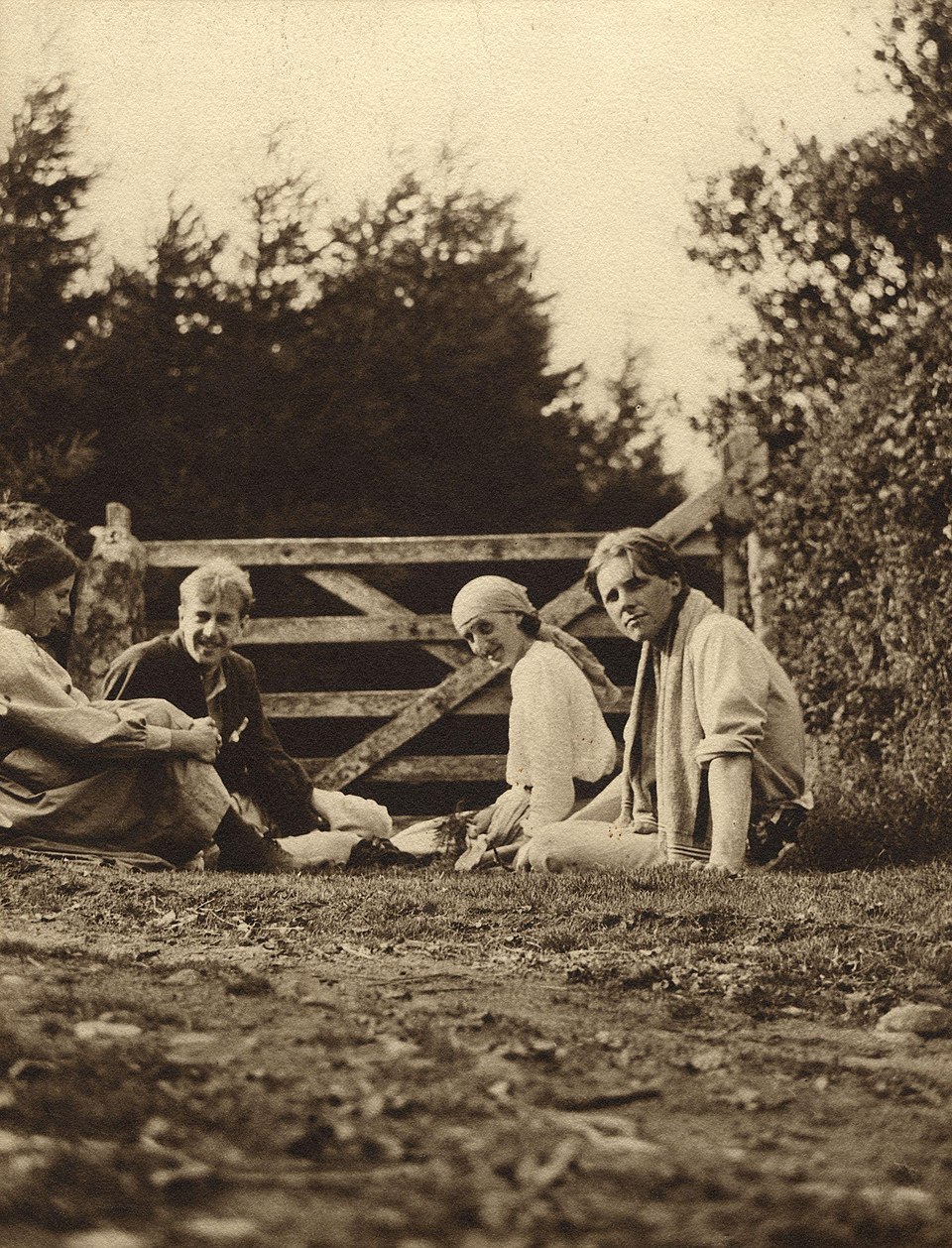
It all passes into them, but transfigured. Orlando is a portrait of Vita disguised as a whimsical biography; it has been called the longest love letter in literature, and I do not deny it. Yet I never copy reality as is — I melt it down. A friendship, a house, a face enter the crucible and come out as characters. My friends from the Bloomsbury circle amused themselves by recognizing themselves, sometimes taking offense. That is the writer's dangerous privilege: everything he lives becomes material, even the beings he loves. I believe one writes well only of what has truly passed through one; the rest is stylistic exercise, skillful and cold.
—The Bloomsbury group always comes up in your story. What did you find there?
Air. After the Victorian suffocation of my childhood in Kensington, Bloomsbury was an open window. We would meet in the afternoons, painters, writers, economists, to discuss without hierarchy art, love, morality — subjects not spoken of in proper homes. There, a woman could give her opinion without eyes being lowered. At Tavistock Square, number 52, our salon buzzed with these conversations, and it was there, in the basement, that the press of the Hogarth Press turned. This circle was not a school with a manifesto; it was a demanding friendship that took ideas seriously. Without it, I believe I would never have dared to write as I did.
—Did the Hogarth Press, which you ran with Leonard, matter as much as your books?
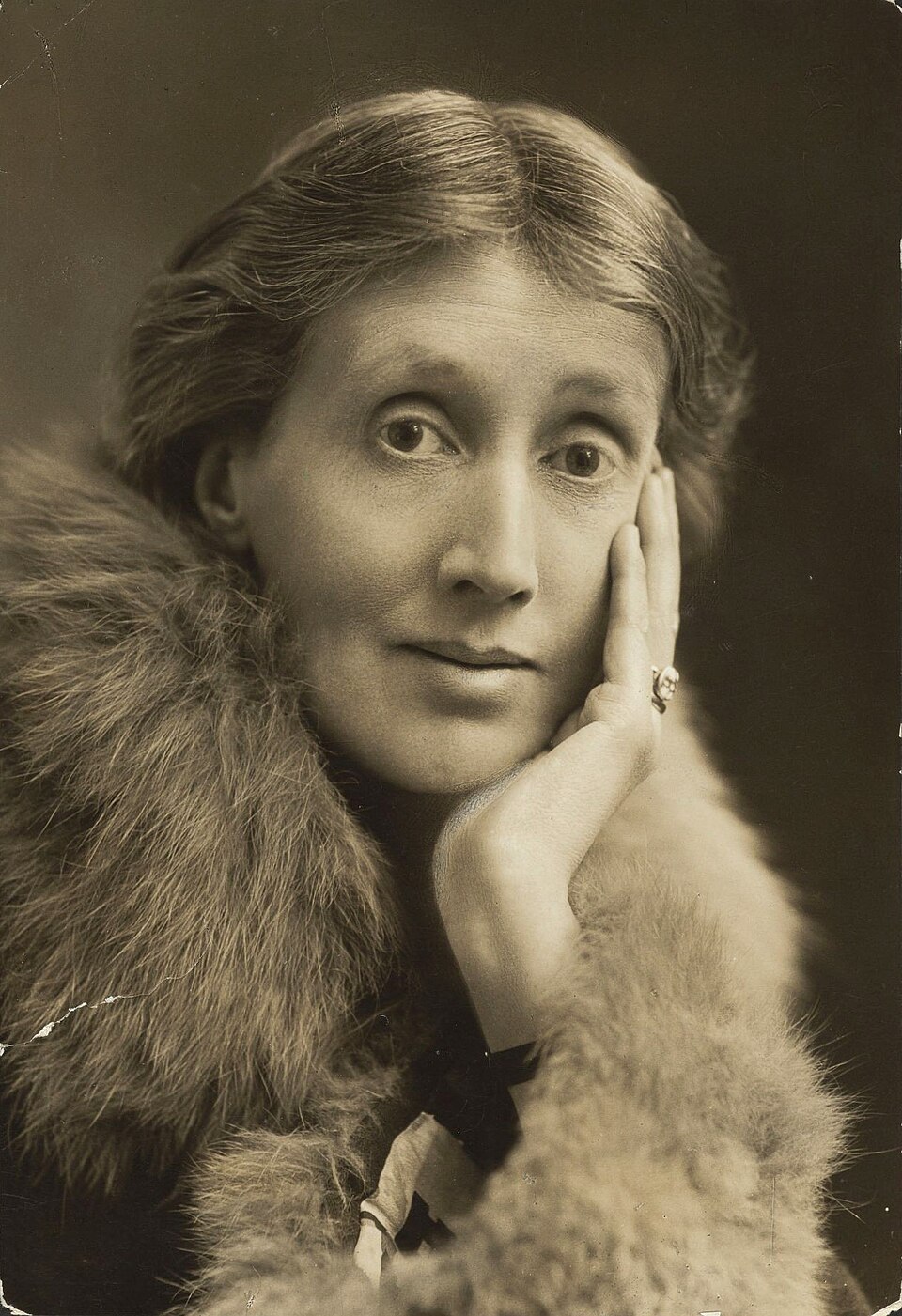
Enormously. To have one's own press is to stop begging. With Leonard we set the type by hand, bound volumes with sometimes clumsy covers, and published what seemed new to us, regardless of commercial tastes. Mrs Dalloway appeared thus under our imprint, in 1925. For a woman who writes, not to depend on the verdict of an outside publisher is an unheard-of freedom — the same, basically, as the locked room and the annuity. We brought out difficult authors, translations, essays that no major publisher would have risked. This little press in Bloomsbury was, I believe, one of the quiet laboratories where English modernism learned to breathe.
—You wrote with, as you say, the shadow of madness at your side. When did you first meet it?
Very early. In 1895, I was thirteen when my mother, Julia, died; the ground gave way, and I experienced my first real fall, those darknesses where the mind turns against itself. Since then they have returned in waves, all my life. I do not romanticize the suffering — it is terrifying and stupid. But I cannot deny that it deepened in me an attention to inner states, to the fissures of consciousness, to what happens beneath the polished surface of days. That psychological introspection that critics praise in my novels was also born from there, from those periods when one had to observe one's own shipwreck. One does not write Mrs Dalloway, with its character haunted by death, without having oneself skirted the edge.
—In your diary from 1926, one reads a heartbreaking sentence about the return of this illness. What did you feel then?
I had noted, on September 30, 1926: I feel certain that I am going mad again. I feel we can't go through another of those terrible times. Keeping a diary was my way of measuring the rising tide — naming it so it would not sweep me away entirely. Later, at Rodmell, while bombs fell on London, the anxiety mingled with the immense anxiety of war; you could hear the planes over Sussex and wonder what would remain. I wrote nonetheless, every morning, as one holds a railing. The page, the notebook, were both my refuge and the only place where I could tell the truth without being consoled. Writing was my way of enduring.
I wrote every morning as one holds a railing — the page was my way of enduring.
This imaginary interview was generated by artificial intelligence from sources documented in Virginia Woolf's profile. It dramatises what the figure might have said based on what we know about them, but does not constitute attested historical testimony. For primary sources and factual documentation, refer to the full profile.