Kids interview Virginia Woolf
by Charactorium · Virginia Woolf (1882 — 1941) · Literature · 5 min read
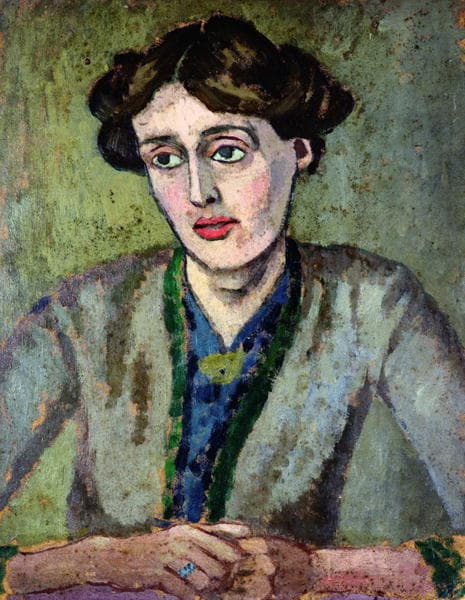
Two young visitors, each twelve years old, push open the door of a house full of books. A somewhat pale lady, with a lively gaze, invites them to sit near the window. Her name is Virginia Woolf, and she has agreed to answer all their questions.
—How old were you when you first felt sad?
You know, my child, I was thirteen. It was in 1895, the year my mother died. Imagine the light suddenly gone from a house: that's what I felt. I went through a great sadness, what they called in my time a breakdown. That shadow returned often in my life, like a tide. But listen carefully: this pain also taught me to look inside people. When I write my novels, I know that behind every calm face there are storms. It was my sadness that gave me those eyes.
Behind every calm face, there are storms.
—What were your afternoons like when you were little and older?
Oh, my afternoons! Imagine a sitting room in London, in a neighborhood called Bloomsbury. Friends would arrive: painters, writers, thinkers. They were called the Bloomsbury Group. We drank tea, and above all we talked. About books, paintings, new ideas. It was like a fireplace where each person brought a log. With my husband Leonard, we even founded a small publishing house, the Hogarth Press. We printed daring books ourselves that no one else dared to publish. Those afternoons were my true country.
A sitting room where each person brought a log for the same fire.
—What time of day did you write?
Morning, always morning! I would get up around eight or nine, have a light breakfast, and then rush to write. Often still in my dressing gown, like a lazybones! But those were my best hours, when my mind was fresh. I wrote first by hand, in notebooks where I jotted down my ideas in disorder. Imagine a notebook full of erasures, arrows, crossed-out words. That was where my novels were born. In the afternoon, friends came; but in the morning, my child, that silence belonged only to me.
The silence of the morning belonged only to me.
—What does it mean to write what goes on inside people's heads?
What a good question! You know, in real life, your head never thinks in a straight line. You see a bird, it reminds you of summer, then your grandmother, then you're hungry. Everything mixes together. I wanted to write that: what is called the interior monologue, putting on paper thoughts as they come, without tidying them up. In Mrs Dalloway, in 1925, I am inside a lady's head for a single day in London. You hear everything she thinks. That was new in my time. People found it strange. I found it finally true.
Your head never thinks in a straight line.
—Was your strangest book the one with lots of people talking?
You're probably thinking of The Waves, written in 1931. Yes, it is strange, I admit! Imagine six friends, and each speaks in turn, like voices that rise and fall. Like waves on a beach, indeed. Not really a story with a beginning and an end: only souls thinking aloud. In one of my sentences, a character says: "I am not one and simple, but complex and many" — I am not a single simple being, but many things at once. That's what I wanted to show: we are all crowds inside.
We are all crowds inside.
—Is it true you wrote a book for a friend you loved?
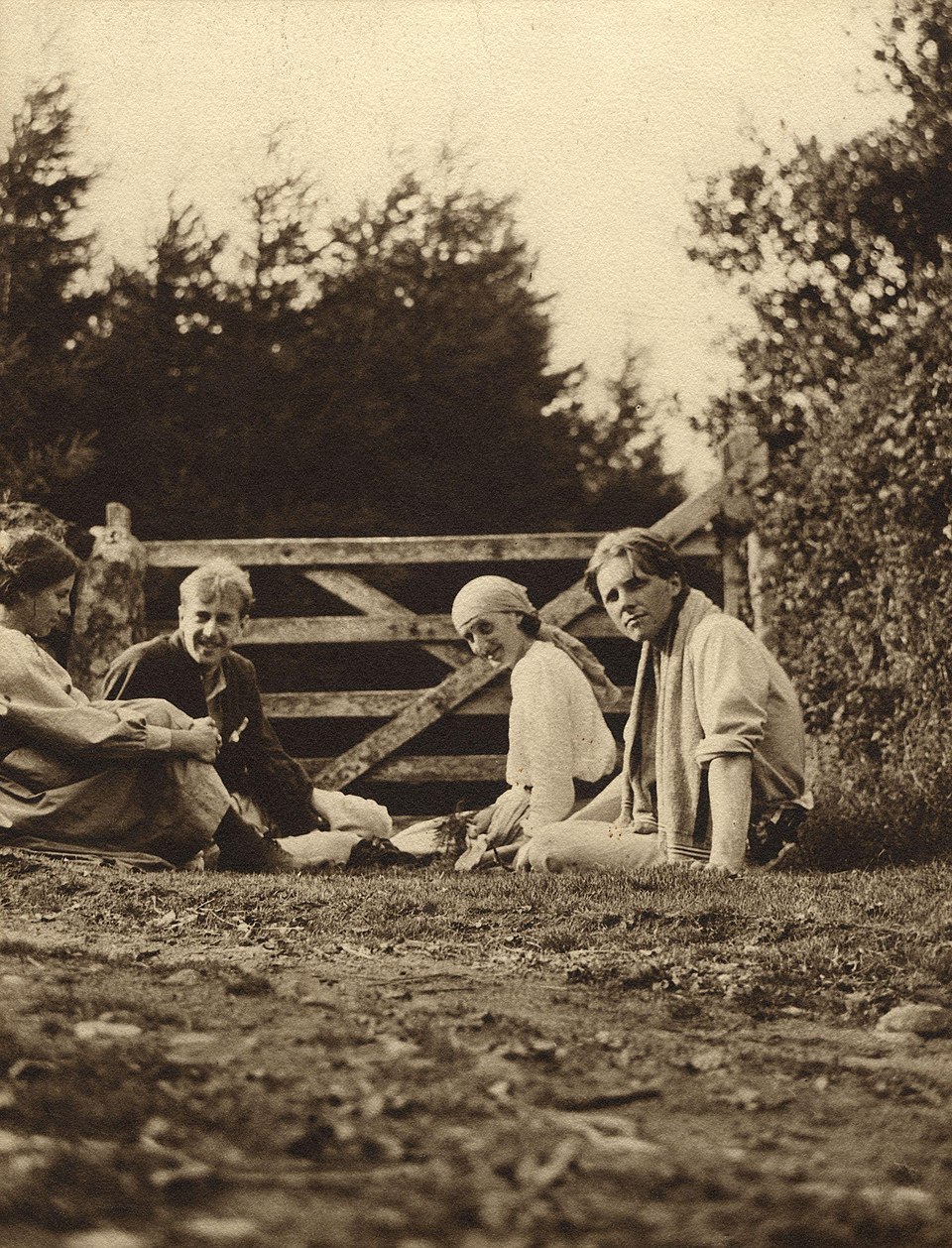
That is absolutely true! That friend was Vita Sackville-West, a writer I loved dearly. For her, I invented a crazy character: Orlando. Imagine a hero who lives for centuries, and who, one fine morning, wakes up a woman when he was a man! In 1928, writing that was very daring. I played with an idea called androgyny: the idea that within each of us there is a bit of masculine and a bit of feminine. It was my gift to Vita. A book, you see, is sometimes the most beautiful way to tell someone you love them.
A book is sometimes the most beautiful way to say you love.
—Why did you say girls need a room to write?
Ah, my child, that is the most important idea I defended! In 1928, I was invited to speak before female students at Cambridge. From that day came my little book, A Room of One's Own. I wrote in it: "A woman must have money and a room of her own if she is to write fiction". That means: to create, a woman needs a little money and a room where she is left alone. Imagine wanting to write while being asked constantly to set the table! In my time, that's what was expected of girls. I demanded a door that could be closed.
To create, you need a door that can be closed.
—Did you find it unfair for women in your time?
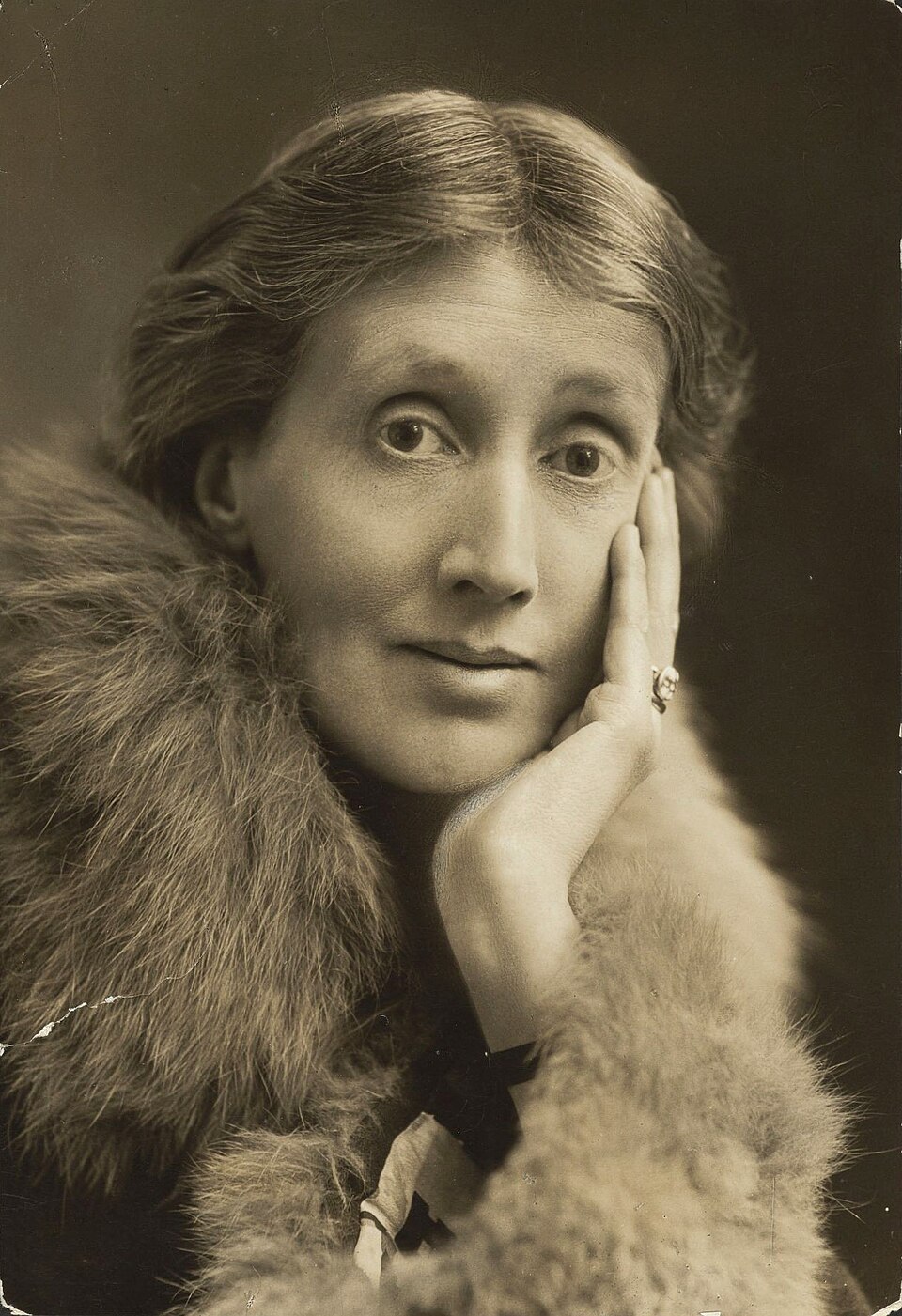
Deeply unfair, yes. You know, when I was young, my brothers went to university, and I stayed home reading alone. Girls were taught to make themselves pretty, not to think. But things were changing! In 1918, women over thirty finally got the right to vote in our country. That was a great victory. I believe a woman is worth as much as a man to write a fine book; she just lacks the chance to be allowed. That's why I insisted so much: give them a little money and quiet, and you'll see what they can do.
Girls were taught to make themselves pretty, not to think.
—What was it like writing during the war, with bombs?
It was frightening, my child. During the Second World War, bombs fell on London. We heard the sirens, we watched the sky. I had taken refuge in the countryside, in a Sussex village called Rodmell. There, I kept my diary, where I noted my fears day after day. Imagine writing sentences about the beauty of the world while in the distance houses collapse. My last novel, Between the Acts, in 1941, preserves the trace of that anguish. Writing, in those moments, was my way of standing upright when everything around me trembled.
Writing was my way of standing upright when everything trembled.
—If we could really see you, what would we notice first?
What a lovely question! You would probably notice my long, simple dresses. I didn't like artifice, nor tight corsets; I preferred clean lines. People said I was a bit austere, but that was my independence. You would also see my ink-stained hands, because I wrote with a pen, in a house full of books up to the ceiling. And then, I think, you would see my absent gaze: often, I was already elsewhere, inside the head of a character I was inventing. My body was having tea with you, but my mind was wandering in a novel.
My body was having tea, but my mind was wandering in a novel.
This imaginary interview was generated by artificial intelligence from sources documented in Virginia Woolf's profile. It dramatises what the figure might have said based on what we know about them, but does not constitute attested historical testimony. For primary sources and factual documentation, refer to the full profile.