Imaginary interview with William Shakespeare
by Charactorium · William Shakespeare (1564 — 1616) · Literature · 7 min read
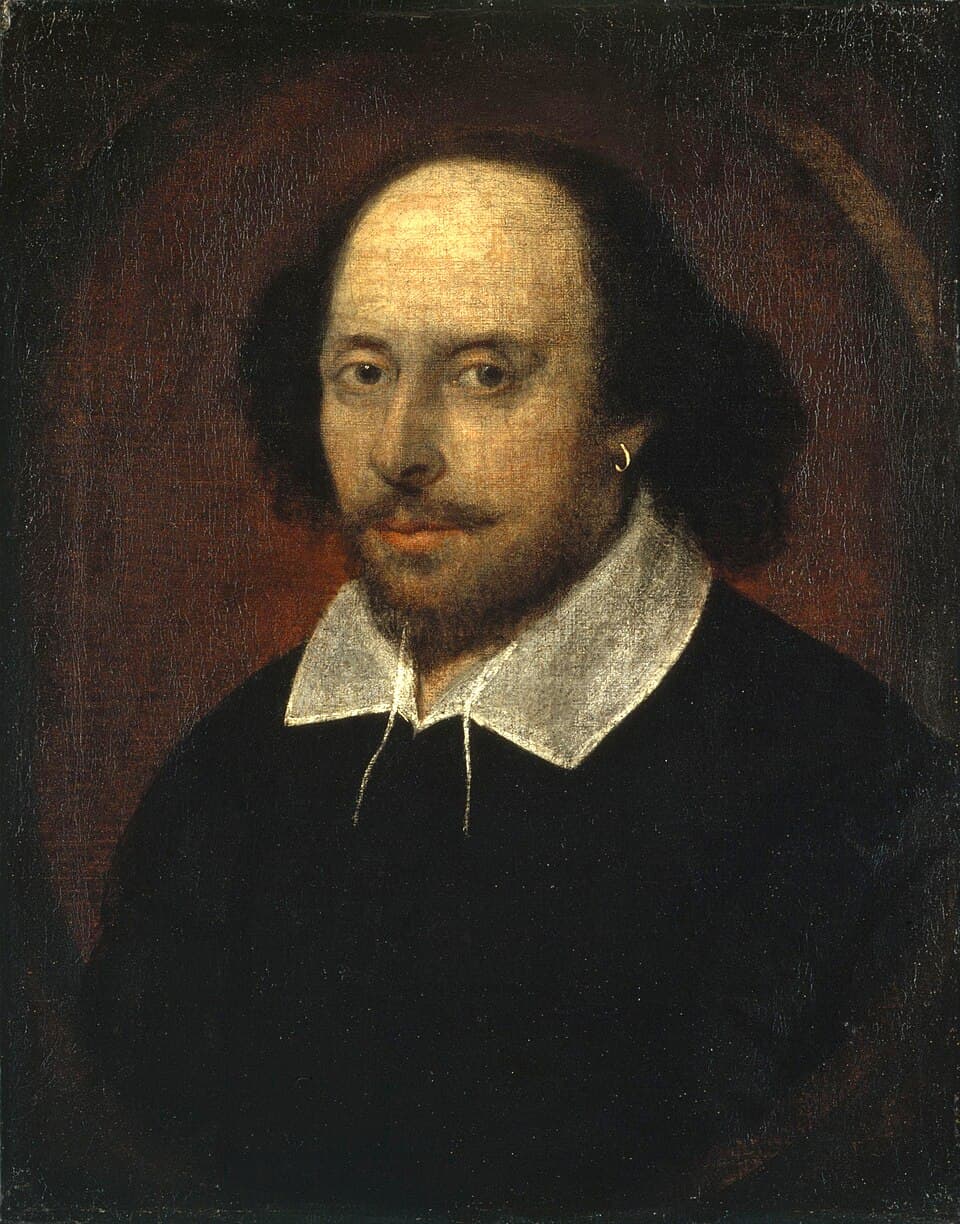
London, an afternoon in the year 1613. On the south bank of the Thames, where the still-warm ashes of the Globe mingle with the mud of Bankside, a man in a sober doublet and trimmed beard receives us in a smoky tavern. A candle, a tankard of light ale, and William Shakespeare consents to speak of his life, his boards, and his ghosts.
—How did you come to this life of theater, you who first married very young in Stratford?
They believe I was born a poet, but I was first a boy from Stratford-upon-Avon pressed by circumstances. In 1582, I was only eighteen, and Anne Hathaway, my betrothed, was already six months pregnant with our child — a special dispensation was needed to hasten the banns. Imagine: no genius, no muse, only an ordinary young man who marries in haste and sees a daughter born, then twins three years later. It was from this banal life, these obligations, that I left for London. I believe my kings and lovers were born there, in that tension between what one must do and what one dreams of being. Every poet begins as a man who has accounts to settle with his own story.
No genius, no muse, only a young man who marries in haste.
—Tell us about the Globe, that wooden theater to which your name is now attached.
The Globe, we erected it in 1599 on the bank of the Thames, round as a world — hence its name. I was both pen and purse there, for I owned a share: what was played on those boards, I had often written, and what the takings brought in also filled my purse. Think of this wooden vessel open to the sky, three thousand souls packed in, the nobleman in the galleries and the barefoot standing in the pit, all straining toward the same words. In the morning I crossed the teeming streets, in the afternoon we rehearsed, then we played between two and five o'clock, in the frank light of day. No place taught me more: a theater is not a book, it is a crowd breathing together, and it lets you know if you bore it.
A theater is not a book, it is a crowd breathing together.
—Many say you changed theater by plumbing the souls of your characters. What did you have in mind with Hamlet?
With Hamlet, around 1601, I wanted a man who never stops talking to himself. The Prince of Denmark does not first fight a murderer: he fights his own mind, his slowness, his lucidity that paralyzes him. “To be, or not to be, that is the question” — that phrase is not an answer, it is an open wound in the middle of the stage. And later, that skull he holds in the graveyard, that bone that was once a laughing man, it is our whole condition held in the hollow of a hand. I believe my craft was never to invent plots — the old chronicles overflow with them — but to listen to what a being murmurs to himself in the dark. Show a spectator the hesitations of a prince, and he will recognize his own sleepless nights.
« To be, or not to be » is not an answer, it is an open wound in the middle of the stage.
—You grew up in a triumphant England. What did the defeat of the Armada mean to you?
In 1588, I was still an unknown seeking my place in London when the Spanish fleet was broken by our ships and by the storms. The whole kingdom believed itself chosen by Providence: Queen Elizabeth ruled over a nation drunk on its own power, after Drake had already circumnavigated the globe. We lived Elizabethan without knowing it, in that fever where the court shone and theater rose in honor. But I distrust triumphs: behind the banners, I have always seen men anxious about their future. This national glory inspired in me less fanfares than questions about power — who holds it, who loses it, and what it costs the soul of those who covet it.
—Your darkest tragedies, Macbeth and Othello, seem fascinated by inner evil. Why this inclination?
Because the most terrible evil does not come from outside, it wells up from within. In Macbeth, in 1606, a brave general becomes a murderer out of pure ambition, and his wife, believing her hands clean, ends up rubbing them in her sleep: “Out, damned spot! Out, I say!” That stain that only she sees is guilt that no water can wash away. In Othello, the poison is not a sword but a whisper — Iago pours jealousy drop by drop into a noble man's ear until he becomes the murderer of what he loves. I do not write to frighten with monsters; I write to show that an honest man carries within him the means to damn himself. The spectator shudders less at seeing the crime than at understanding he could have committed it.
The most terrible evil does not come from outside, it wells up from within.
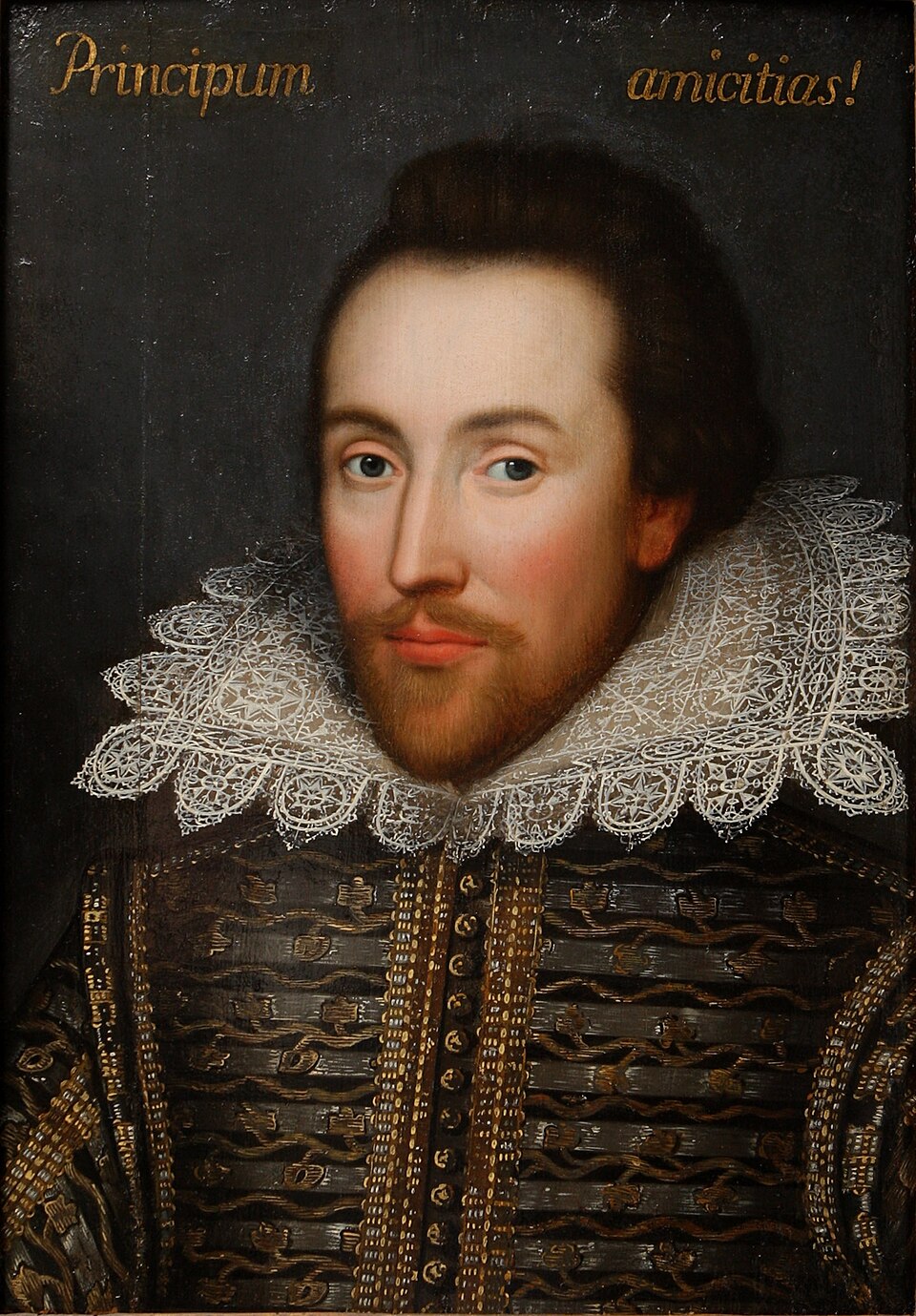
—You speak of the Globe with emotion. What happened this past June 29th?
It was a day I will not forget. On June 29, 1613, we were performing Henry VIII, and to mark the entrance of a king, a stage cannon was fired. A burning wad flew up to the thatched roof — and within a quarter of an hour, my wooden theater, my round vessel where three thousand souls had crowded, was nothing but a blaze. They say a man had his breeches on fire, that a tankard of beer put them out, and that by a miracle no one died. But I watched twenty years of my life burn. A theater is only planks and thatch; yet to see go up in smoke the place where Hamlet and Lear lived is like witnessing the death of a friend who had sheltered you every day. They will rebuild it, they say. Stones rise again; the time one lived there, never.
I watched twenty years of my life burn.
—Under King James, the political climate grew tense. How does one write in a kingdom rife with plots?
When Elizabeth died in 1603 and James I took the crown, we became the King's Men, the king's own company — an honor, but also a caution to observe. For times were heavy: barely two years later, in 1605, the Gunpowder Plot nearly blew up Parliament and the king with it. In a court where treachery hides behind every bow, one does not write about kings with impunity. Macbeth, with its witches and regicide, also speaks to a Scottish sovereign haunted by conspiracies. I learned to speak truths about power by disguising them under ancient crowns, Danish or Scottish. The theater is a mirror held up to the prince; still, the mirror must not cut too deeply, on pain of ending up in the Tower.
I learned to speak truths about power by disguising them under ancient crowns.
—What remains for you of that home in Stratford that you left so young?
They think I am entirely of London, but my heart never left the Warwickshire. I left Anne and our children behind while I ran the boards, and that absence was the price of my craft — a price I have not finished paying. With success, I bought New Place, one of the finest houses in Stratford-upon-Avon, as if to prove to myself that the boy who left empty-handed could return as a respected property owner. It is there that I gradually retire, far from the tumult of the pit and the smell of the Thames. A man spends his life fleeing the place he comes from, and he discovers, with gray hair, that he only wrote to earn the right to return.
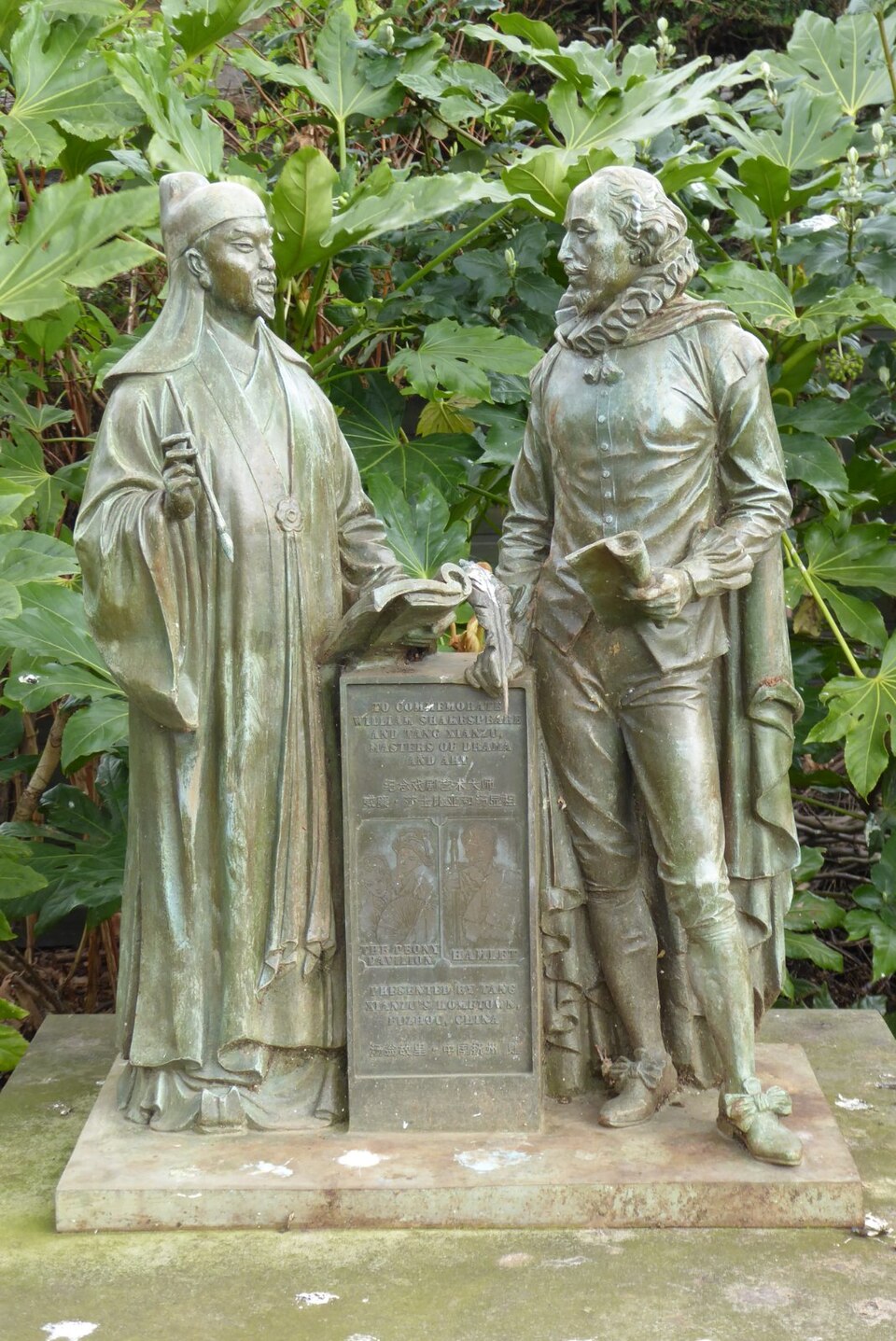
—Beyond the theater, you wrote one hundred fifty-four sonnets. What did you seek there that the stage did not give?
The stage belongs to the crowd; the sonnet, to a single ear. In those fourteen lines, I could say what no king nor fool could bear for me — love, time that gnaws, beauty one would snatch from death. “Shall I compare thee to a summer's day? Thou art more lovely and more temperate”: everything is there, the desire to eternalize a face on paper when the flesh itself fades. In the theater, I lend my voice to twenty characters; in the sonnet, I have only one, and it is perhaps the hardest to embody — myself. The psychology I probe in Hamlet or Lear, I first tried on my own soul, by candlelight, quill in hand.
The stage belongs to the crowd; the sonnet, to a single ear.
—They say no faithful portrait of you exists. Does this lack of an image trouble you?
There is a strange irony: I have given a face to hundreds of men — Hamlet, Othello, old Lear — and I have left scarcely one of my own. No painter has fixed my features in a way I am sure of; an actor passes, and his body does not remain. Perhaps it is just. A playwright must efface himself behind his creatures, otherwise the audience would see only him and not the prince he embodies. What's in a name? I have Juliet say — what matter the name, what matter the face, if the work breathes. Yet I confess, the idea that they will not even know what I looked like has something dizzying: to be everywhere in my words, and nowhere in the memory of eyes.
I have given a face to hundreds of men, and I have left scarcely one of my own.
—You have written nearly thirty-seven plays. Do you sometimes think of what will become of them after you?
I think of it more than I admit. A play is not a book: it lives for the duration of a performance, then the manuscript lingers, tears, gets lost in a company's trunk. How many of my texts survive only in prompter's copies, crossed out, uncertain! If I were to imagine being read a century hence, faithful friends — some actor from my company, perhaps — would have to gather these scattered folios into a single volume, before mold takes them. I know nothing; no one can promise posterity. But I have put into these thirty-seven plays and these sonnets everything a man knows of love, power, and death. If anything deserves to last, it will not be my name: it will be that others, long after me, will still recognize themselves in them.
If anything deserves to last, it will not be my name, but that others still recognize themselves in them.

This imaginary interview was generated by artificial intelligence from sources documented in William Shakespeare's profile. It dramatises what the figure might have said based on what we know about them, but does not constitute attested historical testimony. For primary sources and factual documentation, refer to the full profile.