Kids interview William Shakespeare
by Charactorium · William Shakespeare (1564 — 1616) · Literature · 5 min read
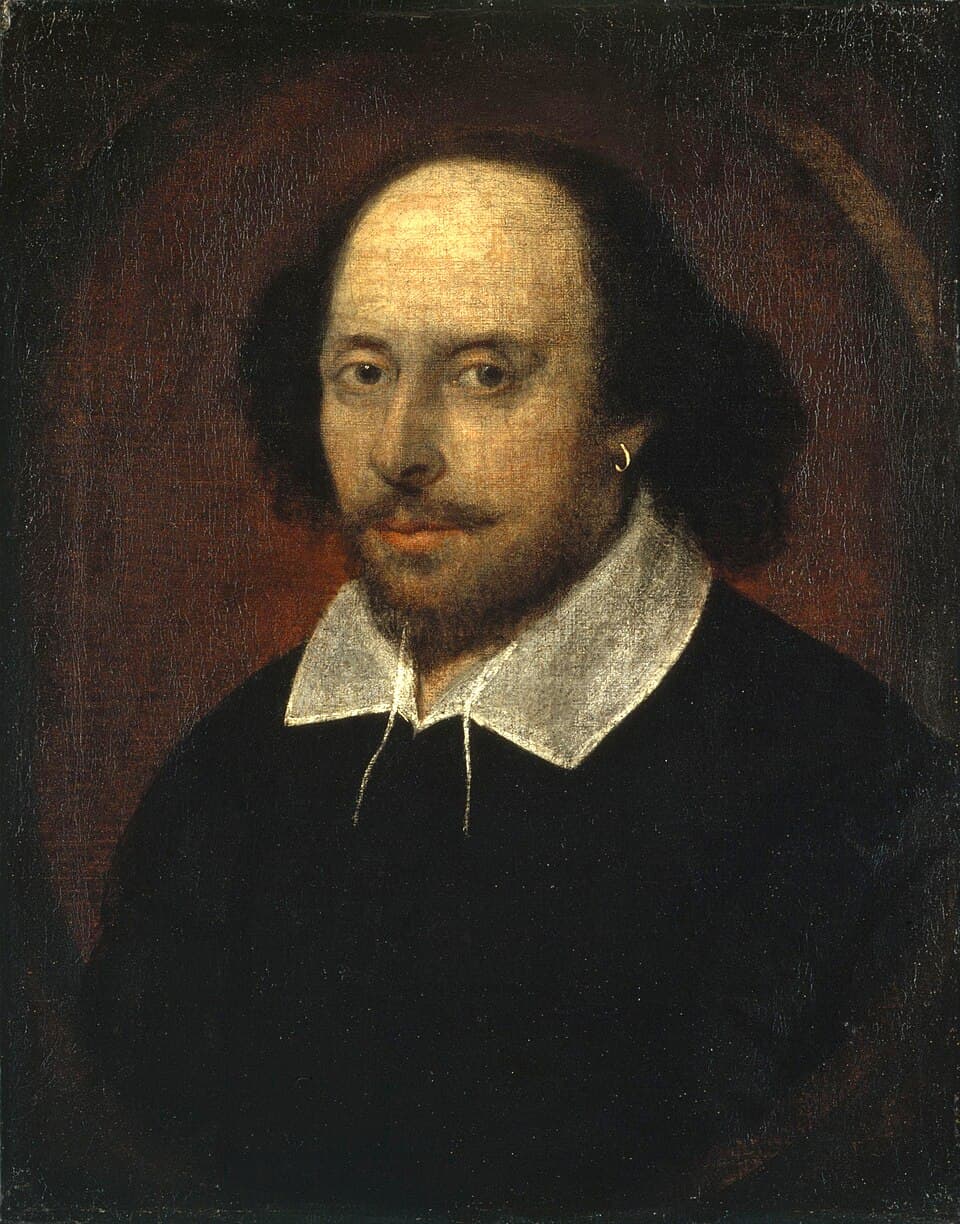
Two young twelve-year-old visitors, on a school trip, push open the door of a London inn. Before them, a man with a neatly trimmed beard sets down his quill. William Shakespeare smiles at them: he has all the time in the world to answer.
—How old were you when you got married?
I was eighteen, my child. It was in 1582. Imagine a young lad, still a boy, in Stratford-upon-Avon, having to hurry to marry Anne Hathaway. Why the hurry? Because she was already expecting a baby. We had to ask for a special permission to speed things up. You see, I wasn't yet the great author everyone talks about. I was just a young man with a family to feed. Three years later, in 1585, twins were born. Two at once! Before the plays, before London, there was this: an ordinary boy learning about life.
Before the genius, there was an ordinary boy.
—What was your house like when you were little?
It was in Stratford-upon-Avon, made of wood and wattle and daub. Wattle and daub is a mix of earth and straw spread over the walls. Imagine a street with no engine noise, just the clatter of horses' hooves and the cries of merchants. In the morning, we ate bread, some cheese, and drank small beer. Yes, even children! The water wasn't safe to drink, so mild beer took its place. Later, when I became wealthy, I bought a grand house there, New Place. That's where I retired, old and tired, far from the city's bustle.
—What was a day like when you worked at the theatre?
Ah, what a fine question! In the morning, I walked through London's busy streets. In the afternoon, around two o'clock, we performed. Imagine a large round wooden theatre, the Globe, open to the sky: three thousand people packed inside, rich and poor mixed together. I belonged to a company, the Lord Chamberlain's Men. A company is a family of actors who work together. I was both an actor on the stage and the author of the plays. We rehearsed, I corrected texts, I guided the apprentices. In the evening, by candlelight, I wrote some more. It was tiring, my child, but I wouldn't have wanted any other life.
—What did you wear when you went on stage?
The costumes were magnificent, you know! Rich, colorful, embroidered. On stage, a simple actor could look like a king thanks to them. Imagine a cloak covered in golden thread that shines in the daylight. In everyday life, I dressed more soberly: a fitted doublet — that's a kind of tight jacket — hose for the legs, and a cape. It showed I was a successful man, without being noble. But on the stage of the Globe, we put on the crown and the sword, and suddenly the dream began. The costume was the first magic, before even the words.
The costume was the first magic, before even the words.
—How did you invent such true-to-life characters?
I listened to them inside, my child. Before me, plays often showed heroes who were all of a piece: good or bad, that's it. I wanted to show what happens inside the heart, where we doubt. Take my prince Hamlet. He wonders whether to live or die: To be, or not to be, that is the question. No one before had dared to open a soul like that, in public. My characters hesitate, they are afraid, they contradict themselves. Like you, like me. That's what makes them live forever.
I didn't show perfect heroes, I showed hearts that doubt.
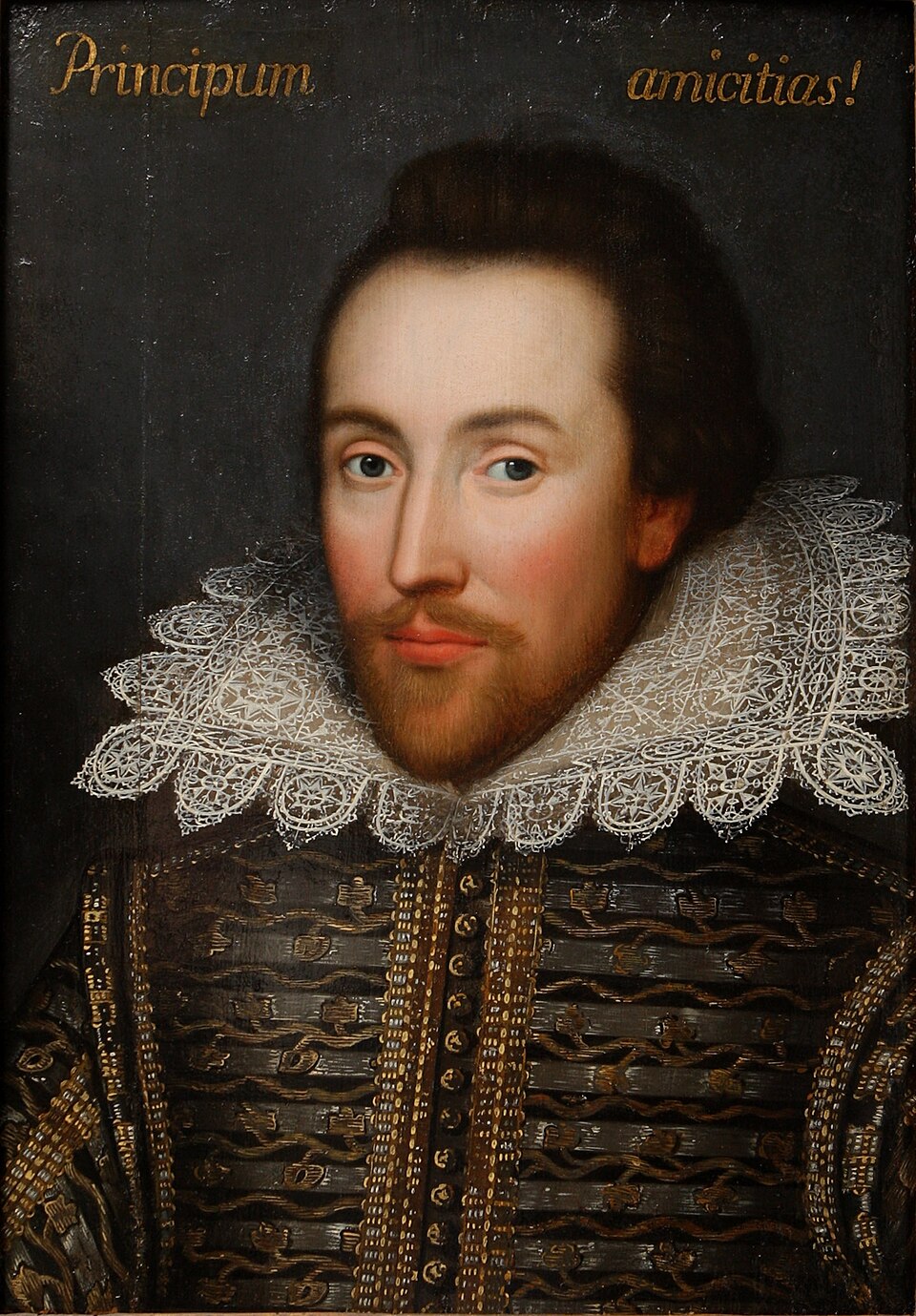
—Why is there a skull in Hamlet, isn't that a bit morbid?
You find it frightening? I understand. But listen. In Hamlet, my prince picks up a skull in a graveyard. And he thinks about death, about what remains of us. It's not to scare, it's to make you think. In my time, death was everywhere, we didn't hide it. In another play, Macbeth, a queen imagines her hands stained with blood and cries: Out, damned spot! She is consumed by what she has done. You see, I spoke of guilt, of our remorse. The skull is just a way of saying: enjoy your life while it lasts.
Death on stage is not there to scare, but to make you think.
—You wrote about kings. Weren't you afraid of angering them?
One had to be careful, oh yes. In my time, power trembled. In 1603, Queen Elizabeth I died, and a new king, James I, came to the throne. Two years later, men tried to blow up Parliament with gunpowder: that's called the Gunpowder Plot. Can you imagine the fear? So I wrote Macbeth, the story of a man who kills to become king and is destroyed by his crime. I spoke of power, of ambition, but through an old Scottish tale. It was wiser. You can say many truths when you dress them up as theatre.
You can say many truths when you dress them up as theatre.
—How did it feel to write for a king who could decide everything?
It was an honor and a danger at the same time, my child. Our company even became the King's Men, playing for James I himself. We sometimes performed at court, for the nobles and courtiers who surround the sovereign. Imagine having to entertain and move the most powerful man in the land, without ever offending him. In Macbeth, I show that a king who takes the throne by crime ends up devoured by his fear. It was a lesson, gently slipped in. A crown and a sword on stage shine brightly, but they weigh heavy on the head of the one who wears them. Theatre was my way of speaking my mind without losing my own head.
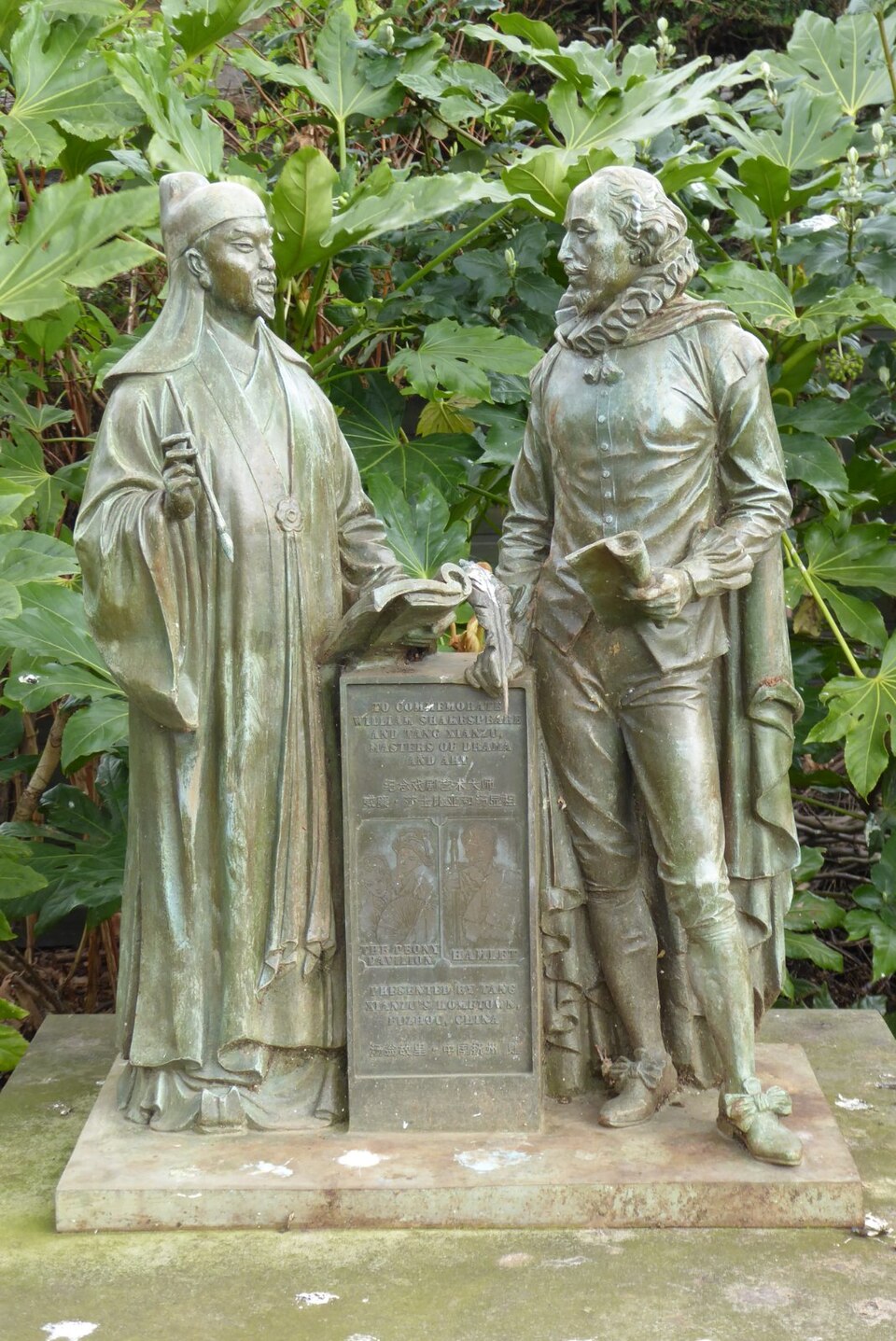
—Is it true that your theatre burned down during a performance?
Alas, yes! It was 29 June 1613. We were performing Henry VIII. To make it more realistic, we fired a small stage cannon. But that day, a spark flew into the thatched roof. Imagine: the great Globe, all wood, catching fire in minutes while three thousand spectators rush outside. And the most extraordinary thing? No one died. Not a single casualty! They say a man had his trousers on fire and someone put it out with beer. My dear theatre went up in smoke, but everyone survived. We rebuilt it the following year.
My theatre went up in smoke, but not a single life was lost.
—Were you just the author, or did you partly own the theatre?
Partly mine, indeed! You see, I wasn't only the one who wrote the words. I was also a shareholder of the Globe. A shareholder is someone who owns a part of the business and shares the profits. So when the theatre burned down in 1613, it wasn't just a set that went up: it was a bit of my money and my heart. Imagine your home, your work, and your dream all in one place, and that place suddenly burning. But our company was strong. We banded together and rebuilt. When you love what you do, my child, you always start again.
When you love what you do, you always start again.
—If people could still read you in a very long time, how would that make you feel?
It overwhelms me, truly. You see, in my lifetime, play texts were not always well preserved. It was after my death, in 1623, that friends gathered thirty-six of my plays into a big book, the First Folio. Without them, Hamlet or Macbeth might have disappeared! Imagine your voice silenced, and then someone rekindles it for centuries. I wrote about love, power, fear, death. These things never grow old, because you too will feel them one day. That two children still ask me questions today is my greatest reward.
I wrote about things that never grow old, because you too will feel them.
This imaginary interview was generated by artificial intelligence from sources documented in William Shakespeare's profile. It dramatises what the figure might have said based on what we know about them, but does not constitute attested historical testimony. For primary sources and factual documentation, refer to the full profile.