
English playwright, poet, and actor (1564–1616), Shakespeare is the author of the greatest plays in world literature. He revolutionized theatre by exploring human psychology and creating unforgettable characters who grapple with love, power, and death.
William Shakespeare(1564 — 1616)
William Shakespeare
royaume d'Angleterre
8 min read
Frequently asked questions
Famous Quotes
« To be, or not to be, that is the question»
« All the world's a stage, and all the men and women merely players»
« What's in a name? That which we call a rose by any other name would smell as sweet»
« Some are born great, some achieve greatness, some have greatness thrust upon them»
Key Facts
- Born in Stratford-upon-Avon on 23 April 1564
- Founded the Lord Chamberlain's Men theatre company (1594), later renamed the King's Men
- Built the Globe Theatre in London (1599), where most of his plays were performed
- Published 37 plays and 154 sonnets in the recognized canon
- Died in Stratford on 23 April 1616, at the age of 52
Works & Achievements
A major tragedy exploring madness, revenge, and human existence through the Prince of Denmark. This play is considered one of the greatest works in world literature, featuring the famous soliloquy "To be, or not to be."
A passionate love tragedy between two young people from rival families in Verona. This play embodies the archetype of impossible love and remains one of the most famous love stories of all time.
A dark tragedy exploring ambition, power, and guilt through the fate of a Scottish general. The play examines the moral consequences of the hunger for power and remains a profound study of human psychology.
A fantastical comedy blending love, magic, and transformation in an enchanted forest. This work celebrates love in all its forms and showcases Shakespeare's genius for creating imaginary worlds.
A tragedy exploring jealousy, racism, and manipulation through the fate of a Black general destroyed by Iago's villainy. The play remains a powerful examination of prejudice and revenge.
A major tragedy examining paternal power, family ingratitude, and madness. This complex and profound play explores the universal themes of old age, filial love, and justice.
A fantastical comedy combining magic, forgiveness, and reconciliation on a mysterious island. This final play by Shakespeare is often interpreted as a meditation on the power of art and the nature of forgiveness.
Anecdotes
In 1582, at the age of 18, Shakespeare had to obtain a special dispensation to marry Anne Hathaway, who was six months pregnant. This hurried marriage shows that young William led a perfectly ordinary life before becoming the literary genius we know today. He had three children with Anne, including twins born in 1585.
The Globe Theatre, built in 1599 in London, was the heart of Shakespeare's theatrical career. This circular wooden theatre could hold around 3,000 spectators, with wealthy and poor audience members mingling together. Shakespeare was both a shareholder in the theatre and the author of the plays performed on its stage.
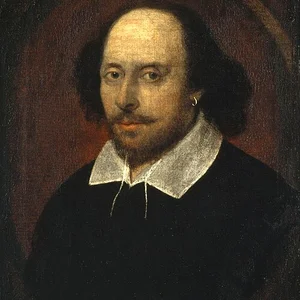
No authentic, confirmed portrait of Shakespeare painted during his lifetime exists. After his death, only a handful of likenesses were created, a mystery that has long puzzled historians. This enigma shows just how many questions still remain today about the private life of a man who became so enormously famous.
Shakespeare wrote and had performed approximately 37 plays and 154 sonnets over the course of his life. Plays such as Hamlet, Romeo and Juliet, and Macbeth have been performed continuously since the early 17th century, making them the most frequently staged dramatic works in the world.
The Globe Theatre burned to the ground on 29 June 1613 during a performance of Henry VIII, most likely because a stage cannon misfired. Miraculously, no lives were lost, and the theatre was rebuilt the following year, almost identical to the original.
Primary Sources
Something is rotten in the state of Denmark. / To be, or not to be, that is the question: / Whether 'tis nobler in the mind to suffer / The slings and arrows of outrageous fortune.
What's in a name? That which we call a rose / By any other name would smell as sweet.
Out, damned spot! Out, I say! One, two. Why, then, 'tis time to do't. Hell is murky.
Shall I compare thee to a summer's day? / Thou art more lovely and more temperate.
The course of true love never did run smooth.
Key Places
Shakespeare's birthplace, where he was born in 1564. This is where his childhood home still stands, and where he grew up before leaving for London to pursue a career in theatre.
London's iconic theatre where Shakespeare worked as an actor and playwright from 1599. Most of his greatest plays were performed here before London audiences.
The English capital where Shakespeare spent most of his professional career (roughly 1590–1613). It was here that he found fame, moved in royal circles, and established his reputation as a theatrical genius.
The parish church in Stratford where Shakespeare was baptised in 1564 and buried in 1616. It is one of the most important memorial sites associated with the playwright.
A London theatre where Shakespeare and his company (the King's Men) performed from 1608. It was one of the last venues to stage his plays during his lifetime.
The royal castle where some of Shakespeare's plays — most notably 'The Merry Wives of Windsor' — are said to have been performed before the English royal court.
Typical Objects

Shakespeare's primary writing tool for composing his plays and sonnets. The goose quill was the indispensable instrument of writers during the English Renaissance.

Documents containing the texts of plays such as Hamlet or Romeo and Juliet, circulated as manuscripts before being printed. These texts represent Shakespeare's major body of work.

Richly ornamented garments worn by actors at the Globe Theatre. Shakespeare himself was an actor, and these colourful, elaborate costumes were a hallmark of English Renaissance theatre.

A wooden theatre built in London in 1599 where most of Shakespeare's plays were performed. It is the iconic venue most closely associated with his dramatic career.

The first collected edition of Shakespeare's complete works, published seven years after his death. This volume preserved and spread his plays for posterity.

The primary light source for theatrical performances in the Elizabethan era. Shakespeare's plays were staged in natural light or by candlelight at the Globe Theatre.

The central prop in the famous graveyard scene of Hamlet, symbolising meditation on mortality. It is one of the most iconic images in Shakespearean theatre.

Stage props representing the power and political stakes explored in Shakespeare's tragedies such as Macbeth or Richard III.
School Curriculum
Vocabulary & Tags
Key Vocabulary
Tags
Époque
Daily Life
Morning
Shakespeare typically rose at dawn, as was customary during the Renaissance. After a brief wash with cold water, he would have a frugal breakfast of bread, light ale, and possibly cheese, before making his way to the theatre or his workplace through the bustling streets of London.
Afternoon
Afternoons were devoted to theatrical rehearsals with the Lord Chamberlain's Men, of which he was both actor and playwright. Shakespeare oversaw the apprentices, revised scripts, and took part in performances held in the afternoon — generally between 2 and 5 p.m. at the Globe Theatre or Blackfriars. He might also spend time writing new plays at a tavern or in his study.
Evening
In the evenings, Shakespeare would have supper consisting of meat, bread, and vegetables, accompanied by ale or wine depending on his growing financial comfort. He might converse with fellow artists and writers in London's taverns, or withdraw to continue his writing and poetry by candlelight.
Food
As a man of the rising middle class, Shakespeare's daily diet included white or brown bread, ale (a safe drink at a time when water was often contaminated), meat (poultry, pork, or beef depending on his means), cheese, and eggs. On occasion, he would enjoy imported spices, fruit, and pastries at banquets or festive meals.
Clothing
Shakespeare typically wore a fitted doublet, hose, and a cloak — standard attire for a man of his social standing in the late English Renaissance. His dress reflected his growing status as a recognized writer and successful man of the theatre, though it fell short of aristocratic luxury. He likely sported a well-kept beard, a common accessory among distinguished men of the era.
Housing
Shakespeare lived in London, first in modest lodgings before moving to more comfortable quarters as the Globe Theatre brought him success. His home was probably timber-framed with wattle and daub, featuring several rooms, a fireplace, and an upper floor. He also owned New Place in Stratford-upon-Avon, a prestigious house to which he gradually retired in the later years of his life.
Historical Timeline
Period Vocabulary
Visual Style
Un style visuel mêlant le dramatisme du théâtre élisabéthain avec l'élégance de la Renaissance, caractérisé par des éclairages théâtraux contrastés, des ornements dorés, et une atmosphère intemporelle oscillant entre réalisme historique et poésie visuelle.
Sound Ambience
Une ambiance immersive du théâtre élisabéthain du Globe, mêlant les bruits d'une représentation dramatique intense avec les sons authentiques de Londres Renaissance : musique de luth, applaudissements du public, pas des acteurs sur les planches, et l'atmosphère urbaine tumultueuse de l'époque.
Liens externes & ressources
Références
Œuvres
Roméo et Juliette
1594-1596
Le Songe d'une nuit d'été
1595-1596
Othello
1603-1604
Le Roi Lear
1605-1606
La Tempête
1610-1611