Imaginary dialogue between Franklin D. Roosevelt and Winston Churchill
by Charactorium · Winston Churchill (1874 — 1965) · Politics · 6 min read
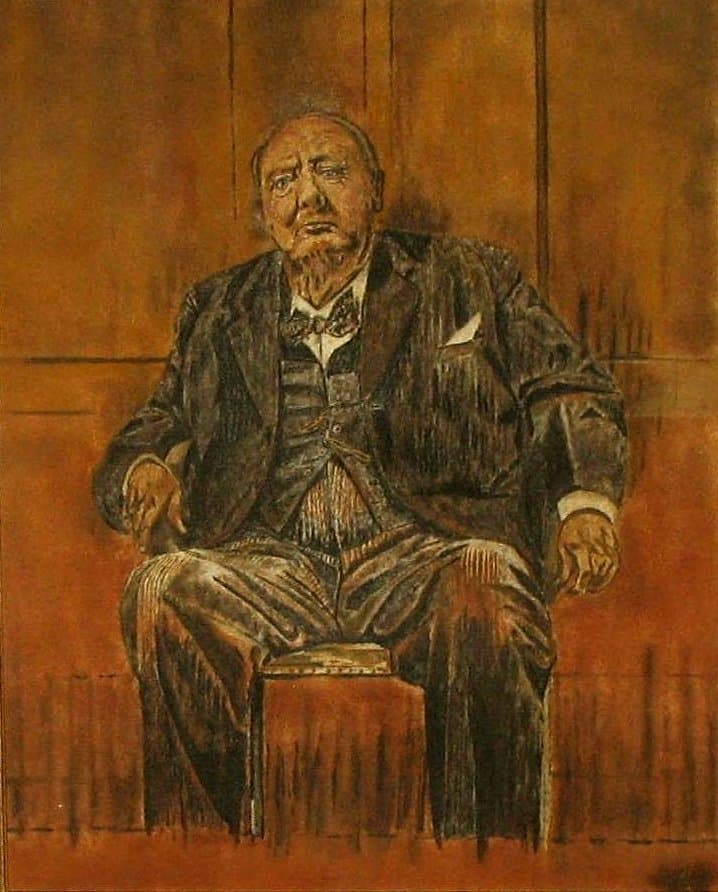
It is aboard the cruiser Augusta, anchored in Placentia Bay, Newfoundland, that Franklin D. Roosevelt meets Winston Churchill in August 1941. The air smells of salt and fuel oil, gangways creak between the two warships, and the dull roar of engines accompanies the hours. The two men know each other by letters before knowing each other by voice, and the American president, his wheelchair braced against the railing, has come to sound out the man behind the cigar as much as the strategist. What is said here, far from the microphones, lacks the solemnity of speeches.
—Winston, last year, when you were handed the keys to Downing Street at the worst possible moment, what did you feel as you descended into your underground War Rooms?
Franklin, I will confide in you what I have told no one. That evening in May 1940, as I lay down, I felt a strange peace — as if I were finally walking alongside destiny, and all my past life had been but a preparation for that hour. You can hardly imagine the contrast: above, London trembled under the threat; below, in that fortified bunker, I held the maps and the telegraph wires. I was sixty-five years old and felt as if I were beginning to live. I had nothing to offer the Commons but blood, toil, sweat, and tears — but that very poverty was my strength. When you have nothing left but resolve, you cease to be afraid.
I was sixty-five years old and felt as if I were beginning to live.
—And in those dark hours, my friend, do you ever doubt deep inside that bunker, or is that just a posture for your people?
Doubt, Franklin, I leave at the door of the Cabinet War Rooms like a wet umbrella. Inside, I have no right to tremble: a Prime Minister who hesitates is a nation that collapses. But at night, alone with my memos and my cigar, I weigh every lost convoy, every bombed city. The Blitz reduced entire districts to ashes, and I know the names of the streets. My method is simple: turn anxiety into work. I dictate, I revise, I badger my generals until dawn. Determination is not the absence of fear — it is the decision not to obey it. That is my only secret, and it is no secret at all.
Determination is not the absence of fear — it is the decision not to obey it.
—Here we are at last, face to face on these decks of Newfoundland, after so many telegrams. Admit it: what do you truly expect from our meeting?
You who are well placed to know, Franklin, I expect from you what no speech will bring me: your hand reached out across the Atlantic. Our letters have woven between us a complicity I dared not hope for — you wrote that it was fun to be in the same decade as you, and I smiled like a schoolboy. Today, on these ships, we are going to sign a charter of common principles, a compass for the free world. I am not yet asking you to enter the war — I know what your Congress allows you. But I come to seek the certainty that, when the day comes, America will stand at our side. Between us, this secret journey is worth all the treaties.
I expect from you what no speech will bring me: your hand reached out across the Atlantic.
—You speak of a compass for the free world. Do you believe, Winston, that these principles we are putting on paper will survive the war?
I do believe it, Franklin, because without that nothing would be worth fighting for. What we are writing here — the right of peoples to choose their government, freedom of the seas, renunciation of conquest — these are not words of circumstance. You, the man of the New Deal, know that a political promise is only worth keeping if you keep it after the storm. I am not naive: my British Empire sits uneasily with some of these principles, and we shall debate them, you and I, until we fall out. But a world where the Allies had vanquished Nazism without offering anything better would be but a respite before the next abyss. These papers are our bet on the future.
A world where the Allies had vanquished without offering anything better would be but a respite before the next abyss.
—I am told you write constantly, even in the midst of war. Where does this fury to put words on paper come from, my dear Winston?
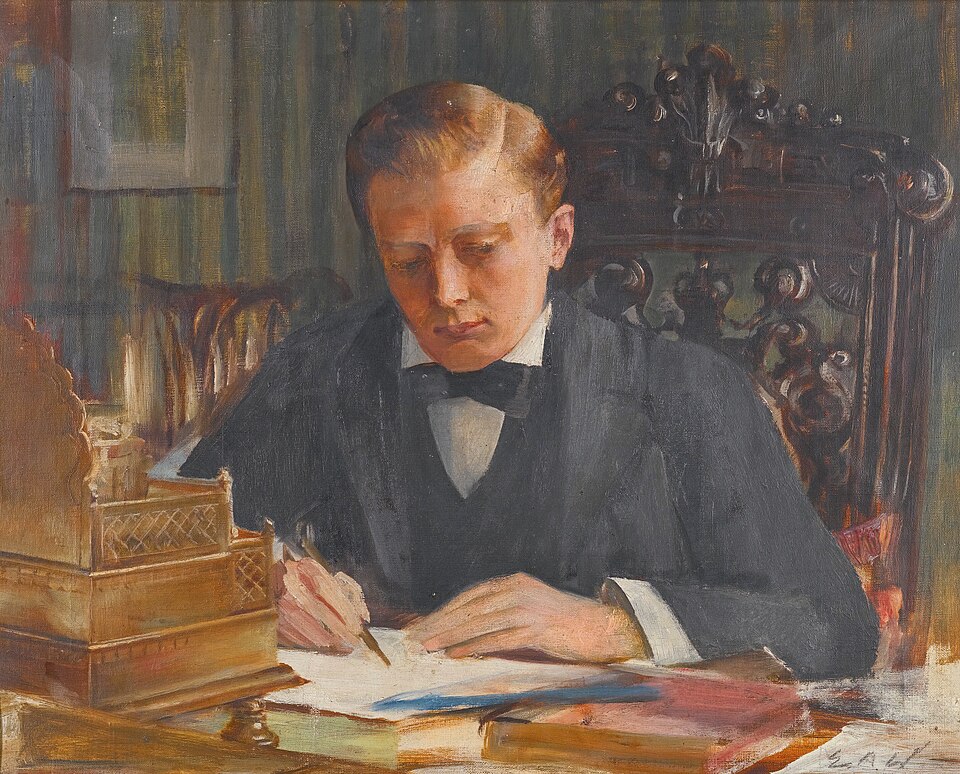
Franklin, I write as others breathe — it is my way of understanding the world before governing it. From my youth, whose escapades I will one day recount in My Early Life, the pen sustained me when politics shunned me. During my wilderness years, excluded from power, it was my books that paid for Chartwell and its gardens. History is not for me an ornament: it is a weapon. He who knows the past can guess the traps of the present — I had read enough chronicles to recognize Hitler before others. And then there is painting, that silent refuge where I lay down my brushes when words tire me. A statesman without inner art is but a bureaucrat unaware of himself.
History is not for me an ornament: it is a weapon.
—Do you think, Winston, that a man can both govern nations and aspire to literary glory, without betraying either?
That is a question only a man weary of compromise could ask me, Franklin. I believe the two feed each other. When I draft a speech for the Commons, I am a writer; when I recount this war in several volumes — and I will, rest assured — I am still an actor in what I describe. The danger is to lie to posterity out of vanity. I strive to tell my truth without glossing over my errors, and God knows I have made them. If a jury of men of letters should one day distinguish my writings, I would blush no more than for my battles. The right sentence and the right decision demand the same thing: courage and a great many revisions.
The right sentence and the right decision demand the same thing: courage and a great many revisions.
—Allow a friend a less serious question: they say you are a man of cigars and champagne. What does a day of Winston Churchill look like?
Ha! You touch on my pet sins, Franklin, and I own them. I wake late, around eight, and have breakfast in bed, surrounded by newspapers and secretaries to whom I dictate before even setting foot on the ground. My Cuban cigar rarely leaves me — they have even named a variety after me, which flatters me more than many decorations. The afternoon belongs to the Commons and the staff maps; in the evening, I dine at length, a glass of whisky or French champagne at hand, then work until ungodly hours. They think me tireless: the truth is, I also know how to rest in broad daylight, like a cat. The secret of endurance, my friend, is never to stand up when you can sit down.
The secret of endurance, my friend, is never to stand up when you can sit down.
—This flamboyant image — the cigar, the uniform, the booming voice — do you cultivate it deliberately, or does the man truly resemble the character?
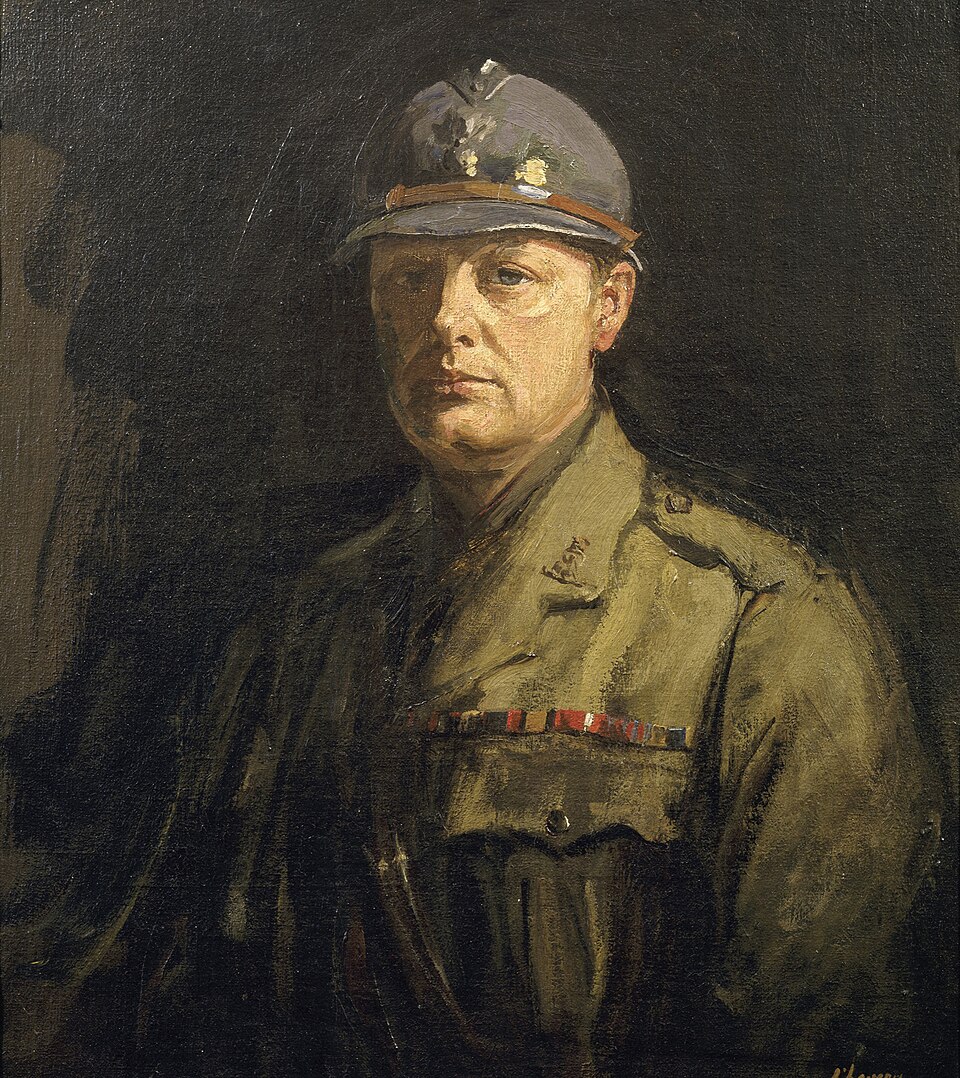
The two have been married so long, Franklin, that I could no longer separate them. When I put on my blue Royal Air Force uniform, it is not a charade: I want every sailor, every pilot, to feel that their chief shares their fight. But I do not deny the pleasure of theater — a people at war needs figures, not just figures. The cigar between my teeth is a flag as much as a vice. You, who lead your country from your wheelchair with your smile and your cigarette holder, know this art: to appear stronger than you feel. The character reassures when the man, deep down, still doubts. But beneath the image, I assure you, the heart beats just as strongly as yours.
The cigar between my teeth is a flag as much as a vice.
—Beyond Hitler, you sometimes mention a peril from the East. Do you believe, Winston, that the Soviet ally will become our adversary tomorrow?
Franklin, that is the anxiety I carry in secret while we fight side by side against Berlin. Today, Stalin bleeds for the common cause, and I shake the hand I must shake — against Nazism, I would ally myself with the devil himself. But I have not forgotten what totalitarianism is, whether brown or red: a state that crushes the individual. When Germany is defeated, I fear that a curtain will fall across Europe, isolating entire nations behind silence and fear. You will find me alarmist — I have already been reproached for being so about Hitler, and I was right too soon. Let us ensure we win the war without losing the peace. That is the fight to come, and it will be long.
Against Nazism, I would ally myself with the devil himself — but I have not forgotten what totalitarianism is.
—You say you were right too soon. Did this loneliness of the prophet no one listens to cost you dearly, my old friend?
More dearly than any word can say, Franklin. During the years I cried in the wilderness against appeasement, I was taken for a warmonger, a toothless old lion rehashing alarms. My friends shunned me, the press mocked me, and I returned to Chartwell to paint my ponds so as not to yield to bitterness. But I held firm, for I saw the storm coming that others refused to name. Cassandra's reward is to suffer twice: first from not being believed, then from seeing her fears realized. If I speak to you today of future peril, it is because I have learned at my own expense that it is wrong to keep silent in order not to displease. Better to alarm in time than to weep too late.
Cassandra's reward is to suffer twice: from not being believed, then from seeing her fears realized.
This imaginary interview was generated by artificial intelligence from sources documented in Winston Churchill's profile. It dramatises what the figure might have said based on what we know about them, but does not constitute attested historical testimony. For primary sources and factual documentation, refer to the full profile.