Imaginary interview with Winston Churchill
by Charactorium · Winston Churchill (1874 — 1965) · Politics · 6 min read
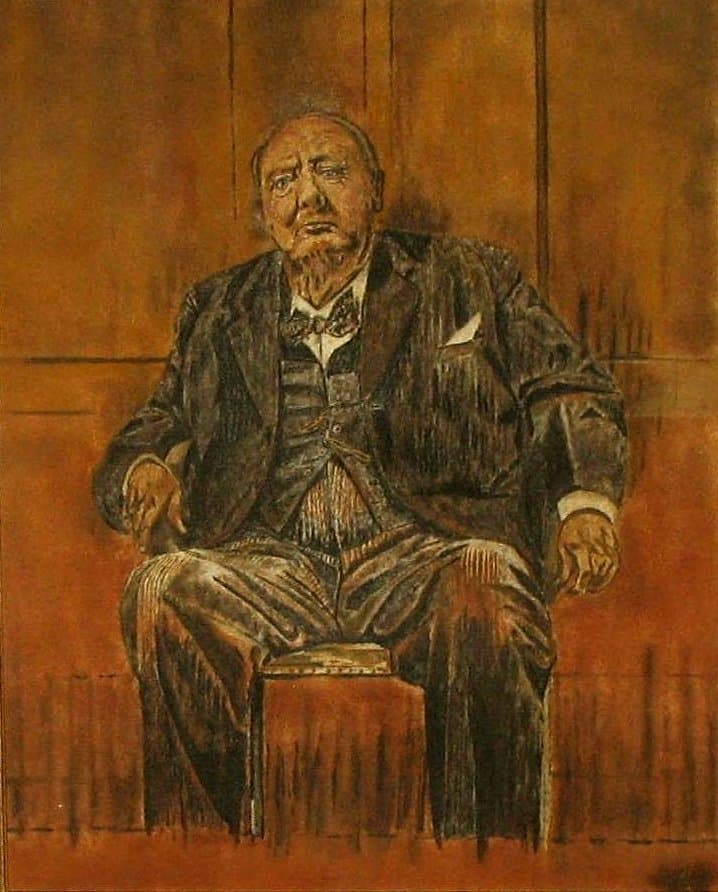
November 1953. In the great drawing-room of Chartwell, the Kent fog clings to the windows and a cigar slowly burns in a crystal ashtray. The man who has just received the Nobel Prize in Literature settles into his armchair, a glass within reach, and agrees to look back over half a century of storms.
—How does one run a besieged country from a basement in London?
You learn very quickly that modern war is won not only on the beaches, but in windowless rooms. Under Whitehall, we had set up fortified chambers, maps pinned with little flags, stale air, and telephones that rang at all hours. I often went down there dressed in my old Royal Air Force blue uniform, which amused my admirals and, I think, reassured the young officers. Above our heads, the Blitz was reducing entire districts to rubble; below, we had to keep a cool head and a steady voice. I understood then that a leader's courage consists above all in appearing certain when you are not. The cigar helped: it occupied my hands and gave me time to think before answering foolishly.
A leader's courage consists above all in appearing certain when you are not.
—How did you feel when you spoke in June 1940, after Dunkirk?
France was faltering, our soldiers were coming back haggard across the Channel, and I was asked to find words for a people who had nothing left but their bare hands. From 10 Downing Street, I rehearsed my sentences aloud, like an actor afraid of forgetting his lines. I wanted neither to lie nor to despair. So I spoke of duty, and I dared the idea that if the Empire lasted a thousand years, they would still say: “This was their finest hour.” It was presumptuous, perhaps. But a cornered man must lift his eyes higher than the abyss, otherwise he falls into it. The BBC microphone was my only cannon that evening, and it carried further than any shell.
A cornered man must lift his eyes higher than the abyss, otherwise he falls into it.
—Do you remember the day you became Prime Minister?
May 1940. I was entrusted with power at the worst possible moment, which is, by the way, the only honest way to get it. I remember going to bed that night with a strange feeling, almost indecent given the circumstances: that I had finally found my place. I later wrote that I walked with destiny, “as if all my past life had been but a preparation for this hour and this trial.” Before the House of Commons, I promised nothing but blood, toil, tears, and sweat. A curious campaign offer, isn't it? And yet the faces hardened, not with fear, but with resolve. The English prefer to be told of the storm rather than a false fair weather.
I was entrusted with power at the worst possible moment, the only honest way to get it.
—Why did you rely so heavily on speech, on words, in a war of iron and steel?
Because a people fights well only for things they can name. The German tanks were superior to ours, their air force too, for a time; I had the English language left, and I intended to use it as a large-caliber weapon. Before the United States Congress, at Christmas 1941, I said that if the Empire were one day to perish, archaeologists would find no trace of cowardice in the conscience of our people. That was not flattery: it was a moral contract I made aloud, so that it would be harder to break. My memoirs, later, prolonged this work. You write history, you see, partly to prevent it from repeating itself, partly to ensure that you appear on the right side.
A people fights well only for things they can name.
—How does a statesman come to receive a literature prize?
By writing a lot, and early. Long before the ministries, I was a war correspondent, paid by the line, and I kept throughout my life that discipline of the craftsman who must deliver his copy. My Early Life tells of that impatient young man, who sought glory under fire for lack of finding it at school. Later, the six volumes of The Second World War allowed me to tell our ordeal in my own way — biased, I readily admit, for history written by oneself always has a good profile. That Nobel Prize of 1953 flattered me and surprised me a little: it crowned the writer for sentences that the politician had uttered in urgency. I saw it as the delightful proof that a man can pursue two careers, provided he sleeps little.
History written by oneself always has a good profile.
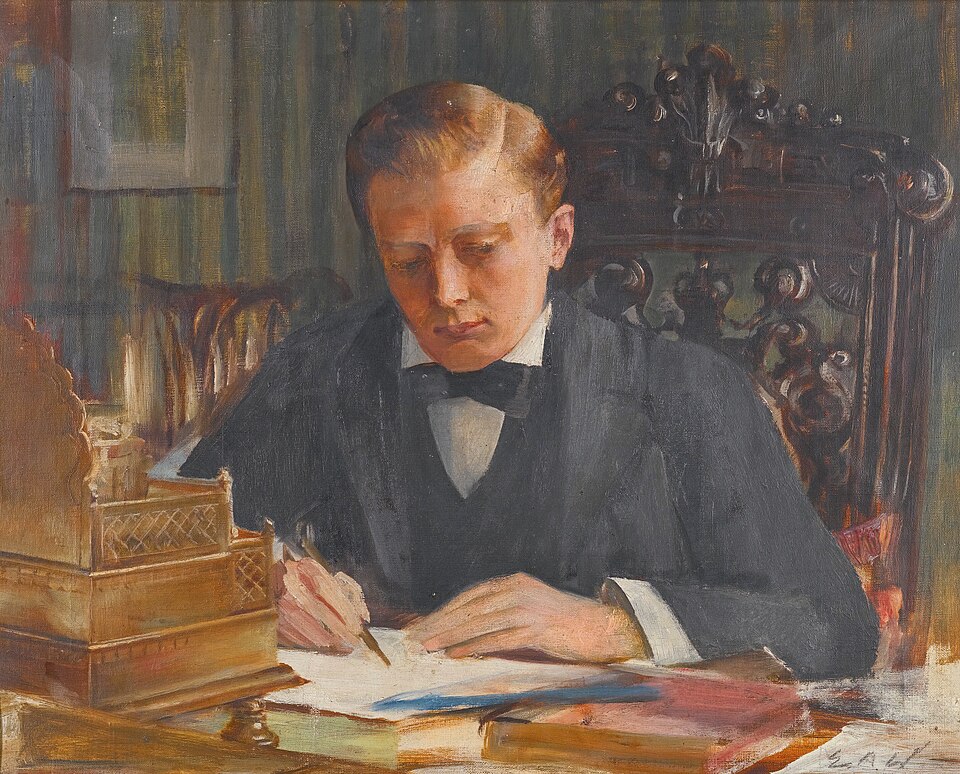
—You are known to paint. What were you seeking, brush in hand?
Silence. Politics is a constant din of dispatches and speeches; before an easel, at Chartwell, the world finally shrinks to a square of canvas and the Kent light on a pond. I discovered painting late in life, during one of those wilderness years with which my career was generously supplied, and it saved me from the black mood that the English politely call the black dog. I painted badly, no doubt, but with a fierce appetite: bright colors, Mediterranean sun, the very opposite of bunkers and fogs. A man who has spent his life deciding the fate of millions needs, come evening, to be responsible only for a badly mixed sky. That is a form of rest that no whisky quite provides.
A man who has decided the fate of millions needs, in the evening, a badly mixed sky.
—What did you see at Yalta, in 1945, around that table with Roosevelt and Stalin?
Three old lions, one of whom was already very tired and the other very patient. In the Crimea, we were redrawing a still-smoking continent, and I sensed that the approaching victory would not settle everything — it would only shift the fault line. Roosevelt believed he could charm Stalin; I loved him too much to disabuse him harshly, but I could see that the Red armies, once they entered a country, were not in the habit of leaving. We negotiated borders on maps like dividing an inheritance before the funeral. I was defending what remained of the British Empire and the idea that small nations have a right to their destiny. I was reproached for that later. But I prefer a lucid compromise to a comfortable illusion.
We were sharing a continent on maps like an inheritance before the funeral.
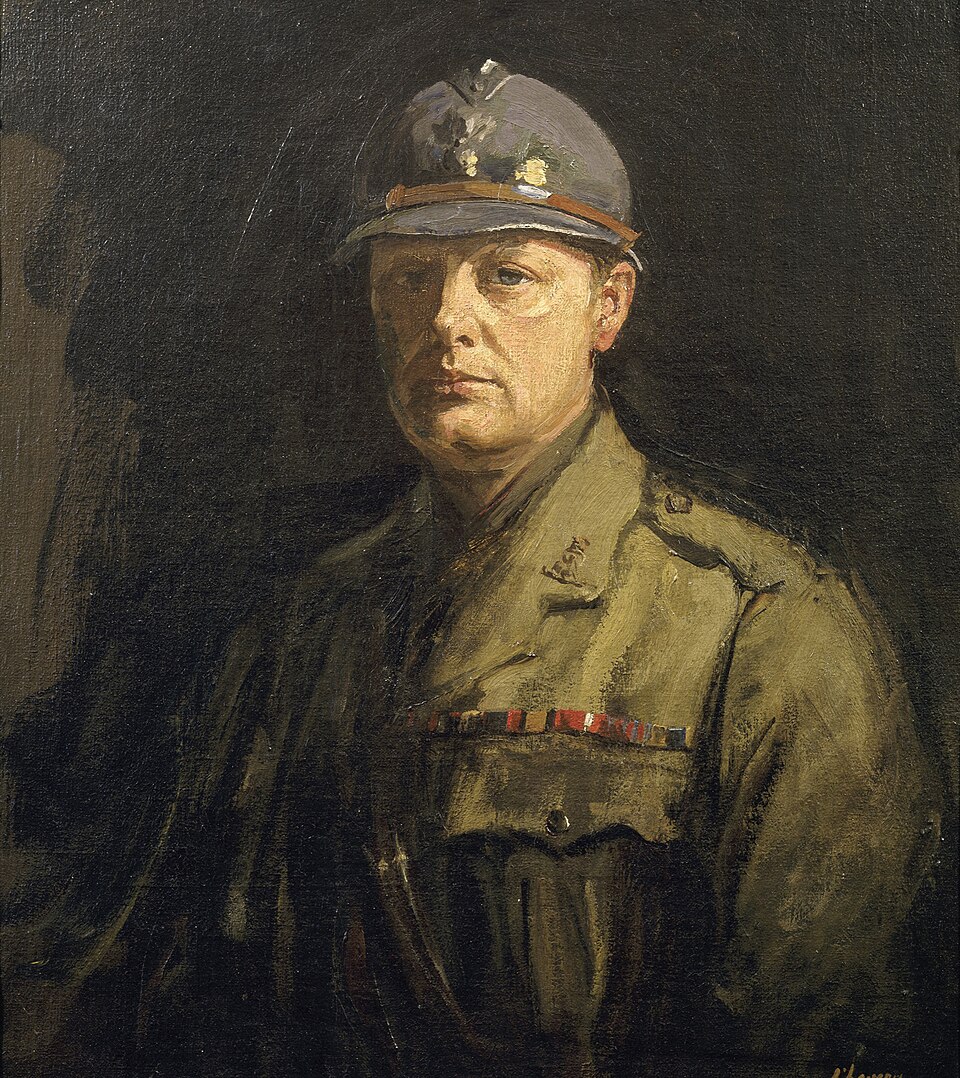
—At Fulton, in 1946, you spoke of an 'iron curtain.' What had you understood that others refused to see?
That the peace of 1945 was only a truce of a new kind. I said, in that small town in Missouri, that from Stettin in the Baltic to Trieste in the Adriatic, “an iron curtain has descended across the Continent.” I was called bellicose, alarmist, a bad sport — I was used to it; it was the same refrain when I denounced Hitler in the thirties, in the days of appeasement. But I had learned one thing the hard way: totalitarianism is never sated by concessions, it feeds on them. Behind that curtain, entire peoples passed from one tyranny to another without even tasting the freedom they had been promised. Sounding the alarm is never popular; but I have always preferred to disturb early than to console too late.
Totalitarianism is never sated by concessions, it feeds on them.
—Let us talk about your legend: the cigar, the whisky. Cultivated myth or real man?
A bit of both, which is the very definition of a good legend. The cigar is real, believe me: a faithful companion, lit upon getting out of bed or nearly so, and it ended up having my name on some boxes — a vanity I did not fight fiercely. I wake late, have my tea and newspapers in bed, dictate my mail in a dressing gown before even setting foot on the ground. In the evening, a good dinner, French champagne, a Cuban cigar, and we work until ungodly hours. My doctors disapproved; I replied that I had taken more from life than life had taken from me. Discipline, for me, never consisted in depriving myself, but in never stopping.
I have taken more from life than life has taken from me.
—At the end of such an existence, what still keeps you awake at night?
Work, above all, from old habit — I write better when the house is asleep. But also that question that every public man eventually asks himself: what was all that noise for? I have seen two world wars, the fall of empires, the atomic bomb that I helped conceive and whose use leaves me with a discomfort I do not hide. At Chartwell, surrounded by my paintings and my books, I sometimes reread my A History of the English-Speaking Peoples and I tell myself that civilizations hang on very little: courage at the right moment, and the memory we keep of it. If I am still read in a century — a presumptuous supposition — I would like to be remembered not as the orator, but as the man who refused to surrender when it would have been more reasonable.
Civilizations hang on very little: courage at the right moment, and the memory we keep of it.
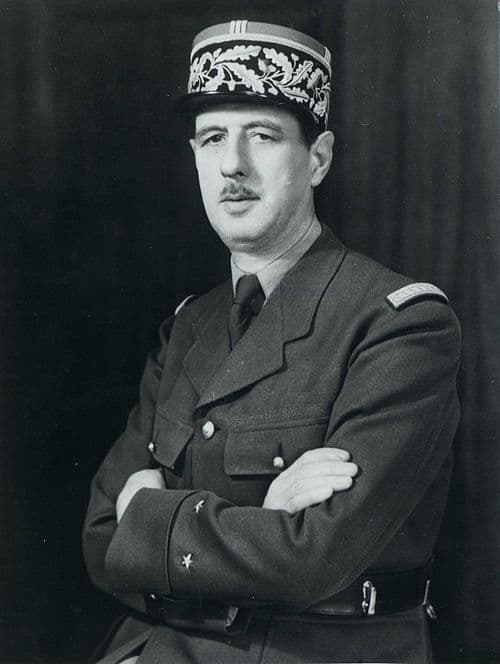
This imaginary interview was generated by artificial intelligence from sources documented in Winston Churchill's profile. It dramatises what the figure might have said based on what we know about them, but does not constitute attested historical testimony. For primary sources and factual documentation, refer to the full profile.