Imaginary interview with Yaa Asantewaa
by Charactorium · Yaa Asantewaa (1832 — 1921) · Military · 5 min read
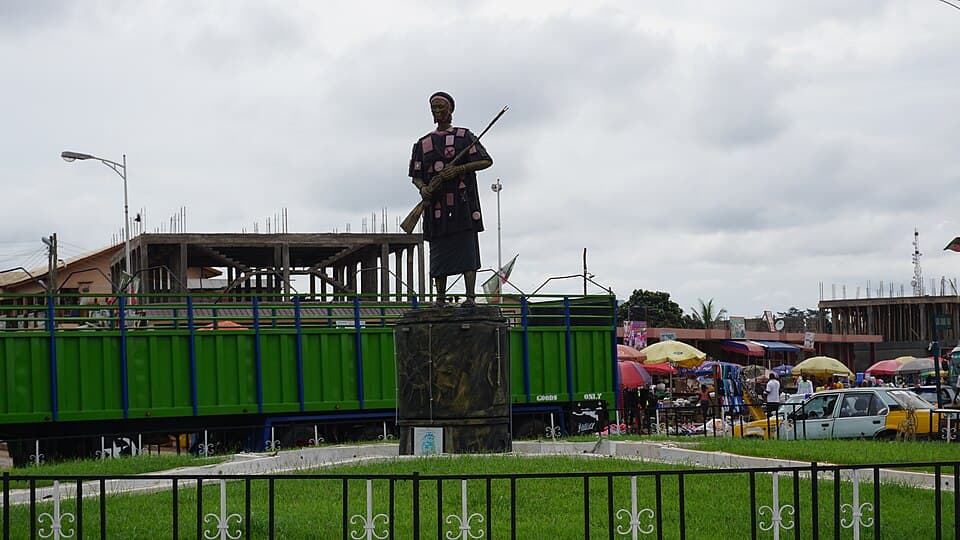
Kumasi, in the shade of the trees where councils are held. The Queen Mother of Ejisu receives, upright despite her years, the gaze of one who has seen chiefs hesitate and guns fall silent. She speaks slowly, as one places stone upon stone.
—Do you remember the day the governor summoned the chiefs to demand the Golden Stool?
It was in March 1900. Frederick Hodgson sat before us like a man who thinks he can buy a soul with words. He demanded the Sika Dwa Kofi, the sacred stool, as if claiming a piece of furniture. I saw the men lower their heads, the same men who wore the akofena at their belts. The silence weighed heavier than cannons. So I rose and said what I had to say: if you, men of Ashanti, refuse to fight, then I myself will take up arms and fight for our people. I was not afraid to die. I was afraid we would die on our knees.
He demanded our soul as if claiming a piece of furniture.
—Why did those words, spoken by a woman, suffice to ignite the war?
Because shame is a fire faster than gunpowder. The chiefs knew the danger; they knew the Martini-Henry rifles and the cannons the whites dragged from the coast. But a queen mother who announces she will go to battle is a mirror held up to the warriors: either they follow me, or they accept that an old woman has more heart than they do. In our house, legitimacy comes not only from strength, but from the right word spoken at the right time. I had enstooled my own grandson as chief of Ejisu; the men knew my voice was not wind. The Fontomfrom beat that night, and Ashanti rose.
Shame is a fire faster than gunpowder.
—How did a woman over seventy find herself commanding a siege?
One does not choose one's age; one chooses one's duty. When the chiefs named me head of the armies, I took it not as an honor but as a heavy burden, heavy as the gold of a crown. We surrounded the white men's fort at Kumasi, where they had barricaded themselves with supplies and field guns. I moved from post to post, watched the approaches, tightened the trenches so no relief column could break through. The young warriors looked at me and dared not speak of fatigue. An old woman who does not sleep — that awakens an entire army better than any drum.
One does not choose one's age; one chooses one's duty.
—What could you oppose to British artillery with only your guns and drums?
Patience and the land. Their field guns spoke loudly, but a cannon does not eat or sleep peacefully when surrounded. We had our Martini-Henrys taken from the enemy, our powder counted grain by grain, and above all the forest that had been ours since time immemorial. The Fontomfrom carried my orders faster than any white rider could gallop. The warriors wore their gris-gris, amulets holding the protection of the ancestors, and believe me, a man who does not fear death holds a post better than a cannon. We held that siege for weeks. The whites eventually called for reinforcements from the coast, because alone, they would not have lasted.
—The famous Golden Stool — what became of it while the British searched?
They never touched it, and that is the whole story. The Sika Dwa Kofi is not a stool one sits upon; no king himself sits on it. It contains the entire soul of the nation, descended from the sky, it is said, before our ancestors. Hodgson, the poor man, thought that by demanding it he would take our heart. We hid it so deep in the forest that neither their soldiers nor their spies ever caught its scent. In the evening, in our ceremonies, it was him we honored, him the spirit of the people. They won the war, they burned our villages — but the soul slipped through their fingers like water.
They won the war, but the soul slipped through their fingers like water.
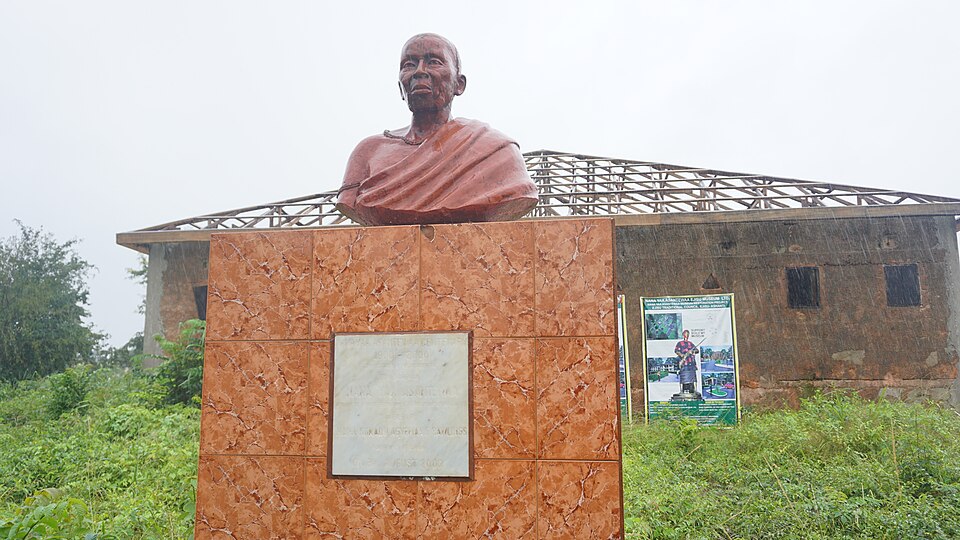
—Why was a stool of wood and gold worth shedding so much blood?
Because a people without its soul is just a herd to be moved. The white man saw an object; we saw the link between the living, the dead, and those not yet born. To demand the Golden Stool was to ask us to sign our own disappearance, politely, handing over the knife ourselves. In my evenings at Ejisu, I led the rites of the stool's cult; I knew what it weighed, not in gold but in memory. A protectorate can take your lands, your taxes, your chiefs. The day it takes your symbols, it has already buried you. That is why we preferred war to shame.
A people without its soul is just a herd to be moved.
—What exactly is a queen mother in Ashanti society?
I am often mistaken for a king's wife; I am something else. The queen mother, the Asantehemaa at the empire's level, is the guardian of the lineage, for among us blood is passed through mothers. It was I who designated and enstooled my grandson as chief of Ejisu; the throne passes through my hand before his. My days were not days of war: in the morning, I received reports from the court; in the afternoon, I sat in the council of elders, listened to complaints, settled disputes. That authority — slow, patient, woven day after day like kente — that is why, when the day came, the warriors listened to me. They do not obey a stranger.
—How did you get warriors to accept being led by a woman?
I did not make them accept anything; I merely reminded them of what they already knew. For generations, the queen mother speaks in council, designates chiefs, keeps the memory of the ancestors. My authority did not date from the war; it dated from my entire life at court in Ejisu, from the audiences given, the quarrels settled. When you have held the scales of justice for years, you need not raise your voice to be followed on a battlefield. I wore the kente of great occasions and the gold of my rank, not out of vanity, but so that everyone might see in me traditional legitimacy, that of customs, not the foreign force from across the seas.
When you have held the scales of justice, you need not raise your voice.
—You ended your life far from Kumasi. What does that exile in the Seychelles represent for you?
An island at the end of the water, where the wind does not carry the smell of home. The whites, after defeating us, tore us from our land — me and other chiefs, like uprooting trees so they never grow again. There the king Prempeh I already awaited me, deported before me. I knew the Seychelles as one knows a prison without walls: the sea for bars. I knew I would never again see the forest of Ejisu nor the Fontomfrom of festive evenings. But exile does not erase a given word. I had said I would fight; I did. The rest — old age far from the country — was merely the price.
I knew exile as a prison without walls: the sea for bars.
—If you could imagine how you would be remembered long after your death, what would you wish?
I am just an old woman from Ejisu, and I cannot read the future. But if one should speak of me a century hence, I would like them to say not only that a queen was defeated and deported. Let them say rather that at the moment when men hesitated, a woman rose and refused to surrender her people's soul. Perhaps one day my body will return to rest in that Ashanti land the whites forbade me — that is the only return I would dare hope for. The Golden Stool, it will always be hidden somewhere, alive. As long as it breathes in the forest, I will not have entirely lost.
At the moment when men hesitated, a woman refused to surrender her people's soul.
This imaginary interview was generated by artificial intelligence from sources documented in Yaa Asantewaa's profile. It dramatises what the figure might have said based on what we know about them, but does not constitute attested historical testimony. For primary sources and factual documentation, refer to the full profile.